All-On-4 Dental Implants in Thailand
Losing most or all of your teeth can feel overwhelming. Eating becomes a chore. Smiling turns into a source of anxiety. You might have tried dentures that click, slip, or cause sore spots.
There is a better way.
All-On-4 dental implants have changed millions of lives worldwide. And in Thailand, this life-changing procedure costs a fraction of what you would pay in the US, UK, or Australia.
But is it safe? Is it worth traveling for? How much will you actually pay?
This guide answers every question with honesty. No hype. No hidden sales pitch. Just real information to help you decide if Thailand is the right choice for your new smile.
What Exactly Are All-On-4 Dental Implants?
Let us start with the basics.
All-On-4 is a specific implant technique developed by a Portuguese dentist named Dr. Paulo Malo. The name tells you exactly what it does:
- All – all of your teeth (upper arch, lower arch, or both)
- On – supported by
- 4 – four dental implants
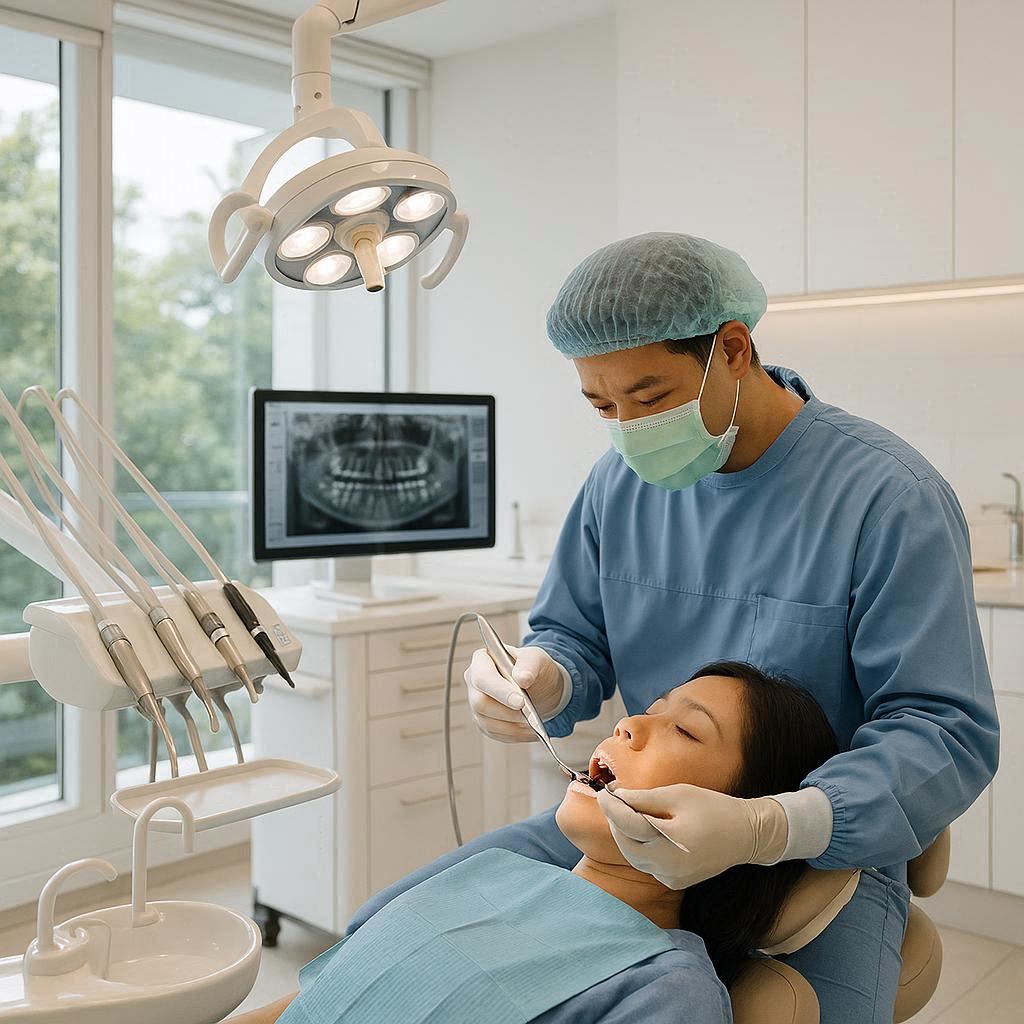
Instead of placing one implant for every missing tooth, your dentist places just four titanium posts into your jawbone. Those four posts support a full bridge of 12 to 14 teeth.
How Does It Work?
Think of it like building a table.
The four implants act as the legs. The bridge is the tabletop. The legs are angled strategically – two straight in the front and two tilted in the back. This angled design allows the dentist to avoid sinus cavities in the upper jaw and nerve canals in the lower jaw.
Because of this clever engineering, many people who were told they lack enough jawbone for traditional implants can still get All-On-4.
All-On-4 vs. Traditional Implants
| Feature | All-On-4 | Traditional Implants |
|---|---|---|
| Number of implants | 4 per arch | 6 to 10 per arch |
| Bone grafting needed | Rarely | Often required |
| Treatment time | As little as 24 hours | 6 to 12 months |
| Cost | Lower | Higher |
| Removable? | No (fixed) | No (fixed) |
| Suitable for low bone density | Yes | No |
Who Is a Good Candidate?
You might be a good fit if you:
- Have lost most or all teeth in one or both jaws
- Wear dentures that are uncomfortable
- Have been told you lack sufficient jawbone
- Suffer from advanced gum disease (must be treated first)
- Want a permanent, non-removable solution
There is no upper age limit for All-On-4. Healthy adults in their 70s and 80s receive this treatment regularly.
Note: Heavy smokers and people with uncontrolled diabetes or severe bruxism (teeth grinding) may need extra evaluation. Be honest with your dentist about your health history.
Why Thailand Has Become a Global Hub for Dental Implants
Thailand did not become a dental tourism destination by accident. The country has spent over two decades building a reputation for quality care at reasonable prices.
World-Class Training
Many Thai dentists complete advanced training in the United States, Europe, or Japan. They return with international certifications and modern techniques. Some of the most skilled All-On-4 specialists in the world practice in Bangkok, Phuket, and Chiang Mai.
International Accreditations
Look for clinics with:
- JCI accreditation (Joint Commission International) – the gold standard in global healthcare
- ISO 9001:2015 certification
- Thai Hospital Accreditation (HA)
These accreditations mean the clinic follows strict safety protocols, sterilization standards, and patient care guidelines.
Lower Overhead Costs
The price difference is not about lower quality. It is about economics.
Labor costs, real estate, and utilities are significantly lower in Thailand than in Western countries. A dental implant that costs 400wholesaleintheUSmightcost120 in Thailand. The dentist’s time costs less per hour, yet the skill level remains equal or higher.
The Vacation Factor
Recovering from implant surgery is more pleasant when you are in a warm, tropical environment. Fresh fruit, gentle weather, and low stress all help healing.
Many patients combine their dental work with a week or two of vacation. You return home with a new smile and a tan.
Real Costs: How Much Are All-On-4 Dental Implants in Thailand?
Money matters. Let us be specific.
Price Breakdown (2025 Estimates)
| Treatment | Average Cost in Thailand (USD) | Average Cost in the US (USD) |
|---|---|---|
| Single arch (upper or lower) | 7,500–10,000 | 20,000–30,000 |
| Full mouth (both arches) | 14,000–19,000 | 40,000–60,000 |
| All-On-4 with premium materials (zirconia) | 12,000–15,000 per arch | 30,000–45,000 per arch |
These prices typically include:
- Initial consultation and CT scan
- Four titanium implants (brands like Straumann, Nobel Biocare, or Osstem)
- Temporary bridge (placed same day)
- Final permanent bridge (acrylic or zirconia)
- All follow-up adjustments during your stay
What Is Usually Not Included
- Airfare to Thailand
- Accommodation
- Medications (usually less than $50)
- Additional bone grafting (rare but possible, add 500–1,500)
- Sinus lift (add 1,000–2,000 if needed)
- Travel insurance
Why Some Quotes Are Cheaper
You will see clinics advertising All-On-4 for $4,000 per arch. Be very careful.
Often, that low price uses:
- Lower quality implants (no-name brands from China)
- Acrylic temporary bridges only (not the final set)
- No warranty
- Less experienced dentists
Important: Do not choose a clinic based on price alone. The cheapest option can lead to implant failure, infection, or a poor fit. You cannot put a price on your health.
The Step-by-Step Process: What to Expect
Knowing exactly what happens removes fear. Here is your realistic timeline.
Step 1: Research and Remote Consultation (4–6 weeks before travel)
You start at home. Fill out a medical history form. Send photos or an X-ray if available. Many clinics offer free video consultations via Zoom or WhatsApp.
The dentist will give you a preliminary quote and tell you if you need any pre-treatment (like clearing infections).
Step 2: Arrival and First Appointment (Day 1)
You arrive in Thailand. The next day, you visit the clinic for:
- A full 3D CT scan (painless, takes 10 minutes)
- A comprehensive oral exam
- Final treatment plan and price confirmation
- Meeting your surgical team
Step 3: Surgery Day (Day 2 or 3)
This is the big day. Here is how it happens.
Anesthesia: You receive local anesthesia or IV sedation. Most clinics offer sedation at no extra cost. You will be conscious but deeply relaxed. Many patients remember nothing.
Extractions: Any remaining teeth are removed gently.
Implant placement: The dentist places four titanium implants into your jaw. Each arch takes about 60 to 90 minutes.
Temporary bridge: A fixed temporary bridge is attached to the implants the same day. You leave with teeth. They will look natural but are for soft foods only.
Recovery: You rest at your hotel. Some swelling and discomfort are normal.
Step 4: Healing Period (3 to 6 months)
This is the most important phase. Your jawbone grows around the implants. This process is called osseointegration. It must happen for the implants to become permanent.
During this time, you:
- Eat soft foods (soup, yogurt, smoothies, scrambled eggs)
- Avoid hard, crunchy, or sticky foods
- Practice gentle oral hygiene
- Return home and live normally
Step 5: Final Bridge Placement (Second Trip or Extended Stay)
Once healing is complete, you return to Thailand (or some clinics can ship the final bridge to a local dentist). The temporary bridge is removed. Impressions are taken. Your final bridge – usually made of acrylic reinforced with titanium or high-grade zirconia – is fitted.
The final bridge is stronger, more beautiful, and designed to last 15+ years.
Step 6: Ongoing Maintenance
You will need regular checkups every 6 to 12 months. Many patients see a local dentist at home for cleanings and send updates to their Thai clinic via email. Some return to Thailand annually for a checkup and a holiday.
Types of Materials Used for the Final Bridge
Not all bridges are created equal. Here is what you need to know.
| Material | Pros | Cons | Typical Cost (per arch) |
|---|---|---|---|
| Acrylic (PMMA) | Affordable, lightweight, easily repairable | Less durable, stains over time | Included in base price |
| Acrylic with titanium reinforcement | Stronger than standard acrylic | Still can stain after 3-5 years | +500–1,000 |
| Zirconia | Extremely strong, natural look, stain-resistant | More expensive, harder to adjust | +3,000–5,000 |
Most clinics offer the acrylic bridge in their base package. Upgrading to zirconia is a popular choice for patients who want the best longevity and aesthetics.
Realistic advice: Acrylic is fine for most people. It lasts 5 to 8 years with good care. Zirconia lasts 15+ years but costs more. Choose based on your budget and expectations.
Risks and Complications: Honest Talk
Every surgery carries risk. Thailand clinics are safe, but you need a clear picture.
Common (but temporary)
- Swelling and bruising: Peaks at day 2 or 3, fades by day 7
- Mild bleeding: Normal for the first 24 hours
- Sore throat: From the breathing tube during sedation
- Difficulty eating soft foods: Frustrating but temporary
Less Common but Serious
- Infection: Happens in about 1-2% of cases. Prevent with antibiotics and good hygiene.
- Implant failure: An implant does not fuse to the bone. More likely in smokers and diabetics. Success rate for All-On-4 is 95-98% over 10 years.
- Nerve damage: Rare in experienced hands. Can cause temporary or permanent numbness in the lip or chin.
- Sinus problems: For upper arch implants, a perforated sinus is possible but usually heals on its own.
How Thailand Clinics Minimize Risks
- Digital CT scans for precise planning
- Computer-guided surgery (less invasive, more accurate)
- Strict sterilization (autoclave, disposable tools)
- Antibiotics before and after surgery
- 24/7 emergency contact numbers
Quote from Dr. Somchai R., a Bangkok implant specialist: “We treat our international patients exactly as we would treat our own family. The technology we use in Thailand is the same as in Switzerland or the US. The difference is only the price.”
How to Choose the Right Clinic in Thailand
Do not just pick the first Google result. Do your homework.
Red Flags to Avoid
- Prices below $5,000 per arch for a complete All-On-4
- No clear before-and-after photos
- Dentist cannot provide credentials or training certificates
- Pushy sales tactics demanding a deposit immediately
- No physical address or fake reviews
Green Flags to Look For
- Clear, itemized pricing on the website
- Multiple positive reviews on independent platforms (Trustpilot, Google Reviews, WhatClinic)
- Dentist lists their training and experience with All-On-4 specifically
- Clinic offers a warranty (minimum 5 years on implants, 1 year on bridge)
- You can speak with former patients (some clinics provide references)
Top Locations for Dental Implants in Thailand
| City | Vibe | Best For |
|---|---|---|
| Bangkok | Busy, modern, endless options | Patients who want the widest choice of top specialists |
| Phuket | Beach resort, relaxed | Combining surgery with a seaside recovery |
| Chiang Mai | Mountain scenery, laid back | Lower prices than Bangkok, good for extended stays |
| Pattaya | Coastal, lively | Patients looking for value and entertainment |
Questions to Ask Before Booking
- How many All-On-4 procedures has your lead dentist performed? (Look for 500+)
- What brand of implants do you use? (Straumann, Nobel Biocare, and Osstem are reliable)
- Is the final bridge acrylic, reinforced acrylic, or zirconia?
- Do you offer a warranty? What does it cover?
- What happens if I have a problem after returning home?
- Can you provide contact details for two past patients from my country?
Preparing for Your Trip: Practical Checklist
Proper preparation prevents problems.
6 Months Before
- See your local dentist for a general checkup
- Stop smoking if possible (smoking dramatically increases implant failure)
- Get any serious health conditions under control (diabetes, high blood pressure)
- Research clinics and request remote consultations
1 Month Before
- Book your flights and accommodation (stay near the clinic for at least 7 days)
- Purchase travel insurance that covers dental tourism (not all policies do)
- Arrange time off work (minimum 10 days for the surgery trip, plus a second trip later)
- Stock up on soft foods for when you return home
Packing List for Your Trip
- Soft toothbrush and non-alcoholic mouthwash
- Lip balm (your lips will get dry)
- Ice packs (some clinics provide them)
- Button-up shirts (easier than pulling t-shirts over a swollen face)
- Phone charger and power bank
- Entertainment (tablet, books) for recovery days
- A list of emergency contacts
What to Eat After Surgery (First 2 Weeks)
Safe foods:
- Smoothies (no seeds)
- Yogurt and pudding
- Mashed potatoes
- Soups (cooled down)
- Scrambled eggs
- Protein shakes
- Mashed bananas
Avoid completely:
- Rice (small grains get stuck under the bridge)
- Bread and crackers
- Nuts and seeds
- Chips and crunchy snacks
- Sticky candy
- Hot coffee or tea (risk of burns while numb)
- Straws (sucking motion can dislodge blood clots)
Real Patient Stories (Anonymized)
These are based on real cases from Thai dental clinics.
Case 1: Mark, 62, from Australia
Before: Full upper denture that clicked when he laughed. Lower natural teeth failing.
Treatment: Upper All-On-4 with acrylic bridge. Extractions of remaining lower molars. He stayed in Bangkok for 10 days.
Result: “I cried when I saw my smile. Not from pain. From happiness. I ate an apple for the first time in seven years. The total cost was 9,800.Athome,itwas32,000.”
Complication: Minor infection at week three. He emailed photos to the clinic, and they prescribed antibiotics through a local doctor. Resolved in 10 days.
Case 2: Linda, 55, from the UK
Before: Severe gum disease led to loose teeth. She was embarrassed to eat in restaurants.
Treatment: Full mouth All-On-4 (both arches) with zirconia bridges. She combined surgery with a two-week holiday in Phuket.
Result: “The first week was uncomfortable, not going to lie. But the clinic checked on me daily via WhatsApp. By day 10, I was eating soft noodles. My final bridge is beautiful. Total cost $18,500. The UK quote was £42,000.”
Complication: None.
Case 3: Robert, 70, from Canada
Before: Wore dentures for 15 years. Chronic sore spots. Could not taste food properly.
Treatment: Lower All-On-4 only (his upper denture still worked fine). He chose a budget clinic at $4,500 per arch.
Result: “I learned my lesson. The implants felt loose after 8 months. The clinic would not respond to emails. I had to have them removed in Canada and start over. I should have paid more for quality.”
Lesson: Robert’s story is a warning. Cheap does not mean good value.
After You Return Home: Long-Term Care
Your responsibility does not end when you leave Thailand.
Daily Hygiene Routine
All-On-4 bridges require special cleaning. You cannot just brush normally.
You will need:
- A water flosser (Waterpik) – use daily to flush food under the bridge
- Super floss or implant-specific floss – thread under the bridge
- A soft-bristled toothbrush
- An interproximal brush (small cone-shaped brush)
Morning and evening routine:
- Brush all surfaces of the bridge
- Use the water flosser on low pressure
- Thread super floss under each section
- Rinse with non-alcoholic mouthwash
Foods to Avoid Forever
- Hard candy and ice cubes (can crack the bridge)
- Sticky toffee or caramel (can pull the bridge)
- Bones and shells (obvious, but worth saying)
- Pens and fingernails (habits that break teeth)
When to Call Your Dentist
- The bridge feels loose
- You see redness or swelling around an implant
- The bridge clicks when you bite
- You break or chip the bridge
Most minor problems can be fixed by any dentist. But for major repairs, you may need to return to Thailand or see a local implant specialist.
Comparing Thailand to Other Destinations
Thailand is not the only country offering affordable implants. Let us see how it stacks up.
| Country | Avg. Cost Full Mouth (USD) | Quality Level | Travel Time from US/UK | Language Barrier |
|---|---|---|---|---|
| Thailand | 14,000–19,000 | High (JCI clinics available) | Long (15-24 hours) | Low (English widely spoken) |
| Mexico | 12,000–18,000 | Mixed (research required) | Short (2-5 hours) | Medium |
| Turkey | 10,000–15,000 | Medium to High | Medium (4-12 hours) | Low (in tourist areas) |
| Hungary | 13,000–18,000 | High (European standards) | Medium (2-4 hours from UK) | Medium |
| India | 9,000–14,000 | Medium | Long | Medium to High |
Why Thailand wins for many patients:
- Consistent high quality across many clinics
- Excellent tourism infrastructure
- English is common in medical settings
- Low risk of counterfeit implants (unlike some budget destinations)
Frequently Asked Questions (FAQ)
1. Is the pain worse than a tooth extraction?
Most patients say the pain is similar to having a wisdom tooth removed. The first 48 hours are the hardest. By day 5, most people manage with just over-the-counter painkillers.
2. How long do All-On-4 implants last?
With good care, the titanium implants last a lifetime. The acrylic bridge lasts 5 to 10 years. Zirconia bridges can last 15 to 20 years or more.
3. Can I get both arches done at once?
Yes. Many patients do full mouth (upper and lower) in a single surgery. The surgery takes 3 to 4 hours total. Recovery is similar to a single arch, though eating is more challenging at first.
4. Will my insurance cover any of this?
Most dental insurance does not cover implants. But some medical plans cover the surgery portion if tooth loss results from an accident or illness. Check your policy. Some patients use medical loans or payment plans.
5. What if an implant fails after I return home?
Reputable Thai clinics offer a warranty (typically 5 to 10 years). They will either replace the implant for free or refund the cost. You may need to pay for a local dentist to remove the failed implant and prepare for a new one.
6. Can I fly home the day after surgery?
No. You need at least 5 to 7 days in Thailand for the initial healing. Flying earlier increases the risk of bleeding and swelling due to cabin pressure changes.
7. Do I need a second trip?
Yes, for the final bridge. The temporary bridge heals for 3 to 6 months. Then you return for 3 to 5 days to receive your permanent bridge. Some clinics offer to ship the final bridge to a dentist in your home country, but this carries risks.
8. Are the implants safe? What about hepatitis or HIV?
Thailand has strict infection control laws. Reputable clinics use single-use sterile instruments and follow the same protocols as Western hospitals. The risk of infection is extremely low – lower than in many Western dental offices, according to some studies.
Additional Resources
For more independent information about dental tourism and All-On-4 implants, visit:
🔗 Medical Tourism Association – medicaltourism.com (patient guides and accredited clinic lists)
Conclusion
All-On-4 dental implants in Thailand offer a genuine path to a new smile at about one-third of Western prices. The country combines internationally trained dentists, modern clinics, and a warm recovery environment. Success rates are high, but you must do your research, choose a reputable clinic, and commit to long-term care. Your smile is worth the investment – just make sure you invest wisely.
Disclaimer: This article provides general information only and does not constitute medical advice. Always consult with a qualified dentist in your home country before traveling for dental surgery. Results vary by individual. Prices mentioned are estimates and subject to change. The author does not endorse any specific clinic or dentist.