all on four dental implants problems
If you are missing most or all of your teeth, you have probably heard about the All-on-4 dental implant system. It sounds like a dream: a full set of new teeth fixed in your mouth with just four implants per arch, often completed in a single day.
But here is the truth no one tells you at first. No medical procedure is perfect. And All-on-4 is no exception.
Before you invest your time, health, and money, you deserve to know the real problems that can happen. Not the horror stories from the internet. Not the glossy marketing brochures. Just the honest, realistic challenges that real patients face.
This guide will walk you through every possible problem with All-on-4 implants. You will learn what can go wrong, why it happens, and most importantly—how to prevent or fix these issues.
What Is All-on-4? A Quick Refresher
Before we dive into problems, let’s agree on what All-on-4 actually is.
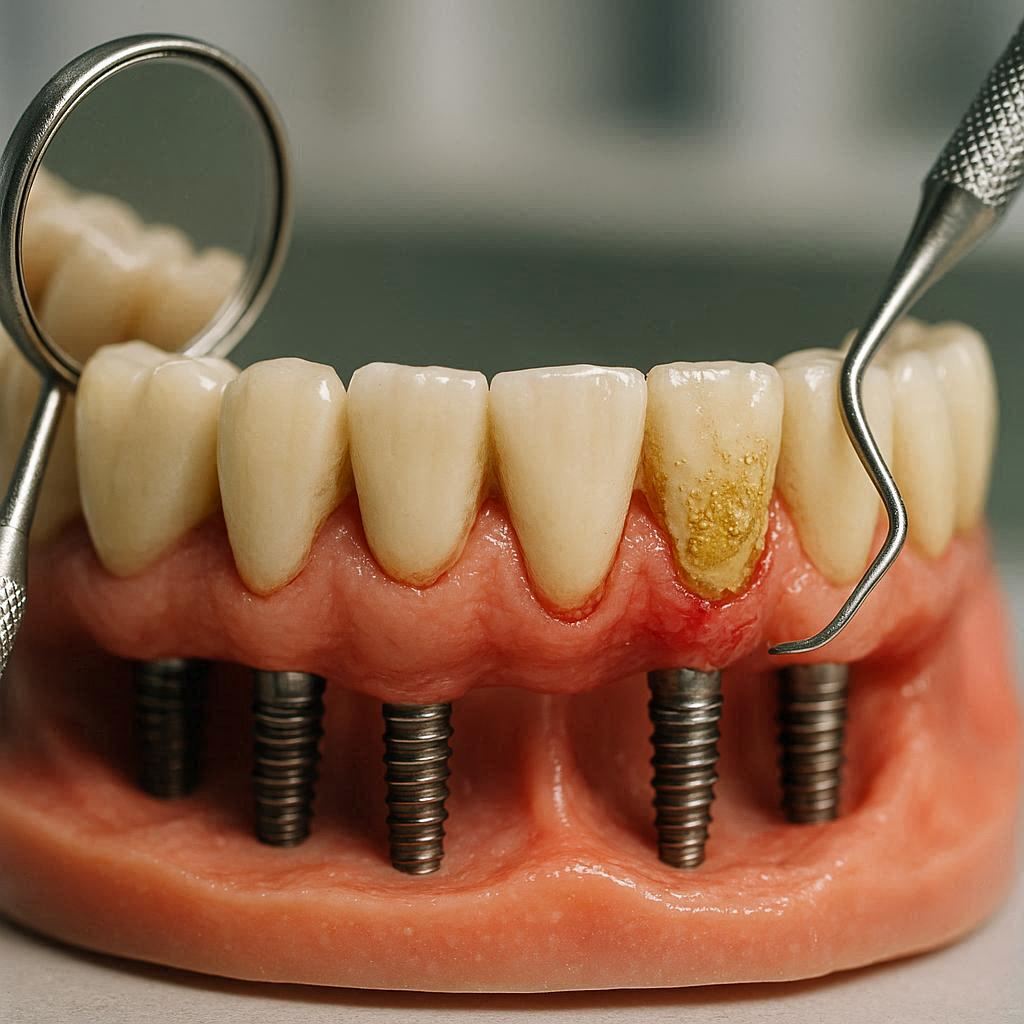
All-on-4 is a technique where a dental surgeon places four titanium implants into your jawbone. These implants support a full bridge of prosthetic teeth. The back two implants are tilted at a 45-degree angle. This angle helps them grip better bone, often avoiding the need for bone grafting.
The procedure is popular because it is faster and often cheaper than placing six or eight individual implants.
But faster and cheaper sometimes come with trade-offs. And that is exactly what we will explore.
The Most Common All on Four Dental Implants Problems
Let’s be direct. No sugar-coating.
Here are the most frequent problems patients report:
| Problem | How Common? | Severity (1-10) |
|---|---|---|
| Difficulty cleaning under the bridge | Very common | 6 |
| Food trapping | Very common | 4 |
| Gum inflammation (peri-implantitis) | Common | 8 |
| Implant failure (one or more implants) | Less common | 9 |
| Fractured prosthetic bridge | Moderate | 7 |
| Bone loss over time | Common | 7 |
| Speech changes (lisp or muffled voice) | Moderate | 3 |
| Excessive gum display (“gummy smile”) | Less common | 5 |
| Nerve damage (numbness or tingling) | Rare | 9 |
| Sinus problems (upper arch) | Moderate | 6 |
Now, let’s unpack each of these problems in detail.
1. The Cleaning Nightmare
Imagine trying to floss under a fixed bridge that never moves. You cannot lift it. You cannot remove it at night. And food will find its way underneath.
This is the number one complaint from All-on-4 patients.
Why cleaning is so difficult
The prosthetic bridge sits flush against your gums, but there is always a tiny gap. Even a 0.5mm gap can trap food particles. Over time, bacteria build a sticky film called biofilm. If you do not remove it daily, that biofilm hardens into tartar.
What happens if you do not clean properly
- Bad breath that does not go away
- Red, swollen, bleeding gums
- Peri-implantitis (we will talk about this next)
- Bone loss around the implants
- Implant loosening or failure
How to fix the cleaning problem
You cannot use regular floss. Instead, you will need special tools:
- Superfloss or implant-specific floss
- Water flossers (Waterpik with a perio tip)
- Interdental brushes (soft, small sizes)
- TePe brushes with longer handles
- Oral irrigators at medium pressure
A real patient quote
“No one warned me I would spend 15 minutes every night cleaning under my new teeth. It is not like brushing natural teeth at all. You have to learn a whole new routine.”
— Sarah, 58, All-on-4 upper arch.
2. Food Trapping: The Annoying Daily Reality
Even with good cleaning, food will get stuck. Especially if you eat fibrous foods like steak, spinach, or bread.
Where food gets trapped
- Under the bridge between implants
- Around the gumline where the bridge meets your gums
- Between the bridge and your palate (upper arch)
Is it painful?
Not usually. But it is annoying. Many patients carry a portable water flosser in their bag or car. Some avoid certain foods altogether.
Prevention tips
- Rinse with water immediately after eating
- Use a water flosser after every meal (not just at night)
- Avoid sticky foods like caramel, dried fruit, or chewy bread
- Cut food into smaller pieces before eating
3. Peri-Implantitis: The Silent Destroyer
This is the most serious long-term problem on this list.
Peri-implantitis is an inflammatory disease. It affects the soft tissues and bone around an implant. Think of it as advanced gum disease, but for implants instead of natural teeth.
How it starts
- Bacteria accumulate under the bridge.
- Your gums become inflamed (mucositis).
- If untreated, inflammation spreads to the bone.
- The bone starts to dissolve away from the implant.
- The implant becomes loose.
Signs you should never ignore
- Bleeding when you clean around the implant
- Pus coming from the gums
- A bad taste in your mouth
- The bridge feels slightly mobile
- Your gums look red or purple, not pink
Can it be treated?
Yes, but early detection is everything.
- Mild cases: deep cleaning with special instruments
- Moderate cases: laser therapy or open flap surgery
- Severe cases: remove the implant and start over
The hard truth
Once bone is lost to peri-implantitis, it rarely grows back. You can stop it from getting worse, but you cannot reverse major bone loss.
*”I lost my lower All-on-4 after just three years because I did not keep my cleaning appointments. I thought brushing was enough. It was not.”*
— Mark, 62.
4. Implant Failure: When One or More Implants Do Not Integrate
All-on-4 uses four implants per jaw. But what if one fails?
Two types of failure
Early failure (within first 6 months)
- Implant does not fuse with the bone (osseointegration fails)
- Causes: infection, overheating during surgery, poor bone quality, smoking
Late failure (after 1+ years)
- Implant was fine, then later fails
- Causes: peri-implantitis, clenching/grinding, trauma, overloading
What happens to the bridge if one implant fails?
This depends on which implant fails.
- One back implant fails: The bridge may still function on three implants, but with higher risk. Most dentists will recommend replacing the failed implant.
- One front implant fails: More urgent. The bridge loses major support. It may wobble or fracture.
- Two implants fail: The entire bridge is compromised. It will likely need removal and replacement.
Can a failed implant be replaced?
Yes. But you must wait for the bone to heal (3-6 months). You may also need a bone graft first. And you will wear a temporary denture during healing.
Prevention
- Do not smoke. Smokers have 2-3x higher failure rates.
- Control diabetes and other systemic conditions.
- Wear a night guard if you grind your teeth.
- Never miss your annual checkup X-rays.
5. Fractured Prosthetic Bridge: It Is Not Real Teeth
The bridge itself is strong. But it is not unbreakable.
Common causes of fractures
- Biting into hard foods (nuts, ice, hard candy, bones)
- Grinding or clenching your teeth at night
- Uneven bite pressure (one side hits harder than the other)
- Manufacturing defects (poor quality materials)
What breaks?
- The acrylic teeth (they can chip or crack)
- The titanium bar inside (rare, but happens)
- The connection screws (more common)
Signs of a fracture
- A clicking sound when you bite
- Food getting stuck in new places
- A rough spot on the bridge you can feel with your tongue
- The bridge moves slightly
Repair options
- Small chip: polished or filled with composite resin
- Cracked tooth: can sometimes be repaired intraorally
- Broken bridge: may need to be sent to the lab for repair (you will be without teeth for 1-2 weeks)
- Severe fracture: complete remake of the bridge (8,000–15,000)
A note on warranties
Some clinics offer a 5- or 10-year warranty on the bridge. Read the fine print. Most warranties do not cover fractures from grinding or biting hard objects.
6. Gradual Bone Loss: The Hidden Problem
Your jawbone needs stimulation to stay strong. Natural teeth provide that stimulation through chewing forces.
Implants also provide stimulation, but it is different. And if you have an All-on-4 bridge, the forces are distributed across four implants instead of many teeth.
What happens over 10-20 years?
You may lose 1-2mm of bone height around each implant. That is normal and usually harmless.
But some patients lose more. Especially if:
- They have osteoporosis
- They are long-term smokers
- They had poor bone quality from the start
- They develop peri-implantitis
Why bone loss matters
If bone loss continues, implants can become exposed. You might see metal threads above your gumline. Eventually, the implant may lose enough support to fail.
Can bone loss be stopped?
Yes. But it requires addressing the cause. Stopping smoking. Improving hygiene. Treating gum disease. In severe cases, a bone graft can add height back.
7. Speech Changes: The First Week Surprise
Many patients notice they sound different immediately after the final bridge is placed.
Common speech issues
- A lisp on “s” and “sh” sounds
- Muffled speech, as if something is in your mouth
- Clicking noises when you talk
- Excess saliva that affects pronunciation
Will it go away?
For most people, yes. Your tongue and lips adapt within 2-4 weeks. The brain learns the new shape of your mouth.
But sometimes it persists
If the bridge is too thick on the palate (roof of the mouth), you may always have a slight change in your voice. This is more common with upper arch All-on-4. A dentist can sometimes thin the bridge to improve speech.
“For two weeks, I sounded like I had a mouthful of marbles. My husband thought it was hilarious. I did not. But by week three, my normal voice was back.”
— Linda, 64.
8. Excessive Gum Display: The “Gummy Smile”
You chose All-on-4 to smile confidently. But what if you end up showing too much gum?
Why this happens
When a surgeon places implants, they must avoid important structures like nerves and sinuses. Sometimes, this forces them to place the implants higher or lower than ideal. Then the prosthetic bridge must be built to match that position.
If the implants are too low in the bone, the bridge will sit lower, and you will show less tooth and more gum when you smile.
Can it be fixed?
Yes, but it is not simple.
- Minor cases: Pink-colored acrylic can be added to the bridge to make the gum portion look natural
- Moderate cases: The bridge can be remade with a different tooth-to-gum ratio
- Severe cases: Surgical revision of the implants (rare)
Prevention
Ask to see a digital smile simulation before your final bridge is made. A good prosthodontist will show you how much gum will show when you smile.
9. Nerve Damage: The Rare but Serious Risk
This one sounds scary, and it is. But it is also rare with an experienced surgeon.
Which nerves are at risk?
- Inferior alveolar nerve (lower jaw): Numbness in your lower lip, chin, and gums
- Mental nerve (lower jaw): Numbness on one side of your lower lip
- Nasopalatine nerve (upper jaw): Numbness in the front roof of your mouth
What does nerve damage feel like?
- Complete numbness (you cannot feel touch)
- Tingling or pins and needles
- A burning sensation
- Altered taste (rare)
Will it heal?
Sometimes. Minor nerve irritation usually resolves in 6-12 months. Severe nerve damage (cut or severed nerve) may be permanent.
How to reduce the risk
Choose a surgeon who uses 3D CBCT scanning before surgery. This scan shows exactly where your nerves are. The surgeon can plan implant positions that avoid them.
Never let a dentist place All-on-4 implants using only 2D X-rays. That is how nerve damage happens.
10. Sinus Problems (Upper Arch)
If you need All-on-4 on your upper jaw, your sinuses are right above it.
What can go wrong?
- Sinus perforation: The implant tip pokes into the sinus cavity
- Sinusitis: Chronic inflammation of the sinus from an implant that is too close
- Mucus buildup: The implant blocks normal sinus drainage
Signs of a sinus problem
- A feeling of pressure in your cheekbones
- Constant post-nasal drip
- Frequent sinus infections
- Fluid leaking from your nose when you bend over (sign of perforation)
Treatment
- Minor perforation: Heals on its own with antibiotics
- Larger perforation: Surgical repair
- Chronic sinusitis: May require removing the implant and letting the sinus heal
Prevention
A good surgeon will measure your sinus floor on the CBCT scan. If your bone height is too low, they may recommend a sinus lift before implants. Do not skip this step.
Less Common Problems (But Still Worth Knowing)
Metal allergies
Titanium allergies are rare (less than 1% of people). But they exist. Symptoms include chronic inflammation, rash in the mouth, and implant failure. Zirconia implants are an alternative, but they are not typically used for All-on-4.
Galvanic shock
If you have metal fillings in any remaining natural teeth, you may feel a mild electric shock when metal touches metal. This is harmless but uncomfortable. Replacing old fillings solves it.
Temperature sensitivity
Some patients feel cold more intensely through the prosthetic bridge. The metal substructure conducts temperature. This usually improves over time.
Unrealistic expectations
This is not a technical problem, but it is a real problem. Some patients expect their All-on-4 bridge to feel exactly like natural teeth. It does not. You will feel less pressure. You will not sense “touch” the same way. And you may never bite into an apple the same way again.
Financial Problems: The Hidden Costs
Let’s talk money. The average All-on-4 procedure costs between 20,000and30,000 per arch in the United States.
But that is rarely the final price.
Unexpected costs you should plan for
| Cost Item | Typical Range |
|---|---|
| Initial consultation and CBCT scan | 300–800 |
| Temporary bridge during healing | 1,500–3,000 |
| Final bridge materials (acrylic vs. zirconia) | 2,000–7,000 difference |
| Annual maintenance exams | 200–500 |
| Professional cleaning (special instruments) | 150–300 per visit |
| Bridge repair (chip or crack) | 200–1,000 |
| Full bridge remake | 8,000–15,000 |
| Implant replacement (including bone graft) | 3,000–6,000 per implant |
| Night guard (if you grind) | 500–1,000 |
What about dental insurance?
Most plans cover very little of the implant cost. You may get 1,000–2,000 toward the procedure. Some plans cover the bridge but not the implants. Always get a pre-authorization in writing.
Financing pitfalls
Many clinics offer financing. Read the terms carefully. Some plans have deferred interest. If you do not pay in full by the end of the promotional period, you owe all the back interest (often 25%+).
Who Should Avoid All-on-4?
Not everyone is a good candidate. You may face higher risks if:
- You are a heavy smoker (more than 10 cigarettes per day)
- You have uncontrolled diabetes (HbA1c above 8.0)
- You take bisphosphonates for osteoporosis (high risk of jaw necrosis)
- You have severe bruxism (teeth grinding) and will not wear a night guard
- You have active gum disease or untreated cavities
- You have insufficient bone without grafting
- You have a compromised immune system
Important note: This does not mean you cannot get All-on-4. It means you need extra precautions. Work with a surgeon who understands your specific risks.
How to Choose a Surgeon to Minimize Problems
Your choice of surgeon is the single most important factor in avoiding problems.
Red flags to watch for
- They quote you a price without a CBCT scan
- They promise “zero problems” or “guaranteed for life”
- They refuse to show you before-and-after photos of their own patients
- They do not offer a written treatment plan with contingencies
- They push you to decide today with a “limited-time discount”
Green flags to look for
- They are a prosthodontist or oral surgeon with implant fellowship training
- They use 3D CBCT planning for every case
- They discuss risks openly and honestly
- They have a dedicated hygienist trained in implant maintenance
- They offer a warranty for both implants and the bridge (and explain exclusions)
Questions to ask before surgery
- How many All-on-4 procedures have you performed?
- What is your implant failure rate?
- Who will make my final bridge (in-house lab or external)?
- What happens if an implant fails during the first year?
- What is your protocol for peri-implantitis?
- Can I speak to two of your previous patients?
Maintenance Requirements: The Long-Term Commitment
Once you have All-on-4, you are never “done.”
Daily maintenance (15-20 minutes)
- Water flosser (low to medium pressure)
- Superfloss under the bridge (one arch takes 5-7 minutes)
- Interdental brushes between implants
- Soft toothbrush for the bridge surface
- Antibacterial rinse (if prescribed)
Professional maintenance (every 6 months)
- Implant-specific scaling (metal instruments can scratch implants)
- Periapical X-rays to check bone levels
- Check screw tightness (the screws can loosen over time)
- Oral cancer screening
- Evaluate bridge for cracks or wear
Annual maintenance
- Full mouth CBCT scan every 2-3 years (or sooner if problems appear)
- Bite analysis to check for uneven pressure
- Assessment of speech and function
*”I wish someone had told me that All-on-4 is not a ‘set it and forget it’ solution. It is more like buying a classic car. Beautiful, functional, but requires constant attention.”*
— David, 55.
Problems Specific to the Lower Jaw vs. Upper Jaw
Not all problems are equal. Your risk profile changes depending on which arch you treat.
Lower jaw (mandible) problems
- Nerve damage risk is higher (inferior alveolar nerve runs through the jaw)
- Bone is denser, so surgery is more physically demanding
- Speech changes are usually minimal
- Tongue space can feel crowded if the bridge is too thick
- Saliva pooling under the bridge is more common
Upper jaw (maxilla) problems
- Sinus problems are unique to the upper arch
- Bone is softer, so implant integration may take longer
- Palatal coverage affects speech and taste more
- Gummy smile risk is higher
- Food trapping on the palate is more annoying
Full mouth (both arches) problems
- Double the cleaning time (30+ minutes per day)
- Double the cost (often 40,000–60,000 total)
- Double the potential failure points (eight implants total)
- Bite coordination is more complex to achieve
- Temporomandibular joint (TMJ) issues can emerge if the bite is wrong
What to Do If You Already Have Problems
If you are reading this because you already have All-on-4 and something is wrong, do not panic. Most problems are fixable.
Step-by-step action plan
- Document everything. Take photos. Write down when the problem started. Note what makes it better or worse.
- Contact your original surgeon first. They know your case best. Give them a chance to fix it.
- If they are unavailable or unhelpful, find a prosthodontist who specializes in implant complications. Search for “implant complications dentist” in your area.
- Ask for a second opinion. Even if your surgeon offers to fix it for free, get another professional’s opinion on the best approach.
- Do not ignore pain or mobility. A loose implant will not tighten on its own. It will only get worse.
Realistic Success Rates (So You Can Make a Smart Decision)
Let’s be honest about numbers.
According to long-term clinical studies:
- 5-year success rate: 94-98% (implants still functioning)
- 10-year success rate: 89-95%
- 15-year success rate: 80-88%
- 20-year success rate: 70-80%
This means that out of 100 people with All-on-4:
- 5-6 will have a problem within 5 years
- 10-15 will have a problem within 10 years
- 20-30 will have a problem within 20 years
Most of these problems are manageable (peri-implantitis, bridge fractures, food trapping). But implant loss becomes more likely over time.
Compare to traditional dentures
- Dentures have a 100% “failure” rate in terms of bone preservation (bone always resorbs over time)
- Dentures never last longer than 5-7 years before needing relining or replacement
- But dentures are cheaper and easier to clean
There is no perfect solution. Only trade-offs.
Prevention Checklist: Your Action Plan for Success
If you decide to move forward with All-on-4, use this checklist to prevent as many problems as possible.
Before surgery
- Get a CBCT scan (not just panoramic X-ray)
- Stop smoking (or switch to nicotine replacement)
- Stabilize blood sugar if diabetic
- Treat any existing gum disease
- Discuss night guard fabrication before surgery
- Confirm the warranty terms in writing
During healing (first 4-6 months)
- Eat only soft foods (no nuts, no hard bread, no ice)
- Do not use a water flosser on high pressure near surgical sites
- Take prescribed antibiotics completely
- Wear your temporary bridge as instructed
- Attend all follow-up appointments
After final bridge placement
- Learn proper cleaning from a hygienist (not just YouTube)
- Buy a water flosser and superfloss before you leave the clinic
- Schedule your 6-month maintenance appointment immediately
- Wear your night guard every night (if you grind)
- Avoid chewing on hard objects (pens, fingernails, bones)
- Return immediately if you feel mobility or see bleeding
Frequently Asked Questions (FAQ)
1. Can All-on-4 implants be removed if I change my mind?
No, not easily. The implants are fused to your bone. Removing them requires surgery and leaves holes in your jawbone. You cannot simply “go back” to natural teeth.
2. How many times can an All-on-4 bridge be repaired?
Most bridges can be repaired 2-3 times before the structure weakens. After that, a full remake is necessary.
3. Do All-on-4 implants cause bad breath?
They can. If you do not clean properly, bacteria under the bridge produce sulfur compounds that smell bad. Good hygiene prevents this.
4. Can I get All-on-4 if I have osteoporosis?
Yes, but with caution. Your surgeon may recommend longer healing times and more frequent X-rays to monitor bone levels.
5. What is the most common reason for All-on-4 failure?
Peri-implantitis (gum disease around the implants) is the number one cause of late failure. Poor home care is almost always the root cause.
6. How much does it cost to fix a failed All-on-4?
It depends. A simple bridge repair: 200–1,000. Replacing one failed implant: 3,000–6,000. Full remake from scratch: 20,000–30,000.
7. Will my face look different with All-on-4?
Most patients look better because the bridge restores lip support. But if the bridge is too bulky, your upper lip may look fuller than before. This usually settles after a few months.
8. Can I sleep in my All-on-4 bridge?
Yes. Unlike dentures, you never remove an All-on-4 bridge. You sleep in it, eat in it, and live in it 24/7.
9. Do All-on-4 implants set off metal detectors?
Sometimes. Titanium is non-magnetic but can trigger sensitive airport scanners. Carry your implant ID card (your dentist can provide one).
10. What is better: All-on-4 or individual implants?
Individual implants (6-8 per arch) distribute forces better and are easier to clean between. But they cost more and require more surgery time. All-on-4 is a compromise between cost and function.
Additional Resource
For a deeper dive into implant maintenance and long-term care, visit the American Academy of Implant Dentistry’s patient education page:
https://www.aaid.com/patients/
This resource includes a search tool to find board-certified implant dentists near you.
Disclaimer
This article is for informational purposes only and does not constitute medical advice. Dental implant outcomes vary based on individual health, anatomy, and surgeon skill. Always consult with a licensed dental professional before making any treatment decisions. The author and publisher are not liable for any actions taken based on this content.
Conclusion
All-on-4 dental implants can change your life for the better. But they come with real problems—difficult cleaning, peri-implantitis, implant failure, bridge fractures, and bone loss. Most issues are preventable with the right surgeon, daily hygiene, and lifelong maintenance. Know the risks, plan for the costs, and commit to care, and you have a strong chance of success.