Can a Loose Dental Bridge Be Recemented? A Complete, Honest Guide for 2026
You are eating lunch, and suddenly you feel it. A slight wobble. A strange movement. Your dental bridge, which has been a solid part of your mouth for years, now feels loose.
Your heart sinks a little. Thoughts rush through your mind: Do I need a new bridge? Will this cost a fortune? Is this an emergency?
Let me give you the short answer first: Yes, in many cases, a loose dental bridge can be recemented. But—and this is an important “but”—it depends entirely on why it became loose and the condition of the teeth or implants underneath.
This guide walks you through everything you need to know. No complicated dental school language. No fake promises. Just honest, practical information to help you make the right decision for your smile and your wallet.
Understanding Your Dental Bridge: A Quick Refresher
Before we talk about recementing, let’s quickly review what a dental bridge actually is. Think of it as a team of teeth working together.
A traditional bridge has three main parts:
- Abutments: The natural teeth (or implants) on each side that act as anchors.
- Pontics: The false teeth in the middle that fill the gap.
- The bridge structure: A solid piece of porcelain, metal, or ceramic that connects everything.
Your dentist cemented this entire structure onto your prepared natural teeth. For years, it felt like one solid unit. But when that cement breaks down or something changes underneath, the bridge becomes loose.
Important note: A loose bridge is not normal. Even a tiny movement means something is wrong. Do not ignore it.
Can a Loose Dental Bridge Be Recemented? The Real Answer
Here is the honest truth. A dentist can recement a bridge if the supporting teeth (or implants) are still healthy and structurally sound.
Think of it like a loose shoe sole. If the shoe itself is in good shape, you can glue it back. But if the leather is cracked or the shape has changed, glue will not help.
The same logic applies here.
When recementing works well:
- The cement simply wore out over time (this happens after 5–10+ years).
- The bridge fits correctly with no rocking.
- The supporting teeth have no new decay.
- No part of the bridge is broken or cracked.
When recementing does NOT work:
- One of the anchor teeth has new decay underneath.
- A supporting tooth has fractured.
- The bridge itself is cracked or has a hole.
- The bridge no longer fits (your teeth shifted).
A dentist must examine you first. No one can tell you for sure over the phone or through a photo.
Why Did Your Bridge Become Loose? Common Causes
Knowing the “why” helps you understand your options. Here are the most common reasons a bridge loosens.
Normal Cement Breakdown
Dental cement is strong, but it is not forever. Over years of chewing, drinking hot coffee, eating ice cream, and normal wear, the cement slowly breaks down. Tiny gaps form. Bacteria and moisture get in. Eventually, the bridge starts to move.
This is actually the best scenario. Why? Because nothing is broken. Your dentist can clean off the old cement and apply fresh material.
Decay Under the Crown
This is the most common hidden problem. Bacteria find their way under the bridge where you cannot see or clean well. They slowly eat away at the natural tooth underneath.
Your bridge might feel loose, but the real issue is that the anchor tooth is now damaged. A dentist must remove the bridge to check. If the decay is small, they can treat it and recement the bridge. If the decay is large, you may need a new bridge or even a root canal.
A Broken Tooth or Implant
Sometimes the supporting structure fails. A natural tooth can crack below the gum line. A dental implant can have a loose screw or a broken abutment. In these cases, recementing the old bridge is impossible. You need to fix the foundation first.
An Ill-Fitting Bridge
Bridges do not last forever. Over 10–15 years, your gums and bone change shape. What once fit perfectly may now have gaps. A bridge that rocks even a little will keep coming loose no matter how many times you recement it.
Trauma or Accident
A hard hit to the mouth—from a fall, sports injury, or even biting something extremely hard—can knock a bridge loose. In this case, the bridge itself might be fine. Your dentist needs to check if the anchor teeth moved or fractured.
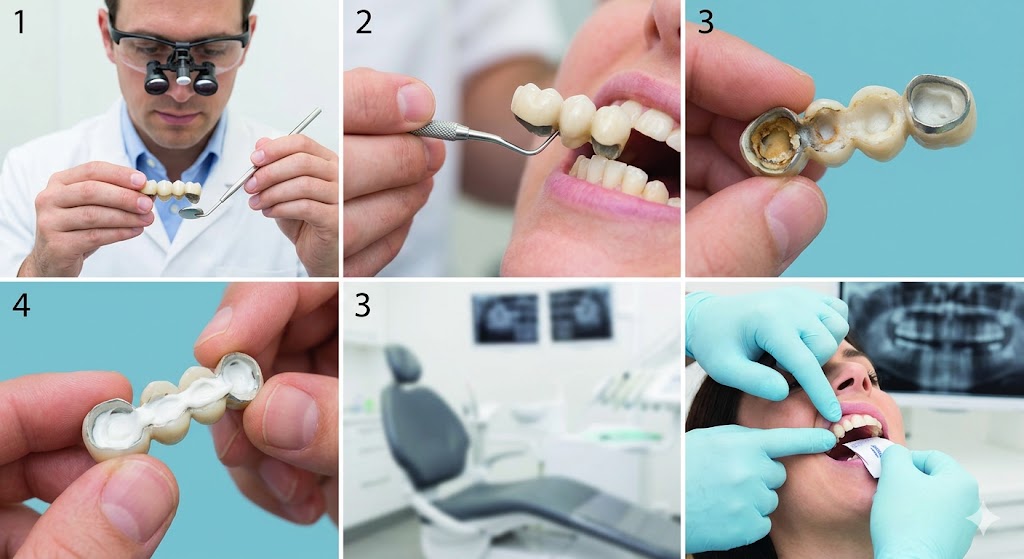
Step-by-Step: What Happens When You Get a Loose Bridge Recemented
Let me walk you through what to expect at the dentist’s office. This helps reduce anxiety and prepares you for the process.
Step 1: The Examination (No Pressure Yet)
Your dentist will gently test how loose the bridge is. They will tap on it. They may take an x-ray. This x-ray shows:
- Decay under the crowns.
- The health of the bone around the teeth.
- Any cracks in the roots.
Do not let anyone recement a bridge without x-rays first. That is like painting over moldy drywall. It looks fine for a week, then the problem comes back worse.
Step 2: Removing the Bridge Carefully
If recementing is possible, the dentist removes the bridge. They use special tools that gently pry it off without breaking it. This process is not painful, but you will feel pressure.
Step 3: Cleaning the Bridge and Teeth
This is the most important step. The dentist scrapes off all old cement from:
- The inside of the bridge.
- The surfaces of your natural teeth (or implants).
They also clean away any debris, plaque, or bacteria. If even a small piece of old cement remains, the new bond will fail quickly.
Step 4: Checking for Damage (The Honest Moment)
Now the dentist inspects everything with fresh eyes. They look for:
- Tiny cracks in the bridge.
- Decay on your natural teeth.
- Gum inflammation.
If they find a problem, they pause and discuss your options. You may need a small filling first. Or you may need a completely new bridge.
Step 5: Temporary Recement or Permanent?
Sometimes dentists use a temporary, softer cement. This is not a shortcut. It is a test. If the bridge stays stable for a few weeks, they come back and use permanent cement. This approach protects you from locking a problem under a bridge permanently.
Other times, they go straight to permanent cement. That decision depends on how healthy everything looks.
Step 6: Final Cementing and Bite Check
The dentist applies fresh cement inside the bridge, seats it firmly onto your teeth, and asks you to bite down gently. After the cement hardens (usually a few minutes), they check your bite. They make sure you are not hitting the bridge too hard or too softly.
Step 7: Home Care Instructions
You leave with clear instructions:
- Do not chew on that side for 24 hours.
- Avoid sticky or hard foods for a few days.
- Floss carefully (they may show you a special floss threader).
Cost Comparison: Recement vs. Replace
Money matters. Let me give you realistic numbers. These vary by location and dental insurance, but they provide a helpful baseline.
| Procedure | Typical Cost (No Insurance) | Typical Cost (With Insurance) |
|---|---|---|
| Bridge recementation (simple) | $150 – $350 | $50 – $150 |
| Bridge recementation with minor repair | $300 – $600 | $100 – $300 |
| New traditional 3-unit bridge | $1,500 – $3,500 | $500 – $1,500 |
| New implant-supported bridge | $3,000 – $15,000+ | $1,500 – $5,000+ |
A note on insurance: Many dental plans cover recementing a bridge as a minor service. However, if the dentist finds decay and needs to do a filling or crown, the price changes. Always ask for a written estimate before agreeing to treatment.
How Long Will a Recemented Bridge Last?
This is the question everyone asks. The honest answer: It depends entirely on why it came loose in the first place.
| Scenario | Expected Lifespan After Recementing |
|---|---|
| Old cement simply wore out | 3 – 8 more years |
| Minor decay caught early and treated | 2 – 5 more years |
| Bridge was always a poor fit | 6 months – 2 years (then loose again) |
| Gum disease present but not treated | Less than 1 year |
A recemented bridge is rarely “like new.” But it can absolutely give you several more years of good service. Think of it as an extension, not a permanent fix.
Signs You Should NOT Recement Your Bridge (Even If You Want To)
You love your bridge. It feels like part of you. But sometimes, letting go is the smarter choice.
Do not recement if:
The Bridge Rocks Side to Side
Press on one side. Does the other side lift up? That is called “rocking.” It means the bridge no longer fits the shape of your teeth. New cement will break within weeks.
You See Black or Brown at the Gum Line
That is decay. If you can see it from the outside, the damage underneath is usually much worse. A new bridge is the safer answer.
The Bridge Has a Visible Crack
Even a hairline crack weakens the structure. One day, you will bite into something normal—like bread—and the bridge will split in half. Save yourself the emergency visit.
You Have Pain When Biting
Pain means the nerve inside the anchor tooth is angry. It could be infected. Cementing over an infected tooth traps the bacteria inside. That leads to an abscess, which is a true dental emergency.
Your Gums Bleed Heavily Around the Bridge
Healthy gums do not bleed. Heavy bleeding means active gum disease or trapped food and bacteria. Recementing over infected gums makes the problem worse because you seal the bacteria inside.
Home Care After Recementing: Protecting Your Investment
You spent money and time to save your bridge. Now protect it. These habits make the difference between a bridge that lasts 2 more years and one that lasts 8 more years.
Daily Cleaning Tools
Regular brushing is not enough. A bridge creates a trap for food and plaque. You need special tools:
- Superfloss or threader floss: This lets you pull floss under the bridge from the side.
- Water flosser (like Waterpik): A gentle stream of water blasts out debris. This is the single best tool for bridge owners.
- Interdental brushes: Tiny brushes that fit between the bridge and gums.
A Simple Daily Routine
- Brush normally for two minutes.
- Use the water flosser on low pressure. Aim at the gum line under the bridge.
- Thread floss under the bridge and clean each side.
- Rinse with alcohol-free mouthwash.
This takes three extra minutes. Those three minutes save you thousands of dollars.
Foods to Avoid After Recementing (First Week)
- Sticky caramels, taffy, gummy candy
- Hard nuts, ice, hard candies
- Chewy bagels or tough bread
- Corn on the cob (cut it off the cob instead)
After the first week, you can return to normal eating. But always be mindful. A bridge is not as strong as natural teeth.
What If Your Bridge Falls Off Completely?
Do not panic. This happens more often than you think. Follow these steps:
- Find the bridge. Rinse it gently with water. Do not scrub or use soap.
- Do not try to glue it back yourself. Superglue is toxic. Denture adhesive is for dentures, not bridges.
- Store it safely. Put it in a small container or a sealed plastic bag. Add a damp cotton ball so it does not dry out and crack.
- Call your dentist immediately. They may see you the same day or the next morning. In the meantime, avoid chewing on that side.
- If you have pain or swelling, see an emergency dentist. An exposed tooth nerve is urgent.
Do not wait weeks to fix a fallen bridge. Your teeth can shift in as little as 7–10 days. If they shift, the old bridge will never fit again. You will need a brand new bridge at full price.
Frequently Asked Questions (FAQ)
Can I recement my own bridge at home?
No. Absolutely not. Household glues are toxic and will damage your remaining teeth. You also cannot clean the bacteria from under the bridge, so you will seal decay underneath. This is a bad idea that leads to tooth loss.
How many times can you recement the same bridge?
Most bridges can be recemented 2–3 times over their life. Each time the dentist removes it, they remove a tiny amount of material. Eventually, the bridge becomes too loose or thin to hold cement.
Does recementing a bridge hurt?
No. The process is not painful. You might feel pressure when the dentist removes the bridge. If you have decay or sensitive teeth, they will use local anesthesia (numbing) to keep you comfortable.
Can a loose bridge cause bad breath?
Yes. A loose bridge traps food and bacteria. As that material decays, it produces a sulfur-like smell. Recementing the bridge eliminates the gaps where bacteria hide, which often improves breath dramatically.
How long does the recementing appointment take?
Plan for 45–60 minutes. The cleaning and inspection take the most time. A simple recement might be 30 minutes. A complex case with decay removal could be 90 minutes.
Will my insurance cover recementing?
Most PPO dental plans cover recementing at 50–80% after your deductible. HMO plans may have a small copay. Call your insurance before your appointment to confirm.
What happens if I ignore a loose bridge?
The loose bridge rocks back and forth. This action damages the anchor teeth. It can crack them, cause bone loss, or allow decay to spread deep inside. Ignoring it turns a $300 problem into a $3,000 problem.
When to Replace Instead of Recement: A Decision Guide
Use this simple checklist. If you answer “yes” to any of these questions, replacement is likely the better choice.
- The bridge is more than 12–15 years old.
- This will be the third time you recement the same bridge.
- You have pain or sensitivity in the anchor teeth.
- The bridge visibly does not fit well (gaps at the gum line).
- Your dentist showed you decay on an x-ray.
- You have advanced gum disease (periodontitis).
- You want a better aesthetic result (newer materials look more natural).
If you answered “no” to all of these, recementing is a reasonable, cost-effective option.
Types of Bridges and Their Recementing Success Rates
Different bridges behave differently. Here is a quick reference.
| Bridge Type | Common Cause of Looseness | Recementing Success Rate |
|---|---|---|
| Traditional porcelain-fused-to-metal | Cement wear after 8–12 years | Very high (90%+ if no decay) |
| All-ceramic (zirconia or Emax) | Cement failure or poor fit | High (85%+) but more fragile |
| Resin-bonded (Maryland) bridge | Bond failure (very common) | Moderate (60–70%) – often replaced |
| Cantilever bridge (one anchor only) | Excess force on one tooth | Low – frequently needs replacement |
| Implant-supported bridge | Loose screw or abutment | Variable – screw is tightened, not cemented |
Special note on Maryland bridges: These are bonded rather than cemented. They come loose often. Many dentists recommend replacing them with a traditional bridge rather than repeated bonding.
Finding a Dentist for Bridge Recementing
Not every dentist approaches loose bridges the same way. Look for these qualities:
- Takes x-rays before any work. This is non-negotiable.
- Explains why the bridge became loose. A good dentist gives you a cause, not just a procedure.
- Shows you the bridge after removal. They should let you see the inside of the bridge and your teeth.
- Offers a warranty or guarantee. Many dentists guarantee recementing for 6–12 months. If it falls off again in that time, they redo it free.
- Does not pressure you into immediate replacement. A respectful dentist presents all options and lets you decide.
Avoid any dentist who says, “Let’s just cement it back and see what happens” without an x-ray. That is lazy dentistry that costs you more in the long run.
Realistic Expectations: The Emotional Side
Let me be honest with you. Hearing that your bridge is loose can feel discouraging. You might worry about your appearance, your ability to eat, or the cost.
Here is what I want you to remember:
A loose bridge is rarely an emergency. You have time to think, ask questions, and get a second opinion if you want.
Most loose bridges can be recemented successfully. The odds are in your favor.
And if you need a new bridge? Modern materials look better, fit better, and last longer than the bridge you had ten or fifteen years ago. Sometimes an upgrade is a blessing in disguise.
Conclusion
So, can a loose dental bridge be recemented? In most cases, yes. If the supporting teeth are healthy and the bridge is not damaged, your dentist can clean off the old cement and apply fresh material. This buys you several more years of use at a fraction of the cost of replacement.
However, recementing is not always the answer. Decay, cracks, poor fit, or gum disease may mean you need a new bridge. A proper dental exam with x-rays is the only way to know for sure. Do not ignore a loose bridge. Do not try to fix it yourself. And do not panic. You have good options.
Additional Resource
For a visual guide on how to clean under a dental bridge using floss threaders and water flossers, the American Dental Association offers a free patient resource library:
🔗 https://www.mouthhealthy.org/en/az-topics/bridges
Disclaimer: This article is for informational purposes only and does not constitute medical or dental advice. Always consult with a licensed dentist for diagnosis and treatment of your specific situation. Individual results vary. The author and publisher are not responsible for any actions taken based on this content.