What Is The Smell After Oral Surgery?
A distinct, often unpleasant smell emanating from the mouth in the days following an oral surgical procedure is a common and alarming patient experience. This post-operative halitosis is, in most cases, a predictable and benign consequence of the normal healing cascade. However, in a smaller but critical number of cases, the smell is the first sign of a significant post-surgical complication, most notably a dry socket, an infection, or a retained foreign body. Distinguishing between the normal healing smell and the smell that signals a problem is essential for a safe and comfortable recovery.
The Normal Healing Smell: A Biological Signature
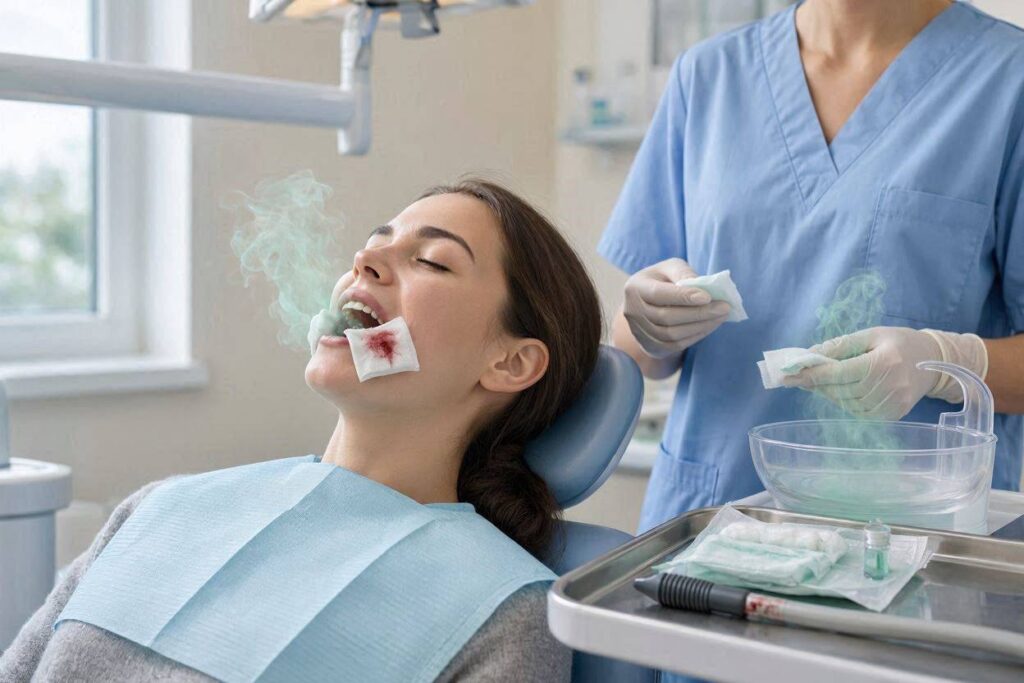
The most common source of a post-operative smell is not an infection but the sterile, protein-rich wound environment itself. Oral surgery creates a deep, raw wound in a heavily contaminated field. The extraction socket or surgical incision immediately fills with blood, which coagulates to form a fibrin clot. This clot is composed of platelets, red and white blood cells, and a mesh of fibrin protein. It is a natural biological dressing, and it is the scaffold for healing. It is also a potent attractant for the oral bacteria that exist naturally in the mouth at all times.
Over the first few days, the superficial layers of this blood clot and the torn, non-viable tissue edges begin to break down through a process of autolysis. Macrophages, the cleanup cells of the immune system, digest this cellular debris. This sterile, necrotic breakdown of blood proteins and tissue releases volatile sulfur compounds, the same class of molecules responsible for the smell of a rotting egg. The patient, who is gently brushing their other teeth but avoiding the surgical site, notices the smell. It is often described as a stale, metallic, or slightly sour odor. A gentle, salt-water rinse, if permitted by the surgeon, will temporarily clear the debris and the smell. This is normal healing, and it fades as the site epithelializes.
The Role of Reduced Oral Hygiene and Oral Flora
The surgeon’s post-operative instructions universally mandate that the patient not brush the surgical site, not spit vigorously, and not use a mouth rinse for the first 24 hours. This temporary hygiene blackout zone is essential to protect the fragile blood clot from physical dislodgement. However, it also allows the natural oral bacterial biofilm to overgrow the tongue, the undisturbed teeth, and the suture material. The overgrowth of anaerobic, gram-negative bacteria on the posterior dorsum of the tongue is a primary source of volatile sulfur compounds and is a well-known cause of halitosis, even without surgery. The post-operative smell is often a combination of the wound’s own sterile breakdown products and the generalized oral malodor from this transient, localized hygiene pause.
The Warning Smell: Dry Socket (Alveolar Osteitis)
When the smell changes from a mild, stale, metallic odor to a frankly foul, putrid, and unmistakably rotten stench, the diagnosis is almost certainly a dry socket. Alveolar osteitis is the most common and most painful complication following a tooth extraction, particularly of the lower wisdom teeth. It occurs when the protective blood clot is lost prematurely, either through dislodgement, such as aggressive spitting or straw usage, or through premature fibrinolysis, where the body’s own enzymes dissolve the clot too early.
The result is an empty, exposed bony socket. The bone is denuded, and its nerve endings are exposed to air, saliva, and bacteria. The socket fills with food debris and bacterial plaque, which putrefy in the warm, moist, protected environment. The smell is a fetid, decaying odor that can fill a room. The pain is the defining feature: a deep, throbbing, radiating pain that is not controlled by the prescribed analgesics. This is not an infection of the bone but a localized, intensely painful, and foul-smelling osteitis. The treatment is not antibiotics; it is a palliative medicated dressing, typically soaked in eugenol and a local anesthetic, packed gently into the socket by the surgeon to seal the exposed bone and provide immediate, profound pain relief.
The Infected Socket and Purulent Drainage
A true post-operative infection of the surgical site is less common than a dry socket, but it produces a similar foul odor. The difference is the presence of suppuration, which is the formation of pus. The socket does not just have food debris; it has a visible, creamy, white-to-yellow exudate that wells up from the depths of the wound when gentle pressure is applied. The surrounding gum tissue is not just tender; it is red, swollen, and indurated, or hard, to the touch. The patient may have a low-grade fever and feel systemically unwell. The smell is the smell of a septic, pyogenic bacterial infection. The treatment requires mechanical debridement of the socket, irrigation, and the placement of an antibiotic dressing, often along with systemic oral antibiotics.
The Smell of a Retained Foreign Body
A less frequent but insidious cause of a persistent, foul odor is a micro-retained foreign body, typically a tiny fragment of food that has become deeply impacted in a healing periodontal pocket, under a loose surgical flap, or between the suture and the gum. A kernel of popcorn, a seed, or a fiber of meat can become trapped. The body does not break it down, but the oral bacteria eagerly decompose it. This creates a localized, persistent, putrefactive smell that does not resolve with gentle rinsing. The surgeon, on close clinical inspection, will see a specific, inflamed point and can gently flush or pick out the offending particle with a fine curette. The smell disappears instantly upon removal.
Non-Absorbable Suture Accumulation
Non-resorbable black silk sutures, in particular, have a braided, multi-filament structure that acts like a wick, drawing plaque, food debris, and bacteria deep into the suture interstices. The area around each suture can develop a localized, mild inflammatory halo and a characteristic stale odor. This suture smell resolves the moment the surgeon cuts and removes the sutures at the post-operative visit. Resorbable sutures, which are smooth, monofilament strands, are far less prone to this wicking and plaque accumulation problem.
Medication and Sinus-Related Odors
A dry mouth, or xerostomia, is a potent cause of oral malodor. Post-operative pain medications, particularly opioid analgesics like codeine and hydrocodone, and the drying effect of the surgery itself and mouth breathing can drastically reduce salivary flow. The normal, self-cleansing, buffering, and antimicrobial functions of saliva are diminished. This creates an environment where odor-producing anaerobic bacteria flourish, contributing to the overall post-operative smell.
In the specific context of upper posterior tooth extractions, a persistent, foul smell and taste in the nose, along with fluid passing between the mouth and nose, is a sign of a perforation into the maxillary sinus, an oroantral fistula. A chronic sinus infection from the communication can produce a characteristically foul, purulent odor that is present in both the mouth and the affected nostril. This complication requires specific surgical management to close the defect.
Conclusion
The smell after oral surgery is most often a benign, temporary result of the sterile breakdown of the protective blood clot and the localized pause in oral hygiene, producing a mild, stale, metallic odor that resolves as the site heals. However, a sudden onset of a profoundly foul, putrid stench, especially when coupled with severe, unrelenting pain, is the hallmark sign of a dry socket, while a septic smell with visible pus, fever, and swelling indicates a post-operative infection. A localized, persistent smell from a single point may be a trapped food particle or a wicking non-absorbable suture, and any smell in the nose points to a potential sinus communication, each requiring a specific and prompt return to the treating surgeon.
Frequently Asked Questions
Q: How can I tell the difference between a normal healing smell and a dry socket smell at home?
A: The pain is your primary differentiator. A normal healing smell is mild and accompanied by manageable, decreasing discomfort. A dry socket smell is overwhelmingly foul and is accompanied by severe, deep, throbbing pain that your prescribed painkillers do not control. If the pain is a 7 or 8 out of 10 and the smell is rotten, you have a dry socket.
Q: Will antibiotics get rid of the smell from my extraction site?
A: Only if the smell is from a true bacterial infection. Antibiotics will not fix a dry socket, as dry socket is not primarily an infection. They will not wash out a trapped food particle. Do not take leftover antibiotics. You must return to your surgeon for the correct diagnosis and local socket treatment.
Q: When can I start brushing and rinsing normally to clean the smell away?
A: Follow your specific surgeon’s timeline. Typically, gentle warm salt water rinsing can begin 24 hours after surgery. Do not spit the water out with force; just let it gently drool out. Normal, gentle brushing can resume around the surgical site after the first few days, carefully avoiding the socket itself until the tissue has sealed over.
Additional Resource
For authoritative, evidence-based patient guides on the prevention and management of post-extraction complications, the following national institute provides comprehensive surgical aftercare resources.
- National Institutes of Health MedlinePlus After Tooth Extraction: medlineplus.gov/ency/article/007630.htm