Dental Implant Marketing: The Real-World Guide to Growing Your Practice Ethically and Profitably
You hold a patient’s X-ray in your hand. You can see the solution clearly. A dental implant will restore their smile, protect their jawbone, and give them the confidence to eat their favorite foods again. The clinical path forward makes perfect sense to you. But the patient hesitates. They worry about the cost. They feel anxious about the procedure. They do not fully understand why an implant matters more than a cheaper bridge. And the biggest problem? This patient might never even walk through your door because they cannot find you, or when they do find you online, your message does not speak to their deep, unspoken fears.
This reality defines the core challenge of dental implant marketing. You did not go to dental school to become a marketer. Yet, in today’s landscape, clinical excellence alone cannot fill your schedule. A crowded market of corporate chains and savvy private practices competes for the same patients. You need a bridge between your surgical skill and the patient who needs that skill. That bridge is a marketing strategy built on empathy, education, and honesty.
This article does not promise magic pills. It does not offer a “secret loophole” to get implant patients for free. It provides a comprehensive, realistic, and reliable blueprint. You will learn how to attract the right patients, how to communicate value without sounding like a used car salesperson, and how to build a system that generates a steady stream of qualified leads month after month. We will focus on ethical tactics, psychological triggers that serve the patient, and digital strategies that work in the real world, not just in marketing agency pitch decks.
Take a deep breath. Pour a cup of coffee. We are going to walk through everything you need to know.
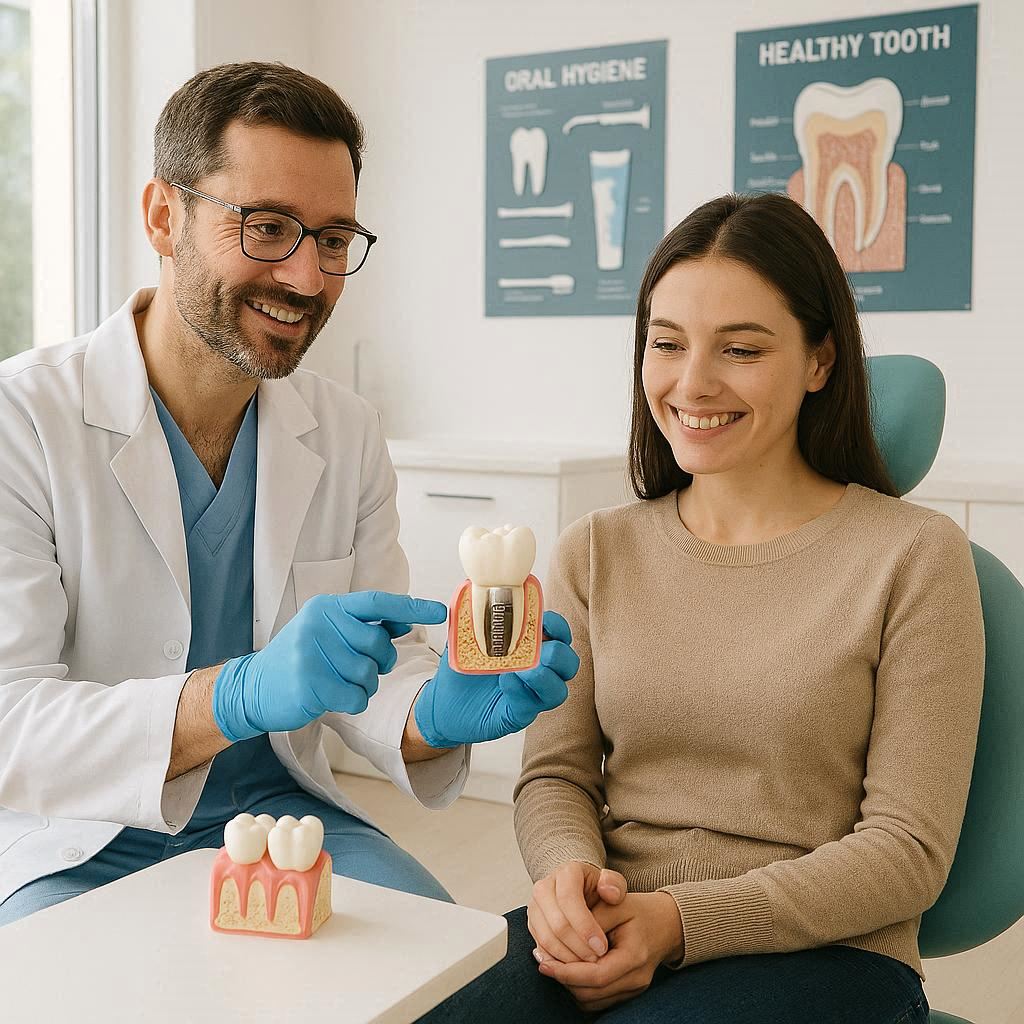
1. The Foundation: Understanding the Modern Implant Patient
Before you spend a single dollar on Google Ads or redesign your logo, you must stop thinking about “getting patients” and start thinking about helping a specific person solve a painful problem. The audience for dental implants is not a monolith. They range from the 28-year-old who lost a tooth in a hockey accident to the 65-year-old who has struggled with a flipper for a decade. However, a common psychological thread binds them.
The Patient’s Internal Monologue
If you could sit in the passenger seat of a potential patient’s car while they drive to work and see a billboard for “$399 Dental Implants,” their mind does not say, “Wow, what a deal!” It usually says:
- “This is going to hurt.”
- “I’m ashamed I let my teeth get this bad.”
- “I can’t afford this, and I’m embarrassed to ask about money.”
- “Is this dentist going to judge me?”
- “What if it fails and I’m left with nothing?”
Your marketing must intercept this internal monologue. Most dental marketing fails because it focuses on the dentist’s credentials (“I am a Fellow of the XYZ Academy”) rather than the patient’s fear. Credentials are important, but they serve as proof later in the process. At the beginning, the patient needs empathy.
A Critical Note on Messaging: Do not lead with technical jargon. Osseointegration is a beautiful biological process, but it does not comfort a terrified patient. Lead with feelings. Lead with outcomes. “Eat the steak. Smile at your daughter’s wedding. Forget you ever lost a tooth.” That is what sells. The science just backs it up.
Why “Cheap” is Your Enemy
In the world of dental implant marketing, there exists a race to the bottom. Some practices compete solely on price, advertising “mini-implants” for the price of a weekend grocery trip. If you are a GP or a specialist placing high-quality, standard-diameter implants with proper restorative protocols, do not try to win this race.
Patients who shop exclusively on price rarely become loyal, long-term patients. They often present with the highest maintenance psychologically. They question the value at every turn because the relationship started with a coupon, not trust.
Your goal in marketing is to filter out the price-only shopper and attract the value-conscious patient. You do this by demonstrating a higher level of care, a superior experience, and a safer outcome. If your marketing screams “cheap,” you imply a commodity. A dental implant is not a toaster. It is a surgical procedure that fuses a foreign object to your bone. Market the safety, the longevity, and the quality of life, not the discount.
The Trust Deficit in Dentistry
We live in a skeptical age. A patient’s default position is often distrust. They assume you are going to upsell them. They fear a diagnosis that is more about your boat payment than their health.
To combat this, your marketing must embrace radical transparency. Show real pricing ranges on your website. Yes, this is controversial. Many consultants say, “Never put prices online; get them in the chair.” But a patient who has no idea if an implant costs $1,500 or $15,000 is often too afraid to even book the consult. You do not need a binding quote, but you do need a fee guide or a starting price.
A Realistic Insight: “We published a ‘Starting At’ price for single implants on our site. Our call volume initially dropped by 20%. However, our booked consultation rate skyrocketed because the people calling had already pre-qualified themselves financially. We stopped wasting chair time on patients who were shocked by the fee at the case presentation.” — A Practice Manager in Texas
2. Building Your Digital Home Base: The Website as a Conversion Engine
You can run the most brilliant Facebook ad campaign in the world, but if it leads to a slow, confusing, or ugly website, you are pouring money down a drain. Your website is not a brochure. It is your hardest-working employee. For implant marketing, the website must serve two masters: Google’s algorithm and a nervous potential patient.
Dedicated Implant Landing Pages vs. General Service Pages
A common mistake is burying implant information on a long “Services” page that also discusses cleanings, fillings, and dentures. Implants are a high-consideration, life-changing service. They deserve their own dedicated section of your website.
Create a “Dental Implants” main page that provides a 30,000-foot overview. But do not stop there. You need individual, deep-dive pages for every critical question and variation:
- Full Mouth Dental Implants
- Single Tooth Implants
- Implant-Supported Dentures (Snap-In)
- All-on-4 / Teeth-in-a-Day
- Bone Grafting
- Sinus Lifts
- Cost of Dental Implants
- Dental Implant FAQs
Why this structure works: It signals to Google that you are a topical authority. When someone searches for a hyper-specific query like “How painful is sinus lift recovery?”, a dedicated page on your site is 100 times more likely to rank than a generic “Surgical Services” page.
The Psychology of Before-and-After Galleries
A picture is worth a thousand words, but a bad implant photo can cost you a thousand patients. Most galleries are clinical garbage. They are bloody, swollen, immediately post-op photos that look like crime scene evidence.
Your gallery must sell the destination, not the journey.
- The “Before” shot: Well-lit, high-resolution, showing the patient looking unhappy but not grotesque.
- The “After” shot: The final restoration. Not the day of surgery. Not the temporary. The final crown or bridge. The patient is smiling. The lighting is warm.
- Smile Frame Consistency: Use the same retractors and angles so the comparison is visually striking and honest.
A Note on Consent: Ensure you have a specific HIPAA-compliant consent form for marketing use. A general treatment consent does not cover putting someone’s face on a billboard.
Speed, Mobile, and the Technical Trust Signals
If your website takes four seconds to load on a smartphone, 40% of users will abandon it. Google knows this and will refuse to show your page to premium traffic. In a world where 60-70% of “dentist near me” searches happen on a phone, mobile speed is an SEO factor and a patient retention factor.
Run your site through Google’s PageSpeed Insights. Look at the Core Web Vitals. If your developer tells you “it’s fine” but the report says “Needs Improvement,” find a new developer. High-quality implant marketing relies on high-quality technical infrastructure.
3. The Art of Educational Content: Blogging for Surgeons
Content marketing for implant dentistry is a long game. It will not fill your schedule next Tuesday. But next year, when you have 100 articles answering every conceivable patient question, you will own your market.
Topic Clusters that Actually Answer Questions
Stop writing blog posts about “The History of Dental Implants.” Nobody cares. They care about their specific, immediate problem. Use this framework for your content calendar:
The “Pain & Problem” Cluster:
- Loose Dentures Slipping? Here Is How to Fix Them Permanently
- Tooth Extraction and Immediate Implants: Can I Leave With a Tooth?
The “Financial & Logistics” Cluster:
- Dental Implant Financing: Breaking Down the Monthly Cost
- Does Medical Insurance Ever Cover Implants? The Honest Answer
The “Vs.” Cluster:
- Dental Bridge vs. Implant: A 10-Year Cost Comparison
- Mini Implants vs. Standard Implants: Which One Is Safe for You?
Writing Style: How to Simplify Without Dumbing Down
Write as if you are explaining the procedure to a smart friend at a dinner party, not a colleague at a conference. Use analogies. “A bone graft is like putting down new soil before planting a tree.” Short sentences create rhythm. They hold attention.
Avoid excessive use of the passive voice. Say “We place the implant,” not “The implant is placed by the surgeon.” Active voice builds accountability and connection.
The “Procedure Journey” Content Framework
For every major procedure like “All-on-4,” write a guide that mirrors the patient’s journey:
- The Decision: Is this right for me?
- The Preparation: What happens in the first appointment?
- The Surgery Day: What does the room look like? What smells are there? Can I listen to music?
- The Healing: What will I eat? What will it feel like?
- The Reveal: Getting the final teeth.
By narrating this journey, you remove the terror of the unknown. A predictable experience feels safe. A safe dentist gets booked.
4. Search Engine Optimization (SEO): Being Found When Fear Strikes
Search engines are the modern Yellow Pages. When a patient bites into an apple and feels their bridge snap, they grab their phone. Your name needs to appear in that moment of panic.
Local SEO: The Google Business Profile Deep Dive
For “dental implant marketing,” the most critical asset is your Google Business Profile (GBP). It controls your visibility on Google Maps and the local “3-Pack.”
Optimization Checklist:
- Category Accuracy: Select “Dental Implants Periodontist” or “Dental Implants Provider” as a primary or secondary category. Do not just leave it as “Dentist.”
- The Q&A Section: Seed your own Q&A with common questions. “Do you offer sedation for implant surgery?” Answer it directly. This content lives on your profile and helps undecided searchers.
- Weekly Photo Uploads: Google favors active profiles. Upload a photo of your surgical suite, your friendly front desk, or a happy patient (with consent) once a week.
- Posts: Use the “Updates” feature to share a quick tip or an offer. “Thinking about implants? Download our free guide on the 5 things to ask at your consultation.”
Keyword Strategy: Intent Over Volume
It is tempting to target “Dental Implants [City].” Every dentist targets that. The competition is savage. You need to target the “Long Tail.”
A user searching “dental implants” has low commercial intent; they might be a student writing a paper. A user searching “emergency implant dentist open Saturday Austin” has a credit card in hand. The search volume is lower, but the conversion rate is astronomically higher.
Create pages for:
- “Implant consultation second opinion”
- “Fix failed dental implant [city]”
- “Zygomatic implants for severe bone loss [state]”
The Link Building Reality Check for Dentists
Backlinks are the currency of SEO. But how does a dentist earn links? You do not buy them from shady providers. You earn them through real-world relationships.
- Local Sponsorships: Sponsor a local 5K run. Local news sites covering the event will link to your site.
- Expert Sources: Sign up for “Help a Reporter Out” (HARO). Journalists often need medical sources. Quote you as a dental expert, and a high-authority news site will link to your practice.
- Cross-Referrals: If you accept referrals from GPs, ask if their “Meet the Team” or referral page can link to your specialist site.
5. Pay-Per-Click (PPC) Advertising: The Quick Flow (That Costs Money)
SEO is a marathon. PPC is a tap you can turn on for immediate water—provided you can afford the water bill.
Google Ads for “Dental Implants Near Me”
Competition for these keywords is brutal. In major metropolitan areas, a single click can cost $20 to $50. You will waste thousands of dollars if you do not set up your targeting correctly.
The No-Fail Strategy:
- Exact Match Keywords Only (Initially): Do not trust “Broad Match” until you have months of data. Broad match will show your ad for “free dog tooth implant,” and you will pay for it. Target [dental implant consultation], [all on 4 dentist], [implant specialist near me].
- Hyper-Local Radius: Do not target a 50-mile radius if you are in a dense city. A patient in downtown Chicago will not drive 45 minutes to the suburbs for a consultation. Start with a 10-mile radius and laser-focus your budget.
- Time of Day: Do you want the phone ringing at 3 a.m.? Turn off ads when the office is closed unless you have a 24/7 answering service that is trained to convert. An unanswered PPC call is money burned.
Landing Page Alignment: The Quality Score Secret
Your Google Ads Quality Score determines if you pay $5 or $50 per click. The biggest factor? Relevancy. If your ad promises “Free Implant Consultation,” but the link sends them to your generic home page with no mention of a free consult, Google penalizes you.
You must build a dedicated “silo” for your PPC.
- Ad: “Single Tooth Implant? Free Consult & 3D Scan ($350 Value).”
- Landing Page: A page with no main navigation (to prevent distraction). It highlights the free offer, shows a video of the doctor, and has a simple contact form and a click-to-call button. It must match the ad verbatim.
Retargeting: Staying in Front of the Anxious Researcher
99% of website visitors leave without booking. Implant decisions take weeks or months. Retargeting (showing your ads to people who visited your site) is essential.
Segment your retargeting based on behavior:
- Someone who visited the “Cost” page? Retarget them with a message about 0% financing.
- Someone who viewed “Sedation Dentistry”? Retarget them with a video about a pain-free experience.
This gentle persistence reminds the patient of their initial interest without feeling like a stalker. Frequency capping is crucial; do not show the same ad 15 times a day. Cap it at 3-4 impressions.
6. Social Media: The Slow-Burn Trust Builder
Social media rarely delivers a direct, immediate implant case the next day. It is a trust-building ecosystem. It is where a potential patient “stalks” you for three months before picking up the phone.
Facebook vs. Instagram: Where Do Implant Patients Live?
Facebook: The 45-65+ demographic is still very active here. This is the prime implant audience. Facebook’s detail-rich environment allows for longer captions that explain the technology behind guided surgery. Facebook Groups (local community groups) are a goldmine. When someone asks, “Who is the best implant dentist in town?”, your name needs to be mentioned by a patient, not by you.
Instagram: The 28-45 demographic lives here. Instagram is visual. It is the place for high-quality smile reveals and Reels that show your team’s personality. Avoid bloody surgical videos on Instagram Reels; the algorithm suppresses gore, and users scroll past it instantly.
Video Content: Showing the Human Behind the Loupes
Do not aim for Hollywood production value. Aim for authenticity. A 60-second vertical video of you explaining, in plain clothes, why you started placing implants builds more rapport than a sterile, scripted commercial.
Post series ideas:
- Mythbuster Monday: “Do dental implants set off airport metal detectors? Let’s find out.”
- Case of the Week: A quick slideshow of a case with a voiceover explaining the patient’s emotional story.
- Team Spotlight: Introduce the surgical assistant. Patients fear the doctor less when they feel they know the team that will be holding their hand.
Community Management and Reputation Defense
When you post about implants on social media, you invite comments. Some will be positive. Some will be terrifying testimonials from people who had a bad experience in another country 15 years ago. Do not delete negative comments about dentistry in general. Reply with empathy. “I’m sorry that happened to you. Technology and techniques have changed so much since 2008. We’d be happy to have a chat about modern protocols if you’re ever curious.” You are not just replying to that commenter; you are talking to the 500 silent lurkers watching how you handle criticism.
7. Video Marketing: The Closest Thing to a Chairside Chat
Video is the heavyweight champion of dental implant marketing. It bridges the gap between a digital search and an in-person consultation.
The “Doctor Introduction” Video
Place this on your home page and your main implant landing page. It should be 90 seconds.
- First 5 seconds: You, smiling, no loupes, no mask. “Hi, I’m Dr. Smith. I know thinking about dental implants can be a bit overwhelming…”
- Middle 60 seconds: Cut to you in the operatory, looking at a 3D scan, talking about safety and comfort.
- Last 25 seconds: Cut back to you, no mask. “We’d love to sit down with you and just talk. No pressure. Let’s figure out a plan.”
This video replicates the “chairside manner” the patient is seeking before they commit to driving to your office.
Procedure Explainers Without the Gore
Animated video explainers are often better than live-action surgery for initial marketing. An animation of a titanium post integrating with a jawbone is clean, fascinating, and non-threatening. Use these for blog posts and social ads. If you do film live surgery, use extreme close-ups on the site sparingly. Focus on the team’s hands, the calmness of the room, and the final x-ray confirming perfect placement.
Patient Testimonial Mini-Documentaries
Drop the script. Do not hand the patient a card to read. Sit off-camera, ask them open-ended questions, and let them tell their story.
- “What was the breaking point that made you call us?”
- “What did you imagine the surgery would be like… and what was it actually like?”
- “What did it feel like the first time you ate a steak after healing?”
These raw, emotional narratives are your most powerful marketing assets. They provide social proof that no amount of doctor bragging can match.
8. Reputation Management: Reviews as Your Silent Sales Force
A potential patient finds your Google listing. They compare you to the dentist down the street. You have 4.2 stars. The other dentist has 4.9 stars and 150 reviews. You just lost the case before the patient even saw your beautiful website.
The Ethical Way to Generate Implant-Specific Reviews
Do not send a mass email blast begging for 5-star reviews. It looks spammy. Integrate the ask into the patient journey.
At the final delivery appointment, when the patient is looking in the mirror and crying happy tears, your assistant gently hands them a tablet.
“We are so happy you love your smile. Would you mind sharing your story on our Google page? It takes two minutes, and it helps other nervous patients know they’re not alone.”
Make it easy. Create a QR code on a card that goes straight to the review box. If they write a generic review like “Great dentist!”, gently ask if they can add one line about what procedure they had. “Implant” mentioned in the review text helps your local SEO ranking for implant-related searches.
Responding to the Negative Review Publicly and Privately
You will get a bad review. Maybe it is your fault (a billing issue), or maybe it is a misunderstanding. Your response is a piece of marketing content.
- Public: “Hi [Name], thank you for your feedback. Patient experience is our highest priority, and I’m disappointed to hear we fell short. Please call the office directly and ask for [Manager] so we can make this right.”
- Private: Reach out directly. Fix the problem. Often, a patient will update the review to reflect the resolution.
Never, ever argue clinical details in a public reply. This violates HIPAA and makes you look defensive.
Showcasing Reviews on High-Intent Pages
Use a widget (like those offered by Birdeye or Podium) to filter only the implant-specific reviews and place them on your “Dental Implant Cost” or “All-on-4” pages. This closes the loop. The patient reads about the cost, gets nervous about the investment, and immediately sees a carousel of five patients saying, “It was the best money I ever spent.”
9. Internal Marketing: Converting Callers into Consultations
Marketing gets the phone to ring. Internal marketing (the art of handling that call) converts the ring into a booked chair. A leaky bucket will bankrupt your marketing budget.
The First Five Seconds of the Phone Call
The phone rings. The front desk team member does not sigh. They do not say, “Hold please.” They answer with a smile (it’s audible) and a specific phrase:
“Thank you for calling [Practice Name]! It’s a great day. This is Sarah. How can I help you smile today?”
This triggers a psychological pause. The patient was braced for a rushed, rude interaction. They just got warmth.
The Financial Conversation: Scripts for Success
Most patients don’t ask “How much is an implant?” directly on the call because they are embarrassed. They ask, “Do you take my insurance?” This is usually code for “I’m scared of the cost.”
Do not let the call end with a price quote. “Well, Mrs. Jones, the implant itself could range anywhere from X to Y depending on what we find on the 3D scan. But before we worry about numbers, why don’t we get you in for a complimentary visit? The doctor will sit down with you, run the scan, and show you exactly what your payment options would look like. No surprises.”
The goal is to get the patient to see the value of the scan and the consult before they hear the price. You cannot show value over the phone, only in the chair.
The Unused Power of the Treatment Coordinator
If you are a solo surgeon doing your own consults and case presentations, you are losing money. A dedicated Treatment Coordinator (TC) is the bridge between clinical jargon and financial reality.
The doctor diagnoses. The doctor establishes trust.
The TC says, “Here is what Dr. Smith found. Let’s sit down in this comfortable office and look at how we can make this fit your budget.”
A TC handles the money talk so the doctor remains the “good guy,” the healer. Patients are more comfortable negotiating payment plans with a non-clinical staff member.
10. Referral Marketing: The Forgotten Goldmine
Digital marketing is loud. Silent, professional referral networks often provide the highest-quality implant patients with the lowest acquisition cost.
Physician and GP Referral Systems
General dentists see failing teeth every day. They are your primary source. But you cannot just send a letter and a box of donuts once a year. You must make the GP the hero.
When a GP refers a patient to you:
- Communication Protocol: Send a report back to the GP before the patient gets back to their car. A photo of the final restoration, a summary note. “Thank you for trusting us with Bill. The implant integrated perfectly. He’s back to you in two weeks for the crown.”
- Never Steal: If the GP plans to restore the implant, you place it and send it back. You do not build a crown on it. Stealing patients kills the pipeline instantly.
The “Thank You” Economy with Existing Patients
A satisfied implant patient has friends with missing teeth. They run in the same circles. Create a structured, non-cash-incentive thank you system. “We planted a tree in your honor” or a charitable donation is often more classy than a Starbucks card for a $5,000 case. Create an “Inner Circle” event for past full-mouth restoration patients. They bring a guest. That guest is a future patient.
Specialist Co-Marketing Agreements
If you are an oral surgeon, partner with a periodontist. If you are a prosthodontist, partner with a lab. Co-host a community “Implant Education Night.” You split the cost of the hors d’oeuvres and the Facebook ad. You get a room full of 30 people in active decision-making mode, eager to ask questions.
11. Navigating the Maze of Digital Tools and Analytics
Without data, marketing is guesswork. You do not need to become a data scientist, but you must understand a few critical tools.
Call Tracking: Knowing Which Half of Your Marketing Works
Stop asking patients “How did you hear about us?” They lie. They say “Internet” or “Insurance.” Use a call tracking number that dynamically swaps the number on your website based on the source. Was it an organic Google search? A PPC ad? The direct mailer?
By recording calls (and complying with local two-party consent laws), you can also audit your front desk’s performance. You can hear if they sound bored, if they forgot to ask for the appointment, or if they gave a price without building value.
CRM Systems: Stopping Leads from Falling Through Cracks
A Facebook lead form delivers a contact. An email arrives. The patient needs a call back within five minutes, or the lead goes cold. A Customer Relationship Management (CRM) system (like HubSpot, Salesforce, or a dental-specific system) automates this.
If the lead does not answer, the CRM sets a reminder to call tomorrow. It sends a text message: “Hey Mary, saw you requested info on implants! Feel free to text us any questions here.” Digital natives prefer texting over phone calls. If your practice does not use HIPAA-compliant texting, you are marketing in 2015.
Interpreting Data Without Panic
Look at the cost per lead, not just the cost per click. If you spent $1,000 on Google Ads and got 50 clicks but only 1 call, your cost per lead is $1,000. That is unsustainable. But if you got 10 calls, your cost per lead is $100. If one of those leads becomes an implant case worth $5,000, your return on ad spend (ROAS) is 5:1.
Dental implant marketing often has a “lag time.” A patient might click an ad in January, attend a seminar in February, and not book surgery until May. Do not turn off campaigns just because the phone isn’t ringing with surgical bookings in week one.
12. Comparative Analysis of Marketing Channels
Not all channels are created equal. Here is a breakdown to help you decide where to place your bets.
Cost Per Acquisition Benchmarks
Note: These are realistic estimates based on a mid-sized US city. Your market will vary.
| Channel | Average Cost Per Lead | Average Cost Per Implant Case (Acquisition) | Time to Return |
|---|---|---|---|
| Google PPC | $80 – $150 | $600 – $1,200 | Immediate (Days) |
| SEO (Organic) | $10 – $50 (Content Cost) | $50 – $200 | 6 – 12 Months |
| Facebook Ads | $30 – $70 | $400 – $800 | 1 – 3 Months |
| Doctor Referrals | $20 (Lunch/Gifts) | $20 – $50 | Ongoing (Relationship) |
| Mailers (Direct) | $100 – $200 | $1,000+ | 1 – 3 Months |
Speed vs. Sustainability Matrix
| Channel | Speed of Results | Sustainability | Risk Level |
|---|---|---|---|
| Google PPC | Fast | Low (Stops when you stop paying) | High (Wasted spend if poorly managed) |
| SEO | Slow | High (Compounds over time) | Low (Algorithm changes) |
| Social Media Organic | Slowest | Medium (Platform dependency) | Low |
| Seminars/Events | Medium | High (Builds community) | Low (Time investment) |
Your Ideal Portfolio:
60% of your budget should go to “right-now” channels (PPC) if you are a new practice. As you mature, shift to a 40% PPC / 60% SEO and referral model to increase profitability and reduce advertising dependency.
13. Ethical Boundaries and Compliance in Advertising
The medical device companies that sell implant systems do not control your marketing, but you must control yourself. The line between good marketing and ethical violation is clear, yet many dentists cross it.
Before and After Rules
Do not use stock photography. That is fraud. The photos must be your actual patients. Ensure your consent forms explicitly grant you the right to use the photos in digital marketing (not just “educational purposes”).
The Truth About “Guarantees” and “Free” Offers
In many jurisdictions, “guaranteeing” a medical outcome is a violation of dental board rules. An implant might have a manufacturer’s warranty, but you cannot guarantee a lifetime of bone stability because a patient’s biology is a variable.
Similarly, “Free Implant Consult” is fine, but “Free Implant” is a bait-and-switch unless it is truly a giveaway. If you have to pay for the crown and the abutment and the CT scan, the implant post was never “free”; it was just a loss leader. Be transparent.
Avoiding Body Shaming and Fearmongering
The “Smile Makeover” industry often veers into telling people their natural teeth are ugly to sell veneers. The implant industry can do the same by using terms like “horrible, sunken faces” to describe denture wearers. Yes, bone resorption is a reality. It changes the facial profile. But marketing that screams “You look disgusting without this surgery” is bullying.
Instead, frame it positively: “Restore your smile’s support. Bring back the natural contour of your face. Feel confident again.” You are offering a restoration of health, not a cure for ugliness.
14. Conclusion: The Long Game Wins
Dental implant marketing works best when you stop chasing hacks and start building systems. Use empathy as your primary strategy.
Success comes from understanding the deep fears of tooth loss and answering them with clear, compassionate education. It comes from building a digital infrastructure that guides a nervous researcher from a Google search to a comfortable consultation chair. The practices that win are not the ones that spend the most, but the ones that communicate trust most effectively, both online and in person.
Frequently Asked Questions (FAQ)
How long does it take to see results from SEO for dental implants?
You should expect to see movement in local rankings within 6 months, but significant, practice-changing organic traffic usually takes 12-18 months of consistent content publishing and link building. It is a cumulative effort, not a one-time fix.
Is it better to use stock images or real patient photos?
Always use real patient photos and real photos of your office and team. Stock photos scream “generic corporate chain” and undermine the trust you are trying to build. Authenticity converts better.
How much should a single practice spend on implant marketing per month?
A realistic budget for a practice actively seeking implant growth starts at $3,000 – $5,000 per month. This allows for a mix of local SEO maintenance, some PPC testing, and a retargeting campaign. Budgets under $1,500 often fail to gain enough data traction to be effective.
Should I market “mini implants” if I mainly do standard implants?
Only if you genuinely believe in them as a long-term solution. If you view them as a lower-quality option, marketing them will attract the price-sensitive patient you wanted to avoid, and you may end up dealing with more maintenance and failures, hurting your reputation.
Why are my Google Ads getting clicks but no calls?
This almost always signals a disconnect. Either your keywords are too broad (people researching, not buying), your landing page is confusing or slow, or you do not have a clear “Call Now” button in the user’s immediate view (above the fold) on mobile.
Additional Resource:
For further reading on building an ethical framework around case acceptance, visit the American Academy of Dental Practice Administration (ADP) for insights on communication psychology.
Disclaimer:
This article provides informational guidance based on realistic marketing trends. It does not constitute legal or medical advice. Always check your specific state dental board regulations regarding advertising, testimonials, and fee transparency before implementing new marketing strategies.