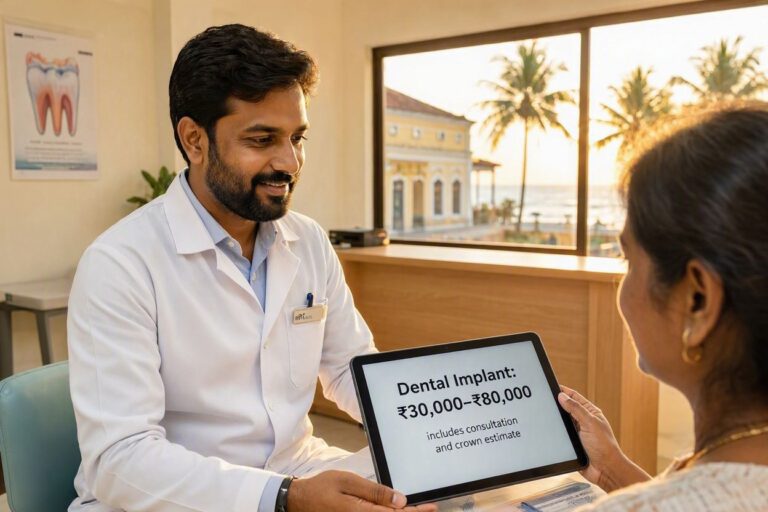
The Real Cost of Dentures in Mexico: A Patient’s Complete 2026 Guide
It is 8:15 on a Tuesday morning in Los Algodones, and the waiting room already hums with quiet conversation. Snowbirds from Minnesota flip through magazines next to a retired teacher from Nevada. Everyone sips coffee from paper cups, waiting for their name to be called. They are not here by accident. They have run the numbers. They have faced the impossible quotes back home. And now, they sit just a few miles south of the US border, waiting for a new smile that will cost them a fraction of what they would pay in San Diego or Phoenix.
If you are reading this, you have probably heard the whispers. Maybe your dentist handed you a treatment plan that made your stomach drop. Maybe a friend came back from a Mexican border town with a flawless set of teeth and a wallet that was still intact. The promise sounds almost too good to be true. High-quality dentures. Modern clinics. Stunning savings. But what is the actual cost? What is the real price, when you factor in travel, time, risks, and hidden fees?
This guide will walk you through every single layer of that question. We will look at price lists, yes. But we will also explore the cities, the clinic standards, the materials, the travel logistics, and the honest, unvarnished risks. By the time you finish reading, you will know exactly what to expect when you consider getting dentures in Mexico.
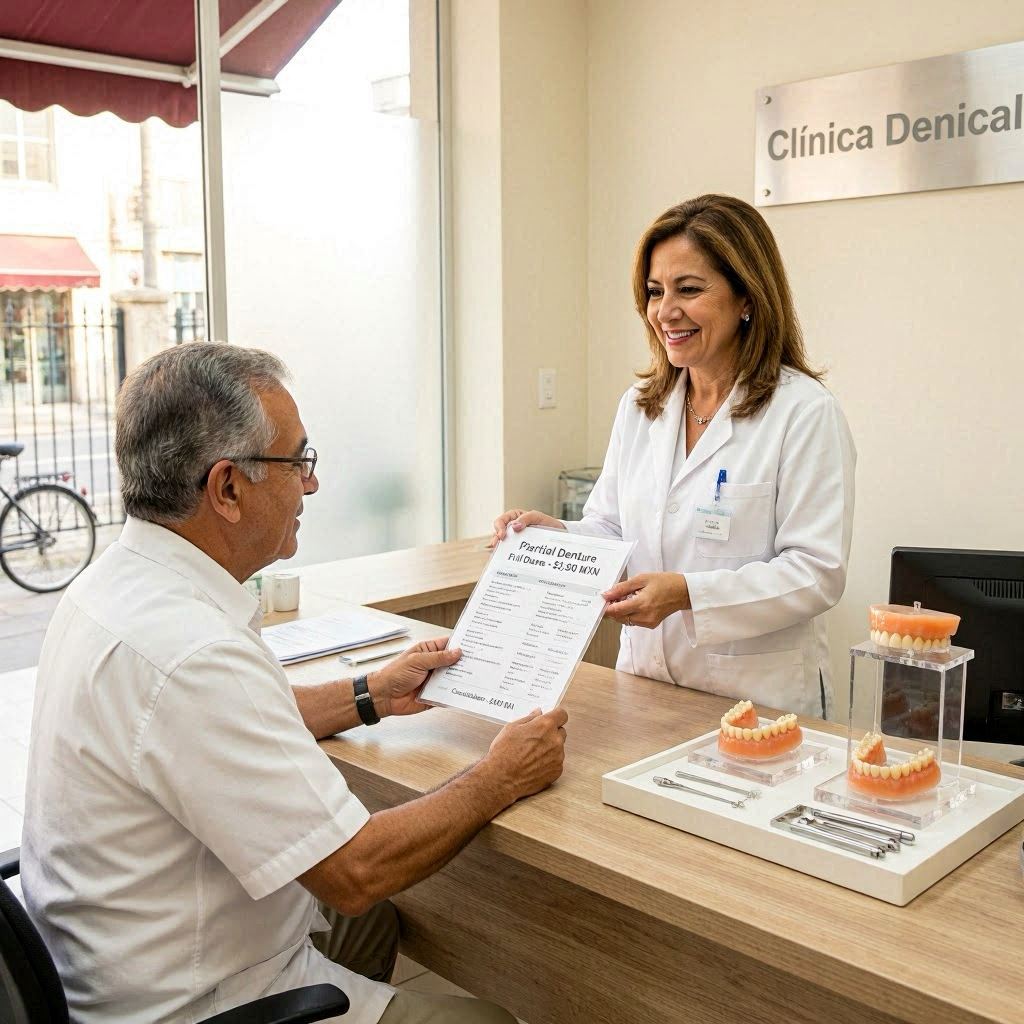
Why Mexico Became a Global Dental Destination
For decades, Mexico has quietly built a reputation as one of the world’s most reliable destinations for affordable dental care. The phenomenon did not start with a marketing campaign. It started with word of mouth. A few adventurous patients crossed the border in the 1980s and 1990s, came back with quality work, and told their friends. Today, the corridor between Yuma and Los Algodones alone sees thousands of dental tourists every month. Some estimates suggest that over a million Americans and Canadians travel to Mexico annually for dental procedures.
The driving force is simple mathematics. In the United States, a full set of premium dentures can cost anywhere from $2,000 to $10,000 per arch. For many retirees on fixed incomes, this number is not just high; it is impossible. Mexico offers an alternative that does not ask patients to sacrifice quality for affordability.
The Economic Logic
The lower prices in Mexico are not a sign of inferior care. They reflect a different economic reality. A dental laboratory technician in Mexico City earns a fraction of what their counterpart in Chicago makes. Clinic rent in Tijuana does not carry the same price tag as office space in Manhattan. Malpractice insurance, licensing fees, and administrative overhead are all dramatically lower. These savings ripple through the entire treatment chain and land in the patient’s pocket.
Beyond labor costs, there is also the question of volume. Many Mexican clinics operate at a scale that American private practices rarely match. A high-volume clinic in Los Algodones might fabricate hundreds of dentures per month. This volume allows them to negotiate better prices for materials, maintain an in-house laboratory, and streamline every step of the process. You, the patient, benefit from an efficient system that has been optimized for decades.
Breaking Down the Numbers: Current Costs in 2026
Let us talk about real money. Prices fluctuate based on geography, clinic reputation, and material choice, but we can provide a reliable framework. The figures below come from 2026 data gathered directly from clinic price lists, patient forums, and on-the-ground interviews. They reflect the final cost you should expect to pay at a reputable, mid-to-high-end clinic in major Mexican dental destinations.
Comparative Price Table: Mexico vs. United States (2026)
| Procedure | Average Cost in Mexico (USD) | Average Cost in United States (USD) |
|---|---|---|
| Single Complete Conventional Denture (Standard Acrylic) | $350 – $650 | $1,500 – $3,200 |
| Single Complete Premium Denture (High-Impact Acrylic, Custom Shading) | $650 – $1,100 | $3,200 – $7,500 |
| Full Set (Upper and Lower) Standard Dentures | $650 – $1,200 | $3,000 – $6,000 |
| Full Set Premium Dentures | $1,200 – $2,200 | $6,000 – $15,000 |
| Flexible Partial Denture (Valplast or similar) | $450 – $800 | $1,800 – $3,800 |
| Cast Metal Partial Denture (Chrome Cobalt) | $550 – $950 | $2,200 – $4,500 |
| Implant-Supported Overdenture (Snap-On, 2 Implants) | $2,800 – $4,500 | $8,000 – $17,000 |
| All-on-4 Full Arch Fixed Hybrid (per arch) | $5,500 – $9,000 | $21,000 – $35,000 |
| Reline (Chairside Soft or Hard) | $80 – $180 | $400 – $900 |
| Simple Tooth Extraction (per tooth) | $40 – $85 | $150 – $400 |
| Surgical Extraction (impacted) | $120 – $250 | $400 – $900 |
Important Note: These are average ranges gathered in early 2026. Prices can vary significantly based on the specific clinic, the complexity of your case, and any additional procedures like bone grafting or sinus lifts. Always request a personalized, written treatment plan.
What Is Included in These Prices?
One of the most common misunderstandings among first-time patients involves what the quoted price actually covers. In the United States, a denture quote often bundles together the examination, X-rays, extractions, impressions, wax try-ins, adjustments, and the final delivery. In Mexico, some clinics itemize these steps, while others offer all-inclusive packages. You must ask this question directly before committing.
A responsible quote should clearly state whether it includes:
- Panoramic X-ray or CBCT scan.
- Initial consultation and examination.
- Any necessary extractions.
- All impression materials and try-in visits.
- The final denture fabrication and delivery.
- Post-insertion adjustments for a set period, often 30 to 90 days.
If an extraction is simple, some clinics will bundle it into the denture package. Complicated surgical extractions, bone grafting, or sinus lifts will almost always carry additional fees.
The Geography of Dental Care: Where to Go in Mexico
Mexico is a large country, and dental tourism does not spread evenly across its map. Most patients gravitate toward specific clusters that offer a high concentration of English-speaking dentists, modern infrastructure, and easy access from the United States or Canada.
Los Algodones, Baja California: The Molar City
Los Algodones sits just a few miles west of Yuma, Arizona. If you stand in the town’s central plaza, you can almost see the US border fence. This tiny town has more dental clinics per square mile than any other place in North America. Estimates suggest over 300 dental professionals practice here, serving a patient base that is overwhelmingly international.
The town operates on a rhythm dictated by its visitors. During the winter months, the waiting rooms swell with snowbirds. By April, the crowds thin as the desert heat begins to build. Clinics here compete intensely on price and service. The competition drives standards up and keeps costs remarkably stable. You can park your car on the US side, walk across the border, and be in a dental chair within fifteen minutes.
Los Algodones is ideal for straightforward denture work. If you need a full set of conventional dentures or a few extractions, the infrastructure here is perfectly tuned for efficiency. Many clinics offer same-day services for simple denture repairs and relines. For complex implant cases, Los Algodones also has specialists, but availability can be tighter during peak season.
Tijuana, Baja California
Tijuana offers a different flavor. It is a large, sprawling city with a long-established medical tourism sector. The Zona Rio district houses gleaming modern clinics that rival any in San Diego. Tijuana attracts patients who want maximum choice in specialists. If your case requires an oral surgeon, a prosthodontist, and a periodontist, you are more likely to find them all under one roof or within a short drive in Tijuana than in smaller towns.
The city is a practical choice if you are flying into San Diego. You can land, take a short ride to the border, and walk across into Mexico. Many clinics arrange transportation from the San Diego airport directly to their doors. Tijuana prices tend to run slightly higher than Los Algodones, but the difference is marginal, and the breadth of services is greater.
Cancún and Playa del Rey, Quintana Roo
For patients coming from the East Coast, Europe, or Canada’s eastern provinces, the Yucatán Peninsula offers a compelling alternative. Flying to Cancún can be cheaper and faster than trekking all the way to Arizona or California. The dental clinics in Cancún’s hotel zone and downtown area cater to a mix of vacationers and dedicated dental tourists.
The experience here blends treatment with recovery in a resort setting. You can have your initial appointment, spend a few days on the beach, and return for the final fitting. Prices in Cancún are comparable to Tijuana. The main difference is the travel cost and the overall atmosphere. Cancún does not have the same hyper-concentrated dental cluster as Los Algodones, so you must research individual clinics more carefully.
Mexico City and Guadalajara
The big interior cities attract a different kind of dental tourist. These are often patients with family ties to Mexico, or those who want to combine treatment with an extended stay in a cultural capital. Mexico City houses some of the country’s most advanced dental specialists, many of whom trained at top international programs. Prices here are not necessarily lower than in the border towns. The advantage is access to cutting-edge technology and specialists who handle the most complex reconstructive cases.
Summary of Destination Characteristics
- Los Algodones: Best for fast, affordable dentures. Easy walk-in access from Yuma. Highly competitive prices. Limited evening entertainment.
- Tijuana: Best for complex multi-specialist cases. Direct flights to San Diego. Wide price range. Big-city atmosphere.
- Cancún: Best for combining treatment with vacation. Ideal for East Coast and European travelers. Resort recovery environment.
- Mexico City: Best for highly specialized reconstructive work. Top-tier labs. No border convenience but world-class cultural amenities.
Types of Dentures Available and Their True Costs
Walking into a Mexican dental clinic and simply asking for “dentures” is like walking into a car dealership and asking for “a car.” The options range from basic economy models to precision-engineered luxury versions. Your satisfaction depends heavily on understanding these differences before you commit.
Standard Acrylic Dentures
The workhorse of the denture world. Standard acrylic dentures use a gum-colored acrylic base that sits directly on your gums. The teeth themselves are usually made from composite resin or basic acrylic. These dentures serve patients well for everyday function. They restore a natural-looking smile, allow for comfortable chewing of soft to moderate foods, and are easy to repair if dropped or damaged.
In Mexico, a single standard acrylic denture typically costs between $350 and $650. A full set, upper and lower, will run between $650 and $1,200. These prices assume a straightforward case without major surgical extractions.
The main drawback is durability. Standard acrylic can wear down faster than premium materials. Over a few years, the teeth may lose some of their definition. The base can develop tiny stress fractures if you have a heavy bite. That said, for a patient who needs an affordable, functional solution, standard acrylic dentures remain a completely valid and widely used option.
Premium High-Impact Acrylic Dentures
A meaningful step up in both cost and quality. Premium dentures use a high-impact acrylic that resists cracking better than standard formulas. The teeth come from recognized international brands like Ivoclar or Dentsply. These teeth offer better wear resistance, more natural color layering, and a more lifelike translucency.
A premium single arch in Mexico will cost between $650 and $1,100. The additional money buys you peace of mind. These dentures simply last longer. A premium set may serve you well for seven to ten years before needing replacement, whereas a standard set might show significant wear after five. The aesthetics also improve noticeably. The lab technicians spend more time customizing the gum tint, positioning the teeth, and creating natural contours.
Flexible Partial Dentures
Not everyone needs a full set. If you are missing a few teeth but have healthy remaining ones, a flexible partial denture made from materials like Valplast can be an elegant solution. These partials use a thin, thermoplastic nylon base that blends with your gum tissue. They clasp gently around your existing teeth without the metal hooks that traditional partials require.
The cost in Mexico ranges from $450 to $800 per arch. The comfort difference compared to traditional acrylic partials is significant. Flexible partials are lighter, thinner, and often more stable. The trade-off is repairability. If a flexible partial cracks, relining or repairing it is more difficult and sometimes impossible. You may need a complete replacement.
Cast Metal Partial Dentures
For maximum durability and stability in a partial, cast metal frameworks using chrome cobalt alloy remain the gold standard. These partials combine a strong, thin metal base with acrylic gums and high-quality teeth. They resist fracture, transmit less temperature to the underlying tissue, and can be designed to be extremely thin and comfortable.
Mexico’s prices for cast metal partials range from $550 to $950. These are an excellent long-term investment for patients missing several teeth in a row. The main aesthetic concern, visible metal clasps, can often be mitigated with strategic clasp placement or by using precision attachments, though the latter increases cost and complexity.
Implant-Supported Overdentures
This category represents the most significant leap in function and price. A traditional lower denture simply rests on the gums and relies on suction and muscle control to stay in place. Many patients struggle with a loose, floating lower denture. An implant-supported overdenture solves this problem by anchoring the denture onto two or more dental implants placed in the jawbone.
The denture itself looks similar to a conventional denture but contains special attachments on its underside. These attachments snap onto corresponding connectors on the implants. The result is dramatic: you can chew with much greater force, speak without worry, and eliminate the need for denture adhesives. A lower snap-on overdenture supported by two implants in Mexico typically costs between $2,800 and $4,500, including the implants, the attachments, and the denture.
All-on-4 and Fixed Hybrid Solutions
For the ultimate restoration, Mexico offers the All-on-4 protocol, which uses four to six implants per arch to support a fixed, non-removable bridge. This is not a denture in the traditional sense. It is a full arch of beautiful teeth that only a dentist can remove. The All-on-4 technique transformed the lives of patients who could not tolerate removable appliances.
In Mexico, All-on-4 per arch costs between $5,500 and $9,000. A full mouth rehabilitation on both arches typically falls between $11,000 and $18,000. Compared to the $40,000 to $70,000 price tag in the United States, the savings here are extraordinary. The procedure requires careful planning, often a CBCT scan, and a highly skilled surgical and restorative team. Not every clinic in Mexico offers this service at a high level, so research becomes especially critical.
The Patient Journey: From Consultation to Final Smile
The process of getting dentures in Mexico follows a predictable, well-established path. Understanding this journey helps you plan your time and budget realistically.
Step 1: Remote Consultation and Treatment Planning
Most clinics now encourage or even require a virtual consultation before you travel. You will send photographs of your mouth, any existing dentures, and panoramic X-rays if you have them. The dentist reviews these and provides a preliminary treatment plan and cost estimate. This step prevents surprises. If your bone levels are too low for implants, you will know before you book a flight.
A word of caution: a remote consultation is not a guarantee. The dentist cannot see everything through a smartphone camera. The final treatment plan may change slightly once you are in the chair and the clinic takes its own diagnostic images. However, a reputable clinic’s preliminary estimate should be reasonably close to the final number.
Step 2: Travel and First Appointment
You arrive in Mexico, either by plane or by car. If you are driving to Los Algodones, you park at one of the secure lots on the US side and walk across. The border crossing on foot is generally quick, especially early in the morning. Clinics often send a staff member to meet you or provide very clear walking directions.
Your first appointment involves a comprehensive examination, a panoramic X-ray (and possibly a 3D CBCT scan), and a detailed discussion of your goals. The dentist evaluates your remaining teeth, your gum health, and your jawbone structure. If extractions are needed, this is often when they happen. Some clinics can extract teeth and deliver an immediate temporary denture on the same day. Others prefer to extract, let the gums heal for a period, and then begin the denture fabrication.
Step 3: Impressions, Extractions, and Immediate Dentures
If you are proceeding with conventional dentures and immediate placement, the dentist takes impressions of your mouth before any extractions. These impressions go to the on-site laboratory. The lab fabricates a denture that will be ready for you the same day your teeth are extracted. You will leave the clinic with teeth, even if the gums underneath are still healing.
Immediate dentures are a popular choice because they spare you the experience of being toothless. However, they require patience. As your gums heal and shrink over the following months, the immediate denture will loosen. You will need a reline, either soft or hard, to tighten the fit. Many clinics in Mexico include the first reline in the package price or offer it at a very reasonable cost.
Step 4: The Try-In Appointment
For conventional dentures made after the gums have healed, the laboratory creates a wax try-in. This is a preview of your final denture set in wax. The dentist places it in your mouth so you can evaluate the tooth position, size, color, and overall appearance. You can request changes at this stage. Adjusting a wax try-in is straightforward. Adjusting a finished denture is much harder.
This step is critical. Do not let anyone rush you through it. Look in a mirror. Smile. Talk. Ask a friend or family member to give their honest opinion. A good dentist will welcome your feedback and communicate it clearly to the laboratory.
Step 5: Delivery and Adjustments
The final denture is ready. You sit in the chair, the dentist places it, and you see your new smile for the first time. The first few days with any new denture can feel strange. Your mouth needs to adapt. Sore spots almost always develop. A good clinic schedules follow-up adjustment visits to smooth out pressure points and refine the fit.
In Mexico, the compressed timeline means you may need to stay in the area for a few days after delivery. For patients getting conventional dentures, the entire process from first appointment to final delivery can often be completed in five to seven business days. Implant cases require longer timelines, sometimes spanning several months if the implants need to integrate before the final denture is attached.
Quality and Safety: What to Look For in a Mexican Clinic
The most common fear among first-time dental tourists is not pain or cost. It is quality. How do you know the clinic is legitimate? How do you verify the credentials of the dentist? These questions deserve serious answers.
Credentials and Certifications
Reputable Mexican dentists proudly display their credentials. Look for membership in the Asociación Dental Mexicana (ADM), the Colegio de Cirujanos Dentistas, and international organizations like the American Academy of Implant Dentistry or the International Congress of Oral Implantologists. Many Mexican dentists hold postgraduate degrees in prosthodontics or oral implantology.
Board certification by the Mexican Council of Dentistry is a meaningful credential. It requires rigorous examinations and continuing education. Some dentists also maintain active licenses in the United States and regularly attend American conferences. Do not hesitate to ask a clinic for the dentist’s curriculum vitae. Professionals who invest in their education welcome the question.
On-Site Laboratory
One of the most significant advantages of the Mexican dental tourism model is the prevalence of on-site dental laboratories. A lab down the hall, not across the country, fabricates your denture. This arrangement has practical benefits. The dentist can walk to the lab, discuss your case directly with the technician, and make immediate adjustments. Turnaround times shrink. Customization increases.
An on-site lab also signals a certain level of investment. A clinic that owns and operates its own lab has made a substantial financial commitment to quality control. Ask before you book whether the lab is in-house or contracted out. Both arrangements can produce excellent work, but in-house offers clear logistical advantages.
Sterilization and Infection Control
Sterilization protocols should be visible, not hidden. A reputable clinic will have a dedicated sterilization area that you can see. Staff should be opening sealed, autoclaved instrument packets in front of you. The clinic should use hospital-grade disinfectants on all surfaces between patients. Gloves, masks, and protective eyewear are non-negotiable.
You can ask directly about their autoclave testing schedule. Clinics that follow proper protocols will have biological indicator test results available. They will not be offended by the question. If you ever enter a clinic that does not present as impeccably clean, with organized treatment rooms and a professional atmosphere, walk away. There are plenty of excellent options.
Travel Logistics: Planning Your Dental Trip
The dental treatment is one piece of a larger puzzle. You also need to get there, sleep somewhere, eat, and navigate a foreign city. Planning well transforms a potentially stressful trip into a smooth and even enjoyable experience.
Crossing the Border
For Los Algodones, crossing on foot is the simplest approach. The pedestrian border gate opens early and closes in the evening. You need a valid passport or passport card. The wait to enter Mexico is usually negligible. The wait to re-enter the United States can vary wildly. On a busy afternoon in high season, you could stand in line for an hour or more. Bring water, a hat, and patience.
Tijuana’s San Ysidro pedestrian crossing is one of the busiest in the world. The SENTRI or Global Entry card can save you enormous time. If you do not have one, aim to cross back during off-peak hours, typically mid-morning or late evening. Many clinics in Tijuana help arrange medical passes that can expedite the crossing if you have a documented appointment.
Flying directly into Mexico, as you would for Cancún or Mexico City, eliminates the land border crossing entirely. You clear customs at the airport and proceed to your hotel. For this reason, flying can be simpler, even if the flight costs more than driving.
Accommodations
Mexican dental destinations have developed impressive hospitality infrastructure. Los Algodones, despite its tiny size, has clean, comfortable hotels and numerous short-term rental options. Some clinics maintain relationships with local hotels and can secure discounted rates for patients.
In Cancún and Tijuana, your accommodation choices range from budget-friendly Airbnb apartments to luxury beachfront resorts. If you are combining treatment with recovery, consider a place with a kitchenette. Soft foods are the order of the day after extractions or new denture delivery. Having a blender for smoothies and a comfortable place to rest will make the healing process far more pleasant.
Transportation and Safety
Internal transportation in Mexican border cities is straightforward. In Los Algodones, everything is within walking distance. In Tijuana and Cancún, taxis and ride-sharing services like Uber operate reliably. Many clinics offer complimentary or low-cost transportation from the airport or border directly to their doors.
Safety is an understandable concern. The dental tourism zones of Los Algodones, Tijuana’s Zona Rio, and Cancún’s hotel zone are heavily trafficked by international visitors. Violent crime in these specific areas is rare. Exercise the same common-sense precautions you would in any city: avoid walking alone late at night in unlit areas, do not display large amounts of cash, and stay aware of your surroundings. For dental tourists, the clinics act as a protective infrastructure. They have a vested financial interest in their patients’ safety and comfort.
Real Patient Stories: The Human Side of Dental Tourism
Margaret, 67, Retired Teacher from Oregon
Margaret needed a full upper denture and a lower partial. Her local dentist quoted her $4,800. On a teacher’s pension, that number felt like a wall. She researched for three months, read reviews, and chose a clinic in Los Algodones. Her total cost, including extractions, impressions, a premium upper denture, and a flexible lower partial, came to $1,950. She stayed in Yuma for a week, drove to the border each day, and completed all her appointments.
“I was terrified,” she says. “I had this image of a dusty back-alley office. What I found was a clinic that looked like a spa. The dentist spent more time with me than my dentist back home ever did. I am two years out now, and everything still fits beautifully. I have sent three friends since then.”
David, 58, Construction Foreman from Texas
David’s case was more complex. He had failing bridgework and significant bone loss in his lower jaw. His American oral surgeon recommended an All-on-4 procedure on the lower arch, with a quote of $28,000. David drove to Tijuana, where a team of specialists placed four implants and a fixed hybrid bridge for $8,200 total. He made two trips: one for the initial surgery and temporary bridge, and a second three months later for the final, permanent restoration.
“The savings paid for a used truck and a vacation for my wife,” David says. “More importantly, I can eat a steak again. I was on a soft diet for almost two years. The team in Tijuana changed my life.”
Risks and Realities: An Honest Assessment
Dental tourism is not without risk. Anyone who tells you otherwise is selling something. The key is understanding the risks clearly so you can manage them.
Communication Barriers
While English is widely spoken in dental tourism clinics, subtle communication can still suffer. Nuances about aesthetics, comfort, and expectations may not translate perfectly. Be explicit. Use visual references. Show photos of smiles you like. Rephrase important questions to confirm understanding.
Continuity of Care
Your dentist in Mexico will do excellent work, but they will not be around the corner next year. You need a plan for long-term maintenance and emergencies. Before you leave Mexico, ask your dentist for a complete set of records, including X-rays, implant brand and serial numbers, and detailed notes. Find a local dentist back home who is willing to see you for adjustments and repairs. Some American dentists are hostile to dental tourism. Others are pragmatic and simply want to help patients maintain their oral health. Call around before you travel.
The Risk of Complications
All dental procedures carry risk of complications. Extractions can lead to dry socket. Implants can fail. Dentures can fracture. When a complication arises, being thousands of miles from your treating dentist adds stress. A responsible clinic provides a warranty and a clear protocol for handling post-treatment issues. Some clinics in Mexico have partner dentists in the United States who can handle minor adjustments. Others will pay for you to return. Know what your clinic offers before you need it.
The Temptation of the Lowest Price
The cheapest clinic in Los Algodones is not where you want to go. A denture that costs $200 is cheap for a reason. Perhaps the lab uses low-grade acrylic that stains and cracks quickly. Perhaps the dentist rushes through five patients an hour. Perhaps they reuse impression trays without proper sterilization. Price shopping is smart. Chasing the absolute lowest number is dangerous. Look for value: a competitive price backed by verifiable quality.
Insurance, Payment, and Financing
Most American dental insurance plans offer little to no coverage for treatment performed outside the United States. Some PPO plans have limited out-of-network international benefits, but you should not count on it. Medicare does not cover dental care abroad. Dental savings plans generally apply only to participating US providers.
Payment Methods
Mexican dental clinics operate in a cash-favorable environment. Many offer discounts for cash payments in US dollars. Credit cards are widely accepted, though you may face foreign transaction fees from your bank. Some clinics accept personal checks, but this is less common. Wire transfers and digital payment platforms like Zelle or PayPal are increasingly available.
Before your trip, call your bank. Notify them that you will be making charges in Mexico. Ask about foreign transaction fees and daily spending limits. Carry a backup form of payment. Cash, in reasonable amounts, provides flexibility and can often secure a small discount.
Financing
Third-party medical financing companies like CareCredit have limited international applicability. Some Mexican clinics have begun partnering with American financing firms, but this is still the exception. Most patients pay out of pocket. The savings are so substantial that many find the upfront payment manageable even without financing.
The Dental Laboratory: The Invisible Partner
We have mentioned on-site laboratories several times. Their role deserves deeper attention because they are the invisible engine behind every successful denture case.
A high-quality denture is not just a product of the dentist’s skill. It is a collaboration between the clinician and a trained dental technician. The technician pours the models, sets the teeth in wax, processes the acrylic, and polishes the final product. In Mexico, many of these technicians have decades of focused experience. They have worked in the same lab, often for the same dentist, producing dentures for a primarily American patient base.
This experience matters. A technician who has fabricated thousands of dentures for American patients understands subtle preferences in tooth shape and shade. They know that patients from the Midwest often want slightly different aesthetics than patients from the Southwest. They can execute natural gum stippling, individualized tooth rotation, and custom characterization that elevates a denture from merely functional to genuinely beautiful.
When you choose a clinic with an experienced on-site lab, you benefit from this deep, specialized knowledge. The dentist can walk over to the technician and say, “Mrs. Peterson wants a little more smile line on the left side, and the central incisors need to be just a fraction wider.” That conversation happens in real time, without emails, without shipping, and without misinterpretation.
Recovery, Diet, and Adjusting to Your New Dentures
The first week with new dentures is a period of adjustment. Your mouth will produce more saliva as it perceives the denture as a foreign object. You may develop sore spots where the acrylic base presses against tender gum tissue. Speaking clearly will require conscious effort and practice.
Mexican clinics typically schedule adjustment appointments during your stay. They smooth out pressure points, check your bite, and ensure you are comfortable before you travel home. Once you return, you need a plan for follow-up care. Find a local dentist or denturist willing to do adjustments. Minor sore spots can often be relieved with a quick acrylic trim that takes only minutes.
Diet progression should be gradual. Start with liquids and soft foods: smoothies, yogurt, mashed potatoes, soup. Advance to soft solids like pasta, scrambled eggs, and well-cooked vegetables. As your confidence and gum conditioning improve, you can introduce firmer foods. Cutting food into small pieces helps. Chewing on both sides of your mouth simultaneously stabilizes the denture and prevents rocking.
Comparing Materials: A Deeper Look
The materials used in your denture directly affect its longevity, aesthetics, and comfort. Understanding the choices empowers you to make informed decisions.
Denture Base Materials
Standard heat-cured acrylic has been used for decades. It is inexpensive, easily repaired, and widely available. Its limitations include lower impact resistance and a tendency to absorb odors and stains over time.
High-impact acrylic incorporates strengthening agents that make it significantly more resistant to fracture. For patients with a strong bite or a history of dropping their dentures, this upgrade is worth the extra cost.
Flexible nylon-based materials, used primarily in partial dentures, offer an entirely different feel. They are thinner, lighter, and do not require metal clasps. They are ideal for patients allergic to acrylic monomers, as nylon is monomer-free.
Denture Teeth
The teeth on your denture are not just white plastic blocks. Quality varies enormously. Basic acrylic teeth wear down quickly against natural teeth or opposing dentures. Premium acrylic teeth have cross-linked polymers that resist wear. Composite resin teeth offer a good balance of aesthetics and durability.
Porcelain teeth, once the premium standard, have fallen out of favor. They are extremely hard and wear resistant, but they are also brittle, noisy when they contact each other, and can wear down opposing natural teeth. Most quality clinics in Mexico now recommend premium acrylic or composite teeth for all but a few specific clinical situations.
Timeline Expectations for Different Procedures
| Procedure | Minimum Time On-Site | Recommended Stay | Follow-Up Trips Needed |
|---|---|---|---|
| Single Conventional Denture (no extractions) | 3 days | 5 days | None |
| Full Set Immediate Dentures (with extractions) | 5 days | 7-10 days | Possible reline at 6-12 months |
| Flexible Partial Denture | 3 days | 5 days | None |
| Cast Metal Partial Denture | 3 days | 5 days | None |
| Implant Overdenture (2-4 implants, conventional loading) | 5 days (first trip) | 7 days (first trip) | Return at 3-6 months for final attachment |
| All-on-4 (same-day teeth) | 7 days (first trip) | 10 days (first trip) | Return at 4-6 months for final bridge |
These timelines assume a straightforward case without complications. Patients with healing difficulties, extensive grafting, or multiple procedures may need longer stays.
How to Research and Choose Your Clinic
The internet provides tools previous generations lacked. Use them systematically.
Read independent reviews on platforms like Google Maps, Dental Departures, and WhatClinic. Look for patterns. A single negative review about a rude receptionist means little. Five reviews mentioning ill-fitting dentures that needed constant adjustments signal a real problem.
Look for patient testimonials with photographs. A before-and-after gallery tells you more about a clinic’s aesthetic standards than any written promise. Pay attention to the cases most similar to yours. If you need a full upper denture, look at other full upper denture results.
Call or email the clinic and gauge their responsiveness. A clinic that takes two weeks to reply to a simple inquiry will not suddenly become more communicative when you are a patient. Ask to speak with a past patient. Many clinics maintain a list of former patients willing to share their experiences.
A Note on Medical Tourism Facilitators
Several companies act as intermediaries, connecting patients with Mexican dental clinics. These facilitators can simplify the process. They vet clinics, arrange travel logistics, and provide support if problems arise. Some patients find immense value in this service. Others prefer to research independently.
If you use a facilitator, understand their financial model. Most earn a commission from the clinics they recommend. This does not inherently create a conflict of interest, but you should know that the facilitator has a financial incentive to direct you to certain providers. Independent facilitators who charge you a flat fee for their services may offer more objective guidance than those who take clinic commissions.
The Environmental and Social Impact
An underappreciated aspect of dental tourism is its economic impact on the communities that host it. In Los Algodones, dentistry is the economic lifeblood. The industry supports not only dentists and lab technicians but also hotels, restaurants, pharmacies, and street vendors. When you pay for dentures in Mexico, your money flows into a local economy where it has significant purchasing power.
This is not charity. It is a transaction that benefits both parties. You receive excellent care at a fair price. A community thrives. Understanding this context enriches the experience. You are not exploiting a system. You are participating in a mature, mutually beneficial economic relationship.
Frequently Asked Questions
Is it safe to travel to Mexico for dental work?
Yes, in the established dental tourism zones, millions of patients have received safe, high-quality care. Exercise normal travel precautions, stay in well-trafficked areas, and use a reputable clinic.
How much can I realistically save?
Most patients save between 60% and 75% compared to United States prices, even after accounting for travel and accommodation.
What if something goes wrong after I return home?
Reputable Mexican clinics offer warranties and will work with you to resolve issues. Some have partner dentists in the United States. In worst-case scenarios, you may need to return for correction or pay a local dentist for adjustments. Budget a small reserve fund for this possibility.
Do I need a passport?
Yes. A valid US passport or passport card is required for air travel and strongly recommended for land crossings. Enhanced driver’s licenses are accepted at some land borders but are not universally valid.
Can I use my American dental insurance?
Generally no. Most US dental insurance does not cover treatment abroad. Check your specific policy, but plan to pay out of pocket.
How long do dentures from Mexico last?
With proper care, a quality set of dentures from Mexico will last five to ten years, comparable to dentures made in the United States. Premium materials extend the lifespan.
Is the water safe at the dental clinic?
Reputable clinics use distilled or purified water in their dental units and for all patient care. Sterilization protocols meet or exceed international standards.
Additional Resource
For verified clinic reviews and current patient experiences, visit the Dental Departures website. This independent platform lists thousands of clinics worldwide, provides verified patient reviews, and offers clinic quality checks that include credential verification, on-site visits, and patient satisfaction data. Use it as one tool among several in your research process.
Link: Dental Departures – Mexico Dentists
Conclusion
Getting dentures in Mexico offers a realistic path to high-quality, affordable dental care that has already transformed millions of lives. The cost savings are real and substantial, ranging from 60% to 75% compared to American prices, without a necessary sacrifice in materials or clinical skill. Success depends on thorough research, choosing a reputable clinic in a well-established dental destination, and having a clear plan for long-term follow-up care back home. When approached with care and realistic expectations, dental tourism in Mexico represents one of the most accessible solutions available today for patients facing otherwise prohibitive costs.
Disclaimer: This article provides general information and does not constitute medical advice. Dental treatment decisions should be made in consultation with qualified healthcare professionals. Prices cited are averages gathered in early 2026 and may vary. Individual cases differ, and outcomes depend on numerous factors including your specific clinical situation, the clinic chosen, and your adherence to post-treatment instructions. The author and publisher assume no liability for decisions made based on this information.