Your Complete Guide to Oral Surgery and Dental Implants in Columbus
Finding the right oral surgeon feels like a big decision. You want someone with the right skills, a gentle approach, and a team that makes you feel comfortable from the moment you walk in. For residents exploring their options for Greater Columbus Oral Surgery & Dental Implants, this guide serves as your comprehensive roadmap. We will walk you through everything from common procedures to recovery timelines, costs, and what truly sets exceptional care apart. Our goal is to replace anxiety with knowledge and uncertainty with confidence.
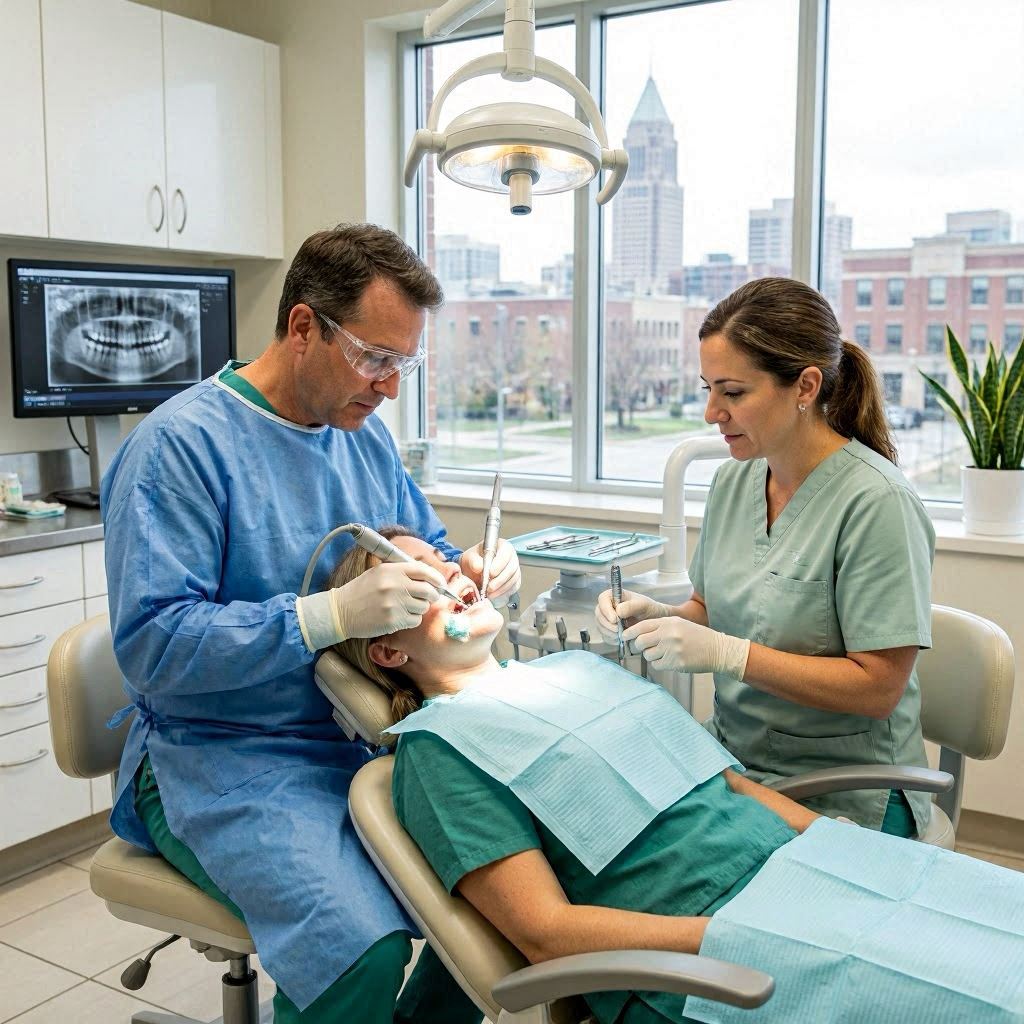
Understanding the Scope of Modern Oral Surgery
Oral and maxillofacial surgery goes far beyond pulling teeth. It is a sophisticated surgical specialty that bridges dentistry and medicine. Surgeons in this field complete extensive training after dental school, often spending four to six years in hospital-based residency programs. They study anesthesia, emergency medicine, and plastic surgery alongside their dental surgical training. This dual background makes them uniquely qualified to manage complex conditions of the mouth, jaw, and face.
When you visit an oral surgeon, you access a level of expertise that handles everything from routine extractions to reconstructing jawbones. The specialty covers diagnosing and treating diseases, injuries, and defects affecting the hard and soft tissues. This includes removing impacted wisdom teeth, placing dental implants, correcting jaw misalignment, treating facial trauma, and managing oral pathology. The breadth of knowledge required means these professionals handle some of the most delicate and life-changing procedures in healthcare.
The technology supporting these procedures has advanced rapidly. Today’s practices use 3D cone beam CT scanners to create detailed, three-dimensional maps of your anatomy. This digital precision allows for virtual surgery planning. The surgeon can perform the entire operation on a computer screen before making a single incision. This translates to safer, faster, and more predictable outcomes for you.
Why Surgical Expertise Matters for Your Smile
Choosing a specialist over a general dentist for surgical procedures often comes down to the complexity of your case and the level of comfort you desire. Oral surgeons provide deep sedation and general anesthesia options that most general dental offices do not offer. For many people, the ability to sleep through a procedure completely transforms their experience. Anxiety melts away, and the body’s healing response often improves when you avoid the stress of remaining awake during surgery.
The training difference is significant. While a general dentist might place some implants, an oral surgeon manages the full spectrum of complications that can arise. If a tooth breaks during extraction, if a sinus membrane tears during an implant placement, or if significant bone grafting becomes necessary, the oral surgeon handles these challenges seamlessly. They do not need to refer you elsewhere. This comprehensive capability provides a safety net that protects your outcome from start to finish.
Think of it like this: you could have a family doctor stitch a deep cut on your hand, but a plastic surgeon’s specialized training ensures the best functional and aesthetic result. The same principle applies inside your mouth. The precision, speed, and tissue-handling techniques of a seasoned oral surgeon preserve bone, protect nerves, and set the stage for restorations that look and feel natural.
Navigating Dental Implants: A Permanent Solution
Dental implants have revolutionized how we approach tooth loss. Unlike bridges or dentures that sit on top of the gums, implants replace the root of the missing tooth. A small titanium post integrates directly with your jawbone through a process called osseointegration. This creates a foundation so stable that it feels and functions like a natural tooth. You bite with full force, speak without worry, and smile without hesitation.
Why Implants Outperform Traditional Options
The benefits extend far beyond comfort. When you lose a tooth, the surrounding bone begins to shrink. The root no longer stimulates the bone during chewing, and the body resorbs the unused tissue. Over time, this bone loss changes facial structure, leading to a sunken appearance around the mouth. Dental implants stop this process cold. The titanium post stimulates the bone just like a natural root, preserving your facial contours and jaw density.
Adjacent teeth also benefit. A traditional bridge requires grinding down healthy neighboring teeth to serve as anchors. An implant stands independently. It does not compromise the structure of other teeth. This conservative approach preserves more of your natural dentition for a lifetime. Cleaning an implant is also straightforward—you brush and floss it exactly like a natural tooth. There are no special clips, adhesives, or nighttime soaking rituals.
Long-term value enters the conversation as well. While the upfront investment for implants is higher than for a bridge or partial denture, the longevity tells a different story. Bridges typically need replacement every 10 to 15 years. Dentures require relining and eventual replacement. A properly cared-for dental implant can last a lifetime. When you calculate cost per year of use, implants often emerge as the most economical choice.
The Single Tooth Implant Journey
The path to a single tooth implant follows a predictable sequence. After your initial consultation and 3D imaging, the surgeon plans the exact placement. On surgery day, they make a small opening in the gum, prepare the site in the bone, and gently place the implant. A healing cap or temporary crown may go on top. The gum tissue heals around this for several months while the bone fuses to the implant surface.
Once integration is complete, you return for the restorative phase. The surgeon or your restorative dentist attaches an abutment—a small connector piece—to the implant. Then they secure a custom-made crown designed to match your surrounding teeth in shape and shade. The result blends so naturally that even you might forget which tooth was replaced. The crown resists chipping and staining, offering decades of reliable service with proper home care and regular checkups.
Restoring a Full Arch with Implant Bridges
For patients missing several teeth in a row, implant-supported bridges offer a middle ground between single implants and full dentures. Instead of replacing each tooth with an individual implant, the surgeon places two or more implants to support a continuous row of prosthetic teeth. This approach reduces cost and surgical time while still providing fixed, non-removable teeth.
The bridge does not rest on your gums. It connects directly to the implants, leaving a small space underneath for easy cleaning with floss threaders or water irrigators. You feel no movement or clicking when you chew or speak. The prosthetic teeth absorb biting forces that stimulate the underlying bone, maintaining jaw health. Many patients report that an implant-supported bridge feels dramatically more secure than the removable partial denture it replaced.
Full Arch Restoration: All-on-4 and Beyond
One of the most transformative advances in modern dentistry is the full arch restoration concept. Patients who have lost all their teeth—or who face losing them—can receive a complete set of fixed teeth supported by as few as four implants per arch. The All-on-4 technique places two implants vertically toward the front of the jaw and two at an angle in the back to maximize available bone. This clever angulation often eliminates the need for bone grafting, even in jaws with significant bone loss.
The procedure typically unfolds in one day. You arrive in the morning with failing or missing teeth and leave in the afternoon with a temporary but fully functional set of fixed teeth. This immediate-load protocol restores your ability to eat a normal diet and smile confidently on the same day as surgery. After healing, you return for a final, more refined set of teeth crafted from durable, high-aesthetic materials.
Patients who choose this path describe it as life-changing. They regain the ability to eat steak, apples, and corn on the cob. They laugh without covering their mouths. They stop worrying about dentures slipping during conversation. The psychological lift matches the physical restoration. Confidence returns, often accompanied by a renewed interest in social activities and professional engagement.
The Critical Role of Bone Grafting
Bone grafting sounds intimidating, but the concept is straightforward. When a tooth has been missing for months or years, or when infection has eaten away tissue, there may not be enough healthy bone to anchor an implant. The surgeon places bone graft material in the deficient area. This material serves as a scaffold that encourages your body’s natural regenerative cells to migrate in and build new, living bone.
Where Does Graft Material Come From?
Graft material originates from several sources. Autografts use your own bone, typically harvested from the chin, the back of the jaw, or the hip for larger reconstructions. This type offers excellent regenerative potential because it contains your living cells and growth factors. Allografts come from carefully processed human donor tissue, eliminating the need for a second surgical site. Xenografts derive from bovine sources and have an exceptional safety record spanning decades. Synthetic grafts use laboratory-created materials that mimic the mineral structure of human bone.
Most oral surgeons in modern practice use a combination approach, blending materials to optimize the result. The choice depends on the size of the defect, the location, your medical history, and your personal preferences. Your surgeon will discuss the best option for your specific situation.
The healing timeline for a bone graft ranges from three to six months, sometimes longer for extensive reconstructions. During this time, the graft matures into dense, vascularized bone capable of supporting an implant. For patients in the area seeking this type of preparatory work, the experience and technique applied to Greater Columbus Oral Surgery & Dental Implants graft procedures significantly influence how well the site heals and how soon you can move forward with your final restoration.
Sinus Lifts Explained
The upper back teeth present a unique challenge. The maxillary sinus sits just above the roots of these teeth. When upper molars are lost, the sinus floor often expands downward, thinning the available bone to a paper-like layer. Placing an implant in such thin bone risks penetrating the sinus, which could cause infection or implant failure.
A sinus lift procedure carefully elevates the sinus membrane and packs graft material into the newly created space. Think of it as raising the floor of the sinus to restore a thick enough bone platform below. This delicate surgery demands precise, gentle technique. A perforation in the sinus membrane requires repair, and the entire outcome hinges on a well-contained, stable graft. Surgeons who perform this procedure regularly produce results that open up implant possibilities for countless patients previously told they were not candidates.
Wisdom Teeth: Prevention and Timely Removal
Wisdom teeth, or third molars, are the last teeth to erupt, usually between ages 17 and 25. For most people, the jaw no longer has room to accommodate these late arrivals. When space is tight, wisdom teeth become impacted—trapped beneath the gum, often angled in directions that threaten neighboring structures.
The Case for Early Intervention
Removing wisdom teeth during the late teens or early twenties offers distinct advantages. The roots are not yet fully formed, making extraction simpler and reducing the risk of nerve injury. Bone is more flexible in younger patients, and healing proceeds faster with fewer complications. Waiting until problems develop—pain, infection, cyst formation, or damage to adjacent teeth—makes the surgery more complex and the recovery more involved.
Impacted wisdom teeth can cause crowding, shifting the alignment you or your child worked hard to achieve with orthodontics. They can damage the roots of the neighboring second molars or create pockets where bacteria collect, leading to decay and gum disease. A cyst can form around the impacted crown, slowly destroying the jawbone from within. By removing wisdom teeth before these issues arise, you prevent damage rather than repair it after the fact.
What to Expect During Wisdom Tooth Surgery
The procedure typically takes place under intravenous sedation or general anesthesia. You drift off to sleep and wake up with the teeth gone, often with no memory of the surgery itself. The surgeon makes incisions to access the impacted teeth, sometimes sections them into smaller pieces for easier removal, and closes the sites with dissolvable stitches. The entire process for all four wisdom teeth usually takes well under an hour.
Recovery follows a predictable pattern. The first 48 to 72 hours bring the most swelling and discomfort, easily managed with prescribed or over-the-counter pain relievers and ice packs. Most people return to school or desk work within three to five days. Full healing of the sockets takes several weeks, but you feel essentially normal long before that. Following post-operative instructions—especially avoiding straws, smoking, and vigorous rinsing—prevents the most common complication: dry socket, where the protective blood clot dislodges and exposes the underlying bone.
Sedation Options for a Comfortable Experience
Fear of dental procedures keeps millions of people from seeking needed care. Oral surgeons understand this deeply and have built their practices around making treatment accessible to anxious patients. The anesthesia training embedded in their surgical residency means they provide options ranging from mild relaxation to complete unconsciousness.
Nitrous oxide, or laughing gas, offers the lightest touch. You remain awake and responsive but feel calm and detached. The effects wear off within minutes, and you can drive yourself home. Oral conscious sedation involves taking a prescribed pill before your appointment. You reach a deeper state of relaxation and may have little memory of the procedure. You need a driver for this option.
Intravenous sedation provides the deepest level available in an office setting. Medications flow through an IV line, allowing the surgeon to precisely adjust your sedation depth throughout the procedure. You remain technically conscious enough to breathe on your own and respond to direction, but you feel nothing and remember nothing. This twilight state has become the preferred method for wisdom tooth removal and implant placement.
General anesthesia renders you completely unconscious. A dedicated anesthesia provider or the surgeon’s certified team monitors your vital signs continuously. This option suits extensive procedures, patients with severe anxiety, or those with special medical or developmental needs that make cooperation difficult. The safety protocols in accredited oral surgery facilities match or exceed those in hospital operating rooms.
The Technology Shaping Better Outcomes
The tools an oral surgeon uses directly impact the safety, precision, and comfort of your procedure. Practices that invest in advanced technology demonstrate a commitment to excellence that translates into real patient benefits.
Cone Beam CT Imaging
The cone beam CT scanner has become the standard of care for implant planning and complex extractions. Unlike traditional dental x-rays that show a flat, two-dimensional image, CBCT captures hundreds of images from different angles and reconstructs them into a three-dimensional model. The surgeon rotates this model on a screen, measuring bone dimensions, tracing nerve pathways, and mapping sinus cavities with sub-millimeter precision.
This information proves invaluable. The surgeon knows exactly how much bone exists in every direction before making an incision. They can avoid nerves that run through the lower jaw, preventing numbness or tingling after surgery. They can assess the proximity of implant sites to adjacent tooth roots. The scan also reveals pathology—infections, cysts, or tumors—that two-dimensional imaging might miss. Having this data eliminates guesswork and dramatically reduces surgical surprises.
Intraoral Scanners and Digital Workflows
The sticky, gag-inducing trays of traditional impressions are quickly becoming a thing of the past. Intraoral scanners use a small wand to capture thousands of digital photographs stitched together into a precise model of your teeth and gums. This digital impression feeds into design software where the restorative team plans your implant crown, bridge, or denture.
For implant cases, digital workflows allow the surgeon and restorative dentist to collaborate seamlessly. They can plan the implant position based on the final tooth shape, ensuring the crown emerges in an ideal location. Surgical guides—custom-fabricated stents that fit over your teeth—translate this digital plan to the surgical field. The surgeon places the implant through the guide, precisely replicating the planned position, angle, and depth.
Platelet-Rich Fibrin for Enhanced Healing
A relatively recent innovation harnesses your body’s own healing factors to accelerate recovery. The surgeon draws a small amount of your blood before surgery and spins it in a centrifuge. This separates the platelets and growth factors from the red blood cells, creating a fibrin clot rich in healing proteins. Placed in extraction sockets or around implants, platelet-rich fibrin reduces inflammation, speeds tissue regeneration, and lowers the risk of dry socket.
The technique adds only a few minutes to the procedure and uses entirely your own biological material, eliminating any risk of rejection or disease transmission. Patients who receive PRF often report less post-operative pain and faster return to normal function.
Preparing for Your Consultation
The consultation sets the tone for your entire treatment experience. It serves as a two-way interview where you evaluate the practice just as the surgeon evaluates your clinical needs. Arriving prepared helps you make the most of this important visit.
Bring a list of your current medications, including over-the-counter drugs and supplements. Note any medical conditions, even if they seem unrelated to oral health. Conditions like diabetes, heart disease, autoimmune disorders, and osteoporosis all influence surgical planning and healing. Bring your dental insurance card if you have coverage, though oral surgery benefits often fall under medical insurance depending on the procedure.
Write down your questions in advance. The most common areas patients want to explore include:
| Question Category | Examples |
|---|---|
| Surgeon Qualifications | What specific training do you have for this procedure? How many have you performed? |
| Anesthesia | What sedation options do you recommend for my case? Who administers and monitors it? |
| Risks and Complications | What are the most common complications for my procedure? How do you manage them? |
| Recovery | What should I expect for pain, swelling, and downtime? When can I return to work? |
| Cost and Payment | What is the total fee? What does it include? Do you offer payment plans? |
| Long-Term Outcome | What is the success rate for this procedure? What maintenance is required? |
A confident surgeon welcomes these questions and answers them directly, without defensiveness or vague generalities. The way the team treats you during the consultation—the warmth of the front desk, the patience of the assistant, the engagement of the surgeon—predicts your experience throughout treatment.
Understanding the Financial Investment
Oral surgery and implant procedures represent significant investments in your health. Understanding the cost components helps you plan and evaluate your options without unpleasant surprises.
The total fee for a single tooth implant in the Columbus area typically ranges from $3,000 to $5,500, including the implant placement, the abutment, and the crown. Factors that move the number within this range include the need for bone grafting or a sinus lift, the type of implant system used, and whether a surgical guide is fabricated. Full arch restoration on four to six implants generally falls between $20,000 and $35,000 per arch, with the final prosthetic teeth accounting for a substantial portion of the cost.
Insurance coverage varies widely. Many dental plans cover a portion of tooth extractions and some implant components, but they rarely cover the full cost. Medical insurance may cover procedures deemed medically necessary, such as jaw surgery to correct a skeletal deformity, removal of tumors or cysts, or treatment of facial trauma. The administrative team at your surgeon’s office typically handles insurance verification and can provide a detailed breakdown of estimated coverage before you commit to treatment.
Most practices offer third-party financing through companies like CareCredit, LendingClub, or Proceed Finance. These healthcare-specific credit lines often feature promotional periods with zero or low interest if you pay the balance within a set timeframe. In-house payment plans, cash discounts, and treatment phasing—spreading procedures over multiple calendar years to maximize insurance benefits—are additional strategies the financial coordinator can help you explore.
Important Note: When comparing quotes between practices, ask what each fee includes. Some surgeons quote a “surgical fee only,” with the abutment, crown, and any necessary grafting billed separately by the restorative dentist. Others provide an “all-in” fee covering every step from start to finish. Comparing apples to oranges leads to confusion and budget surprises.
The Recovery Process: Day by Day
Knowing what to expect during recovery reduces anxiety and helps you prepare your environment and schedule for smooth healing.
Day 1: Bleeding is normal for the first several hours. Bite gently on the gauze packs provided, changing them every 30 to 60 minutes as needed. Once bleeding slows, discard the gauze. Apply ice packs to the outside of your face in 20-minute cycles. Take prescribed or recommended pain medication before the local anesthetic wears off. Stick to cold, soft foods like yogurt, smoothies, and applesauce. Do not rinse, spit, or use a straw.
Day 2 to 3: Swelling peaks around day two or three, then begins to subside. Continue ice for 48 hours, then switch to moist heat if desired. Begin gentle salt water rinses after meals, but do not swish vigorously. Stick to soft foods at room temperature. You may notice some bruising on the cheek or jaw; this is normal and will fade. Rest as much as possible, keeping your head elevated even while sleeping.
Day 4 to 7: Discomfort diminishes significantly. You can introduce slightly more textured foods—scrambled eggs, pasta, soft fish—but avoid anything crunchy, chewy, or spicy. You may feel well enough to resume light activities, but avoid strenuous exercise that elevates blood pressure and risks bleeding. Continue gentle oral hygiene, avoiding the surgical site with your toothbrush.
Week 2 and Beyond: Most patients feel essentially back to normal. Any remaining stitches dissolve or are removed at a follow-up visit. You can gradually reintroduce normal foods, letting comfort be your guide. For implant patients, the site continues healing beneath the surface for months. Avoid chewing directly on the implant site until your restorative dentist places the final crown.
A Comparative Look at Tooth Replacement Options
Choosing the right tooth replacement strategy requires weighing several factors. The table below provides a straightforward comparison.
| Feature | Dental Implant | Fixed Bridge | Removable Partial Denture |
|---|---|---|---|
| Tooth Preparation | None; adjacent teeth untouched | Adjacent teeth ground down for crowns | Clasps may stress anchoring teeth |
| Bone Preservation | Yes; stimulates bone like natural root | No; bone resorbs under missing tooth | No; accelerates bone loss over time |
| Longevity | 25+ years with proper care | 10-15 years average | 5-8 years average |
| Feel and Function | Most like natural tooth | Good; some sensitivity possible | Movement during eating and speaking |
| Hygiene | Brush and floss normally | Special floss threaders required | Remove for cleaning; soak overnight |
| Upfront Cost Range | $3,000 – $5,500 per tooth | $1,500 – $3,500 per tooth | $800 – $1,800 |
| Long-Term Cost | Lowest cost per year of use | Moderate; replacement needed | Moderate to high; relines and replacement |
| Aesthetic Result | Excellent; indistinguishable from nature | Good; gum tissue may recede over time | Fair; visible clasps may show |
The numbers tell one story, but the lived experience tells another. Patients who choose implants consistently report higher satisfaction than those who choose bridges or removable appliances. They enjoy greater confidence, fewer dietary restrictions, and less worry about their teeth in social situations.
Oral Pathology: Vigilance Saves Lives
Oral surgeons play a crucial role in diagnosing and treating diseases of the mouth. During routine exams, they screen for suspicious lesions that could indicate oral cancer or precancerous changes. The inside of your mouth—cheeks, tongue, floor of the mouth, palate, and lips—should show smooth, pink tissue free of red or white patches, ulcers that do not heal, or unusual lumps.
Risk factors for oral cancer include tobacco use, heavy alcohol consumption, and infection with certain strains of human papillomavirus. However, a growing number of cases appear in younger patients with none of these risk factors. This makes routine screening essential for everyone.
If your surgeon identifies a suspicious area, they typically recommend a biopsy. This quick, in-office procedure removes a small tissue sample for laboratory analysis. The results usually return within a week. Early detection dramatically improves treatment outcomes. The five-year survival rate for oral cancer exceeds 80% when caught early, compared to less than 40% for late-stage diagnoses.
Corrective Jaw Surgery for Function and Balance
When the upper and lower jaws do not align properly, the consequences ripple through your entire body. Difficulty chewing, speech problems, sleep apnea, jaw joint pain, and facial imbalance all stem from skeletal discrepancies that braces alone cannot fix. Orthognathic surgery moves the jaws into proper position, correcting the underlying structural problem.
This transformative surgery unfolds as a partnership between your orthodontist and oral surgeon. You typically wear braces for 12 to 18 months before surgery, moving teeth into ideal positions on their respective arches. The surgeon then repositions the jaws, securing them with small titanium plates and screws. After surgery, orthodontic treatment continues for several months to fine-tune the bite.
The results go beyond aesthetics, though the facial changes are often striking. Breathing improves. Chewing becomes efficient and comfortable. Speech clarifies. Jaw joint pain often resolves. For patients who have struggled their entire lives with an unbalanced face and compromised function, corrective jaw surgery offers a new beginning.
Protecting Your Oral Health Between Visits
The investment you make in oral surgery and implants deserves diligent protection. Good home care habits extend the life of your restorations and prevent new problems from developing.
Brush twice daily with a soft-bristle toothbrush and fluoride toothpaste. Pay particular attention to the gumline where bacteria collect. Floss once daily, using floss threaders or interdental brushes to clean around implants and bridgework. A water irrigator provides an excellent supplement, flushing debris from hard-to-reach areas.
Attend regular dental checkups and cleanings, typically every six months. Your hygienist uses special instruments to clean around implants without scratching their surfaces. Your dentist examines the restorations, checks for signs of grinding or clenching, and takes periodic x-rays to monitor the bone levels around implants.
Do not ignore warning signs. Bleeding gums, persistent bad breath, loosening of a restoration, or discomfort around an implant warrant prompt evaluation. Catching issues early often allows for simple, conservative treatment before problems escalate.
Choosing the Right Practice in Columbus
The relationship you build with your oral surgeon matters deeply. This person will guide you through significant procedures that impact your health, appearance, and self-confidence. Take the time to evaluate your options carefully.
Look for board certification by the American Board of Oral and Maxillofacial Surgery. This credential indicates the surgeon has passed rigorous written and oral examinations beyond the requirements for licensure. It demonstrates a commitment to maintaining the highest standards of the specialty. Fellowship in the American Association of Oral and Maxillofacial Surgeons provides additional assurance of ongoing education and peer engagement.
Read patient reviews, but read them discerningly. Look for patterns rather than individual outlier experiences. A practice with hundreds of reviews averaging 4.7 stars and above, with consistent mentions of a caring team, clear communication, and comfortable procedures, tells you something reliable.
Visit the practice website and social media. Do they showcase real patient stories and results? Do they explain procedures in clear, educational language? Does the office environment look modern, clean, and welcoming? These digital impressions, while not definitive, offer clues about the culture and values of the practice.
During your consultation, trust your instincts. The surgeon should listen more than they talk. They should ask about your goals and concerns, explain your options in plain language, and welcome your questions without rushing. The team should treat you with warmth and respect from the first phone call to the moment you walk out the door.
Conclusion
Your journey toward optimal oral health begins with choosing a skilled surgical partner who prioritizes your comfort and long-term success. Advanced technology, comprehensive sedation options, and meticulous surgical technique combine to deliver life-changing results, whether you need a single implant, a full arch restoration, or wisdom tooth removal. The right practice guides you through every step—from the initial consultation and financial planning to the final restoration and ongoing maintenance—ensuring you feel informed, supported, and valued as a person, not just a patient.
Frequently Asked Questions
How long do dental implants really last?
With proper home care and regular professional maintenance, dental implants can last 25 years to a lifetime. The crown may need replacement after 15 to 20 years due to normal wear, but the implant post itself often remains functional indefinitely. The most critical factor in long-term success is controlling gum disease and avoiding smoking.
Does dental insurance cover oral surgery?
Most dental insurance plans cover a portion of medically necessary extractions, including wisdom teeth. Implant coverage varies widely—some plans cover a percentage of the implant and crown, while others exclude implants entirely. The administrative team can file a pre-treatment estimate to verify your exact benefits before you commit to treatment.
Am I too old for dental implants?
Age itself is rarely a barrier. The primary requirement is adequate bone volume and good general health. Patients in their 80s and 90s successfully receive implants and enjoy years of improved function. Certain medical conditions and medications require careful evaluation, but most older adults are excellent candidates.
What if I have been told I do not have enough bone for implants?
Bone grafting and sinus lift procedures can rebuild the foundation needed for successful implant placement. Even patients with significant bone loss often become candidates after grafting. A CBCT scan determines exactly how much bone exists and what reconstruction is necessary.
How painful is wisdom tooth removal?
The procedure itself is completely painless under appropriate anesthesia. Post-operative discomfort peaks in the first 48 to 72 hours and is typically well-controlled with prescribed medication, over-the-counter pain relievers, and ice packs. Most patients describe the recovery as manageable and are surprised by how quickly they return to normal activities.
Can a failed implant be replaced?
Yes. If an implant fails to integrate or develops problems years later, the surgeon removes it, cleans the site, and allows the bone to heal. In most cases, a new implant can be placed after a healing period, often with a wider or longer fixture that engages healthier bone.
Additional Resource
For detailed information on oral surgery procedures, recovery, and patient education, visit the American Association of Oral and Maxillofacial Surgeons:
https://myoms.org/
This trusted resource offers procedure videos, recovery guides, and a surgeon finder tool to help you make informed decisions about your care.
Disclaimer: This article provides general educational information and does not constitute medical advice. Individual cases vary, and treatment decisions should be made in consultation with a qualified oral and maxillofacial surgeon who has evaluated your specific condition and medical history.