Dental Implants in West Palm Beach, FL: Restoring Smiles in the Sunshine State
Losing a tooth changes more than just your smile. It affects how you eat your favorite foods, how you speak to the people you love, and how you feel when you look in the mirror every morning. For decades, residents of South Florida had limited options. Bridges and dentures served a purpose, but they never truly replicated the feel, function, or freedom of natural teeth.
Today, dental implant technology has completely transformed the landscape of restorative dentistry. If you are searching for a permanent solution that looks, feels, and functions exactly like a natural tooth, you have come to the right place. This comprehensive guide explores everything you need to know about securing high-quality dental implants in West Palm Beach, FL. We will walk you through the costs, the procedure, the materials, and the crucial steps to finding the perfect implant dentist in Palm Beach County.
The sunny lifestyle of West Palm Beach demands a confident smile. Whether you are dining on Clematis Street, enjoying a day at the beach, or attending a social function in Palm Beach, you deserve to smile without hesitation. Let’s dive deep into the world of implant dentistry and discover why this investment in your health is also an investment in your quality of life.
Understanding Dental Implants: The Gold Standard of Tooth Replacement
Before we discuss specific providers and prices in the 33401 and 33405 areas, we must first establish a clear understanding of what a dental implant actually is. Many patients feel anxious because they do not know what to expect. Education is the first step toward confidence.
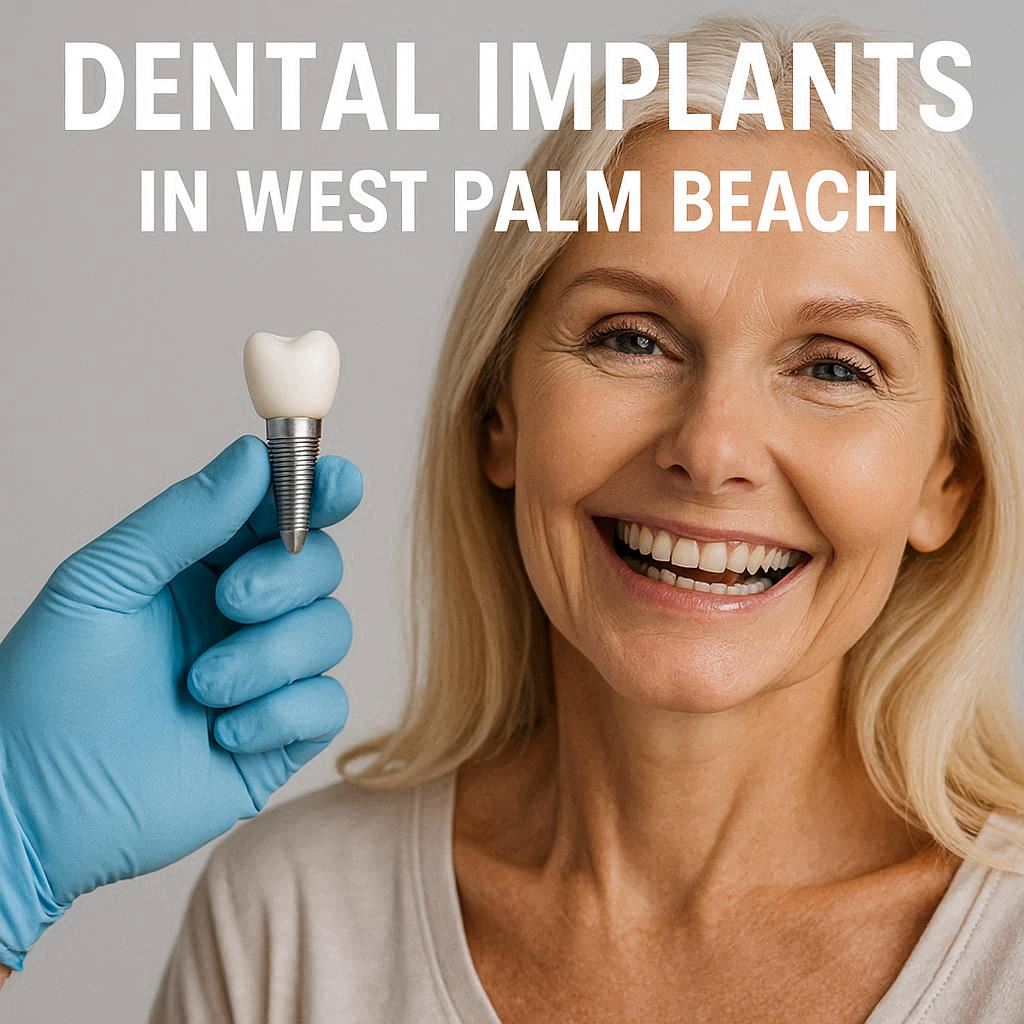
A dental implant is a small, biocompatible post, usually made of medical-grade titanium, that a specialist surgically places into your jawbone. This post acts as an artificial tooth root. Once the implant integrates with the bone through a natural process called osseointegration, it provides a stable foundation for a replacement tooth.
The system consists of three distinct parts. The implant post sits below the gum line. The abutment is a connector piece that attaches to the post. The crown is the custom-made, visible tooth that matches your natural enamel.
Key Distinction:
Unlike a dental bridge, which requires grinding down perfectly healthy adjacent teeth for support, an implant stands alone. It preserves your natural tooth structure and stimulates the jawbone to prevent the bone deterioration that frequently follows tooth loss. This is the single most important advantage of choosing implants over traditional bridges in West Palm Beach.
Why West Palm Beach Residents Prefer Implants Over Traditional Dentures
West Palm Beach boasts a large population of active adults and seniors who refuse to let age dictate their lifestyle. Traditional removable dentures often fail to keep up with the demands of an active Florida life. They can slip during conversation, restrict your ability to enjoy a juicy steak or fresh corn on the cob, and require messy adhesives.
Dental implants remove those restrictions. Because the implant is anchored directly into the bone, the restoration does not move. Patients report a dramatic increase in chewing efficiency and a total elimination of the social anxiety associated with dentures. You can talk, laugh, sneeze, and eat with absolute confidence.
Moreover, the climate and social scene here matter. West Palm Beach is a hub for outdoor dining and entertainment. You want a tooth replacement that looks flawless in the bright Florida sun. Modern implant crowns utilize high-grade ceramics that reflect light exactly like natural enamel, ensuring your smile looks stunning whether you are under the lights of the Kravis Center or the sun at CityPlace.
Types of Dental Implants Available in West Palm Beach, FL
The term “dental implant” functions as an umbrella term. The best approach for a patient missing a single molar differs vastly from the approach for a patient missing every tooth in their arch. Top-tier practices in the West Palm Beach area offer a variety of implant solutions tailored to specific levels of tooth loss and bone density.
Single Tooth Dental Implants
If a traumatic injury, a failed root canal, or severe decay claimed one of your teeth, a single-tooth implant represents the most conservative and effective solution. The surgeon places one titanium post precisely in the empty socket. After a healing period, they attach a custom abutment and a lifelike ceramic crown.
This option exists entirely independently. It does not touch the teeth to the left or the right. You can floss between the implant crown and the natural teeth as easily as you did before. This improves long-term oral hygiene and reduces the risk of future decay on neighboring teeth.
Important Note:
A single-tooth implant often costs more upfront than a three-unit bridge. However, bridges have a finite lifespan of roughly 10 to 15 years and frequently fail due to decay on the anchor teeth. An implant, with proper care, lasts a lifetime. When you amortize the cost over 30 or 40 years, the implant becomes the most economical choice for residents of West Palm Beach.
Implant-Supported Bridges
Sometimes, you have three or four missing teeth in a row. Placing an individual implant for every single missing tooth requires sufficient bone and a significant budget. Implant-supported bridges offer a smart, middle-ground solution.
Instead of placing four implants, the surgeon strategically places two implants on the ends of the gap. These two implants support a bridge containing three or four prosthetic teeth. The bridge is fixed permanently in place.
This method eliminates the need for a removable partial denture, which often uses unsightly metal clasps. The implant bridge feels completely stable. It also protects the jawbone in the areas where the implants sit, slowing the process of bone resorption that occurs in the gaps.
Full Mouth Dental Implants (All-on-4®)
Full-arch restoration has revolutionized the lives of patients who suffer from complete tooth loss or who face the removal of failing teeth. The concept of the All-on-4® treatment protocol has gained massive popularity in West Palm Beach, FL, for its ability to provide a full set of fixed, non-removable teeth in a single day.
The strategy involves placing four to six implants into the arch. The posterior implants often tilt at an angle to maximize contact with the available dense bone, often bypassing the need for bone grafting surgery. The dentist then attaches a provisional, fully functional full-arch bridge on the same day.
You arrive in the morning with no teeth or failing teeth, and you leave in the afternoon with a radiant, secure smile. This immediate function dramatically boosts a patient’s psychological outlook. You never have to wear a traditional flipper or denture during the healing phase.
After a healing period of three to six months, the laboratory fabricates a final, high-end prosthesis made of zirconia or hybrid acrylic. This final set is stronger, more aesthetic, and designed to last for decades.
Cost and Value Alert:
Full mouth dental implants in West Palm Beach represent a significant investment, often ranging from $20,000 to $50,000 per arch depending on the materials and the complexity of the case. However, compared to a lifetime of denture relines, adhesives, and dietary restrictions, patients almost universally declare it one of the best investments they have ever made for their quality of life.
Mini Dental Implants
Not every patient possesses the bone width required for standard diameter implants (3.5mm to 5mm). Some patients seek a less invasive option to stabilize a loose lower denture. Mini dental implants, with a diameter of less than 3mm, fill this niche perfectly.
A West Palm Beach dentist can place these tiny implants using a minimally invasive technique, often without making a single incision. They cost significantly less per implant than standard implants. While they lack the sheer structural strength to replace a molar on their own, they excel at denture stabilization.
If you have a lower denture that floats and slides, placing four to six mini implants can snap that denture into place. The retention improves dramatically. You can remove the denture for cleaning, but during the day, it will not budge.
Comparative Table: Types of Dental Implants
| Implant Type | Best For | Number of Implants | Prosthesis Type | Average Cost in WPB (Per Arch/Single) | Typical Healing Time |
|---|---|---|---|---|---|
| Single Tooth Implant | 1 missing tooth | 1 | Ceramic Crown | $3,500 – $6,000 (total) | 3 – 6 months |
| Implant-Supported Bridge | 3-4 missing teeth in a row | 2 – 3 | Porcelain Bridge | $9,000 – $16,000 (total) | 4 – 6 months |
| All-on-4® (Full Arch) | Full arch tooth loss | 4 – 6 | Fixed Hybrid Denture | $20,000 – $50,000 (per arch) | Immediate load (temp) / 4-6 months (final) |
| Mini Implants | Denture stabilization | 4 – 8 | Overdenture | $500 – $1,500 (per implant) | 1 – 3 months |
| Implant-Retained Overdenture | Full arch, removable | 2 – 4 | Custom Denture | $8,000 – $15,000 (per arch) | 3 – 4 months |
The Dental Implant Procedure: A Step-by-Step Timeline in South Florida
Walking into an implant center in West Palm Beach can feel intimidating if you fear surgery. The reality, however, is that the placement of a dental implant is generally far less painful and traumatic than a tooth extraction. Understanding the chronological steps will calm your nerves and set realistic expectations.
Step 1: The Comprehensive Consultation and 3D Imaging
Your journey begins in a consultation room, not a surgical suite. The West Palm Beach implant dentist will perform a thorough examination of your mouth, review your medical history, and discuss your specific goals.
Technology plays a massive role at this stage. Advanced practices have moved beyond traditional two-dimensional X-rays. They now utilize Cone Beam Computed Tomography (CBCT) scanners. This technology produces a three-dimensional model of your jaws, sinus cavities, and nerve pathways.
The CBCT scan allows the dentist to measure the exact height, width, and density of your bone without any guesswork. They can identify the precise location of the inferior alveolar nerve in the lower jaw, a critical safety measure. They can also assess the sinuses in the upper jaw. This digital roadmap virtually eliminates surgical surprises. If you consult a dentist who plans the surgery using only a 2D panoramic X-ray, seek a second opinion at a practice with 3D capabilities.
Step 2: Pre-Surgical Preparations (Extractions and Grafting)
Many patients seeking implants in West Palm Beach arrive with a broken tooth or a failing root canal still in place. The first surgical phase involves removing that non-restorable tooth. Dentists often perform an “atraumatic extraction” to preserve as much of the bony socket walls as possible.
Following the extraction, the surgeon assesses the site. If the bone is deficient, a bone graft becomes necessary. West Palm Beach surgeons source grafting material from several origins. Autografts come from your own body, usually the chin or ramus of the jaw. Allografts come from a human donor tissue bank. Xenografts consist of bovine bone mineral. Alloplastic grafts use synthetic, lab-created materials like calcium phosphate.
The graft acts as a scaffold. Your body gradually replaces the graft material with your own living bone over a period of four to six months. In cases of a sinus proximity issue in the upper back teeth, the surgeon performs a sinus lift procedure to gently raise the sinus floor and place graft material to gain vertical bone height.
Recovery Insight:
The recovery from extraction and grafting feels similar to a typical extraction. You will experience swelling for 24 to 48 hours. South Florida’s heat makes it tempting to hit the pool or the golf course, but you must avoid strenuous activity for at least 72 hours to prevent a painful complication called dry socket or graft mobilization.
Step 3: The Implant Placement Surgery
On the day of surgery, the specialist ensures your total comfort. Most implant placements in West Palm Beach occur under local anesthesia alone. The jawbone itself has no pain receptors. You feel pressure and vibration, but no sharp pain.
For anxious patients, practices offer varying levels of sedation. Nitrous oxide (laughing gas) takes the edge off. Oral conscious sedation uses a prescribed pill like Halcion or Valium to induce a state of deep relaxation where you remain conscious but carefree. IV sedation provides a deeper twilight sleep, and patients often remember nothing of the procedure.
Once you are comfortable, the surgeon makes a small incision in the gum to expose the bone. Using a series of precisely sized drills guided by a surgical template, they create a channel in the bone. They gradually widen the channel to the exact diameter of the implant. They then screw the titanium post into place with a surgical handpiece that controls torque to prevent pressure necrosis of the bone.
The surgeon then either buries the implant under the gum (two-stage approach) or attaches a small healing cap that protrudes through the gum (one-stage approach). The choice depends on the initial stability of the implant and the need for any simultaneous grafting.
Step 4: Osseointegration and Temporary Restoration
The next three to six months require patience. During this period, the living bone cells of your jaw grow directly onto the micro-roughened surface of the titanium implant. This process, osseointegration, locks the implant in place as solidly as a natural tooth root.
You will not be left toothless during this time. A good West Palm Beach dentist provides a temporary appliance. For a single front tooth, this might be a removable “flipper” with a single fake tooth. For back teeth, you might not need anything visible. For All-on-4 cases, the temporary fixed bridge remains screwed in place, but you must adhere to a strict soft-food diet to protect the splinted implants.
Avoid chewing in the implant area. Do not poke at the site with your tongue. Do not use a Waterpik directly on the site. Gentle salt water rinses keep the area clean. Smoking during this phase is catastrophic. Nicotine constricts blood vessels and dramatically increases the failure rate of dental implants. West Palm Beach dentists often require smoking cessation for the entire duration of treatment.
Step 5: Abutment and Crown Delivery
Once a CBCT scan or torque test confirms integration, you enter the restorative phase. The dentist uncovers the implant (if buried) and attaches the abutment. This small titanium or zirconia pillar connects the implant to the final tooth.
Today’s technology allows for digital impressions. Instead of gagging on a tray full of goopy alginate, the dentist scans the implant site and the opposing arch using an intraoral wand. The software generates a perfectly accurate 3D model.
The laboratory mills or bakes a custom crown. Screw-retained crowns have become the gold standard in West Palm Beach. A screw-retained restoration attaches directly to the implant with a small titanium screw, which the dentist covers with a tooth-colored composite filling. If the crown ever needs repair, the dentist can unscrew it easily. Cement-retained crowns, while aesthetic, carry the risk of residual cement getting trapped under the gums, causing peri-implantitis.
The dentist checks the bite, adjusts the contacts, and ensures the floss glides smoothly between the implant crown and the adjacent teeth. You now have a permanent tooth.
The Investment: Understanding the Cost of Dental Implants in West Palm Beach, FL
Money remains the most significant barrier for patients considering implants. West Palm Beach sits in a higher cost-of-living bracket than many other Florida cities, and dental fees reflect that economic reality. However, value matters more than price. A bargain implant placed without proper planning can destroy your health and cost you twice as much to fix.
Breakdown of Fees for a Single Implant
When you call a practice and ask, “How much for a dental implant in West Palm Beach?” you will likely hear a range. Let’s break down the component costs so you can compare apples to apples.
- Consultation and 3D CBCT Scan: $200 – $600. Many practices waive the consultation fee if you schedule the surgery, or they bundle it into the total case fee. The scan is non-negotiable for safety.
- Extraction (if needed): $150 – $400 for a simple extraction. A surgical extraction of a broken molar can exceed $600.
- Bone Grafting (if needed): $400 – $1,500 per site. The price depends on the volume and type of material used.
- Implant Fixture (Titanium post): $1,200 – $2,500. The brand matters. Premium Swiss brands like Straumann or Swedish brands like Nobel Biocare cost more than generic budget implants. They also offer superior surfaces and decades of clinical data.
- Abutment (Connector): $500 – $1,200. Custom-made zirconia abutments for front teeth cost more than stock titanium abutments for back teeth.
- Implant Crown (The tooth): $1,500 – $2,800. A highly aesthetic, custom-layered ceramic crown created by a master lab technician for a front tooth costs significantly more than a standard back molar crown.
Total realistic range for a single, straightforward implant in West Palm Beach: $4,000 to $7,500.
If the practice quotes a price significantly below $3,000, investigate thoroughly. They might be using a mini implant where a standard implant is needed, skipping the necessary bone graft, or using a lower-quality implant brand copied from an expired patent. Beware of “one-day implant mills” that prioritize volume over careful surgical protocol.
Why Full Mouth Restoration Costs So Much More
Full arch implant restoration fees in West Palm Beach often range from $22,000 to $55,000 per jaw. This price tag shocks people until they understand the volume of work, skill, and materials involved.
The fee typically bundles everything. It covers the sedation, the removal of any remaining failing teeth, the bone reduction and grafting, the placement of four to six highly engineered implants, the fabrication of a highly aesthetic temporary bridge, and the construction of the final high-performance denture or zirconia bridge.
The final zirconia prosthesis alone carries a laboratory bill of several thousand dollars. It involves computer-aided design and manufacturing, hand-layering of ceramic powders, and a sintering process that takes over 24 hours. This prosthesis resists fracture and chipping far better than acrylic options.
Additionally, you are paying for the surgeon’s skill. Placing angled posterior implants to avoid the sinus and nerve canals while achieving primary stability is a complex, advanced procedure. Paying for that expertise protects your health.
Insurance and Payment Options for West Palm Beach Patients
Dental insurance plans often view implants as a “major” service and cap yearly benefits at a low amount, typically $1,000 to $2,000. While this seems disheartening, it still reduces your out-of-pocket cost. The capable administrative teams at West Palm Beach dental offices will submit the medical codes correctly to maximize your reimbursement, especially if the tooth loss resulted from an accident.
Medical insurance can sometimes cover the implant surgery if the tooth loss is medically necessary or related to a covered traumatic injury. This is complex and requires diagnostic documentation proving the functional necessity of the implant.
For the remaining balance, nearly every reputable implant center in West Palm Beach partners with third-party healthcare financing companies. CareCredit and LendingClub offer extended-term plans, often with zero or low interest if paid within a promotional period like 12 or 18 months. Patients frequently use these interest-free periods to break the total cost into manageable monthly payments without paying a cent of interest.
Smart Strategy:
Use your Flexible Spending Account (FSA) or Health Savings Account (HSA) dollars. Dental implants qualify as a reimbursable medical expense. Paying with pre-tax dollars effectively gives you a discount equal to your tax bracket on the total procedure cost.
Choosing the Right Implant Dentist in West Palm Beach: Credentials Matter
The skill and judgment of the clinician placing your implant matter infinitely more than the brand of the implant itself. West Palm Beach has a high concentration of gifted dentists, but their training varies wildly. A general dentist who took a weekend course in implant placement does not offer the same safety profile as a board-certified surgical specialist with a decade of concentrated training.
Periodontist vs. Oral Surgeon vs. General Dentist
Understanding the differences between these three types of providers will guide your selection.
Board-Certified Periodontists are the specialists of the gums and the bone supporting the teeth. After four years of dental school, they complete a three-year residency focused exclusively on the supporting structures of the teeth and the placement of dental implants. They master the management of soft tissue aesthetics. If you need an implant in the front of your mouth, a periodontist often possesses the specialized eye for detail to sculpt the gum tissue around the temporary crown so that the final result looks perfectly natural.
Board-Certified Oral and Maxillofacial Surgeons complete a four to six-year hospital-based surgical residency after dental school. They train alongside medical residents in anesthesia, pathology, and reconstructive surgery. They are the go-to specialists for complex cases involving severe bone loss requiring major grafting from the hip or jaw, impacted teeth, and full-mouth reconstruction under IV sedation. They manage surgical complications with the highest level of skill.
General Dentists with Advanced Implant Training can place implants safely and effectively if they have invested in comprehensive, accredited continuing education. The key lies in finding a general dentist who practices implantology as a significant part of their practice, not just an occasional side service. Ask how many implants they place per month. A clinician placing less than 75 to 100 implants a year may not be encountering and managing complications frequently enough to maintain peak proficiency.
The Team Approach (The Gold Standard):
The finest restorative outcomes in West Palm Beach often come from a team approach. The restorative dentist (the general or cosmetic dentist) designs the ideal smile and plans the position of the final teeth. The surgical specialist (periodontist or oral surgeon) surgically places the implants in the exact prosthetically driven position. They then transfer the case back to the restorative dentist to build the teeth. This separation of duties ensures that the surgeon focuses on biology and the restorative dentist focuses on artistry.
Questions to Ask During Your Consultation
Your consultation is a job interview. You are hiring a professional to place a medical device in your body. Do not be shy.
- “Do you use a Cone Beam CT scan to plan the surgery?” If the answer is no, leave.
- “Who is actually placing my implant? Is it you, or an associate?” Make sure you meet the clinician performing the surgery.
- “What brand of implant do you use, and why?” Listen for recognized names like Straumann, Nobel Biocare, Astra Tech, or Zimmer Biomet. Ask if they keep the restorative parts in stock for decades to come.
- “How do you manage complications like nerve injury or implant failure?” A confident, ethical practitioner has a clear, written protocol for complication management, often at no additional fee within a defined warranty period.
- “Can I see before-and-after photos of similar cases you have completed?” Look for photos that show the final tissue integration, not just isolated teeth.
Comparative Table: Choosing an Implant Provider
| Provider Type | Education & Training | Best For | Anesthesia Capabilities | Typical Fee Range (Relative) |
|---|---|---|---|---|
| Board-Certified Periodontist | 4yr DDS/DMD + 3yr Residency | Front tooth aesthetics, gum sculpting, bone grafts | Local, Nitrous, Oral Sedation | Mid to High |
| Board-Certified Oral Surgeon | 4yr DDS/DMD + 4-6yr Residency | Complex bone grafting, IV sedation, impacted teeth | Local, IV Sedation, General Anesthesia | Mid to High |
| General Dentist (High Volume Implantology) | 4yr DDS/DMD + CE Courses | Straightforward cases, healthy bone, cost-conscious patients | Local, Nitrous, Oral Sedation | Mid |
| Prosthodontist | 4yr DDS/DMD + 3yr Residency | Full mouth rehabilitation, complex bite reconstruction | Refers placement to surgeon, restores | High (Restorative phase) |
The Role of Technology in Modern West Palm Beach Implant Dentistry
The patient experience in 2026 bears little resemblance to the dentistry of the 1990s. West Palm Beach practices that invest in modern technology deliver faster, safer, and more comfortable care.
3D Imaging and Virtual Surgical Planning
We touched on the CBCT scan earlier, but the software workflow deserves more attention. After capturing the DICOM data from the scan, the implant team imports the file into planning software such as Simplant, coDiagnostiX, or Blue Sky Plan.
The implant dentist digitally places the implant in the ideal position in the virtual model of your jaw. They account for the final crown’s shape, the bone density, and the position of nerves. This digital environment allows them to perform the surgery virtually before ever touching a scalpel.
Surgical Guides: The Bridge from Digital to Reality
The true magic happens when the digital plan translates into a physical surgical guide. The team 3D prints a custom stent that fits precisely over your remaining teeth or directly onto the bone tissue. This guide has metal cylinders that direct the surgeon’s drills to the exact position, angle, and depth planned in the software.
This process, called guided implant surgery, often allows for a “flapless” procedure. The surgeon places the implant through a small punch in the gum without cutting a large flap and placing sutures. The result? Virtually no swelling, minimal bleeding, and zero post-operative pain for many patients. For a West Palm Beach professional who wants an implant placed on a Friday and to be back at work on Monday without a bruise or a chipmunk cheek, guided surgery is a game-changer.
The Rise of Zirconia (Metal-Free) Implants
For years, titanium reigned supreme as the material of choice. However, a growing demand for holistic, metal-free dentistry has fueled the rise of zirconia implants. Zirconia is a high-strength ceramic, often called “ceramic steel.”
West Palm Beach patients with autoimmune conditions, metal sensitivities, or simply a preference for a 100% metal-free mouth now have a viable, scientifically backed alternative. Zirconia implants are white, which eliminates the risk of dark metal showing through thin gum tissue. They also demonstrate extremely low plaque affinity.
The placement technique differs slightly. Zirconia implants are one piece, meaning the implant body and the abutment form a single unit. This requires precise placement because the top of the implant sits above the gum line and the dentist cannot change its angle later. The healing process prioritizes tissue integration. Many periodontists in West Palm Beach have completed specialized training in metal-free implantology to meet this specific patient demand.
The Connection Between Bone Health and Implant Longevity
An implant relies entirely on the foundation of your jawbone. A beautiful crown attached to an implant failing due to bone loss is worthless. West Palm Beach dentists focus intensely on long-term maintenance.
Understanding Peri-Implantitis
The single greatest threat to long-living implants is peri-implantitis. This condition mirrors the gum disease (periodontitis) that attacks natural teeth. Bacteria colonize the surface of the implant below the gum line. The body’s inflammatory response begins to destroy the bone that holds the implant.
Unlike a natural tooth, which has thousands of periodontal ligament fibers to defend against bacterial invasion, an implant connects to the bone directly with no such ligament. Consequently, once inflammation starts, it can progress faster and in a more destructive pattern around an implant.
Signs of peri-implantitis include puffiness of the gums, bleeding when you brush, a bad taste in the mouth, and eventually, exposure of the metal threads of the implant as the gum and bone recede. You must treat this professionally. A dentist in West Palm Beach uses guided biofilm therapy systems and laser-assisted protocols to decontaminate the implant surface without scratching it.
Critical Action: You must clean under an implant crown just as thoroughly as a natural tooth. Floss threaders, proxy brushes, or a Waterpik on a low setting are essential tools. You cannot assume that because it is a “fake tooth” it does not need cleaning.
The Impact of Lifestyle Choices in South Florida
The West Palm Beach lifestyle, while gorgeous, presents specific risks to implant and bone health. High consumption of acidic beverages, sugary brunch cocktails, and citrus-infused water can alter the oral pH. If you smoke or vape, you face a significantly elevated risk. The heat and nicotine restrict blood flow to the gums, hiding the signs of gum disease until it is too late.
Moreover, sun exposure is a fact of life here. While this does not directly affect implants, certain medications related to osteoporosis that are common among the active adult population require careful evaluation. Bisphosphonate drugs (like Fosamax, Actonel, or Boniva) change the way bone heals. If you take these medications intravenously or have taken them orally for a long time, you must disclose this fully. Implant surgery in these patients carries a risk of medication-related osteonecrosis of the jaw (MRONJ), a difficult-to-treat condition where the bone fails to heal and dies.
A responsible West Palm Beach implant surgeon will coordinate with your prescribing physician to get a comprehensive medical picture before picking up a surgical drill.
A Closer Look at Full Mouth Transformations: Life with All-on-4 in West Palm Beach
The All-on-4 treatment concept deserves a deeper dive because it has changed retirement and social life for so many people living in the 33401 and surrounding zip codes.
The psychological trauma of wearing a removable denture is profound. Patients report feeling old, unattractive, and withdrawn. They stop smiling. They avoid dating and social gatherings. They cannot taste food fully because the upper denture covers the palate.
When a fixed, implant-supported bridge replaces the denture, the transformation is instant. The roof of the mouth is open, so taste returns immediately. The teeth do not move, so speech is crisp and clear. The framework of the bridge supports the facial muscles, filling out the lips and cheeks and taking years off the patient’s appearance.
The “Teeth in a Day” Experience:
You arrive early. The surgical and restorative teams work together. The surgeon removes the remaining compromised teeth and places the implants using the surgical guide. The lab technician, often on-site at high-end West Palm Beach centers, modifies the pre-made provisional bridge to fit the new implants. The restorative dentist secures the bridge. You rest in recovery, and within an hour of waking up, you see your new smile. You go home with a list of soft foods—mashed potatoes, smoothies, scrambled eggs, yogurt—and a clear care kit.
The emotional release is overwhelming. The West Palm Beach teams that perform this procedure regularly keep a box of tissues in the consultation room because the before-and-after reveal often brings patients to tears of joy.
Transitioning to the Final Prosthesis:
After six months, the bone has matured around the implants. You return to the dentist for the transition to the permanent bridge. The team unscrews the temporary bridge, checks the torque on each implant to confirm 100% integration, and takes a final digital scan.
You will have significant input on the aesthetics. The dental lab technician or the dentist will sit with you for a try-in appointment. The teeth will be set in wax (or a digital mock-up) before the final milling. You can ask for a bit more character, a slight rotation to look natural, or a specific shade to brighten your smile. The final titanium framework with individually baked ceramic teeth or a full-contour monolithic zirconia bridge is milled to perfection and screwed into place with a torque wrench. You walk out with a 10-year smile guarantee and a maintenance schedule of bi-annual professional cleanings.
Full Arch Implant Options: A Detailed Comparison
| Feature | All-on-4® (Acrylic Hybrid) | All-on-4® (PMMA Temporary) | Prettau® Zirconia Bridge | Removable Overdenture |
|---|---|---|---|---|
| Material | Titanium bar + Acrylic teeth | High-grade Polymer | Monolithic/Full-Contour Zirconia | Acrylic denture + Locator caps |
| Aesthetics | Good; may wear over time | Excellent temporary aesthetics | Superior; lifelike translucency | Good |
| Durability | 7-10 years (teeth wear) | 1-5 years (temp use) | 15+ years (highly fracture resistant) | 5-7 years (relines needed) |
| Maintenance | Regular hygiene, prosthetic cleans easily | Regular hygiene, replace annually if needed | Clean like natural teeth, professional polish | Remove nightly, soak, brush |
| Palatal Coverage | None (U-shaped open palate) | None | None | Some (full coverage in maxillary) |
| Patient Sensation | Feels solid, no movement | Feels solid, slightly bulky | Feels most like natural teeth | Slight movement/bounce on soft tissue |
| Cost Marker | $$ (More affordable fixed option) | $ (Included in total case fee) | $$$$ (Highest tier investment) | $ (Lowest initial implant investment) |
The Dark Side of Dental Tourism: A Cautionary Note for West Palm Beach Residents
South Florida residents live just a short flight from various Central and South American countries offering heavily marketed dental implant packages. The prices often seem too good to be true. And usually, they are.
The issue is rarely the technical skill of the foreign dentist. There are many brilliant clinicians worldwide. The issue lies in the continuum of care. Standard implant care requires multiple visits and close monitoring. A proper healing time cannot be bypassed.
Patients often fly abroad, have teeth extracted and implants placed in the same trip, receive a temporary bridge, and fly back home. When a complication arises—and complications can occur in 5% to 10% of cases even in the best hands—the local West Palm Beach dentist faces an ethical and technical nightmare.
They did not place the implant system. They may not have the proprietary tools or specific prosthetic components to fix the foreign system. They often cannot identify the implant brand because low-cost copycat systems may not have recognizable markings. The local dentist usually has to remove the failing foreign implant, bone graft the resulting defect, and start over. This “do-over” process costs the patient more than getting the implant done locally in the first place.
The True Cost of Correction:
Removing a poorly placed implant located in the sinus cavity or impinging on the nerve canal requires expert surgical intervention by an oral surgeon. The cost to explant, graft, and replace can easily exceed $10,000 for a single site, plus the emotional toll of undergoing multiple corrective surgeries.
When you pay for an implant in West Palm Beach, you are not just paying for a piece of titanium. You are paying for a warranty. You are paying for the 24/7 availability of your implant team if you have a problem. You are paying for a long-term relationship with a clinician who charted your bone levels and will monitor them annually. This continuity of care is invaluable and represents the most significant argument against dental tourism.
The West Palm Beach Implant Journey: From Fear to Freedom
We have spoken a lot about technology and costs, but let’s bring it back to the human experience. The journey of a West Palm Beach resident embarking on implant treatment typically follows an emotional arc.
Initial Inquiry: Nervousness. “Am I too old for this? Will it hurt? Can I afford this?” You call the office, and a calm, empathetic treatment coordinator answers. They do not pressure you. They invite you in for a 30-minute conversation with the doctor, often free of charge.
The Consultation: Relief begins. The doctor looks at your mouth, takes the scan, and sits down at eye level with you. They show you the pictures, explain the bone volume, and say, “I can help you.” You realize you are not a hopeless case. You receive a clear, written plan with a breakdown of fees.
The Day of Surgery: The anxiety crests. But the office staff has done this thousands of times. They wrap you in a warm blanket, offer you headphones with your favorite music, and the anesthesiologist or certified sedation assistant places the IV. You drift off instantly. When you open your eyes, it feels like only a second has passed, but the surgery is complete. You feel groggy but pain-free.
The First Week: You follow the ice pack routine (20 minutes on, 20 minutes off) to minimize the swelling that naturally peaks around day three. You take your prescribed antibiotics and use the antimicrobial mouth rinse. You miss real food but discover a new love for gourmet smoothies from a local West Palm Beach juice bar. The discomfort feels mild, similar to a bruise.
The Waiting Period: Life goes on. The temporary tooth functions well. You slowly gain confidence, though you still chew carefully on the other side. You visit the dentist for a quick check at the one-month mark.
The Crown Delivery: The day arrives. The temporary comes off, and the final crown clicks into place. You look in the mirror and see a tooth that you cannot distinguish from your natural ones. The dentist hands you the mirror, and you break into a massive smile—the first uninhibited smile in years. You realize you had stopped smiling with your teeth showing. You immediately book a dinner reservation to test the new tooth on a crispy baguette or a perfectly grilled steak.
A Year Later: You have practically forgotten you have an implant. It feels just like a tooth. Your hygienist probes it, and the numbers are perfect. The X-ray shows bone hugging the threads. You don’t think about it anymore, and that is the ultimate success—dental restoration that completely fades into the background of a full, vibrant life.
Hygiene and Home Care: Protecting Your Investment in the Florida Heat
West Palm Beach’s humid subtropical climate means bacteria thrives. You must remain diligent with your implant hygiene routine.
Invest in low-abrasive toothpaste. Standard whitening toothpastes often contain silica and pumice that can scratch the glaze on an implant crown, making it rough and prone to staining. Use a soft-bristle manual toothbrush or a sonic electric toothbrush with a sensitive brush head.
Flossing around a single implant requires a change in technique. You do not want to snap the floss down hard against the gum tissue, as this can violate the fragile “biological seal” of the gum cuff. Use a floss threader to gently pass the floss. Wrap it in a “C” shape around the implant crown and drag it up the side. Alternatively, use specialized implant floss that has a fuzzy middle section and a thin threader tip.
A water irrigator works wonders for full arch bridges. The HydroFloss or Waterpik with a non-metal tip can blast food debris out from under the bridge where it joins the gum. The water pressure massages the gum tissue and maintains a healthy blood flow. This is especially crucial for the All-on-4 patient.
Professional Maintenance Matters:
Your six-month checkup in West Palm Beach is not just a tooth-polishing visit. The hygienist must use specific instruments. Titanium and scalers are softer than stainless steel scalers to prevent scratching the implant abutment. They will measure probing depths and compare them to your baseline chart. If they detect bleeding or deepening pockets, the dentist will intervene immediately. Treating mucositis (inflammation of the gum only) before it becomes peri-implantitis (bone loss) is the essence of long-term implant survival.
Navigating the Landscape of Dental Implant Brands in West Palm Beach
Your consultation will often involve the dentist casually mentioning a brand name as if it’s a household word. You should know the differences, as the implant system chosen determines the final outcome and future serviceability.
Straumann (Switzerland): Often considered the “Rolex” of dental implants. The surface technology (SLAactive) promotes extremely rapid and reliable bone healing. West Palm Beach periodontists favor Straumann for aesthetic zones because of the tissue-level connection and the Roxolid material alloy, which allows for smaller diameter implants that still carry heavy loads. Choosing Straumann means you are buying into a global network where parts will almost certainly be available for your lifetime.
Nobel Biocare (Sweden/USA): The pioneer. Professor Brånemark placed the first modern dental implant, and that lineage continues. Nobel implants feature the TiUnite surface and a unique internal conical connection that creates a bacterial seal. The All-on-4 concept is a trademark of Nobel Biocare. If you opt for full arch teeth in a day, you likely have Nobel implants.
BioHorizons (USA): A top-tier implant with a laser-lok surface. This micro-channel physical surface allows connective tissue to physically attach to the collar of the implant, creating a biological barrier against bacteria. West Palm Beach dentists who focus heavily on gum health often use BioHorizons.
Hiossen, Osstem, and MegaGen (South Korean): These represent the high-quality “value” segment. They are FDA-approved and demonstrate excellent clinical outcomes. They cost the dentist significantly less per implant, a saving they may pass on to you. They are not “knock-offs.” They are legitimate, research-backed companies. The only risk lies in longevity. If you need a replacement part in 2035, it remains to be seen if the product line will be fully supported, whereas Straumann and Nobel have 50+ year track records of backwards compatibility.
A Detailed Walkthrough of the Bone Grafting Process
When you lose a tooth, the body begins to resorb the bone that once held it. The width shrinks, and the height drops. This happens fastest in the first six months. A CBCT scan often reveals a knife-edge ridge of bone where a robust block once existed.
Bone grafting rebuilds that volume. A West Palm Beach surgeon performs this procedure with micro-surgical precision.
First, they create a small incision to expose the defect. They then place the grafting material and cover it with a collagen membrane. This membrane acts like a band-aid, preventing fast-growing gum tissue cells from invading the graft site. Bone cells grow slowly. The membrane gives them the time they need to populate the graft.
The surgeon secures the membrane with tiny titanium tacks or tiny sutures, ensuring the graft remains completely immobilized. The body’s blood supply infiltrates the graft, bringing stem cells and growth factors. Over four to six months, the body remodels this scaffold into living, vital bone that can be drilled and receive an implant.
Synthetic bone materials often achieve this without a second surgical site. If you needed a hip graft, you would have a surgical scar and post-operative pain at the hip site far worse than the mouth. This is rarely necessary anymore in West Palm Beach. Advanced allograft materials and growth factors like rhBMP-2 can grow bone predictably without robbing the patient’s body of it.
Sinus lifts specifically sound terrifying. The sinus is an air-filled space above the upper back teeth. The surgeon gently elevates the sinus membrane through a small window in the side wall of the sinus. They pack bone into the created space. The membrane drapes back down over the new bone. In skilled hands, this procedure has a success rate exceeding 95% and is much less painful than patients imagine. The main instruction: do not blow your nose for two weeks and do not hold back a sneeze. Open-mouth sneezes release pressure and protect the graft site.
The Psychological and Functional Benefits: It Is Not Just About Chewing
An implant does more than allow you to chew. It preserves the integrity of your facial skeleton. The absence of teeth leads to “facial collapse.” The distance between the nose and chin shrinks. The lips curl inward. Deep wrinkles form around the mouth. Denture wearers often look significantly older than their chronological age.
Dental implants preserve the vertical dimension of the face. The bone stimulation from chewing transmits through the implant and keeps the basal bone dense and full. West Palm Beach is a city of sun, beauty, and vitality. Patients report that after full arch implant treatment, friends and family tell them they look “rested” or that they “lost weight.” The reality is that the facial support returned.
The nutritional improvement is also significant. A patient who avoids salads, nuts, apples, and steak because of loose dentures inevitably suffers from digestive issues and vitamin deficiencies. The moment that implant-supported prosthesis is placed, the patient can eat a diet rich in fiber, proteins, and raw vegetables. They feel healthier, their energy levels rise, and their overall systemic health improves. The link between oral health and heart disease, diabetes control, and even dementia risk is well-established. Eliminating the chronic inflammation of failing teeth and allowing proper nutrition has cascading positive effects throughout the entire body.
The Consultation Experience: What a World-Class West Palm Beach Office Delivers
Let’s paint a picture of what a premium dental implant consultation feels like in the West Palm Beach of 2026, based on the most highly reviewed practices.
You arrive at a medical building or a stand-alone boutique dental spa. The lobby smells of essential oils, not dental chemicals. The front desk staff greets you by name. They hand you an iPad for digital check-in and offer you a coffee, a green tea, or chilled coconut water.
You meet your Treatment Coordinator. This person serves as your guide, translator, and advocate. They do not wear a white coat. They sit with you in a private consultation room with a large screen. They ask about your goals and listen intently to your fears. They explain the process in plain English and show you short, well-produced videos of the specific procedures recommended for you.
Then the clinical exam begins. The doctor enters, focused and warm. They look at your face as a whole, not just your mouth. A cosmetic evaluation includes the smile line, the lip support, and the overall facial symmetry. The assistant takes digital photographs and scans your mouth with an intraoral wand. They take you to the CBCT room.
Within five minutes of the scan, the team converts the data. On the screen, the doctor shows you a 3D reconstruction of your skull. They rotate the model. They show you the nerve canals, the sinus cavities, and the exact thickness of the bone in the area of your missing tooth. You can see precisely why you need a graft or why you are lucky enough to skip it. There is no mystery. This visual transparency builds immense trust.
You return to the consultation room. The Treatment Coordinator presents a detailed, itemized treatment plan. It shows the doctor’s fees, the lab fees, the implant cost, and your insurance estimate. There are no hidden fees. They outline several payment paths: pay in full for a small courtesy discount, use a bridge loan like CareCredit, or a low-monthly extended plan.
You schedule the surgery. You leave the office with a printed folder containing your panoramic scan, your consent forms, pre-surgical instructions, a prescription for the sedation medication (if oral), and a list of recommended soft foods. The anxiety has transformed into hopeful anticipation.
Managing Complications and Ensuring Redundancy in Your Treatment
Ethical dentistry involves acknowledging that complications, while rare, occur. A West Palm Beach implant practice that refuses to discuss failure should trigger your skepticism.
Implant failure falls into two categories: early and late. Early failure happens before the crown is attached, usually due to failed osseointegration. The bone simply never knitted to the implant. Risk factors include smoking, uncontrolled diabetes, auto-immune disease, and surgical overheating of the bone. Late failure occurs after years of function. The culprit is usually a fractured implant, a fractured screw, or peri-implantitis.
If an implant fails, the standard of care requires its removal. This is usually a straightforward procedure. The surgeon uses a tool called a reverse torque wrench to unscrew the failed implant. Because it has not integrated, it backs out with minimal resistance. The surgeon then debrides the site, places a bone graft, and allows the site to heal for several months before attempting a replacement implant.
A warranty on an implant is a signal of the practice’s confidence. Most premium West Palm Beach practices offer a five to ten-year warranty on the implant fixture itself. Some even offer a lifetime warranty, provided you adhere to their recommended professional maintenance schedule. The crown typically carries a separate warranty, usually five years, against fracture and chipping.
The Weakest Link: The Screw
In an implant system, the most common mechanical problem is a loosened or fractured prosthetic screw. This screw holds the crown to the abutment or the bridge to the multi-unit abutments. Dentists design this screw as the “fuse” of the system. If you overload the implant by grinding your teeth without a nightguard, the screw is meant to break before the implant breaks. Your West Palm Beach dentist can often solve a loose screw in minutes. A broken screw in the implant channel requires a specialized retrieval kit, but it is almost always retrievable.
The Future of Dental Implants in West Palm Beach: What’s Next?
The field continues to evolve at a rapid pace. The West Palm Beach market, known for luxury service and high medical standards, adopts new technology quickly. Here is what is on the horizon.
Dynamic Navigation Surgery:
While surgical guides are fantastic, dynamic navigation represents the next leap. This works like GPS for surgery. A camera tracks the position of the patient’s jaw and the surgeon’s handpiece in real-time. The surgeon watches a screen displaying a virtual model of the bone and the planned implant. They control the drilling with micron-level precision. This technology allows for immediate adjustments if the anatomy deviates slightly from the preoperative scan.
Stem Cell and Growth Factor Therapy:
Some periodontists in West Palm Beach already use Platelet-Rich Fibrin (PRF). They draw a small amount of your blood, spin it in a centrifuge, and extract a yellow, sticky membrane rich in your own stem cells and growth factors. They pack this membrane into the implant socket or graft site. This supercharges the healing process, reduces pain, and accelerates soft tissue closure.
Looking further ahead, the combination of 3D bioprinting and induced pluripotent stem cells may one day allow dentists to simply “grow” a new tooth root in the socket itself, making artificial titanium implants obsolete. But for the next twenty years, the titanium and zirconia implant, placed digitally, remains the undisputed champion.
Building Your Support System: The Role of the Dental Hygienist and Patient Community
Your journey does not end when the crown is cemented or screwed in. The unsung hero of long-term implant success is the registered dental hygienist. In a West Palm Beach implant-focused practice, hygienists receive specialized training in implant maintenance.
They know not to use metal instruments that scratch the abutment. They use plastic, Teflon-coated, or titanium scalers. They use glycine powder air polishing systems that gently remove biofilm without damaging the prosthetic surface. They meticulously measure probing depths and record any bleeding points. They become the early warning system for peri-implantitis.
If you feel isolated in your journey, seek out patient support communities. Online forums and local groups exist where you can ask questions like, “Does my All-on-4 bridge feel tight enough?” or “Is it normal to feel air through the implant?” Connecting with someone who has walked the path before you provides reassurance that no brochure can deliver. Some West Palm Beach practices host annual patient appreciation events where current patients mingle with prospective patients, sharing smiles and stories.
The Significant Impact of Dental Implants on Nutrition and Lifestyle
Let’s dig deeper into the nutritional revolution triggered by stable teeth. Prior to implants, patients with failing teeth tend to “graze” on soft, high-carb foods. They reach for bread, pasta, cakes, and processed foods because chewing fibrous meats and raw vegetables is painful or impossible. This diet fuels systemic inflammation, weight gain, and unstable blood sugar.
With a full set of anchored implant teeth, patients can consume a nutrient-dense, whole-food diet. The ability to chew a fresh salad with crunchy romaine lettuce, nuts, and grilled chicken allows the digestive process to begin properly in the mouth. Chewing stimulates saliva production, which contains enzymes to start breaking down carbohydrates. Mechanically grinding food down to a fine paste relieves the stomach and intestines of enormous stress, leading to better nutrient absorption and reduced acid reflux.
The psychological freedom to eat in social settings is equally transformative. No more scanning the menu for the “softest thing.” No more cutting steak into tiny pieces or secretly leaving the skin of the apple on the plate. Dining at Ta-boo on Palm Beach or any of the fantastic restaurants on Clematis Street becomes a pure pleasure.
Mastering the Financial Maze: How to Make Implants Affordable in West Palm Beach
We’ve established the costs, but let’s strategize on how to fit this investment into a real-world West Palm Beach budget without compromising on quality.
Dental Schools:
Nova Southeastern University College of Dental Medicine in Fort Lauderdale offers implant care provided by residents under the strict supervision of board-certified specialists. The fees typically run 30% to 50% less than private practice. The trade-off is time. Appointments are longer, and the treatment sequence takes more months. For a patient with a complex case but ample time, this provides access to elite-level academic care at a steep discount.
Clinical Trials:
Occasionally, implant manufacturers conduct clinical trials in the South Florida region to test new implant surfaces or digital workflows. They provide the implant and restoration at no cost or a heavily subsidized rate in exchange for your commitment to follow-up appointments. If you are healthy and a non-smoker, you might qualify.
In-House Membership Plans:
To combat the limitations of insurance, many West Palm Beach general and specialist practices have launched their own membership plans. You pay an annual fee and receive two cleanings, a full set of X-rays, an annual CBCT, and a significant discount (often 15-20%) on all implant procedures. This can save you thousands on a full arch case.
Staging the Treatment:
Instead of doing an entire mouth at once, you can stage the treatment. Rebuild the lower arch first, because lower dentures are notoriously difficult to wear. Pay it off. Then return to rebuild the upper arch. This spreads the financial impact over two years and keeps you from accruing high-interest credit card debt.
Common Myths About Dental Implants, Debunked by West Palm Beach Experts
Let’s address the falsehoods that circulate in coffee shops and online forums.
Myth 1: “The Surgery Is Extremely Painful.”
Reality: The procedure is surgical, but the recovery from a single implant is typically far less painful than the toothache that preceded the extraction. Most patients manage any post-operative discomfort with over-the-counter ibuprofen and ice. Many return to work the next day.
Myth 2: “Implants Are Only for Old People.”
Reality: Implants are for any adult with a fully developed jawbone who is missing a tooth. A 25-year-old who lost a front tooth in a soccer accident is a prime candidate. Waiting decades allows the bone to melt away and the adjacent teeth to tip into the space, creating a much more expensive problem later.
Myth 3: “All Implants Are the Same; Just Find the Cheapest Price.”
Reality: As detailed earlier, implant design, surface coating, and the connection interface vary enormously. A cheap implant with a smooth surface machined by a low-budget manufacturer has a statistically higher failure rate in poor-quality bone. In West Palm Beach, you are paying for the engineering and the biological research.
Myth 4: “You Can Get Implants and Never Go to the Dentist Again.”
Reality: Neglect is the leading cause of late implant failure. You must maintain impeccable home care and visit the hygienist regularly. Bacteria do not care that your tooth is made of ceramic. They attack the gum and bone seal.
Myth 5: “An MRI Will Rip the Implant Out of My Head.”
Reality: Dental titanium implants are non-ferromagnetic. They do not heat up or move during an MRI. They may cause some “scatter” artifact on the scan near the jaw, but they are completely safe.
How to Prepare for Your Implant Surgery: A Practical Checklist
One Month Before:
- Finalize your financing and insurance submissions.
- Fill your prescriptions for the sedation medication and post-operative antibiotics.
- Purchase a wedge pillow to keep your head elevated while sleeping.
- Invest in a high-quality blender for smoothies.
- Stock up on soft, nutritious foods: Greek yogurt, protein powder, avocado, soups, mashed sweet potatoes, bone broth.
One Week Before:
- Stay exceptionally hydrated. Begin taking a multivitamin and Vitamin C to support tissue healing.
- If you take blood thinners (Aspirin, Plavix, Warfarin, Eliquis), confirm with your cardiologist that it is safe to stop them per the oral surgeon’s protocol.
- Quit smoking and drinking alcohol entirely.
The Night Before:
- Set up your recovery station. Fill your ice pack and have it ready in the freezer.
- Lay out loose, comfortable clothing and a button-down shirt (so you do not have to pull a shirt over your swollen face).
- Do not eat or drink anything after midnight if you are having IV sedation.
The Morning Of:
- Take your oral sedative as directed exactly one hour before the appointment (with a tiny sip of water) if applicable.
- Arrive with a responsible driver who will stay in the office or pick you up promptly.
- Breathe. Trust your surgical team. You are about to take a massive step toward a healthier, happier life.
A Summary and Final Word on Dental Implants in West Palm Beach, FL
We have covered an immense amount of ground in this guide. The central theme is that dental implants represent far more than a cosmetic fix. They are functional medical devices that restore your body’s ability to nourish itself and your spirit’s ability to connect openly with the world. From single crowns to full-arch restorations, the technology available in West Palm Beach is world-class. The key lies in aligning yourself with a provider who values planning, safety, and long-term biological health over a quick sale. Whether you choose a board-certified periodontist for a single anterior aesthetic implant or a surgical-prosthodontic team for a complex full-mouth transformation, you deserve uncompromising care. This investment, while significant, pays dividends in confidence, health, and the simple joy of a pain-free meal, every single day for the rest of your life.
Conclusion
Dental implants offer a permanent, life-changing solution for tooth loss that far surpasses traditional bridges and dentures in function and aesthetics. The journey requires careful selection of a qualified implant provider in West Palm Beach who utilizes advanced technology like 3D CBCT imaging and guided surgery. While the financial investment is significant, the long-term value in health, nutrition, and unwavering confidence makes it one of the most profound choices you can make for your future well-being.
Frequently Asked Questions About Dental Implants in West Palm Beach, FL
1. How long do dental implants actually last if I get them in West Palm Beach?
With consistent home care and professional maintenance, the titanium implant post can last an entire lifetime. The crown portion typically lasts 15 to 25 years before normal wear and tear necessitates a replacement, though many last much longer. The longevity depends heavily on your bite force, dietary habits, and hygiene.
2. Am I too old to get dental implants in West Palm Beach?
Age is rarely a disqualifying factor. The primary requirement is adequate bone volume and good general health to tolerate the minor surgery. Many healthy patients in their 80s and even 90s successfully receive implants, drastically improving their quality of life. Underlying health conditions matter far more than the number of candles on your birthday cake.
3. Why can’t I just get the cheapest dental implant package advertised in West Palm Beach?
Low-cost implant centers sometimes use unbranded generic implants, fail to perform necessary bone grafting, or rush the healing process. This can lead to malpositioned implants that are impossible to restore beautifully, persistent infections due to poor seals, and irreversible nerve damage. Choosing a skilled clinician with premium components protects you from costly and painful corrective surgeries.
4. How do I clean under a full arch implant bridge?
You need a specialized cleaning routine. Use a water flosser with a non-metal tip at low pressure to flush out debris. Super floss with a stiff end helps thread under the bridge. Proxy brushes (interdental brushes) are also critical. Regular visits to a hygienist trained in implant maintenance are non-negotiable to prevent peri-implantitis.
5. Will my dental insurance in Florida cover the full cost of my implant?
It is extremely rare for dental insurance to cover the entire cost. Most plans classify implants as a “major” procedure and cover a percentage, usually capped at a yearly maximum of $1,000 to $2,000. The implant center’s administrative team will help you file to maximize these benefits, and medical insurance may contribute if the tooth loss is trauma-related.
Additional Resource
West Palm Beach Patient Resource – Dental Implant Cost & Care Guide
For further reading on preparation, recovery, and financing options specific to South Florida, visit the comprehensive resource page created for patients considering this procedure:
https://www.nidcr.nih.gov/health-info/dental-implants
Disclaimer: This article provides general information about dental implants in West Palm Beach, FL, and is intended for educational purposes only. It should not be taken as professional dental or medical advice. Always consult with a licensed, board-certified dental professional regarding your specific oral health condition and before undergoing any surgical procedure.