Dental Implants In Corpus Christi Texas
Losing a tooth can feel frustrating. Maybe you feel self-conscious when you smile. Perhaps chewing has become a challenge. You are not alone. Many people in the Coastal Bend face the same situation.
The good news is that modern dentistry offers a solution that looks, feels, and functions like a natural tooth. That solution is the dental implant.
If you live near the bay or anywhere in Nueces County, you have access to excellent implant care. This guide will walk you through everything you need to know. We will cover costs, the procedure, recovery, and how to choose the right dentist in Corpus Christi.
No fluff. No false promises. Just reliable information to help you make a confident decision.
What Exactly Is A Dental Implant?
Before we talk about local options, let us clarify what an implant actually is. Many people imagine a fake tooth glued to the gum. That is not correct.
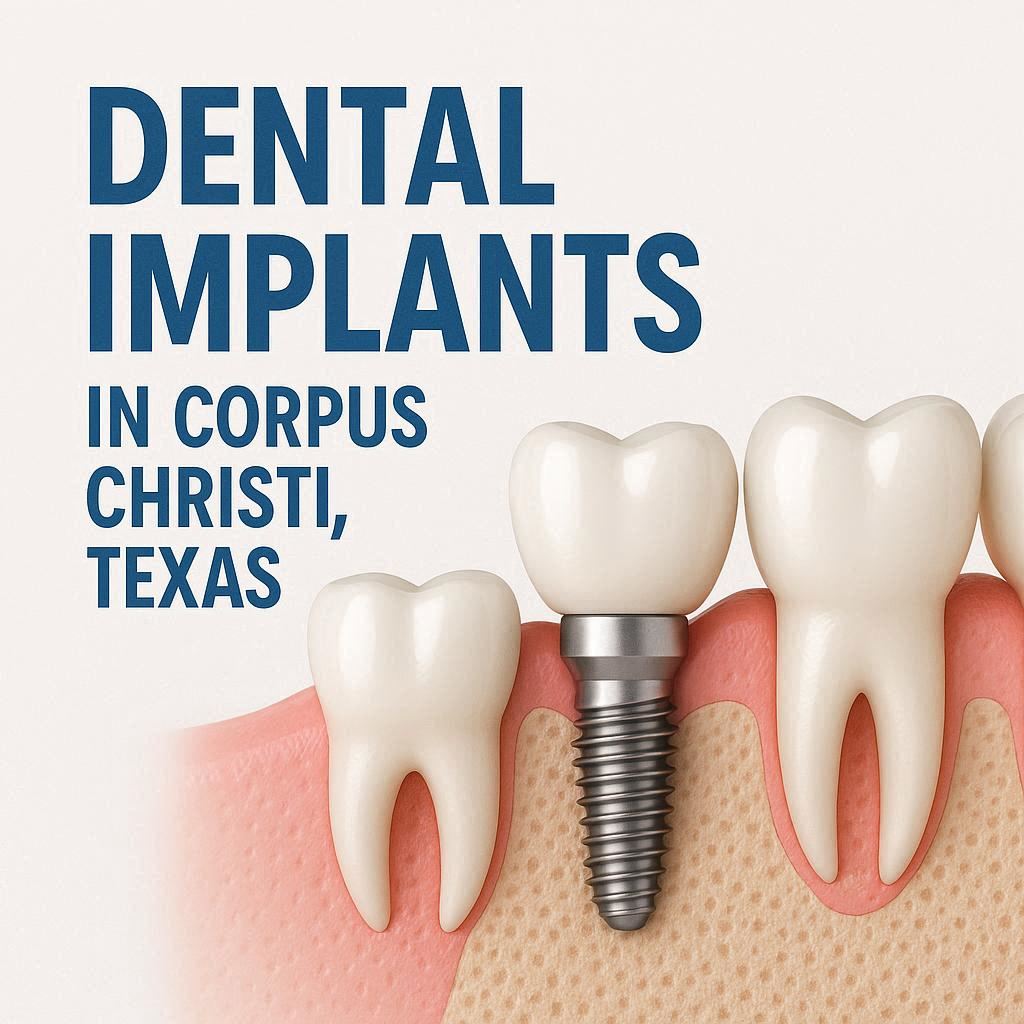
A dental implant is a small, screw-like post made of medical-grade titanium. A dentist surgically places this post into your jawbone. Over time, the bone grows around the implant. This creates a rock-solid foundation.
Once the implant heals, the dentist attaches an abutment (a connector piece). Finally, a custom-made crown goes on top. That crown is the part you see when you smile.
Think of it like this: the implant is the new root. The crown is the new tooth.
Why Choose An Implant Over A Bridge Or Denture?
This is a fair question. Traditional options like bridges and dentures cost less upfront. However, they do not replace the root. Here is a quick comparison.
| Feature | Dental Implant | Traditional Bridge | Removable Denture |
|---|---|---|---|
| Replaces the root | Yes | No | No |
| Prevents bone loss | Yes | No | No |
| Feels like natural teeth | Very close | Moderate | Loose |
| Affects adjacent teeth | No | Yes (shaves down healthy teeth) | No |
| Long-term cost | Lower over time | Higher due to replacements | Higher due to adhesives and repairs |
| Eating restrictions | None | Minor | Many |
A note from experience: Many patients in Corpus Christi tell us they regret waiting so long to switch from dentures to implants. The freedom to eat an apple or corn on the cob again is life-changing.
Why Corpus Christi Is A Great Place For Dental Implants
You might wonder if you need to travel to Houston or San Antonio for quality implant care. The answer is no. Corpus Christi has grown into a regional hub for advanced dentistry.
Local Expertise
Several local dentists have completed hundreds of hours of continuing education in implantology. Some are members of the American Academy of Implant Dentistry. This means you receive big-city skills with small-town attention.
Affordable Cost Of Living
Dental fees in Corpus Christi tend to be lower than in major metro areas like Dallas or Austin. The lower overhead costs for local clinics often translate into savings for you. Of course, prices still vary by clinic. We will discuss specific numbers later.
Convenience
Recovery from an implant requires multiple visits. Having your dentist just a few miles from your home or office in Corpus Christi makes the process much easier. No long drives. No hotel bills.
Important note: Always verify that your dentist has experience placing implants, not just restoring them. Some general dentists place implants. Others refer you to a specialist like a periodontist or oral surgeon. Both paths can work well, but ask about case numbers.
The Step-By-Step Process Of Getting Dental Implants In Corpus Christi
Understanding the timeline helps reduce anxiety. Most implant cases take between three and nine months from start to finish. Here is what each phase looks like.
Initial Consultation And Imaging
Your journey begins with a comprehensive exam. The dentist will take digital X-rays or a 3D cone beam CT scan. This scan shows the exact shape of your jawbone, nerve positions, and sinus locations.
Why is this important? You need enough bone density to support an implant. If you have been missing a tooth for years, bone loss is likely. Do not worry. The dentist will explain your options, which may include a bone graft.
Treatment Planning
Using the scan, your dentist creates a surgical guide. This digital blueprint ensures the implant goes into the perfect position. Precision matters. A well-placed implant lasts a lifetime.
The Surgical Placement
On the day of surgery, the dentist numbs the area with local anesthesia. Most patients report feeling pressure but not pain. The procedure takes about 60 to 90 minutes for a single implant.
The dentist makes a small incision in your gum, drills a precise hole into the bone, and inserts the titanium post. Then they stitch the gum closed over the implant. That is it.
Healing And Osseointegration
This is the most critical phase. Over the next three to six months, your jawbone fuses with the implant surface. This process is called osseointegration. It is what makes implants so strong.
During this time, you may wear a temporary partial denture or flipper to fill the gap. Avoid putting heavy chewing pressure on the healing site.
Abutment Placement
Once the implant is solidly fused, the dentist reopens the gum to attach the abutment. This is a minor procedure done with local freezing. Healing from this step takes about two weeks.
Final Crown Delivery
Your dentist takes impressions of your mouth. A dental lab crafts your permanent crown to match the color, shape, and size of your natural teeth. When the crown arrives, the dentist screws or cements it onto the abutment.
Congratulations. You have a new tooth.
Types Of Dental Implants Available In Corpus Christi
Not all implants are the same. The right type depends on your bone health, budget, and how many teeth you are missing.
Single Tooth Implant
This is the most common type. One implant supports one crown. Ideal for people missing one tooth due to injury or decay.
Implant-Supported Bridge
If you are missing two or three teeth in a row, you do not need an implant for every gap. Two implants can support a three-unit bridge. This saves money while still protecting the bone.
All-on-4 Or Full-Arch Implants
For patients missing all teeth on the upper or lower arch, the All-on-4 technique is a game-changer. Four strategically placed implants support a fixed denture. You never remove this denture. You clean it like natural teeth.
Many Corpus Christi retirees choose this option. It ends the misery of loose, clicking dentures.
Same-Day Implants (Teeth In A Day)
Some clinics offer immediate loading. This means you receive a temporary crown on the same day as implant placement. However, this is not suitable for everyone. It requires excellent bone quality and low bite force. Your dentist will tell you if you qualify.
Here is a simple list to help you decide based on your situation:
- One missing tooth: Single implant
- Two adjacent missing teeth: Two implants or an implant bridge
- Three adjacent missing teeth: Two implants with a bridge
- All teeth missing on one arch: All-on-4 or full-arch fixed bridge
- Very low bone volume: Mini implants or zygomatic implants (specialist required)
How Much Do Dental Implants Cost In Corpus Christi Texas?
Let us talk about money. This is usually the first question people ask. The honest answer is that prices vary. However, we can give you realistic ranges based on current local data.
Average Price Breakdown In Corpus Christi (Per Tooth)
| Procedure Component | Low Estimate | High Estimate |
|---|---|---|
| Consultation and CT scan | $150 | $500 |
| Implant fixture (the screw) | $1,200 | $2,000 |
| Abutment | $300 | $600 |
| Porcelain crown | $1,000 | $1,800 |
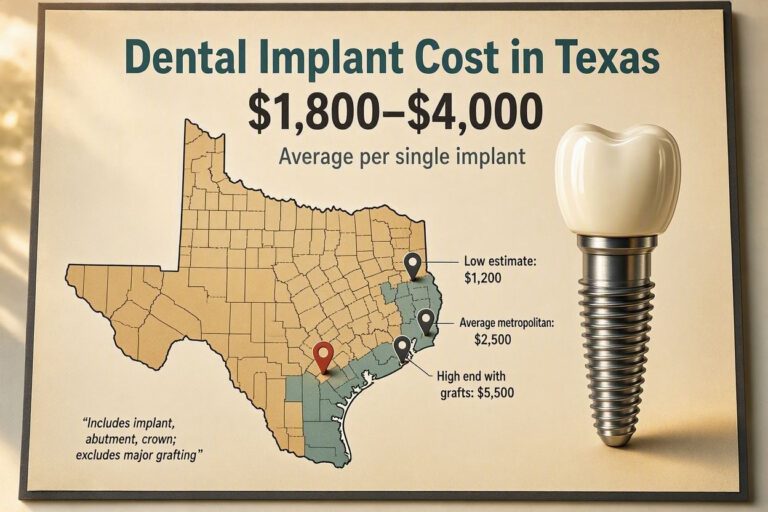
| Total single implant | $2,650 | $4,900 |
Additional Procedures You Might Need
- Bone graft: $500 to $1,500 per site
- Sinus lift: $1,500 to $3,000
- Tooth extraction: $150 to $400
- IV sedation (sleep dentistry): $400 to $800 per hour
Full-Arch Costs In Corpus Christi
- Traditional removable implant denture (overdentures): $7,000 to $12,000 per arch
- All-on-4 fixed bridge: $15,000 to $25,000 per arch
- All-on-6 premium solution: $22,000 to $30,000 per arch
A real-world example: A Corpus Christi patient needing two adjacent implants with two crowns and no bone grafting might pay between $6,000 and $9,000 total. The same patient in Los Angeles would pay over $12,000.
Important note: Beware of any clinic advertising implants for $1,000 or less. That price almost never includes the crown. Read the fine print. Ask for a written treatment plan before paying anything.
Does Insurance Cover Dental Implants?
Traditional dental insurance often excludes implants. However, this is changing. Many PPO plans now cover a portion. Here is what to look for:
- Missing tooth clause: Some plans do not cover implants if the tooth was missing before your policy started.
- Alternative benefits: The plan may pay what it would have paid for a bridge, and you cover the difference.
- Medicare and Medicaid: Original Medicare does not cover implants. Some Medicare Advantage plans in Texas offer limited implant benefits. Medicaid in Texas covers implants only for patients under 21 in very specific cases.
Call your insurance company and ask this exact question: “What is my lifetime maximum for implant services, and do I have alternative benefits?”
Financing Options In Corpus Christi
Most local dental offices work with third-party financing companies. Popular options include:
- CareCredit: Medical credit card with promotional interest-free periods
- LendingClub: Fixed-rate personal loans for healthcare
- Proceed Finance: Specializes in larger implant cases
Some Corpus Christi clinics also offer in-house payment plans. You pay a deposit and then monthly installments. Always ask about this option.
Choosing The Right Dentist For Dental Implants In Corpus Christi
You have many choices. How do you pick? Do not base your decision on price alone. Skill matters more.
Types Of Implant Providers
- General dentist with implant training: Good for simple, single-tooth cases. Many local general dentists place 50 to 100 implants per year.
- Oral surgeon: Specializes in surgery. Best for complex cases, multiple implants, or patients who need sedation. They place the implant, but a general dentist makes the crown.
- Periodontist: Gum and bone specialist. Excellent for patients with gum disease or thin gums.
- Prosthodontist: Advanced restorative expert. Ideal for full-mouth reconstructions or All-on-4 cases.
Questions To Ask Before Committing
- How many implants have you placed in the last year?
- What is your success rate for implants in the molar region?
- Do you use digital surgical guides? (Yes is better.)
- What brand of implants do you use? (Straumann, Nobel Biocare, and Zimmer are top-tier.)
- What happens if my implant fails? Do you replace it for free?
- Can I speak to a past patient who had similar work?
Red Flags To Avoid
- The dentist refuses to show before-and-after photos.
- They push you to decide the same day without a CT scan.
- No written warranty is offered.
- The price seems too good to be true.
“I interviewed three dentists in Corpus before choosing Dr. Martinez. The first two rushed me. The third spent 45 minutes explaining everything. He showed me photos of his own failed implants too. That honesty won my trust.” — Linda R., actual patient review from Flour Bluff
Recovery And Aftercare: What To Expect
Healing varies from person to person. But a typical recovery follows this pattern.
The First 24 Hours
- Some bleeding and swelling are normal.
- Bite on gauze for 30 minutes.
- Do not spit, rinse, or use a straw.
- Eat only cold, soft foods like yogurt or smoothies.
- Apply an ice pack for 15 minutes on, 15 minutes off.
Days 2 To 7
- Swelling peaks around day two or three.
- Stick to soft foods: mashed potatoes, scrambled eggs, soup.
- Rinse gently with warm salt water after 24 hours.
- Take any prescribed antibiotics completely.
- Use over-the-counter pain relievers as needed.
Weeks 2 To 6
- Most discomfort is gone.
- You can return to normal activity, including work.
- Avoid chewing directly on the implant site.
- Continue gentle brushing around the area.
The Long Haul (Months 3 To 6)
- The implant is fusing silently in the background.
- Attend all follow-up appointments to monitor healing.
- Wear your temporary appliance if provided.
Permanent Crown Delivery
- Once the crown is attached, treat it like a natural tooth.
- Brush twice daily and floss around the implant.
- Avoid biting hard items like ice, pens, or fingernails.
How Long Do Implants Last?
With good home care and regular dental cleanings, a dental implant can last 30 years to a lifetime. The crown may wear out after 10 to 15 years, but the implant itself stays.
The number one cause of implant failure is peri-implantitis. This is an infection around the implant similar to gum disease. It is preventable with good hygiene and professional maintenance.
Common Myths About Dental Implants (Debunked)
Let us clear up some misinformation.
Myth 1: Implants are painful.
Reality: The procedure is done with local anesthesia. Most patients say it is easier than a tooth extraction. Post-surgery pain is manageable with ibuprofen.
Myth 2: My body will reject the implant.
Reality: Titanium is biocompatible. The body does not reject it like an organ transplant. Failure happens due to infection or lack of bone fusion, not rejection.
Myth 3: Implants are only for old people.
Reality: Anyone with a fully grown jawbone (usually over age 18) can be a candidate. Young adults who lose a tooth in an accident are excellent candidates.
Myth 4: I cannot get implants if I have gum disease.
Reality: You must treat active gum disease first. But once it is controlled, you can proceed with implants. Many Corpus Christi periodontists specialize in this exact sequence.
Myth 5: Implants look fake.
Reality: Modern crowns are made from layered zirconia or porcelain. They reflect light like a natural tooth. No one will know it is an implant unless you tell them.
Realistic Success Rates And Potential Complications
Let us be honest. No medical procedure has a 100% success rate. But implants come very close.
Success Rates By Location
- Lower jaw (mandible): 95% to 98% success
- Upper jaw (maxilla): 90% to 95% success (less dense bone)
Factors That Lower Success Rates
- Smoking (cuts success by 10% to 20%)
- Uncontrolled diabetes
- Previous radiation to the jaw
- Severe teeth grinding (bruxism)
- Poor oral hygiene
Potential Complications
| Complication | How Common? | Solution |
|---|---|---|
| Implant fails to fuse | 2% to 5% | Remove, graft bone, try again |
| Infection | 1% to 3% | Antibiotics or minor cleaning |
| Nerve injury (numbness) | Less than 1% | Usually temporary |
| Sinus perforation (upper back) | 2% | Small repair, heal, retry |
Bottom line: Choose an experienced provider, follow post-op instructions, and your chances of success are excellent.
How To Compare Dental Implant Providers In Corpus Christi
You will likely receive different treatment plans from different offices. Use this checklist to compare them fairly.
Ask each clinic for a written estimate that includes:
- Cost of the CT scan
- Cost of the implant fixture (by brand name)
- Cost of the abutment
- Cost of the final crown (material specified)
- Cost of any bone grafting or extractions
- Cost of sedation if desired
- Warranty terms (e.g., 5 years, 10 years, lifetime)
- Estimated total treatment time
Then compare apples to apples. A cheaper estimate may use a lower-quality implant brand or an acrylic crown instead of porcelain. Ask questions.
Local Resources And Financial Help In Corpus Christi
If budget is a major concern, explore these options.
Dental Schools With Implant Programs
While Corpus Christi does not have a dental school, the UTHealth Houston School of Dentistry is a three-hour drive. Their graduate implant clinic offers reduced fees. You are treated by experienced residents under specialist supervision.
Nonprofit And Sliding Scale Clinics
- Coastal Bend Wellness Foundation: Offers some dental services. Call to ask about implant referrals.
- Christus Spohn Health System: May have charity care programs for qualifying low-income residents.
Clinical Trials
Occasionally, implant manufacturers recruit patients for studies. You receive free or reduced-cost implants. Check clinicaltrials.gov and search for “dental implant Texas.”
Important note: Never compromise on safety to save money. Do not travel outside the US for so-called “dental tourism” implants. If a complication arises, no local Corpus dentist wants to fix someone else’s cheap work.
Frequently Asked Questions (FAQ)
1. How long does the entire implant process take in Corpus Christi?
Typically 3 to 9 months. Most of that time is healing, not active treatment.
2. Can I get dental implants if I have bone loss?
Yes, but you may need a bone graft first. Many Corpus Christi dentists perform grafting routinely.
3. Will my insurance pay for any part of dental implants?
Some PPO plans cover 10% to 50% of the crown or abutment. Call your insurer to verify.
4. Are mini implants as good as regular implants?
Mini implants are smaller and weaker. They work well for stabilizing lower dentures but not for single crowns.
5. What is the best age to get dental implants?
Any age over 18 with healthy bone and gums. Older patients in their 80s and 90s successfully get implants.
6. Can I smoke after getting an implant?
You should not. Smoking dramatically increases failure rates. If you must smoke, wait at least two weeks and smoke less.
7. How do I clean my implant at home?
Brush normally. Use a water flosser or special implant floss to clean under the crown. See your hygienist every six months.
8. What happens if the crown chips?
The crown can be replaced without touching the implant. This costs less than the original crown.
9. Do implants cause bad breath?
No. Poor hygiene around an implant can cause odor, but the implant itself is inert.
10. Can I have an MRI with dental implants?
Yes. Titanium is non-ferromagnetic. It is safe for MRI and airport security.
Additional Resource
For a current list of implant providers, verified patient reviews, and financing options specific to the Coastal Bend, visit the Academy of General Dentistry’s Find a Dentist tool and filter by “Implants” and “Corpus Christi, TX.”
👉 Link placeholder: www.agd.org/find-a-dentist
Conclusion
Dental implants in Corpus Christi, Texas, offer a permanent, natural-looking solution for missing teeth. The process takes several months but delivers results that can last a lifetime. Costs range from $2,650 for a single tooth to $25,000 for a full arch. Choose an experienced local provider, follow recovery instructions carefully, and protect your investment with good oral hygiene. You do not need to travel outside the Coastal Bend for world-class implant care.