can diatomaceous earth help with tooth infection in humans?
A throbbing toothache can drive anyone to desperation. When the pain radiates through your jaw and keeps you up at night, the internet can feel like a lifeline. You might scroll through home remedy forums and stumble upon a peculiar suggestion: diatomaceous earth. People claim this fine, chalky powder can cure infections, detoxify the body, and even save you from a root canal.
But can diatomaceous earth help with tooth infection in humans, or is this a dangerous path paved with false hope? This article doesn’t rely on internet hearsay. We will take a forensic look at the properties of diatomaceous earth, the biological reality of a tooth infection, and the very real risks of putting an abrasive silica powder in your mouth. Before you reach for that bag of “fossil shell flour” in your pantry, read this complete guide. Your health depends on it.
Understanding Tooth Infections: It’s Not Just a Toothache
Before we can assess any remedy, we must understand the enemy. A tooth infection is not a simple surface wound. It is a deep-seated bacterial invasion that requires mechanical intervention.
The Anatomy of a Dental Abscess
A tooth isn’t a solid piece of bone. Inside the hard enamel and dentin lies a soft chamber called the pulp. This chamber contains nerves, connective tissue, and blood vessels. When decay, a crack, or trauma exposes this inner sanctuary, bacteria rush in.
Once bacteria colonize the pulp, they multiply rapidly. Your immune system sends white blood cells to fight the infection. Pus forms, a thick fluid composed of dead tissue, bacteria, and immune cells. This pus needs somewhere to go.
It often collects at the tip of the root, within the jawbone. This is a periapical abscess. The pressure builds. The swelling begins. The pain becomes excruciating because the pus presses against the sensitive tissues and bone.
Critical Fact: The infection is now sealed off from the outside world. It sits deep inside a bony cavity. No liquid you drink or powder you place on your gum can enter that sealed chamber in therapeutic concentrations.
The Dangerous Spread of Odontogenic Infections
An infected tooth will not heal itself. The bacteria are protected. If you ignore it, the infection doesn’t stay put. It follows the path of least resistance through the cancellous bone and fascia planes in your face and neck.
- Ludwig’s Angina: This is a rapidly spreading cellulitis of the floor of the mouth and neck. It can block your airway within hours. This condition is a surgical emergency with a mortality rate even with modern care.
- Sepsis: Bacteria from the abscess can enter the bloodstream. This systemic infection, called sepsis, causes organ failure and septic shock.
- Brain Abscess: The maxillary teeth are dangerously close to the brain. Infection can travel through the venous system.
“The death of a tooth nerve is not the end of the problem. It is the beginning. The non-vital tooth becomes a sterile reservoir for pathogens.” — A stark reminder from endodontic literature.
What Exactly Is Diatomaceous Earth?
To understand if it can help an infection, we need to know what this substance actually is. Diatomaceous earth, or DE, is not a medicinal herb. It is not a chemical compound. It is a geological deposit.
The Microscopic Shards of Death (For Insects)
Diatomaceous earth is made from the fossilized remains of tiny, aquatic organisms called diatoms. These single-celled algae have skeletons made of silica. Over millions of years, these skeletons accumulated on the floors of lakes and oceans. Today, we mine this chalky rock.
There are two main grades:
- Food Grade: Contains less than 1% crystalline silica. This is the type used in grain storage and some supplements.
- Filter Grade (Pool Grade): Contains high amounts of crystalline silica. This type is extremely toxic to human lungs and is calcined (heat-treated) to make it a sharper, more effective filter. You must never, ever put this in your body.
Under a microscope, the fossilized diatoms look like tiny pieces of broken glass. They are hollow cylinders, sharp spines, and jagged honeycomb structures. This physical structure is the key to its function.
The Mechanism of Insect Control
Diatomaceous earth kills bugs physically, not chemically. When an insect crawls through the powder, the microscopic shards stick to its exoskeleton. They scratch and abrade the waxy outer layer. The insect then loses moisture rapidly, desiccates, and dies. It is a purely mechanical action of abrasive absorption.
This is vital to our discussion. Humans are not insects. We have soft, moist mucous membranes. We do not have a waxy exoskeleton that can be desiccated.
The Difference Between Insect Control and Medicine
Table: Biological Interaction Comparison
| Feature | Insect Exoskeleton (On Bug) | Human Tooth Infection (Internal) |
|---|---|---|
| Target Location | Outside the body | Deep inside the jawbone, sealed chamber |
| Barrier | Waxy, dry cuticle | Bone, soft tissue, biofilm, pus, blood |
| Action Required | Abrasion of a dry surface | Penetration of tissue to kill specific bacteria |
| DE’s Effect | Direct contact causes cuts and dehydration | Powder sits on wet gum; cannot penetrate to pulp |
| Outcome | Insect dies from water loss | Zero bactericidal effect on the abscess; potential physical harm |
This table illustrates a fundamental mismatch. The property that kills a cockroach is irrelevant to killing bacteria inside a sealed, internal human infection.
Can Diatomaceous Earth Help With Tooth Infection in Humans? The Direct Answer
We must ask the question with surgical precision: can diatomaceous earth help with tooth infection in humans? Based on biology, physics, and chemistry, the realistic answer is a firm no. It does not help. It may, in fact, cause a cascade of new problems while delaying life-saving care.
Let’s break down the claims one by one and see how they collapse under scientific scrutiny.
Claim 1: Diatomaceous Earth Kills Bacteria
This is the most common and most dangerous claim. Proponents argue that the sharp edges of DE can slice bacteria or that it absorbs them.
The Reality:
Bacteria are microscopic. They live in a fluid, biological environment. For DE shards to physically cut bacteria, the bacteria would need to be dry and rubbed against the powder, like a bug. In the wet, protein-rich environment of an infection, silica particles become coated with bodily fluids immediately. They lose their abrasive edge.
Moreover, standard dental pathogens like Streptococcus mutans, Porphyromonas gingivalis, and Enterococcus faecalis are not killed by silica powder. They are killed by antibiotics, mechanical debridement, and antiseptics like sodium hypochlorite.
A 2019 study in Materials Science and Engineering: C did explore nano-silica particles for antibacterial delivery. However, the raw microparticles in food-grade DE are not comparable to engineered, surface-functionalized nanoparticles. Raw DE has no inherent, clinically relevant bactericidal property against a deep-seated infection.
Claim 2: DE Detoxifies the Tooth
The logic often goes: “DE pulls toxins out of the infection site.”
The Reality:
This confuses the concept of intestinal detoxification with localized infection. A tooth abscess is not a sponge filled with “toxins” that a powder can absorb. It is a battlefield of live, multiplying bacteria and dying immune cells. The source of the problem is the bacterial colony and the necrotic pulp tissue acting as a food source.
“Diatomaceous earth as a detoxifier works on the principle of cation exchange in the gut, absorbing heavy metals. Applying it to a dental abscess is like putting a sponge on a locked door and expecting it to clean the room inside.” — Paraphrase of toxicology expert opinion.
The only way to “detoxify” a tooth abscess is to open the tooth, physically remove the infected pulp, irrigate the canal with disinfectant, and seal it. A surface powder is physically incapable of entering the microtubules of dentin where bacteria hide.
Claim 3: DE Provides Systemic Minerals to Fight Infection
Some people advise ingesting DE to provide silica and calcium, hoping this will boost the immune system to fight the tooth infection.
The Reality:
Tooth infections are acute crises. They are not a chronic mineral deficiency. Your body cannot remineralize an active abscess from the inside out via dietary silica. The process of periapical inflammation is a destructive cycle of bone resorption. No amount of dissolved silica will reverse a necrotic pulp. You require immediate, localized mechanical treatment to remove the necrotic tissue.
Delaying treatment to try a mineral supplement allows the bacteria more time to proliferate and destroy periapical bone. This is a dangerous and ineffective trade-off.
Physical Risks of Using DE in Your Mouth
Using diatomaceous earth for a tooth infection isn’t just an ineffective placebo. It’s a physically abrasive substance with documented risks when applied to human soft tissue.
The Abrasion Factor: Gum Recession and Enamel Damage
On the Mohs hardness scale, tooth enamel scores a 5. Dentin scores around a 3. Diatomaceous earth, made of silica, scores between a 5 and a 7.
Imagine rubbing a powder with a hardness equivalent to or greater than your teeth on your inflamed, swollen gums. You are literally sanding away the epithelium. A swollen gum over an abscess is friable (easily torn). Applying an abrasive paste creates open micro-wounds.
- Gum Recession: Aggressive rubbing with abrasive powders permanently wears away the gum line. Gums do not grow back.
- Enamel Stripping: If you rub DE on your teeth hoping to “absorb” the infection, you create deep scratches in the enamel. These scratches become new havens for plaque and bacteria, setting you up for future decay.
- Pocket Irritation: Particles can pack into the gingival sulcus (the pocket between tooth and gum), causing a foreign body reaction and painful localized inflammation, completely separate from the underlying abscess.
The Inhalation Danger: Silicosis Risk
This is the most alarming risk. Handling diatomaceous earth, especially pouring a dry spoonful onto a toothbrush, creates airborne dust. Those “microscopic shards” we discussed don’t just abrade insects; they lacerate human lung tissue.
Crystalline silica, even in the small percentages found in food-grade DE, is a known human carcinogen when inhaled. Repeated exposure can cause silicosis, a progressive, incurable lung disease characterized by scarring and inflammation. When you hold a powder under your nose and near your open mouth to treat a tooth, the risk of inhaling a fine dust cloud is extremely high.
Important Note: Even if the bag says “food grade,” this designation relates to ingestion and a crystalline silica content below 1%. It does not mean it is safe to inhale. There is no safe level of crystalline silica inhalation.
Table: Comparing the “Treatment” to the Risks
| The Proposed Action | The Intended Benefit | The Real Physical Risk |
|---|---|---|
| Placing dry DE powder on the gum. | Absorb pus and bacteria. | Desiccates oral mucosa, causing tissue death. Traps bacteria against the gum. |
| Making a DE paste to brush onto the abscess. | Kill the infection locally. | Abrades the epithelium, creates entry points for bacteria into the bloodstream. Bruises the abscess, increasing pain. |
| Packing a cavity with DE. | Stop the pain. | Pushes abrasive particles directly into the pulp or against the nerve via the cavity floor, causing mechanical agony. |
| Rinsing with DE in water. | “Scrub” the mouth clean. | Micro-abrasion of all soft tissue. Significant inhalation risk as you swish and sputter. |
The Psychological Trap: Why We Believe It Works
If DE is so dangerous and ineffective, why do people claim “it worked for their tooth infection”? The answer lies in misinterpreting the body’s natural defense mechanisms.
Spontaneous Fistula Drainage
A dental abscess, as pressure builds, will try to vent itself. It does this by creating a fistula, a small channel through the bone and gum that looks like a pimple on the gum. When this “gum boil” bursts, pus drains into the mouth.
A person might have applied DE paste right before this spontaneous rupture occurred. They experience the immediate release of pressure and the salty taste of pus. They attribute the relief to the DE. The reality is the abscess reached a pressure threshold and drained on its own. The DE was merely a witness to a physiological event.
The Placebo and Distraction Effect
Pain is a subjective experience. The intense ritual of mixing a paste, applying it, and believing in a “natural cure” can release endorphins and provide a temporary placebo effect. Additionally, the gritty sensation might distract the brain from the deeper, throbbing pain.
This temporary distraction is lethal. It reassures the sufferer that they are managing the problem, while the bacterial colony continues to expand into the bone. The pain might subside not because of healing, but because the infection has destroyed the nerve endings and the tooth is now completely necrotic.
A Warning from Clinical Practice
“Dentists routinely encounter patients who have delayed treatment for months, relying on internet remedies. The abscess doesn’t go away. We see massive bone destruction on the X-ray, where a simple, affordable filling could have saved the tooth months prior. Now, the tooth is non-restorable, and the patient faces a surgical extraction and a bone graft.” — A composite reflection of dental professional experiences.
The Only Proven Path: Definitive Dental Treatment
Dental science has spent over a century perfecting the treatments for tooth infections. These treatments are targeted, reliable, and based on biology.
The Breakpoint: Can the Tooth Be Saved?
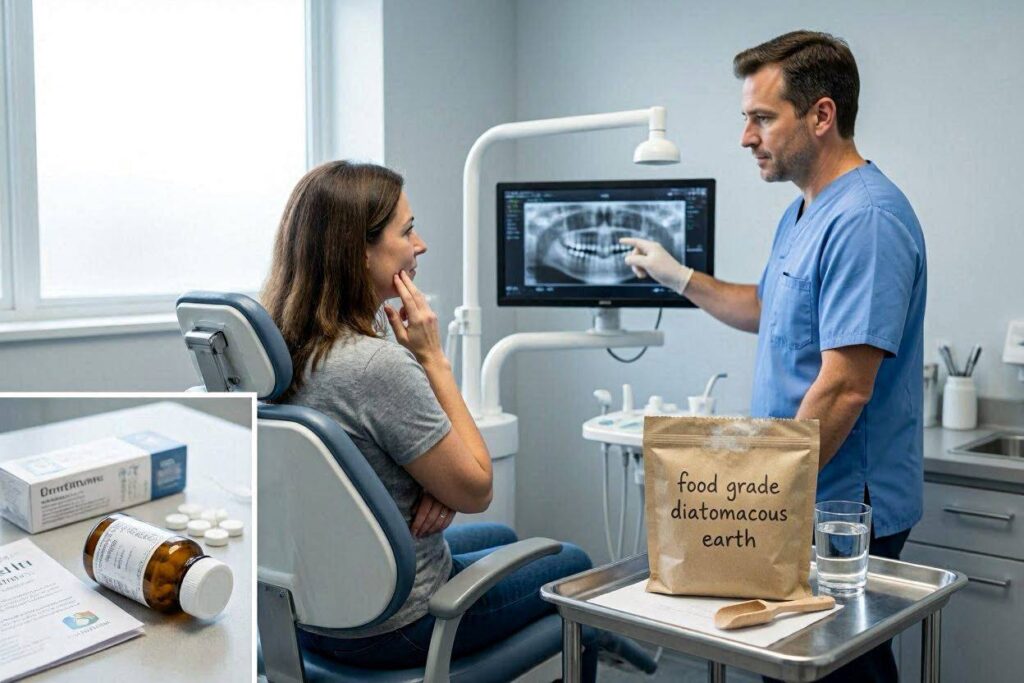
The first step is a diagnosis. A dentist tests the tooth with cold, percussion, and palpation. An X-ray is essential. The radiograph reveals the extent of the infection in the bone.
Signs a tooth can be saved (Root Canal Treatment):
- Sufficient healthy tooth structure remains above the gum line.
- The root structure is intact, with no vertical fractures.
- The bone loss is localized and treatable.
Signs the tooth must be extracted:
- A vertical root fracture extends down the length of the root.
- Decay extends deep below the gum line, making a crown impossible.
- The tooth is mobile (grade 3 mobility) due to complete bone loss.
The Root Canal Process: Step by Step
This is the standard of care. Understanding the precision of this procedure highlights the absurdity of a surface powder.
- Access and Isolation: A rubber dam isolates the tooth, keeping saliva bacteria out and the disinfectant in. The dentist drills a small access hole into the pulp chamber.
- Debridement: Tiny files physically scrape and remove the dead, infected pulp tissue from the main canals.
- Chemical Disinfection: The canals are flushed repeatedly with sodium hypochlorite (bleach) or chlorhexidine. This dissolves any remaining tissue and kills bacteria in the thousands of microscopic side canals where a powder could never reach.
- Obturation: Once the tooth is completely symptom-free and dry, the cleaned, disinfected canals are sealed with a biocompatible material called gutta-percha. The source of the infection is permanently entombed.
- Restoration: The access hole is sealed. Often a crown is required to protect the now-brittle tooth from fracturing.
Extraction and Replacement
If the tooth is non-restorable, extraction is the only cure. The infected source is removed entirely. The dentist then curettes the socket, scraping out the infected granulation tissue and abscess lining from the bone. The body can then heal the bone naturally. Leaving the socket to heal is critical before considering replacement options like implants or bridges.
The Only Acceptable Role: Not What You Think
Is there any place for a silica powder in oral health? Not for an active infection. An active infection is a “red flag” symptom requiring a professional. However, the confusion often stems from DE’s role as a gentle abrasive in some natural tooth powders.
DE as a Mild Polish (Not a Cure)
Some holistic toothpaste brands include diatomaceous earth as a mild abrasive alternative to hydrated silica. In a professionally formulated paste with proper particle size control, humectants, and anti-caking agents, it can act to mechanically remove surface biofilm on healthy teeth.
This is preventative, surface-level cleaning. It has no bearing on an internal infection. Think of it like this: washing your car’s paintwork prevents rust, but it won’t fix a blown head gasket. Polishing a tooth with a DE paste does not remove bacteria inside the pulp chamber.
Important Note: I do not recommend making your own abrasive paste. Without industrial particle grading, a DIY DE toothpaste is inconsistent and dangerously harsh on enamel. If you want a low-abrasion toothpaste, look for one with an RDA (Relative Dentin Abrasivity) value clearly stated and approved.
Safe, Evidence-Based Supportive Care While You Wait
You have decided to see a dentist (the correct choice), but your appointment is tomorrow. What can you do to manage the pain and swelling safely without abrasive powders?
Your Pre-Dentist Emergency Kit
- Salt Water Rinse (The Gold Standard): Mix 1 teaspoon of salt in a cup of warm water. Rinse gently. This creates a hypertonic solution that draws fluid out of the swollen gums via osmosis, temporarily reducing pressure. It is completely safe, non-abrasive, and mildly disinfectant.
- Cold Compress: Apply an ice pack to the outside of your cheek for 15 minutes on, 15 minutes off. This constricts blood vessels, reducing swelling and providing a numbing effect.
- Over-the-Counter Pain Relief (NSAIDs): Ibuprofen is generally more effective for dental pain than acetaminophen because it addresses the inflammatory component. Always follow the dosage on the label and verify with a pharmacist it is safe for you.
- Elevation: Keep your head elevated. When you lie flat, blood pressure to the head increases, and the throbbing gets worse. Sleep propped up on pillows.
- Clove Oil (With Caution): Eugenol, the active component in clove oil, is a natural topical anesthetic and antibacterial. Apply a tiny amount to a cotton ball and place it directly on the painful tooth. Do not let it pool on the gums or tongue, as it can cause chemical burns. Use it only as a temporary bridge, not a substitute for treatment.
The Danger of Heat and Aspirin on Gums
- Never apply a heating pad externally over a swollen face. Heat increases blood flow and will dramatically worsen the swelling and pain.
- Never place a crushed aspirin tablet on the gum. This is an old wives’ tale. Aspirin is acetylsalicylic acid. It will not absorb into the bone; it will simply cause a severe chemical burn on your gum tissue, creating a white, painful slough on top of the infection.
The Bottom Line: A Hard Truth for Natural Health
The desire to use natural remedies stems from a valid place. People want autonomy, they fear dental costs, and they distrust pharmaceuticals. However, the biology of a tooth infection does not bend to intention. A tooth infection is a confined, mechanical problem. The pulp chamber is a closed-off, hard-shelled casing.
Diatomaceous earth is a physical, abrasive powder. It cannot turn a corner. It cannot dissolve through dentin. It cannot distinguish between healthy gum tissue and an abscess. It abrades everything it touches mechanically.
To ask, “can diatomaceous earth help with tooth infection in humans?” is to ask if sandpaper can fix a leak in a pipe. The tool is fundamentally unsuited to the problem.
It cannot help. It can hurt. The abrasive action can breach the thin tissue over an abscess, causing it to drain into your mouth, which feels like relief. But the source of the pus, the necrotic tissue inside the tooth, remains untouched. The relief is a biological trick, not a cure.
Frequently Asked Questions
Is putting diatomaceous earth on a gum boil safe?
No. The tissue over a gum boil is thin and fragile. An abrasive powder can rupture it prematurely before adequate pressure drainage is ready, or push abrasive particles deep into the fistula tract, causing a foreign body reaction and exacerbating the infection.
Can I mix diatomaceous earth with water and drink it for a tooth infection?
Drinking food-grade DE water will not treat a tooth infection. Once swallowed, it enters the digestive system. It never reaches the infected pulp in therapeutic concentrations. It can also cause esophageal irritation if not diluted properly. An active, internal infection requires local or systemic antibiotics and mechanical removal of the source.
What happens if an abscess bursts on its own while I’m using DE?
If you were applying DE and the abscess bursts, do not assume the DE helped. Rinse your mouth immediately with sterile saline or salt water to remove the powder and pus. The drainage provides temporary pain relief, but the infection source remains. You are still in urgent need of dental care to prevent the fistula from closing and re-abscessing.
Does diatomaceous earth help with receding gums?
No. It is a causative agent of gum recession, not a treatment. Applying abrasive powders to the delicate gum line erodes the soft tissue. For receding gums, you need a soft toothbrush, correct brushing technique, and professional periodontal evaluation.
Why do some natural dentists talk about diatomaceous earth?
Some holistic dentists discuss silica as a nutritional supplement for bone density, similar to calcium. This is different from applying raw powder to an infected tooth. Nutritional support is a long-term wellness strategy, not an acute infection treatment. Do not confuse the two concepts.
Additional Resource: Where to Look
For evidence-based information on endodontic (root canal) treatment and dental emergencies, look to the official patient resources provided by the American Association of Endodontists. Their website offers clear, scientifically validated explanations of what a tooth infection is and how it must be treated to save the tooth safely. Visit aae.org/patients for reliable guidance.
Conclusion:
Diatomaceous earth cannot physically reach or neutralize a sealed tooth infection and applying it only introduces severe risks of abrasion, gum damage, and dangerous inhalation. Believing in its false relief delays the definitive mechanical treatment required, transforming a savable tooth into a life-threatening crisis. The only cure for a dental abscess is the clinical removal of the infected source by a professional, so swap the powder for a dentist’s number.
Disclaimer:
This article is for informational and educational purposes only and does not constitute medical or dental advice. A tooth infection is a serious medical condition that can lead to life-threatening complications if left untreated. The information provided here is not a substitute for a professional diagnosis and treatment from a licensed dentist. If you are experiencing symptoms of a dental infection, seek emergency dental care immediately.