What is the Best Home Remedy for Whitening Teeth?
A bright, white smile often signals health, confidence, and vitality. Yet, the reality is that few of us have naturally brilliant teeth, and daily habits like drinking coffee, tea, or red wine, along with the simple passage of time, can dull our smiles. The market responds with a dizzying array of whitening strips, gels, and professional laser treatments. These can be expensive, cause tooth sensitivity, and rely on strong chemicals. So, you might find yourself asking a very logical question: What is the best home remedy for whitening teeth that is both safe and actually works?
The answer is not a single magic ingredient, but rather an approach. The most effective home remedy balances genuine stain-removing power with the safety of your enamel and gums. It must be a method you can use consistently without causing long-term harm. After sifting through anecdotal traditions, modern scientific studies, and the advice of dental professionals, one method consistently rises to the top as the most reliable, safest, and effective: brushing with a simple paste of baking soda and hydrogen peroxide.
This is not a myth. It is a chemistry-backed strategy that, when used correctly and sparingly, provides gentle abrasion to scrub away surface stains and a low-concentration bleaching effect to lighten them. It is the foundational champion of home whitening because it solves the aesthetic problem without creating a health crisis. This comprehensive guide will not only show you how to use this golden-standard remedy correctly but will also rigorously evaluate every other popular home method. We will strip away the hype, expose the dangerous trends, and provide you with a complete, realistic, and lasting guide to a brighter smile from your own kitchen.
Understanding the Science of Tooth Discoloration
Before you can effectively whiten your teeth at home, you must understand what you are fighting. Tooth discoloration is not a single condition; it is a complex issue with multiple layers. Without this foundational knowledge, any attempt at whitening is just guesswork.
Extrinsic vs. Intrinsic Stains: The Two-Tiered Problem
Imagine your tooth as a sponge with a hard, shiny shell. The shell is the enamel, and the sponge beneath is the dentin. Stains occur on both levels, and each requires a completely different approach.
Extrinsic Stains: The Surface Layer
Extrinsic stains are external. They form on the surface of the enamel, the hard, protective outer layer of the tooth. Think of it like a microscopic, sticky film—the pellicle layer—that grabs hold of pigmented compounds. The primary culprits include deeply colored foods and drinks like coffee, tea, red wine, cola, berries, and dark sauces. Lifestyle habits, especially smoking and chewing tobacco, are major contributors, depositing tar and nicotine that create stubborn yellow-brown stains. Even seemingly harmless substances like chlorhexidine, a component in some prescription mouthwashes, can cause staining.
The good news is that extrinsic stains are the easiest to treat. Because they sit on the surface, they can be mechanically disrupted and removed through abrasion or chemically dissolved with bleaching agents. This is the primary target for most effective home remedies.
Intrinsic Stains: The Deep Discoloration
Intrinsic stains are internal. They occur within the tooth structure itself, deep inside the enamel and the softer, more yellow dentin layer beneath. This type of discoloration is far more challenging to address. Its causes are varied:
- Aging: As we age, the outer enamel layer naturally thins and wears away, revealing more of the yellow-hued dentin underneath. This is a primary reason why teeth naturally yellow with time, regardless of diet.
- Trauma: A fall or a blow to a tooth can cause it to bleed internally or die, leading to a dark gray, black, or brown discoloration.
- Medication: Certain antibiotics, most notably tetracycline and doxycycline, can cause profound, banded gray or brown intrinsic stains if taken during tooth formation in childhood.
- Excessive Fluoride: Ingesting high levels of fluoride during enamel development can lead to a condition called fluorosis, which causes white spots or, in severe cases, brown pitting.
- Genetics: Some people are simply born with naturally brighter, thicker enamel or lighter-shade dentin.
This distinction is critical. No home remedy can eliminate a true intrinsic stain. A tetracycline stain is part of the tooth’s chemical structure. A whitening paste, no matter how abrasive, will not scrub it away. Only professional-grade, high-concentration peroxide gels, properly applied by a dentist in a controlled treatment, can penetrate the enamel to break down internal chromophores (color-causing molecules). Setting realistic expectations is the first step toward success.
The Role of Enamel: The Semi-Transparent Shield
Enamel is the rock-star tissue of the human body—the hardest substance we produce. However, it is not a solid, impervious white block. It is a semi-translucent, crystalline structure composed primarily of hydroxyapatite. Think of it like a frosted glass window. Light passes through it, scatters, and reflects back. What you perceive as the tooth’s color is a combination of light reflecting off the outer enamel surface and, more significantly, the color of the underlying dentin shining through.
This semi-translucency is the key to understanding why whitening works and why it can fail. Strong bleaching agents like hydrogen peroxide work by passing through the microscopic pores of the enamel and into the dentin, where they oxidize the deeply embedded colored molecules. The less dentin there is, or the lighter it is, the whiter the tooth appears. The “white spots” from fluorosis or early decay are areas where the enamel has become demineralized and more porous, scattering light differently and appearing opaque white compared to the healthy surrounding enamel.
Protecting the integrity of this enamel shield is the single most important rule of any whitening practice. Damaged, thinned, or eroded enamel cannot be regenerated by the body. Once it’s gone, it’s gone. Thinned enamel reveals more dentin, making teeth look permanently darker, more yellow, and increasingly sensitive. This is why aggressively abrasive remedies like charcoal or pure lemon juice scrubs are a catastrophic trade-off for a temporary, minor whitening effect. You are literally scrubbing away the very tissue you want to keep bright and healthy.
The Golden Standard: Baking Soda and Hydrogen Peroxide
When asking, what is the best home remedy for whitening teeth, the answer backed by the most scientific consensus and clinical safety data is a combination of baking soda (sodium bicarbonate) and hydrogen peroxide. This isn’t a folk tale; it’s a practical application of gentle, effective chemistry. Many commercial toothpaste brands use these exact ingredients, but making a fresh paste at home allows you to control the concentration and avoid the humectants, detergents, and preservatives found in tubes.
Why This Combination is the Best
This dynamic duo works through a powerful synergy of two different mechanisms: gentle mechanical abrasion and potent chemical oxidation. Baking soda provides the physical scrubbing action. Its particles are microscopically shaped, soft, and highly soluble, unlike the jagged, hard particles of silica or charcoal. This allows it to effectively disrupt and scrub away the protein-based pellicle layer and the sticky plaque on the tooth surface where extrinsic stains live, without scratching or gouging the enamel surface. Studies measuring dentin abrasivity, using the Relative Dentin Abrasivity (RDA) scale, consistently rank pure baking soda as low-abrasive. For context, many whitening toothpastes have much higher, enamel-harming scores.
Hydrogen peroxide provides the chemical action. As a powerful oxidizing agent, it releases unstable oxygen molecules. These molecules react with the complex organic chromophores that make up stains, breaking their double and single chemical bonds. This chemical reaction transforms the large, deeply pigmented stain molecules into smaller, colorless molecules that no longer absorb visible light in the same way. The result is a true bleaching effect that physically abrading a surface cannot achieve. The bubbling action of the peroxide also helps lift newly loosened stain particles away from the tooth surface.
Together, the baking soda’s scrubbing clears the surface battlefield for the peroxide, and the peroxide bleaches any residual color from the microscopic pits in the enamel.
The Safe and Effective Recipe
Creating the paste correctly is crucial. A mix that is too runny will be ineffective, and a dry, highly alkaline paste used too often can potentially irritate gums.
Ingredients:
- 1 teaspoon of high-quality, food-grade baking soda (sodium bicarbonate). Ensure it is fresh and not the box that has been absorbing refrigerator odors for a year.
- 1 to 1.5 teaspoons of a 3% hydrogen peroxide solution. This is the standard concentration found in brown bottles at any pharmacy. Never, under any circumstances, use higher concentrations sold for hair bleaching or industrial use. They will cause severe chemical burns.
- Optional: a drop of a safe, edible essential oil like peppermint or spearmint for flavor (not for “detoxing”).
Instructions for Use:
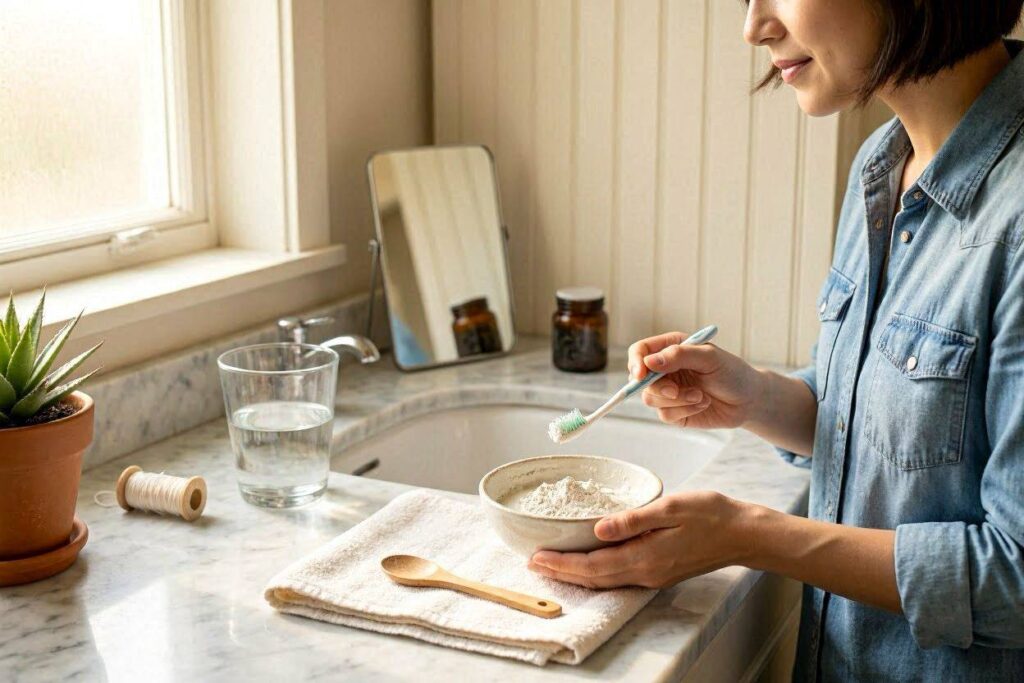
- Mix: In a small, clean dish, combine the dry baking soda with just enough hydrogen peroxide to form a smooth, runny paste. The consistency should be like thin pancake batter, not gritty sand. Let the bubbling chemical reaction subside.
- Application: Using a soft-bristled toothbrush, dip directly into the paste. Do not brush with your regular toothpaste first, as its film can create a barrier. Apply the paste methodically to all tooth surfaces you wish to whiten.
- Brushing: With exceptionally gentle, circular motions, brush for no more than 1 to 2 minutes. Focus on the feel of the soft bristles on your teeth, not the paste’s grittiness. Aggressive scrubbing will not speed up results; it will only wear away enamel and gum tissue.
- Rinse: Rinse your mouth thoroughly and vigorously with water multiple times until all traces of the salty, foamy paste are gone. Failure to rinse completely can leave residual alkaline baking soda, which may irritate the gums.
- Frequency: This is the critical rule. Use this treatment a maximum of 2 to 3 times per week. On off-days, use a gentle, fluoride-based toothpaste to support remineralization. After two consecutive weeks of use, take a one- to two-week break to assess sensitivity and results.
A Critical Note on Safety and Enamel: Baking soda’s low abrasivity is its superpower. Do not confuse it with other abrasive household powders. “Using baking soda every day is like washing your car with a soft sponge; using a charcoal or clay paste is like using fine-grit sandpaper. The sponge cleans without scratching the paint. The sandpaper strips the finish.”
Comparative Analysis: Baking Soda vs. Whitening Toothpastes
The market is flooded with “whitening” toothpastes. How does a fresh baking soda and peroxide paste compare? The table below provides a realistic, evidence-based comparison.
| Feature | Baking Soda & Peroxide Paste | Commercial Whitening Toothpaste |
|---|---|---|
| Primary Mechanism | Gentle mechanical abrasion and chemical oxidation (bleaching). | Primarily mechanical abrasion (silica, calcium carbonate). Some with low-dose peroxide have minimal contact time. |
| Abrasivity (RDA) | Very Low (Baking soda alone is RDA 7). | Highly variable, ranging from Low (RDA 30-70) to High (RDA 100-150+). High-RDA pastes are potentially harmful. |
| Bleaching Action | Yes, true oxidation with fresh, active 3% peroxide. | Generally, none. “Whitening” claims often refer to surface stain removal only. Formulas with 1% peroxide are rinsed away too quickly. |
| Gum Safety | Safe if used with soft brush and gentle pressure. High pH can temporarily irritate if overused. | Generally safe, but strong detergents like Sodium Lauryl Sulfate (SLS) can trigger gum sensitivity or canker sores in some people. |
| Sensitivity Risk | Low to moderate, primarily from the peroxide, not abrasion. | Low to high, depending entirely on the abrasive level of the toothpaste. |
| Cost per Use | Extremely low (pennies). | Low to high (cents to dollars), depending on brand. |
| Shelf Life & Stability | Made fresh each time, peroxide is at full potency. | Peroxide degrades over time in a tube. A 6-month-old open tube likely has no active bleaching power left. |
Other Popular Home Remedies: A Brutally Honest Review
If baking soda and peroxide is the gold standard, the internet is a marketplace of silver, fool’s gold, and outright dangerous counterfeits. Every week, a new viral video promises a “Hollywood smile in 5 minutes” using a single ingredient. It’s essential to apply a scientific and skeptical eye to these claims. Here is an honest, evidence-based breakdown of the most popular alternative home remedies.
Oil Pulling: Ancient Technique, Exaggerated Modern Claims
The Claim: Swishing a tablespoon of oil (typically coconut, sesame, or sunflower) in your mouth for 15-20 minutes “draws out” toxins, removes bacteria, and naturally whitens teeth without abrasion.
The Reality: Oil pulling is a traditional Ayurvedic practice that has a genuine, if limited, role in oral health. It is not a whitening agent in any direct sense. The mechanism is not mystical detoxification; it is mechanical emulsification. The viscous oil acts as a solvent, and the prolonged swishing motion helps shear off and trap bacteria-rich, un-mineralized plaque from tooth surfaces and the gum line.
This plaque, if left to calcify into tartar, takes on a yellow hue from food pigments. By effectively removing this soft, sticky, faintly-yellow biofilm, teeth can appear brighter and feel cleaner. This is a restoration to a natural baseline, not a true “whitening” or bleaching effect. The oil does not penetrate the enamel, nor does it oxidize intrinsic or extrinsic stains that are physically bonded to the tooth.
“There is no credible scientific evidence to suggest that oil pulling can bleach teeth or reverse deep, set-in stains. Its primary validated benefit is as an adjunctive therapy for reducing gingivitis-causing bacteria, similar to a pre-brushing mouthwash rinse.”
The Verdict: A useful, safe, and gentle practice for improving overall gum health and removing daily surface biofilm, which can lead to a temporary feeling of a cleaner, brighter smile. It is not the answer to what is the best home remedy for whitening teeth if your goal is a lighter shade.
Charcoal Toothpaste and Powders: The Black Abrasive Lie
The Claim: Activated charcoal powder, brushed on the teeth, acts like a magnet to absorb stains, toxins, and impurities, providing a dramatic, natural whitening effect.
The Reality: This is one of the most dangerous and effective-looking scams in modern oral care. The “whitening” effect is shockingly real and immediate, which is why the trend has so much traction. However, the mechanism is pure, aggressive abrasion. Charcoal is a fine, hard, gritty powder with irregular, sharp-edged particles. When you brush with it, you are not gently polishing your teeth; you are effectively sandblasting the stained outer layer of your enamel away.
The black powder contrasts starkly with your teeth, creating a powerful visual illusion of cleaning. The dramatic before-and-after photos you see online are a testament to the removal of a charcoal-black film to reveal teeth that, while temporarily free of surface debris, have had a microscopic layer of their protective enamel sheared off. This process is catastrophic for long-term oral health. As we established, once enamel is gone, it is gone forever. Thinned enamel permanently reveals more of the yellow dentin beneath, making your teeth darker over time and dramatically increasing the risk of severe, irreversible sensitivity.
The Verdict: Do not use. The short-term visual reward is a trap that leads to permanent, irreversible enamel erosion. It is a destructive practice masquerading as a natural cure.
Acidic Fruits and Vinegars: The Chemical Erosion Danger
The Claim: Rubbing lemon peels, orange peels, crushed strawberries, or raw apple cider vinegar onto your teeth will naturally dissolve stains and whiten your smile with fruit acids and enzymes.
The Reality: This is chemical warfare on your teeth. The logic seems sound on the surface—acids can dissolve stains, right? The critical, fatal flaw in this thinking is that while the citric, malic, and acetic acids in these fruits and vinegars are indeed dissolving the mineral bonds of the stain, they are doing so at the cost of dissolving your tooth enamel itself at an exponentially faster rate. This process is called chemical erosion.
Enamel begins to dissolve at a pH of around 5.5. Lemon juice has a pH of around 2.0-3.0; apple cider vinegar is similarly acidic. Brushing immediately with or after these substances compounds the disaster, as you are now using mechanical force to scrub away the chemically softened and weakened enamel layer. While strawberries contain some malic acid, which is a very weak bleaching agent, the concentration is far too low to have a meaningful whitening effect without the destructive, erosive power of the acidic juice delivery system.
The Verdict: Never apply raw, acidic foods or vinegars to your teeth for the purpose of whitening. This method reliably trades an incredibly minor, short-lived cosmetic improvement for a lifetime of permanent dental damage in the form of enamel erosion, severe sensitivity, and increased cavity risk.
Spice Pastes (Turmeric, Cinnamon): Staining or Saving?
The Claim: A paste of yellow turmeric powder and water or coconut oil can whiten teeth. The counter-intuitive logic is that the very thing that stains everything else it touches will somehow remove stains from teeth.
The Reality: The evidence here is more complex but still fails to support it as an effective whitener. There is no bleaching or abrasive mechanism that would make teeth whiter. The most positive interpretation of the anecdotal evidence is that turmeric has potent anti-inflammatory and antibacterial properties, which, like oil pulling, can reduce gingivitis and the yellow plaque biofilm, making teeth appear slightly cleaner and gums healthier. Any perceived whitening is the removal of gum redness (improving contrast) and soft yellow plaque. The abrasive quality of turmeric powder is very low, so it’s far safer than charcoal, but it remains a messy, unproven, and low-efficacy treatment.
The Verdict: At best, it’s an effective gum-health treatment with no proven whitening power and a high potential for temporarily staining your toothbrush, sink, and tongue. There are far better, cleaner methods for what it actually achieves.
Diet and Lifestyle: The 24/7 Whitening and Anti-Staining Strategy
A home remedy is not just a treatment you apply for two minutes; it is also a lifestyle. The most successful, long-term strategy for a white smile is minimizing the daily deposition of new stains. No whitening treatment can outpace a constant onslaught of staining compounds. This is the passive, preventive side of the equation, and it is just as critical as the active remedy.
The Chromogen-Rich Culprits to Manage
The molecules responsible for staining are called chromogens. They are highly pigmented and have a chemical affinity for your teeth’s pellicle layer. The most notorious offenders form a sort of “dark triad” of tooth staining: coffee, tea, and red wine. Coffee is a triple threat due to its acidity, which slightly etches and roughens enamel, its chromogens, and the fact it’s often consumed hot, which accelerates chemical reactions. Black tea is, in many cases, a worse stainer than coffee because of its exceptionally high concentration of tannins, sticky compounds that strongly bind chromogens to the tooth surface. Red wine combines acid, tannins, and deep purple-red chromogens in a perfect storm for staining.
Other significant contributors include deeply colored berries (blueberries, blackberries, pomegranates), intensely pigmented sauces (soy sauce, tomato sauce, curry, balsamic vinegar), and cola, which is both acidic and full of caramel coloring. Of course, all forms of tobacco deliver tar and nicotine that create the most stubborn, tenacious yellow-brown stains.
The Drink-and-Rinse Protocol: Immediate Intervention
You do not need to eliminate these joys of life entirely. You simply need a strategy to interrupt the staining process before it sets. The moment you finish a cup of coffee or a glass of wine, the chromogens are suspended in your saliva and actively binding to your teeth. You have a crucial 30- to 60-second window to act.
Swish plain, still water vigorously around your mouth for 15 seconds. This simple mechanical action achieves three things: it dilutes the concentration of chromogens and acids, it physically washes away sticky liquid from the tooth surface, and it helps restore a neutral pH balance in the mouth. This is not a substitute for brushing but an immediate, in-the-moment damage control measure.
Crucial Timing Rule: Do not brush your teeth for at least 30 minutes after consuming anything acidic (wine, coffee, cola, citrus). The acid temporarily softens the enamel. Brushing during this vulnerable window will mechanically scrub away the softened mineral structure, accelerating erosion. The water rinse protects the teeth until the enamel has re-hardened and is safe to brush.
Stain-Blocking Tools: Straws and Crunchy Foods
Simple physical interventions can make a dramatic difference. For deeply pigmented and acidic beverages like iced coffee, cola, or smoothies with berries, drinking through a straw bypasses the front teeth, directing the staining liquid to the back of the mouth. It’s not aesthetically appropriate for a hot espresso or a fine red wine, but it is a practical, effective tool for everyday drinks.
Interestingly, “detergent foods”—crisp, crunchy, high-fiber fruits and vegetables—provide a natural, gentle cleaning action at the end of a meal. Chewing a raw apple, carrot, celery stalk, or a handful of almonds does not whiten teeth, but it acts as a natural scrubber, mechanically disrupting soft plaque and food debris from the tooth surface while stimulating saliva flow. The high water content of these foods also helps dilute sugars and acids. Think of it as a gentle brushing action without a brush.
Building Your Complete Home Whitening Routine
Success does not come from a single isolated act but from a well-constructed, evidence-based system. Combining the powerful short-term treatment with the long-term daily support system yields the most dramatic, healthy, and lasting results. This is not about a quick fix; it’s about transforming your daily oral hygiene into a sustainable whitening regimen.
The Supportive Daily Regimen: The Power of the “Pre-Whitening” Brush
Your choice of daily toothpaste is the foundation upon which any whitening treatment is built. You need a toothpaste that is effectively cleaning, but you must reject harsh, high-RDA “whitening” pastes as your daily driver. Instead, choose a paste with a low RDA score that uses a multi-pronged cleaning system, such as enzymes (like papain or glucoamylase) and gentle surfactants to chemically dissolve the protein pellicle where stains cling. This is often called an “enzymatic” or “plaque-dissolving” toothpaste.
This supportive toothpaste is your everyday, twice-a-day tool. Its job is to keep your teeth meticulously clean at a microscopic level, preventing new plaque accumulation and the hardening of that plaque into yellow tartar. A clean, smooth, plaque-free enamel surface is inherently brighter and more reflective than one covered in a sticky, yellow bacterial film. A comprehensive system would look like this:
- Morning: Enzymatic, low-abrasion toothpaste. Focus on a thorough 2-minute brush to create a perfectly clean and smooth enamel surface. This is your “base coat” preparation for the day.
- Throughout the Day: Consistent use of the drink-and-rinse protocol after any staining beverage or meal.
- Evening (Alternating Days): On 2-3 non-consecutive days per week, perform the 1-to-2-minute treatment with the fresh baking soda and hydrogen peroxide paste. This is your active “bleaching and deep-polishing” session. On all other nights, use your supportive enzymatic toothpaste again to clean and maintain without over-treating with peroxide.
This rhythm respects the biology of your teeth, applying powerful chemistry only as often as needed while maintaining a perfectly clean, healthy oral environment the rest of the time. It prevents the cycle of aggressive over-treatment that leads to sensitivity and damage.
Sensitivity Management and Essential Cautions
Tooth sensitivity during any whitening protocol is a warning sign, not a side effect to be ignored. It is a signal from your teeth that the peroxide is penetrating through micro-pores in the enamel and causing a temporary, reversible inflammation of the nerve within the pulp. This “pulpitis” feels like a sharp, fleeting zing to cold, heat, or air.
If you experience this, stop all whitening treatments immediately. Do not push through the pain. You can soothe the nerve and help re-mineralize the enamel pores by brushing with a specially formulated desensitizing toothpaste. Look for active ingredients like potassium nitrate, which calms the nerve inside the tooth, or innovative biomimetic ingredients like nano-hydroxyapatite, which directly fills in and repairs the microscopic tubules in the enamel that lead to the nerve. Other effective soothing agents include stannous fluoride and arginine.
Do not resume whitening until the sensitivity has been completely absent for at least three full days. When you restart, reduce the frequency, perhaps from three times a week to just once. You must identify the sustainable threshold for your unique tooth physiology.
Absolute Contraindications—When to Stop Immediately:
- Active Gum Disease: If your gums are red, swollen, or bleed easily, the peroxide will cause intense pain and further irritate the compromised soft tissue.
- Untreated Cavities or Dental Defects: Whitening solutions can pass directly through a cavity opening into the pulp chamber of the tooth, causing excruciating, nerve-damaging pain.
- Open Enamel Tubules: Conditions like severe acid erosion or fractures expose the dentin. Whitening agents will cause sharp, immediate pain.
- Pregnancy and Breastfeeding: While no studies have proven topical peroxide to be harmful in these conditions, the standard medical advice is to avoid any elective, non-essential chemical treatments.
- Children Under 16: The pulp chamber in a young person’s tooth is much larger and closer to the enamel surface, drastically increasing the risk of irreversible nerve inflammation.
What is the Best Home Remedy for Whitening Teeth? The Conclusive Verdict
After this exhaustive, evidence-based analysis, we return to the central question. A single method must be crowned, and its champions, challengers, and outright frauds must be clearly categorized for a final, definitive verdict.
The market of home whitening is a chaotic spectrum. On one end, you have the inert and safe but often useless practices. On the other, you have the effective but catastrophically destructive methods that promise fast results. The wisdom lies in the middle path, the nexus of efficacy and safety. We can classify the remedies into three distinct tiers.
Tier 1: The Safe and Proven Winner. The combination of a fresh, correctly-prepared paste of baking soda and 3% hydrogen peroxide, used sparingly, stands alone in this top tier. Its dual-action mechanism of low-RDA abrasion and true chemical oxidation provides a clinically meaningful and noticeable whitening effect without the destructive trade-off of enamel erosion. It is affordable, accessible, and puts control of concentration and frequency in your hands. This is the only remedy that qualifies as the definitive answer.
Tier 2: Supportive Allies. Oil pulling with coconut oil and using a low-RDA enzymatic daily toothpaste fall into this category. They will not bleach or meaningfully whiten your teeth, but they are safe, effective, and essential components of a complete system. Their role is maintenance—removing the un-mineralized biofilm to reveal the bright, clean natural tooth underneath, creating the optimal foundation upon which the Tier 1 remedy can work its true magic.
Tier 3: The Dangerous and Discredited. This tier is the minefield of online misinformation. Charcoal powders and pastes (enamel sandpaper), raw acidic fruits and vinegars (chemical erosion), and even undiluted essential oils cause permanent, irreversible damage for the sake of a fleeting, superficial, and often illusory cosmetic benefit. They must be rejected categorically. The risk-to-reward ratio is not just poor; it is guaranteed failure in the long run.
Conclusion
The best home remedy for whitening teeth is not a mystical secret but a responsible application of chemistry: a fresh paste of low-abrasive baking soda and true-bleaching 3% hydrogen peroxide, used sparingly to remove surface stains and lighten color without sacrificing precious enamel. This active treatment must be the star player of a broader system built on a gentle, non-abrasive daily cleansing routine and smart, defensive dietary habits that prevent stains from forming in the first place. True, lasting oral brilliance is not found in a quick, destructive fix but in a disciplined, patient strategy that respects the biological limits of your body and treats enamel as the irreplaceable treasure it is.
Frequently Asked Questions
Can baking soda and hydrogen peroxide damage my teeth if I use it correctly?
No, when used correctly and sparingly, the risk is exceptionally low. Baking soda has one of the lowest abrasivity scores of any tooth-cleaning agent, far gentler than many commercial “whitening” pastes. 3% hydrogen peroxide is a safe, low-concentration bleaching agent for short contact times. Damage occurs from misuse: daily application, aggressive scrubbing, or using higher peroxide concentrations.
How long will it take to see real whitening results?
You are removing microscopic layers of surface stains and gently bleaching over time. You should perceive a subtle, realistic brightness and a reduction in dull, yellow surface tone within 2 to 3 sessions (one to two weeks). This is not an instant, dramatic bleaching that over-promises and damages. A gradual, healthy lightening of one to two VITA shades over a month is a successful, realistic outcome.
Is coconut oil pulling a better alternative because it has no chemicals?
This question holds a fundamental misunderstanding. Everything is a chemical: water, coconut oil, your enamel. Coconut oil pulling does not bleach teeth through any chemical mechanism. It is a safe, gentle mechanical method for removing un-mineralized bacterial plaque, which can make teeth look cleaner but not lighter in shade. It is a supportive ally, not a substitute for a bleaching agent.
Does whitening work on dental restorations like crowns, veneers, or fillings?
Absolutely not. This is one of the most important facts to internalize. The peroxide in your home remedy will not bleach tooth-colored resin composite fillings, porcelain crowns, or ceramic veneers. These materials are color-stable. If you whiten your natural teeth and they become lighter than the surrounding restorative work, the unmatched restorations will stand out and become more visible, requiring replacement by a dentist.
I have sensitive teeth. What is the safest whitening option for me?
If your teeth are naturally sensitive, you must prioritize sensitivity management over speed of whitening. Start with a two-week pre-treatment phase using only a desensitizing toothpaste containing nano-hydroxyapatite or potassium nitrate. Then, use the baking soda and peroxide paste just once a week for only one minute. If any zinging pain occurs, stop and extend the desensitizing period.
Additional Resource
For an unbiased, science-based assessment of the abrasivity of your daily toothpaste, consult the Relative Dentin Abrasivity (RDA) data compiled by independent dental researchers. Most mainstream brands do not publish their RDA scores, but academic and non-commercial dental health organizations maintain comparative tables. A simple online search for “RDA values of common toothpastes” will guide you toward the gentlest, lowest-abrasion options that protect your enamel while you pursue your whitening goals. Always cross-reference information with a non-commercial, non-brand-affiliated source like a university dental school or an independent dental research body.
Disclaimer: This article is intended for informational and educational purposes only. It is not a substitute for professional medical advice, diagnosis, or treatment. The practice of using hydrogen peroxide for oral care is a personal choice and carries risks, including but not limited to gum irritation and tooth sensitivity. Always consult a qualified dental professional before starting any new oral health regimen, especially if you have pre-existing dental conditions, restorations, are pregnant, or are nursing.