What Happens When You Leave Teeth Whitening Strips on Too Long
You apply the strips, set a timer, and then life interrupts. A phone call runs long. You fall asleep on the couch. You think, “A little extra time can only make them whiter, right?” That assumption leads many people into painful territory.
Leaving whitening strips on beyond the recommended time does not simply accelerate whitening. It triggers a cascade of chemical and biological reactions that can damage your teeth and gums. Understanding exactly what happens, why it happens, and how to respond protects you from unnecessary suffering and expensive dental bills.
We will walk through the entire process, from the moment you exceed the recommended wear time to the recovery period afterward. This knowledge helps you use whitening strips safely and effectively.
How Whitening Strips Work Normally
To understand what goes wrong with extended wear, you must first understand how strips function under proper use.
The Chemical Process in Normal Use
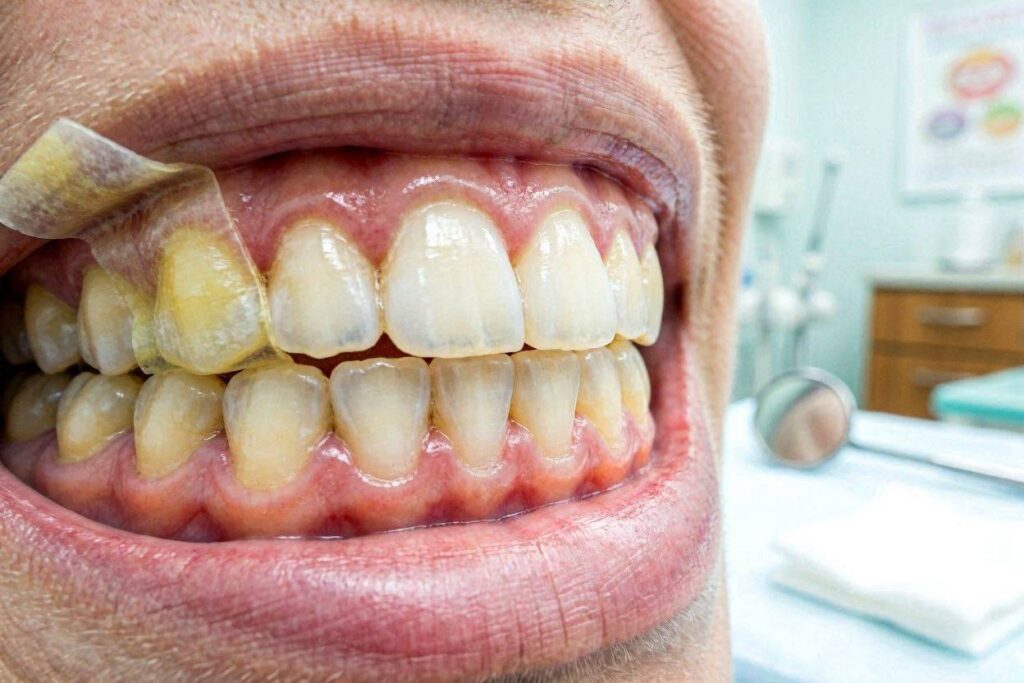
Whitening strips contain a thin layer of peroxide gel, typically hydrogen peroxide at concentrations between 6% and 14% for over-the-counter products. When you apply the strip to your teeth, the gel contacts enamel directly.
Over the recommended wear time, usually 30 minutes, the peroxide releases oxygen molecules that penetrate enamel pores. These oxygen radicals break down chromogen molecules responsible for staining. The reaction proceeds at a controlled rate determined by the peroxide concentration and the temperature of your mouth.
Why Timing Matters
Manufacturers calibrate wear time carefully. They balance efficacy against safety. Thirty minutes provides enough time for meaningful whitening while limiting peroxide penetration depth. Beyond this window, the peroxide does not stop at the enamel-dentin junction. It travels deeper into dentin tubules, approaching the pulp where nerves and blood vessels reside.
The concentration also factors into timing. Higher concentration strips require shorter wear times. Lower concentrations need longer. This balance is precisely calculated during product development.
The Safety Margin
Reputable manufacturers build a small safety margin into their timing recommendations. Wearing strips for 35 or 40 minutes instead of 30 probably does not cause immediate harm for most people. However, this margin is narrow, and individual sensitivity varies enormously. What causes no reaction in one person may trigger severe pain in another.
The Immediate Chemical Effects of Overextended Wear
When strips remain on teeth past the recommended time, several chemical changes occur simultaneously.
Extended Peroxide Penetration
The peroxide continues diffusing deeper into tooth structure. It passes through the full thickness of enamel and enters dentin. Dentin contains thousands of microscopic tubules per square millimeter, each filled with fluid and connected to the dental pulp.
Peroxide molecules travel down these tubules, oxidizing proteins and cellular material along the way. The deeper they go, the closer they approach the nerve tissue at the center of the tooth.
pH Changes on the Tooth Surface
Whitening strip gel maintains a specific pH. As the gel sits on teeth, its pH can drift. Extended wear may allow the gel to become more acidic as it interacts with saliva and tooth minerals. This acidification softens enamel surface layers, contributing to the demineralization that normally reverses after short exposures. With longer exposure, the softening penetrates deeper and takes longer to reverse.
Oxygen Saturation Effects
The whitening reaction consumes peroxide and releases oxygen. Under normal timing, oxygen levels in the tooth equilibrate quickly after strip removal. With extended wear, oxygen can saturate the dentin tubules, creating pressure changes that stimulate nerve endings. This mechanical stimulation adds to the chemical irritation.
Dehydration of Enamel
Prolonged contact with the gel draws moisture out of enamel. Dehydrated enamel appears temporarily whiter, which tricks some people into thinking extended wear improves results. However, this whitening is an illusion that disappears when enamel rehydrates. The dehydration also makes enamel more brittle and susceptible to damage in the hours after treatment.
The Biological Response in Teeth
Your teeth do not passively accept prolonged peroxide exposure. They mount a biological response that manifests as pain and sensitivity.
Nerve Irritation Mechanism
When peroxide reaches the dentin tubules near the pulp, it irritates odontoblasts, the cells that line the pulp chamber. These cells extend processes into dentin tubules. Chemical irritation triggers them to release inflammatory mediators, including substance P and other pain-signaling molecules.
The pulp tissue itself becomes inflamed, a condition called pulpitis. Mild, reversible pulpitis causes transient sensitivity. More severe pulpitis from extended peroxide exposure can cause throbbing pain that lasts for days.
Tubule Fluid Dynamics
Dentin tubules contain fluid that normally moves slowly. Peroxide entering the tubules changes the osmotic balance. Fluid shifts create physical displacement that stimulates mechanoreceptors connected to nerve fibers. This hydrodynamic theory of dental sensitivity explains why extended whitening often causes sharp, shooting pains triggered by cold, air, or pressure.
Inflammatory Cascade
The body responds to chemical irritation with inflammation. Blood flow to the pulp increases. Immune cells migrate into the area. Inflammatory cytokines accumulate. This response, while protective in intent, causes pain and prolongs recovery. The pulp essentially treats the peroxide as a toxic invader and mounts a defense.
| Wear Time | Peroxide Penetration | Pulp Response | Symptom Severity | Recovery Time |
|---|---|---|---|---|
| 30 min (normal) | Enamel only | Minimal | None to mild | None to few hours |
| 45-60 min | Enamel and superficial dentin | Mild inflammation | Mild to moderate sensitivity | Few hours to 1 day |
| 60-90 min | Mid-dentin | Moderate inflammation | Moderate pain, throbbing | 1-3 days |
| 90-120 min | Deep dentin | Significant pulpitis | Severe pain, lingering | 3-7 days |
| 2+ hours or overnight | Near pulp | Severe inflammation | Intense pain, possible damage | 1-2 weeks, possible dental intervention |
Warning: The times above represent typical responses. Individual sensitivity varies significantly. Some people experience severe pain after only 15 extra minutes. Never intentionally exceed recommended wear time. The whitening benefit does not justify the risk.
Gum Tissue Damage from Extended Strip Contact
Teeth are not the only structures affected by overextended strip wear. Gums suffer too.
Chemical Burns on Gingiva
Whitening strip gel is not formulated for prolonged soft tissue contact. When strips sit against gums for too long, the peroxide chemically burns the gingival epithelium. This manifests as white patches on the gums, similar in appearance to a burn from hot food.
The white color results from coagulation of surface proteins and dehydration of epithelial cells. The affected tissue sloughs off over the following days as new cells replace the damaged layer.
Inflammatory Gingival Response
Chemical irritation triggers gingival inflammation. The gums become red, swollen, and tender. They may bleed when brushed. This acute gingivitis resolves once the peroxide exposure ceases and the tissue heals, but the recovery period is uncomfortable.
Strip Adhesive Residue Issues
Extended wear allows the strip adhesive to bond more firmly to teeth and gums. Removing the strip after hours instead of minutes can pull on softened enamel and irritated gum tissue. Some people report small pieces of gum tissue adhering to the strip upon removal, leaving raw, painful areas behind.
Contact Dermatitis Potential
In rare cases, prolonged peroxide contact can trigger an allergic or irritant contact dermatitis on the lips, tongue, or oral mucosa surrounding the treatment area. Swelling, redness, and burning sensations may extend beyond the immediate strip contact zone.
The Illusion of Better Results
Many people leave strips on longer because they believe extended exposure produces whiter teeth. This belief contains a kernel of truth wrapped in dangerous misconception.
The Dehydration Deception
Extended wear dehydrates enamel significantly. Dehydrated enamel scatters light differently, appearing chalky white. This whiteness looks dramatic immediately after removing the strips. You might celebrate the results, thinking the extra time paid off.
Then reality sets in. Over the next 24-48 hours, your enamel rehydrates through saliva contact. The chalky white fades. Your teeth return to a shade much closer to what proper use would have achieved, except now you also have sensitivity and possibly gum damage.
The Point of Diminishing Returns
The whitening reaction does not continue linearly. Peroxide concentration in the gel depletes over time. The most rapid whitening occurs in the first 20-30 minutes. After that, the reaction rate slows dramatically as available peroxide decreases and stain molecules near the surface have already broken down.
Leaving strips on for 60 minutes does not produce double the whitening of 30 minutes. It might produce 10-15% more whitening while increasing side effect risk by several hundred percent. The risk-reward ratio becomes extremely unfavorable.
Uneven Whitening Risks
Prolonged exposure sometimes causes uneven whitening. Areas where the strip fits tightly against enamel whiten more than areas with slight gaps. Extended wear amplifies these differences, potentially creating a patchy appearance that is difficult to correct.
Falling Asleep with Whitening Strips
The most common scenario for extreme overexposure involves falling asleep. This accident happens frequently and deserves special attention.
Why It Happens So Often
People whiten at night because it fits their schedule. They lie down, relax, and drift off despite intending to remove the strips. The strips are thin and comfortable enough to forget. The timer on the nightstand goes unheard.
The Extended Exposure Reality
Sleeping with strips means 6-8 hours of continuous peroxide contact. This represents 12-16 times the recommended exposure. The chemical and biological consequences discussed above compound dramatically. The peroxide reaches the deepest dentin layers. Pulp inflammation becomes severe. Gum tissue suffers prolonged chemical burning.
Morning-After Symptoms
Waking up with strips still on your teeth typically means immediate, severe pain upon removal. Teeth feel as though they are vibrating with pain. Cold air from breathing triggers sharp jolts. Gums appear white and sloughing. The pain may be intense enough to require over-the-counter pain relief.
Immediate Steps After Overnight Exposure
If you wake up with strips still on:
- Remove the strips immediately but gently
- Rinse your mouth with lukewarm water repeatedly
- Do not brush your teeth for at least several hours; enamel is softened
- Apply fluoride gel or remineralizing paste if available
- Take an appropriate dose of ibuprofen or acetaminophen for pain
- Avoid hot, cold, sweet, or acidic foods and beverages
- Contact your dentist if pain is severe or persists beyond 48 hours
Specific Risk Factors That Amplify Damage
Not everyone faces equal risk from overextended wear. Certain conditions make extended exposure much more dangerous.
Pre-existing Sensitivity
People with naturally sensitive teeth have more permeable dentin or thinner enamel. Peroxide reaches their pulp faster and in higher concentrations. Extended wear on sensitive teeth can cause pain that persists for weeks rather than days.
Recent Dental Work
Teeth with recent fillings, crowns, or other restorations may have temporarily more permeable surfaces. The margins around restorations allow peroxide to bypass enamel and enter dentin directly. Extended exposure near dental work increases the risk of pulpal irritation dramatically.
Cracked or Chipped Teeth
Cracks and chips expose dentin directly. Peroxide enters these defects without passing through enamel at all. The concentrated exposure to already compromised tooth structure can cause intense pain and may threaten the long-term health of the tooth.
Gum Recession
Receding gums expose root surfaces. Roots lack protective enamel and are covered only by thin cementum. Peroxide penetrates cementum rapidly, causing immediate and severe sensitivity. Extended strip contact on exposed roots can cause lasting damage to these vulnerable surfaces.
Bleaching Product Concentration
High-concentration strips cause damage faster than low-concentration products. Leaving a 14% hydrogen peroxide strip on for 60 minutes causes more severe consequences than the same duration with a 6% product. Know your product’s concentration and respect its specific instructions.
Signs and Symptoms of Overexposure
Recognizing overexposure symptoms helps you respond appropriately and know when to seek professional care.
Dental Symptoms
The teeth themselves provide clear signals of excessive peroxide exposure:
- Sharp, shooting pain when breathing through your mouth
- Throbbing ache that persists after strip removal
- Extreme sensitivity to temperature, especially cold
- Pain when biting or tapping teeth together
- A sensation of pressure or fullness in the teeth
- Lingering pain that does not subside within hours
Gum and Soft Tissue Symptoms
The gums demonstrate visible signs of chemical injury:
- White, blanched patches on gum tissue
- Redness and swelling extending beyond the strip area
- Peeling or sloughing of surface gum tissue
- Burning sensation on contact with food or drink
- Bleeding when brushing or flossing the affected area
- Small ulcerations or erosions on the gum surface
Systemic Symptoms in Severe Cases
Extremely prolonged exposure, such as overnight wear, can rarely cause systemic symptoms:
- Headache from referred dental pain
- Nausea from intense oral discomfort
- Difficulty eating or drinking due to pain
- Swollen lymph nodes under the jaw if significant inflammation occurs
Recovery and Treatment After Overexposure
Your actions in the hours and days after overexposure significantly affect recovery speed and completeness.
Immediate Post-Exposure Care
The first hours after removing overextended strips determine the trajectory of recovery:
- Rinse thoroughly with lukewarm water to remove residual gel
- Apply a high-fluoride gel or varnish if available
- Take over-the-counter pain medication as needed
- Use a desensitizing toothpaste applied directly to teeth with a finger
- Avoid eating or drinking anything except water for at least one hour
- Do not brush teeth for at least 4-6 hours
The First 24 Hours
The initial recovery period requires gentle care:
- Eat only soft, bland foods at room temperature
- Avoid all acidic, spicy, hot, or cold items
- Continue using desensitizing toothpaste
- Rinse with warm salt water to soothe gum tissue
- Apply cold compresses to the face if swelling is present
- Stay hydrated to support saliva production and remineralization
Days 2-7 After Exposure
As acute symptoms subside, supportive care continues:
- Gradually return to normal diet, still avoiding extremes
- Continue fluoride and desensitizing products
- Resume gentle brushing with a soft-bristled brush
- Avoid any additional whitening for at least 2-4 weeks
- Monitor gums for complete healing
- Note any teeth that remain unusually sensitive
When to See a Dentist
Certain situations demand professional intervention:
- Pain that does not improve after 48 hours
- Pain that prevents sleep or normal eating
- Visible damage to gums that does not heal within a week
- Any tooth that remains exquisitely sensitive beyond two weeks
- Signs of infection: fever, pus, increasing swelling
- Uncertainty about the severity of your symptoms
How Dentists Treat Whitening Overexposure
Dental professionals have tools to manage cases that do not resolve with home care.
Professional Desensitization Treatments
Dentists can apply high-concentration fluoride varnish directly to affected teeth. This forms a protective layer over exposed dentin and accelerates remineralization. Potassium oxalate solutions can physically block open dentin tubules. These in-office treatments provide immediate relief that home products cannot match.
Pulp Vitality Testing
If a tooth remains painful, the dentist tests whether the pulp is still healthy. Thermal and electric pulp testing determine if the inflammation has resolved or if irreversible pulp damage occurred. Teeth with irreversible pulpitis may need root canal treatment, though this outcome is rare from a single overexposure incident.
Gum Lesion Management
Significant chemical burns may require prescription oral rinses or topical medications to prevent secondary infection and promote healing. The dentist evaluates whether the burn is superficial or has caused deeper tissue damage requiring intervention.
Custom Tray Fabrication
For patients who wish to continue whitening safely, dentists can fabricate custom trays. These keep gel precisely on teeth, away from gums, and allow use of lower concentrations for controlled durations. They eliminate the risks associated with ill-fitting strips.
Preventing Overexposure in the Future
Learning from an overexposure incident prevents repetition.
Practical Prevention Strategies
Simple habits eliminate the risk of accidentally leaving strips on too long:
- Set a loud, unmistakable timer on your phone
- Place the timer across the room so you must stand up to silence it
- Never lie down while wearing strips
- Perform whitening earlier in the evening when you are more alert
- Ask a family member to remind you
- Use products with shorter recommended wear times if you struggle with compliance
Choosing Safer Products
Some product designs reduce overexposure risk:
- Strips designed for 15-20 minute wear may be safer for people prone to distraction
- Whitening pens that paint on and dry quickly eliminate the extended contact risk
- Custom trays from a dentist allow precise control over timing and concentration
Addressing the Root Cause
If you deliberately left strips on longer hoping for better results, address the underlying motivation. Consider whether:
- Your expectations are realistic for your starting tooth shade
- You might benefit from professional whitening with faster, supervised results
- Gradual whitening over a longer course might satisfy you without the risks
- Your staining requires a different approach entirely
Frequently Asked Questions
What should I do if I left whitening strips on too long?
Remove them immediately. Rinse with lukewarm water. Apply fluoride gel or desensitizing toothpaste directly to teeth. Take pain medication if needed. Avoid brushing for several hours. If pain is severe or persists beyond two days, contact your dentist.
Can leaving whitening strips on too long cause permanent damage?
Permanent damage is uncommon but possible. Extreme overexposure can theoretically cause irreversible pulpitis requiring root canal treatment. Gum tissue typically heals completely. Enamel remineralizes over time. The most common long-term consequence is lingering sensitivity that may take weeks to fully resolve.
How long does the pain last after leaving strips on too long?
Mild overexposure pain typically resolves within 24-48 hours. Moderate overexposure may cause discomfort for 3-7 days. Severe overexposure, such as wearing strips overnight, can cause sensitivity lasting 1-2 weeks. Pain persisting beyond two weeks warrants dental evaluation.
Why do my teeth look whiter after leaving strips on too long?
Dehydration causes temporary whitening. As enamel loses moisture, it becomes more opaque and appears lighter. This effect reverses within 24-48 hours as saliva rehydrates the teeth. The dramatic whiteness immediately after extended wear is an illusion, not true stain removal.
Can I use sensitivity toothpaste immediately after overexposure?
Yes. Apply desensitizing toothpaste containing potassium nitrate or stannous fluoride directly to the affected teeth with a clean finger. Leave it on for several minutes before rinsing gently. This can help reduce pain in the acute phase.
Is it worse to leave strips on overnight than just an extra hour?
Significantly worse. Overnight wear represents 12-16 times the recommended exposure duration. The peroxide penetrates to the deepest layers of dentin, causing severe pulp inflammation. Gum tissue suffers prolonged chemical burning. The risk of lasting damage increases substantially.
How soon after overexposure can I whiten again?
Wait at least 2-4 weeks, and only begin again when all sensitivity has completely resolved and gums have healed fully. If you experienced severe pain, consult your dentist before attempting further whitening. They may recommend a different product or method.
Additional Resource
For more information about managing dental sensitivity and whitening product safety, visit the American Dental Association’s Mouth Healthy site:
https://www.mouthhealthy.org/en/az-topics/w/whitening
Conclusion
Leaving teeth whitening strips on too long triggers a chain of chemical and biological events: peroxide penetrates deeper into teeth, nerves become irritated or inflamed, enamel dehydrates and temporarily softens, and gum tissue can suffer chemical burns. The perceived extra whitening comes mainly from dehydration and fades quickly, leaving only pain and sensitivity behind. Immediate gentle care, fluoride application, and time usually resolve symptoms, but severe cases need professional dental attention.
Frequently Asked Questions (FAQ)
Q: What are the first signs I left whitening strips on too long?
A: Sharp tooth sensitivity to air or temperature, throbbing pain, white patches on gums, and burning sensations on soft tissue. These symptoms may appear immediately upon removal or develop over the following hours.
Q: How long should I wear whitening strips?
A: Always follow the specific product instructions. Most over-the-counter strips recommend 30 minutes. Some products designed for faster whitening may recommend shorter times. Never exceed the manufacturer’s stated maximum wear time.
Q: Can I fall asleep with whitening strips on?
A: No. Falling asleep with strips on causes severe overexposure lasting hours instead of minutes. This dramatically increases the risk of intense pain, chemical gum burns, and potential long-term sensitivity. Set a timer and remain awake and upright during whitening sessions.
Q: What heals gums after whitening strip burns?
A: Mild chemical burns heal on their own within 3-7 days. Rinsing with warm salt water, avoiding irritating foods, and maintaining gentle oral hygiene support healing. More severe burns with significant tissue sloughing should be evaluated by a dentist.
Q: Does longer whitening strip wear mean whiter teeth permanently?
A: No. Extended wear causes temporary dehydration whitening that fades as teeth rehydrate. The permanent whitening effect does not increase proportionally with wear time. The risks of pain and tissue damage far outweigh any minimal additional whitening benefit.
Disclaimer: This article provides general information about teeth whitening strips and the consequences of overextended wear. It does not constitute dental or medical advice. If you experience severe or persistent symptoms after whitening overexposure, seek professional dental care promptly.