Does Teeth Whitening Harm Enamel?
The question surfaces in every conversation about teeth whitening. Someone leans in, lowers their voice slightly, and asks: “But does it damage your teeth?” The concern is valid. Enamel is the hardest substance in the human body, but it does not regenerate. Once gone, it is gone forever. The thought of applying strong chemicals to this irreplaceable tissue understandably causes anxiety.
The short answer is that properly used peroxide-based whitening does not permanently damage enamel. The long answer requires nuance, because improper use, excessive concentration, and certain individual risk factors can cause harm. We will explore the science thoroughly so you understand exactly what happens to your teeth during whitening and how to protect them.
The Biology of Tooth Enamel
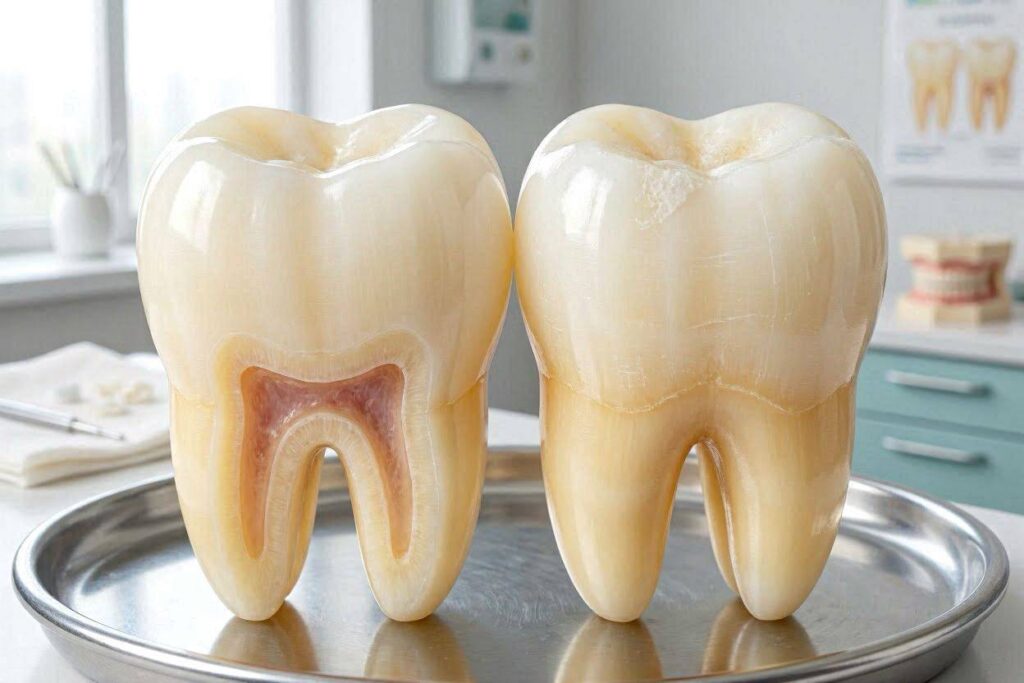
Understanding enamel’s structure helps you grasp how whitening affects it. Enamel is not a simple, uniform shell. It is a complex biological material with specific vulnerabilities.
What Enamel Is Made Of
Enamel consists of approximately 96% mineral, primarily hydroxyapatite crystals. These crystals arrange themselves in rods or prisms that run from the dentin-enamel junction to the tooth surface. Water and organic material make up the remaining 4%.
This extremely high mineral content makes enamel hard but also brittle. The underlying dentin provides flexibility and support. Without dentin, enamel would shatter like glass under biting forces.
Enamel’s Porosity
Despite its density, enamel contains microscopic pores and channels. These spaces between hydroxyapatite crystals allow small molecules to penetrate. Water, acids, and yes, peroxide can travel through enamel’s microstructure.
This porosity explains why whitening works. Peroxide molecules must enter enamel to reach stain molecules within. If enamel were completely impermeable, whitening would only remove surface stains.
Enamel Cannot Regenerate
Unlike bone, skin, or liver tissue, enamel contains no living cells. Ameloblasts, the cells that form enamel during tooth development, die after the tooth erupts. Your body cannot produce new enamel.
This permanent nature means any enamel loss is cumulative and irreversible. Acid erosion, physical wear, and chemical damage all add up over a lifetime. Protecting enamel matters enormously.
How Whitening Agents Interact With Enamel
The whitening process involves more than just bleaching stains. The peroxide interacts with enamel’s mineral structure in measurable ways.
The Peroxide Penetration Process
When you apply whitening gel, hydrogen peroxide or carbamide peroxide diffuses through enamel’s pores. The molecules travel between hydroxyapatite crystals, reaching both the enamel matrix and the underlying dentin.
Once inside, peroxide breaks down into reactive oxygen species. These free radicals attack chromogen molecules, the organic compounds that create discoloration. The reaction oxidizes double bonds in stain molecules, converting them to smaller, colorless compounds.
What Happens to Enamel Minerals
Research using electron microscopes and chemical analysis shows that peroxide exposure causes subtle, mostly reversible changes to enamel surface structure. The outer few micrometers of enamel may show slight demineralization, similar to what occurs from eating acidic foods.
Critically, saliva naturally remineralizes this surface within hours after whitening ends. Calcium and phosphate ions in saliva re-deposit into any partially demineralized areas. This dynamic demineralization-remineralization cycle happens constantly in your mouth from normal eating and drinking. Whitening adds a small, temporary perturbation to this ongoing process.
Protein Matrix Oxidation
Enamel’s organic matrix, the protein scaffold between crystals, can oxidize during whitening. Some studies suggest this oxidation may slightly weaken enamel’s fracture resistance. However, the clinical significance remains debated. Teeth whitened according to instructions do not show increased fracture rates or structural failures in real-world use.
| Whitening Agent | Enamel Penetration Depth | Surface Change | Remineralization Time |
|---|---|---|---|
| 10% Carbamide Peroxide | Moderate | Mild surface etching | 2-4 hours |
| 16% Carbamide Peroxide | Deep | Moderate surface etching | 4-8 hours |
| 22% Carbamide Peroxide | Deeper | Noticeable surface softening | 8-24 hours |
| 6% Hydrogen Peroxide | Moderate | Mild surface etching | 2-4 hours |
| 35% Hydrogen Peroxide (in-office) | Deep | Significant surface change | 24-48 hours |
Important Note: The changes listed above occur under controlled, proper use conditions. Higher concentrations, longer exposure, or more frequent application amplify these effects. Remineralization times assume normal salivary function and no additional acidic challenges.
Scientific Evidence on Enamel Safety
Decades of research support the safety of properly administered whitening. The evidence comes from laboratory studies, clinical trials, and long-term observational data.
Laboratory Studies
Researchers expose extracted teeth to whitening agents and examine them under electron microscopes. They measure enamel hardness before and after treatment. They test for mineral loss using spectroscopy.
The consensus from hundreds of such studies: peroxide whitening at recommended concentrations causes minimal, superficial, and largely reversible changes to enamel. The enamel does not dissolve, collapse, or permanently weaken. Surface roughness may increase slightly, but saliva and fluoride exposure restore the smooth surface quickly.
Clinical Trials
Human studies track patients through whitening treatment and follow-up. Dentists examine teeth for signs of damage. Patients report symptoms. These trials consistently show that the most common side effect is temporary tooth sensitivity, not enamel damage.
Long-term studies following patients for years after whitening find no increased rates of decay, fracture, or enamel wear in whitened teeth compared to non-whitened teeth in the same mouth.
Professional Consensus
Major dental organizations worldwide endorse peroxide whitening as safe when used appropriately. The American Dental Association, British Dental Association, and FDI World Dental Federation all recognize whitening as a safe cosmetic procedure under professional guidance.
When Whitening Can Harm Enamel
Safety depends on proper use. Deviation from recommended protocols introduces risks. Understanding these risks helps you avoid them.
Overuse and Abuse
The most significant danger comes from excessive whitening. Some people, chasing ever-whiter teeth, whiten continuously for months or use multiple products simultaneously. This chronic overexposure overwhelms enamel’s ability to recover between sessions.
Signs of overuse include:
- Persistent, severe sensitivity that does not resolve between sessions
- A bluish, translucent appearance as enamel thins
- Chalky white spots indicating demineralization
- Increased susceptibility to staining as porous, damaged enamel absorbs pigments
Extremely High Concentrations
Professional in-office treatments use concentrations up to 35-40% hydrogen peroxide. These are safe when a dentist controls application time, isolates gums, and monitors the patient. The same concentration used carelessly at home can cause chemical burns and significant enamel softening.
Some unregulated products sold online claim to contain extremely high peroxide levels. These products bypass safety regulations and may contain concentrations that genuinely damage enamel.
Acidic Formulations
Peroxide is most stable at low pH. Some whitening products, particularly older or unregulated formulations, have a very acidic pH. Applying strongly acidic gel to teeth erodes enamel directly, independent of the peroxide effect.
Reputable modern products buffer their gel to a near-neutral pH. The whitening still works, but the acid erosion risk drops dramatically. Always choose products from established manufacturers that disclose their pH or market themselves as enamel-safe.
Whitening Compromised Teeth
Teeth with active decay, cracks, exposed dentin, or defective restorations should not undergo whitening. Peroxide can penetrate through cavities into the pulp, causing intense pain and potential nerve damage. Cracks allow peroxide to reach deep dentin and pulp tissue.
A dental examination before whitening identifies these vulnerabilities. Treat any dental problems first, then whiten healthy teeth.
Combining Whitening With Other Aggressive Treatments
Using whitening products alongside abrasive whitening toothpastes, aggressive brushing, or immediately after acidic food and beverage consumption compounds the stress on enamel. Space out whitening sessions from other potentially harsh oral care practices.
The Role of Remineralization
Your body has a built-in defense against mild enamel demineralization. Understanding and supporting this process protects your teeth during whitening.
How Remineralization Works
Saliva contains calcium and phosphate ions, the building blocks of hydroxyapatite. When enamel loses some mineral content, these ions re-deposit into the enamel surface, filling microscopic defects.
Fluoride enhances remineralization by converting hydroxyapatite to fluorapatite, a more acid-resistant mineral. This explains why dentists often recommend fluoride treatments during whitening.
Supporting Remineralization During Whitening
Several strategies enhance your natural remineralization capacity:
- Use fluoride toothpaste twice daily
- Apply a fluoride mouth rinse after whitening sessions
- Chew sugar-free gum to stimulate saliva flow
- Stay well-hydrated to maintain adequate saliva production
- Use products containing amorphous calcium phosphate or casein phosphopeptide-amorphous calcium phosphate
- Wait at least 30 minutes after whitening before eating or drinking
Remineralization Products
The market offers specialized remineralization products designed to complement whitening:
- Tooth mousse with Recaldent contains casein phosphopeptide-amorphous calcium phosphate
- MI Paste provides bioavailable calcium and phosphate
- Fluoride varnish applied by a dentist delivers concentrated remineralization
- Nano-hydroxyapatite toothpaste supplies enamel building blocks directly
Sensitivity vs. Enamel Damage
Many people mistake sensitivity for enamel damage. The two are related but distinct phenomena.
What Causes Whitening Sensitivity
Sensitivity during whitening results primarily from peroxide penetrating through enamel into dentin. Dentin contains microscopic tubules filled with fluid that connect to nerve endings in the pulp. Peroxide molecules travel through these tubules, causing fluid movement and nerve irritation.
This process is uncomfortable but does not indicate enamel destruction. The enamel remains intact. The peroxide simply passes through its natural pores and reaches the sensitive dentin layer.
Distinguishing Sensitivity From Damage
Sensitivity feels like sharp, shooting pain triggered by cold, air, or sweet foods. It resolves within hours to days after stopping whitening. True enamel damage would manifest as visible changes: rough surfaces, transparency at edges, cupping or pitting of the enamel, or brownish discoloration as dentin shows through thinned enamel.
If your teeth feel sensitive but look normal and the sensitivity fades within 48 hours after your last session, you experienced normal side effects, not permanent harm.
Managing Sensitivity Safely
Do not interpret sensitivity as a sign to stop whitening permanently. Instead, modify your approach:
- Reduce session frequency
- Shorten wear time slightly
- Use a desensitizing toothpaste for two weeks before and during treatment
- Apply desensitizing gel after each session
- Avoid cold triggers during the treatment period
- Take a day or two off between sessions if needed
Factors That Increase Enamel Risk
Some individuals face higher risk of enamel complications from whitening. Identify whether you fall into these categories.
Pre-existing Enamel Erosion
People with a history of acid reflux, bulimia, or high consumption of acidic beverages may already have thinned enamel. Whitening places additional stress on already compromised tissue. These individuals should whiten only under dental supervision and may need to prioritize remineralization before starting.
Bruxism and Clenching
Tooth grinding wears enamel mechanically. The combination of chemical stress from whitening and physical stress from grinding can accelerate enamel loss. If you grind your teeth, address this with a nightguard before considering whitening.
Dry Mouth Conditions
Saliva provides essential protection and remineralization capacity. People with xerostomia from medications, radiation therapy, or autoimmune conditions lack this natural defense. Whitening may cause more pronounced and prolonged enamel softening in dry mouth patients.
Recent Dental Work
Teeth that have recently undergone restorative procedures may have temporarily more permeable surfaces. Wait at least two weeks after fillings, crowns, or other dental work before whitening those areas.
Pregnancy and Nursing
While no direct evidence shows whitening harms fetal or infant development, most dentists recommend postponing cosmetic procedures during pregnancy and nursing. The hormonal changes of pregnancy can also make gums more sensitive and reactive to whitening chemicals.
Protecting Enamel During Whitening
Practical steps minimize any potential enamel impact while maximizing whitening results.
Choose Enamel-Safe Products
Look for products that explicitly state they are enamel-safe or pH-neutral. Avoid unregulated, extremely cheap products from unknown sources. Reputable manufacturers invest in research to ensure their formulations do not damage teeth.
Major brands conduct enamel safety testing and publish their findings. Generic or no-name products may cut corners on pH buffering and stabilizer systems that protect enamel.
Follow the Recommended Duration
Never exceed the manufacturer’s stated wear time. The thought “longer equals whiter” is incorrect and dangerous. Peroxide reactions follow kinetics that plateau after a certain period. Extended wear beyond this point increases side effects without improving results.
Space Out Treatment Courses
Complete a full whitening course, then take a break of at least several months before whitening again. This allows enamel to fully remineralize and stabilize. Annual or semi-annual whitening is safer than continuous monthly treatments.
Use Custom Trays
Custom-fitted trays from a dentist keep gel against teeth and away from gums. They also prevent saliva dilution of the peroxide. Well-fitted trays mean you can use lower concentrations effectively, reducing total peroxide exposure to enamel.
Never Whiten Immediately After Eating or Drinking Acidic Substances
Wait at least 60 minutes after consuming citrus, soda, wine, or other acidic items before whitening. Acid-softened enamel is more vulnerable to peroxide effects. Give your saliva time to neutralize the pH and begin remineralization.
Apply Remineralizing Agents After Whitening
After each session, apply a fluoride gel or remineralizing paste. Some whitening kits include post-treatment gels specifically for this purpose. If yours does not, purchase a separate remineralization product.
Special Considerations for Different Whitening Methods
Each delivery method interacts with enamel differently. Understanding these differences guides safer choices.
Whitening Strips
Strips deliver a controlled dose of peroxide directly against teeth. The thin film limits gel contact with gums. Enamel exposure is relatively brief, usually 30 minutes per session. Strips represent one of the safer OTC options regarding enamel impact because of the short, standardized exposure time.
The main risk comes from overlapping strips onto gum tissue or using strips more frequently than directed.
Tray-Based Systems
Gel in trays maintains longer contact with enamel, which increases both whitening efficacy and potential for surface changes. Custom trays that fit well allow lower peroxide concentrations to work effectively. Ill-fitting trays that leak gel into the mouth increase the chance of swallowing peroxide and reduce contact with teeth.
In-Office Treatments
Dentists can safely use higher concentrations because they control every variable. They apply protective barriers to gums, monitor the teeth throughout the procedure, and terminate treatment if any concern arises. The single-session approach also means enamel experiences one longer exposure rather than repeated daily exposures over weeks.
The main risk involves unqualified providers offering cut-price whitening with inappropriate products. Always verify that your whitening provider is a licensed dental professional.
Whitening Pens
Pens apply a thin film of gel that dries on teeth. The peroxide concentration is usually moderate. The dried film slowly releases peroxide over time. Enamel exposure is relatively gentle compared to tray systems.
The risk is that people often use pens more frequently than recommended because they seem mild. Multiple daily applications can add up to excessive total peroxide exposure.
LED-Accelerated Whitening
The lights themselves do not whiten teeth. They may slightly warm the gel, marginally accelerating the reaction. Some concerns exist that lights could increase enamel surface temperature enough to cause minor thermal stress, but evidence of actual harm is lacking. The bigger issue is that people overpay for light systems that add little efficacy while potentially encouraging longer sessions.
The Role of Non-Peroxide Whitening Products
Some products claim to whiten without peroxide, often marketed as safer for enamel.
Abrasive Whitening Toothpastes
These products use silica, calcium carbonate, or other abrasives to physically scrub surface stains off enamel. They work like sandpaper on wood. Over time, aggressive abrasive toothpastes wear away enamel, especially if you brush hard.
Peroxide whitening, paradoxically, may be safer for enamel than long-term use of highly abrasive toothpastes. The chemical approach whitens internally without physically removing enamel structure.
Charcoal Whitening Products
Activated charcoal became trendy in whitening products. Charcoal is highly abrasive. It scrubs surface stains but also scratches enamel. These micro-scratches accumulate over time, roughening the enamel surface and making it more stain-prone.
Many dentists actively warn against charcoal whitening products because the abrasive damage is permanent and cumulative. Peroxide whitening, used correctly, avoids this mechanical wear.
Oil Pulling
Swishing oil in the mouth for extended periods has traditional roots in Ayurvedic medicine. Proponents claim whitening benefits. No scientific evidence supports significant whitening from oil pulling. It likely removes some surface debris but does not penetrate enamel to address deeper stains.
Oil pulling poses minimal risk to enamel but also delivers minimal whitening. It cannot substitute for peroxide-based whitening.
Blue Covarine Toothpastes
These contain a blue pigment that deposits on teeth, creating an optical illusion of whiteness. The effect is immediate but temporary, washing away with the next meal or drink. They do not interact with enamel chemically and do not pose enamel risks.
Long-Term Enamel Health After Whitening
What happens years after whitening? The long-term data should reassure anyone concerned about permanent damage.
Longitudinal Studies
Studies following patients for 5-10 years after whitening treatment find no increased incidence of:
- Dental caries in whitened teeth
- Enamel fractures or chipping
- Need for restorative treatment
- Progressive sensitivity
- Enamel wear beyond normal age-related changes
Teeth that underwent whitening remain indistinguishable from non-whitened teeth in terms of health and structural integrity at long-term follow-up.
Maintenance Whitening
Many people do touch-up whitening every 6-12 months. These short, infrequent exposures do not appear to cause cumulative damage. The enamel fully recovers between maintenance sessions, and each course represents a fresh start for the remineralization process.
Aging and Whitening
As you age, enamel naturally thins and dentin yellows. Whitening does not accelerate this process. However, older adults should be realistic about what whitening can achieve on thinner enamel with darker underlying dentin. The whitening still works safely, but the cosmetic result may be less dramatic than on youthful, thick enamel.
Frequently Asked Questions
Can teeth whitening cause permanent enamel damage?
When used correctly, no. Research consistently shows that peroxide whitening at recommended concentrations causes only superficial, temporary changes to enamel that saliva remineralizes within hours. Permanent damage requires extreme overuse, very high unregulated concentrations, or whitening already compromised teeth.
How does whitening compare to soda or citrus for enamel damage?
A single whitening session causes less enamel surface change than drinking a can of soda. Sodas and citrus juices have very low pH that directly erodes enamel. Whitening gel at neutral pH causes minimal erosion. The enamel changes from whitening reverse quickly through remineralization.
Why do my teeth feel rough after whitening?
Temporary surface roughness results from slight demineralization of the outermost enamel layer. This roughness disappears within a day as saliva redeposits minerals. Using fluoride rinse or remineralizing gel accelerates smoothing. If roughness persists beyond 48 hours, consult your dentist.
Is professional whitening safer for enamel than drugstore products?
Professional whitening under dental supervision is safer because the dentist evaluates your enamel health first, uses proper isolation techniques, controls concentration and time precisely, and monitors for adverse reactions. However, reputable drugstore products used correctly are also safe for healthy teeth.
Can I whiten my teeth if I have sensitive teeth?
Yes, but take precautions. Use a desensitizing toothpaste for two weeks before starting. Choose lower-concentration products with longer treatment courses. Consider products containing potassium nitrate or amorphous calcium phosphate. Stop if sensitivity becomes severe and consult your dentist.
Does whitening weaken teeth permanently?
No. The minor, temporary softening of enamel surface reverses through natural remineralization. Whitened teeth do not show reduced fracture resistance or increased cavity risk in long-term studies. The structural integrity of enamel remains intact.
Should I avoid whitening if I have acid reflux?
Consult your dentist first. Acid reflux already exposes teeth to erosive challenges. Adding whitening on top of ongoing erosion may overwhelm enamel’s recovery capacity. Treat the reflux, allow enamel to stabilize, then whiten under professional guidance with extra remineralization support.
Additional Resource
For comprehensive, evidence-based information about teeth whitening safety, visit the American Dental Association’s resource page:
https://www.ada.org/resources/ada-library/oral-health-topics/whitening
Conclusion
Teeth whitening, when performed correctly with reputable products, does not permanently harm enamel. The peroxide causes superficial, temporary changes that your saliva naturally repairs through remineralization within hours. The real risks come from overuse, unregulated products, and whitening already damaged teeth. Protect your enamel by following product instructions, supporting remineralization with fluoride, and consulting a dentist before starting any whitening regimen.
Frequently Asked Questions (FAQ)
Q: Does teeth whitening permanently damage tooth enamel?
A: No. Scientific research consistently demonstrates that properly used whitening products cause only temporary, superficial enamel changes. Saliva remineralizes these areas within hours after treatment ends, restoring normal enamel structure.
Q: What concentration of peroxide is safe for enamel?
A: Over-the-counter products with up to 10% carbamide peroxide or equivalent hydrogen peroxide concentrations are safe when used as directed. Professional products up to 35-40% hydrogen peroxide are safe only under dental supervision with proper isolation and timing.
Q: How can I protect my enamel during teeth whitening?
A: Use fluoride toothpaste before and during treatment, apply remineralizing gel after sessions, wait 60 minutes after eating acidic foods before whitening, follow wear time instructions exactly, and avoid combining whitening with abrasive products.
Q: Is charcoal whitening safer for enamel than peroxide whitening?
A: No. Charcoal products are highly abrasive and cause permanent enamel wear through physical scrubbing. Peroxide whitening, used correctly, whitens chemically without removing enamel structure and is generally safer for long-term enamel health.
Q: How long does it take for enamel to recover after whitening?
A: Minor surface changes begin reversing within hours as saliva minerals redeposit. Complete remineralization typically occurs within 24-48 hours after the final whitening session, depending on peroxide concentration and individual salivary function.
Disclaimer: This article provides general information about teeth whitening and enamel safety based on current scientific evidence. It does not constitute dental or medical advice. Always consult your dentist before beginning any whitening treatment, especially if you have dental restorations, sensitivity, enamel defects, or underlying oral health conditions.