How Long Do Mini Dental Implants Last?
You have heard about mini dental implants. They are thinner, less invasive, and often significantly cheaper than conventional implants. Maybe a dentist has recommended them to stabilize your lower denture. Or you have seen advertisements promising a quick, affordable fix for a missing tooth. The appeal is undeniable. But the critical question lingers: how long do they actually last? Are you getting a durable solution or a temporary patch?
The answer is nuanced. Mini dental implants do not have the same long-term track record or survival rates as standard-diameter implants. When used for their most appropriate purpose, stabilizing a lower denture, they can provide years of reliable service. When pushed beyond their design limits, for single crowns or heavily loaded bridges, their lifespan can be significantly shorter. Understanding the distinction is the key to making a wise decision.
This guide will explore the lifespan of mini dental implants in different clinical scenarios. We will examine the evidence, the mechanical limitations, the common failure modes, and the factors that determine whether a mini implant will last five years or twenty.
What Exactly Is a Mini Dental Implant?
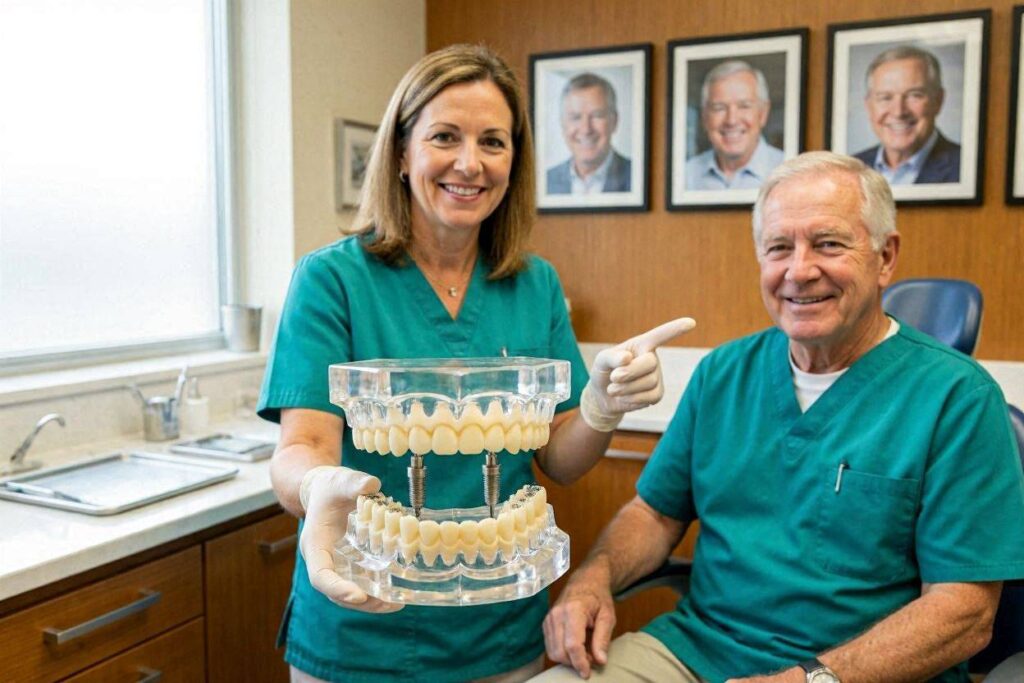
First, a clear definition. A mini dental implant is a titanium or titanium alloy post with a diameter of less than 3 millimeters. Most commonly, they are between 1.8 mm and 2.9 mm wide. A standard-diameter implant, by comparison, is typically 3.5 mm to 6.0 mm wide.
Mini implants are not simply scaled-down conventional implants. They often have a different design. Many are one-piece units where the implant body and the abutment are a single solid piece. The top of the implant has a ball-shaped or O-ring attachment that protrudes above the gum. A corresponding housing in the denture snaps onto this ball, providing retention.
They are placed through a less invasive, flapless surgical technique. The dentist often uses a narrow drill or simply a tissue punch to create a site, and the implant is self-tapping, screwed directly into the bone without sutures. The procedure is quick, with minimal bleeding and post-operative discomfort.
The Evidence: What Studies Say About Mini Implant Survival
The scientific literature provides valuable data, but it must be interpreted carefully. The lifespan of a mini implant depends heavily on what it is being asked to do.
Mini Implants for Denture Retention (Mandibular Overdenture)
This is the strongest evidence base for mini implants. A number of well-designed studies have shown that mini implants supporting a lower overdenture have high survival rates over the medium term.
A systematic review published in the Journal of Prosthetic Dentistry found that mini implants used for mandibular overdentures had a survival rate of approximately 90% to 95% at five years. Some longer-term studies suggest that survival rates may decline after seven to ten years, with some implants being lost to progressive bone loss and overloading.
In this application, the implants are primarily resisting vertical dislodgement (pulling the denture up). The forces are shared among multiple implants (usually four). The denture itself sits on the soft tissue, taking the bulk of the chewing load. The mini implants are retaining, not fully supporting. This is a relatively low-stress environment for a narrow implant.
Mini Implants for Single Crowns
Here, the picture changes dramatically. A single mini implant supporting a crown in the posterior jaw is a high-stress application. The implant must resist not just vertical forces but also significant lateral (side-to-side) and rotational forces during chewing.
The evidence for this application is much weaker. There are far fewer long-term studies, and the failure rates reported are consistently higher than for standard implants. Mini implants used for single crowns are more prone to fracture and to progressive bone loss from overload. Many implant experts consider this an off-label, high-risk application.
Mini Implants for Fixed Bridges
Using mini implants to support multi-unit fixed bridges is even more mechanically demanding. The forces multiply. The narrow diameter provides less surface area for osseointegration and less resistance to bending. This application generally lacks robust long-term scientific support.
The Mechanical Achilles Heel: Diameter Matters
To understand the lifespan, you must understand the physics. The strength and fatigue resistance of a cylinder increases with its diameter. A 2.5 mm mini implant is not just a little weaker than a 4.0 mm standard implant; it is dramatically weaker.
Fracture Risk
An implant in the mouth is subjected to millions of cyclic loading events. Over years, this repeated stress can lead to metal fatigue and fracture. The thinner the implant, the lower the load required to cause a fatigue fracture. A standard implant can typically withstand the forces of normal chewing for decades. A mini implant, particularly in a heavy chewer or a bruxer, has a higher fracture risk.
Abutment Fracture
Because many mini implants are one-piece, the ball attachment is part of the implant body. If this ball fractures, the entire implant usually must be removed. In a two-piece standard implant, a fractured abutment screw can often be retrieved and replaced without losing the implant fixture.
Bone Overload
A narrow implant transfers force to a smaller area of bone. High stress concentration in the crestal bone can exceed the bone’s physiological tolerance, leading to resorption. Over time, the implant loses bone support, becomes loose, and fails. This is the primary biological failure mechanism.
The Critical Factor: How Mini Implants Fail Over Time
When a mini implant fails, it rarely does so because of a sudden, catastrophic event. The decline is usually gradual.
- Initial Osseointegration: If the implant integrates successfully (and many do), it feels solid for the first few years.
- Progressive Crestal Bone Loss: Due to the concentrated stress at the narrow neck, the bone around the implant crest slowly resorbs. A saucer-shaped defect forms.
- Increased Leverage: As bone is lost, more of the implant is exposed. The lever arm lengthens, increasing the stress on the remaining bone and the implant body.
- Mobility and Failure: The bone loss reaches a critical point. The implant becomes mobile, the gum becomes inflamed, and the implant must be removed. Alternatively, the implant or its attachment fractures under the cyclic load.
This process can take five years, ten years, or, in well-maintained, low-force situations, it may not happen at all. But the mechanical vulnerability is always present.
Where Mini Implants Excel: The Long-Term Denture Solution
For a specific patient profile, a mini implant overdenture is a life-changing, durable, and appropriate solution.
The ideal candidate is an older adult with a severely resorbed lower ridge. A standard denture floats and causes constant pain and embarrassment. The patient lacks the bone width for standard implants without extensive, costly, and medically risky bone grafting. They desire a minimally invasive procedure with a quick turnaround.
Placing four mini implants in the anterior mandible and retrofitting the denture with O-ring housings provides dramatic improvement. The denture is firmly snapped into place. It no longer lifts during speech or chewing. The patient can eat a more varied diet. The procedure is done in a single visit, often at a fraction of the cost of standard implant surgery.
In this specific scenario, a mini implant overdenture can last ten years or more, particularly if the patient maintains meticulous hygiene and attends regular professional maintenance. The O-ring inserts in the denture will need periodic replacement, usually every 12 to 18 months. The implants themselves, in a successful case, can serve for many years.
The Comparison Table: Mini Implant Lifespan vs. Standard Implant
| Feature | Mini Dental Implant (1.8 – 2.9 mm) | Standard Dental Implant (3.5 – 6.0 mm) |
|---|---|---|
| Typical Lifespan (Denture Retention) | 7 to 15+ years with maintenance. | 20+ years to lifetime. |
| Typical Lifespan (Single Crown) | Unpredictable; 5 to 10 years at best, high risk. | 20+ years to lifetime. |
| 10-Year Survival Rate (Overall) | Lower, varies widely by application. | > 95% in most studies. |
| Primary Failure Mode | Bone loss from overload, fracture. | Peri-implantitis, late infection. |
| Resistance to Fracture | Low. A 2.5 mm post is inherently weak. | High. A 4.0 mm post is robust. |
| Repairability | Low. Often one-piece; failure means removal. | High. Screws and abutments can be replaced. |
| Ideal Application | Lower denture retention. | Single crowns, bridges, full arches. |
Maximizing the Lifespan of Your Mini Implants
If you have mini implants or are considering them, follow these principles to extend their service life.
- Use Them for Retention, Not Support: The denture base must rest on the soft tissues. The mini implants should not be taking the full vertical chewing load. The occlusion must be carefully adjusted to ensure the denture is tissue-borne, not implant-borne.
- Annual Professional Maintenance: The O-rings wear out. They lose their elasticity over time and must be replaced. A loose O-ring leads to a rocking denture, which overloads the implants. Annual checks are essential.
- Avoid Overload: If you grind your teeth, a night guard is critical. Chewing hard foods like ice, nuts, or hard candy can subject the narrow implants to peak forces that exceed their fracture threshold.
- Meticulous Oral Hygiene: Mini implants have small, smooth surfaces, but the abutment-gum interface is still a plaque trap. Peri-implantitis, while perhaps less common around mini implants under a denture, is still a threat. Clean the implant abutments daily with a soft brush and specialized tools.
Conclusion
Mini dental implants can last seven to fifteen years or more when used for their most proven application, retaining a lower complete denture, especially with diligent maintenance and annual O-ring replacement. However, their lifespan is shorter and more unpredictable when used for single crowns or fixed bridges, due to inherent mechanical limitations in diameter and fracture resistance. They are not a direct, long-term equivalent to standard-diameter implants, and patients should understand this critical distinction before choosing treatment.
FAQ
1. Can a mini implant be replaced with a standard implant later if it fails?
Often, yes. If a mini implant fails and the remaining bone is adequate, the site can be allowed to heal and then re-entered for placement of a standard-diameter implant. Sometimes, a bone graft is needed. The failed mini implant often leaves a relatively small defect.
2. How often do the O-rings on a mini implant denture need replacing?
The O-ring or housing insert typically needs replacement every 12 to 18 months, depending on wear. You will notice the denture starts to feel less retentive and easier to lift. Replacement is a quick, inexpensive in-office procedure.
3. Do mini dental implants hurt more or less than standard implants during surgery?
Mini implant surgery is generally less traumatic. It is often flapless, requiring no incisions or sutures. Post-operative pain, swelling, and bruising are usually minimal, and patients often return to normal activities the same day. This is one of their primary advantages.
4. Why are some dentists recommending mini implants for single teeth if the evidence is weak?
The lower cost and simpler placement protocol can be appealing to both the dentist and the patient. They may be presented as an option when bone is limited and the patient wants to avoid grafting. However, a well-informed patient should understand that the long-term prognosis is less predictable than a standard implant, and the risk of mechanical failure is higher.
Additional Resource
For a balanced view on the role of small-diameter implants in clinical practice, visit the International Congress of Oral Implantologists: https://www.icoi.org/