Is It Safe to Have Dental Implants on the Day of Extraction?
You have a broken, decayed, or cracked tooth that cannot be saved. Your dentist tells you it needs to come out. You dread the thought of walking around with a gap for months while waiting for an implant. Then the dentist mentions a possibility: “We can pull the tooth and place the implant on the same day.” It sounds convenient, modern, and efficient. But is it safe?
The answer is yes, under the right conditions. Same-day implant placement, known clinically as immediate implant placement, is a well-established, scientifically validated procedure. However, it is not safe for every tooth, every patient, or every clinical situation. Safety depends entirely on meticulous case selection, precise surgical technique, and the experience of the clinician.
This guide will explore the safety profile of immediate implant placement. We will detail when it is safe and even advantageous, and when it is risky and should be avoided. By understanding the biological principles and clinical guidelines, you can make an informed decision about whether same-day implant placement is right for your situation.
What Does “Same-Day Implant” Actually Mean?
The term “same-day implant” can refer to two different concepts. It is important to distinguish them.
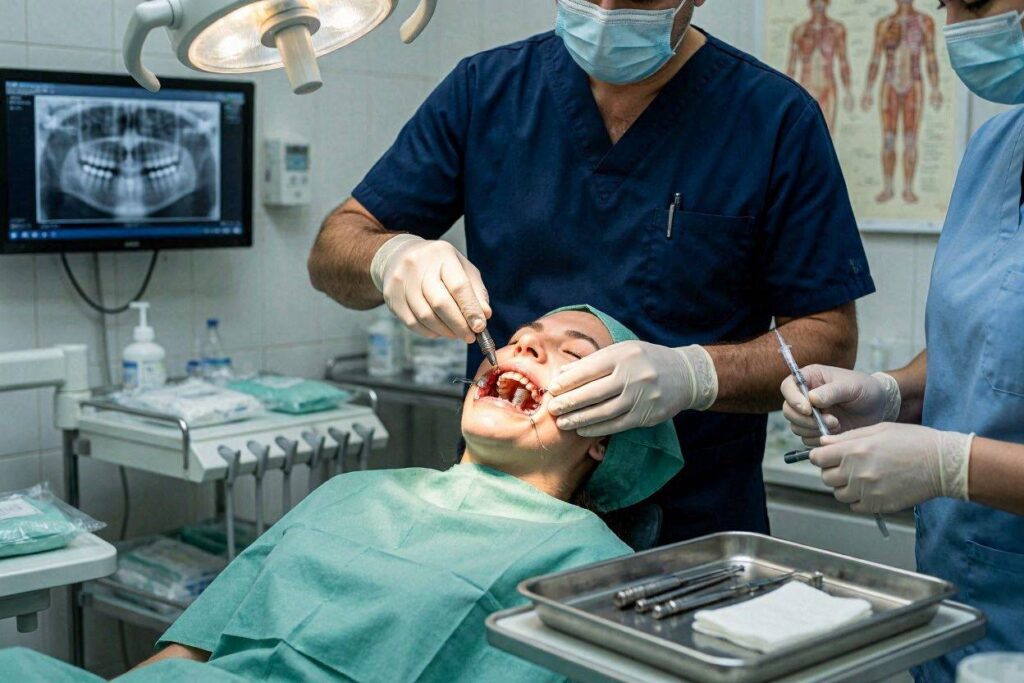
- Immediate Implant Placement: The tooth is extracted, and the implant fixture is placed into the fresh extraction socket during the same surgical appointment. A cover screw or healing abutment is placed, and the gum is often sutured. The implant is left to heal for several months without a functional load. No temporary crown is attached.
- Immediate Implant Placement and Immediate Provisionalization: The tooth is extracted, the implant is placed, and a temporary crown is attached to the implant all in the same visit. The patient leaves with a visible tooth. The temporary is adjusted so it does not touch the opposing teeth during biting (no functional load). This is also called “immediate tooth replacement” and is common in the esthetic zone.
This article focuses primarily on the safety of immediate implant placement, whether a temporary is attached or not. The core question is: is it safe to put a titanium post into a fresh extraction socket?
The Biological Rationale: Why It Can Be Safe
To understand the safety of immediate placement, you must understand what happens in the socket after extraction and how the implant interacts with that environment.
When a tooth is extracted, the socket fills with blood. A clot forms. This clot is a rich scaffold of fibrin, platelets, and growth factors. The body’s healing cascade begins immediately. The bone walls of the socket are lined with viable periodontal ligament cells and bone cells.
If an implant is placed immediately into this environment, several things happen:
- The implant occupies a significant portion of the socket volume, reducing the amount of clot that needs to organize and mature.
- The implant can engage the native bone in the apical (bottom) portion of the socket and sometimes in the palatal wall, achieving primary stability.
- The biological signals for bone healing are already at their peak. The growth factors in the clot bathe the implant surface, potentially accelerating osseointegration.
- The implant, by maintaining the space, may help preserve the bony walls from resorption, particularly the thin facial bone plate.
From a biological perspective, immediate placement harnesses the body’s own healing machinery. It is not inherently dangerous. It is, in fact, a clever way to work with nature.
The Critical Safety Preconditions: When It Is Safe
Safety is not accidental. It is created by adhering to strict clinical criteria. An immediate implant is safe when the following conditions are met.
1. Intact Socket Walls, Especially the Buccal Plate
This is the single most important requirement. The extraction must be as atraumatic as possible, preserving all four bony walls of the socket. The facial (buccal) plate of bone is particularly critical. It is often paper-thin, especially in the front teeth. If this plate is fractured, fenestrated, or completely absent, immediate implant placement is significantly riskier and often contraindicated.
A cone beam CT scan taken before surgery is invaluable. It reveals the thickness of the buccal bone, the presence of any existing defects, and the root anatomy. If the buccal plate is intact and at least 1 millimeter thick, the safety profile is high.
2. Absence of Active Infection
Placing a foreign body into an infected environment is a basic surgical principle violation. A tooth with a chronic, small, localized lesion (a granuloma or small cyst) at the root apex can often be managed safely with immediate placement, provided the lesion is thoroughly curetted and debrided at the time of extraction.
However, a tooth with an acute abscess, purulent exudate (pus), cellulitis, or a large, diffuse radiolucency is not a candidate for immediate placement. The bacterial load is too high. The implant surface can become inoculated with pathogens, forming a biofilm that the body cannot clear. This leads to early failure and potential spread of infection. In such cases, the tooth must be extracted, the infection drained, and the site allowed to heal for 2-4 months before implant placement.
3. Adequate Primary Stability
The implant must achieve a tight, mechanical lock in the native bone. This is difficult in a fresh extraction socket because the coronal (top) portion of the socket is wide and empty. The implant can only engage bone at the apex, often in the bone beyond the root tip, and perhaps in the palatal wall.
The surgeon must place the implant deeper than the extraction socket, engaging at least 3-5 millimeters of pristine bone beyond the apex. If the bone is soft, or if the socket anatomy does not allow this, primary stability will be insufficient. An implant that moves during healing will fail. Achieving insertion torque of at least 30-35 Ncm is a good clinical indicator.
4. Ideal Implant Positioning
The implant cannot simply be dropped into the hole left by the root. Natural tooth roots are often angled differently from the ideal implant axis. The surgeon must prepare a new osteotomy site within the socket, usually engaging the palatal wall and the bone apically, to place the implant in the correct three-dimensional position. This requires skill. A poorly positioned implant in the esthetic zone can be a cosmetic disaster.
5. Management of the Jump Gap
The implant is generally narrower than the extraction socket. A space, called the “jump gap” or “buccal gap,” will exist between the implant surface and the inner wall of the socket, especially on the facial side. This gap must be filled with a bone graft material. If left empty, the body will fill it with a blood clot, which may organize into connective tissue rather than bone, leading to incomplete osseointegration and future bone loss. The graft acts as a scaffold for bone cells to migrate into the gap and maintain the ridge contour.
6. Patient Factors
The patient must be a good healer. Heavy smokers, uncontrolled diabetics, and patients with compromised immune systems are poor candidates for immediate placement. They need the more predictable, staged approach.
The Safety Advantages of Immediate Placement
When the criteria are met, immediate placement offers genuine safety and biological advantages.
- Reduced Number of Surgeries: The patient undergoes one surgical intervention instead of two (extraction plus later implant placement). Less surgical time means less cumulative anesthetic, less post-operative discomfort, and lower overall infection risk.
- Faster Total Treatment Time: Overall time in treatment is reduced by 3 to 6 months.
- Alveolar Ridge Preservation: The immediate implant acts as an internal scaffold. Along with a bone graft, it helps preserve the facial bone plate and the overall ridge dimensions. This is critical for long-term esthetics, particularly in the front of the mouth.
When Same-Day Placement Is NOT Safe: Contraindications
Just as important as knowing when it is safe is knowing when it is not.
- Acute Infection: Active pus, swelling, or a draining fistula at the extraction site.
- Inadequate Bone Beyond the Apex: Less than 3-4 mm of bone beyond the root tip to stabilize the implant.
- Severely Damaged or Missing Buccal Plate: A fractured or absent facial bone wall. Some clinicians may attempt immediate placement with simultaneous guided bone regeneration for small buccal defects, but this is an advanced technique with a higher risk profile.
- Poor Primary Stability: The implant spins in the socket or has very low insertion torque.
- Compromised Healing Capacity: Heavy smokers, uncontrolled systemic disease, bisphosphonate use.
- Unfavorable Socket Anatomy: Molars often have multi-rooted sockets with inter-radicular bone septa. Immediate molar implant placement is much more complex and carries a higher risk of failure compared to the staged approach. It is not commonly performed.
The Specific Safety of Immediate Provisionalization (The Temporary Crown)
Adding a temporary crown on the same day adds another layer of consideration. The key to safety is absolute non-occlusion. The temporary tooth must not touch the opposing teeth in any jaw movement. If the patient bites on it, the micromotion will disrupt osseointegration, and the implant will fail. The patient must be extremely compliant with a soft diet and must protect the tooth diligently.
The advantage is profound: the patient never experiences a gap, and the gum tissue is supported and shaped from day one. But the risk of implant overload is real. This technique should only be performed by experienced clinicians on carefully selected, compliant patients.
The Alternative: Delayed Implant Placement (The Safer Bet?)
The standard, time-tested alternative is the delayed protocol. The tooth is extracted. The socket may be grafted (ridge preservation). The patient waits 3 to 4 months for complete bone and soft tissue healing. Then, the implant is placed into a mature, healed, sterile ridge.
This approach is unquestionably safer in a broader range of clinical situations. There is no risk of implant contamination from a residual infection. The bone is mature and dense, providing excellent primary stability. The soft tissue is sealed and healthy. The predictability is extremely high.
The disadvantage is time and a slightly higher potential for bone resorption during the waiting period. However, a socket graft at the time of extraction mitigates much of that loss.
The choice between immediate and delayed placement is a risk-benefit analysis. An experienced implant surgeon will recommend the approach that maximizes long-term success for your specific anatomy.
Conclusion
Immediate dental implant placement on the day of extraction is a safe and predictable procedure when strict selection criteria are met, including an intact socket, absence of active infection, achievement of adequate primary stability, and proper management of the bone-implant gap. It offers the advantages of reduced surgeries, shortened treatment time, and better bone preservation. However, in cases of acute infection, severely damaged bone, or poor healing capacity, the traditional delayed approach remains the safer and more predictable choice. The decision must be guided by thorough 3D imaging and the judgment of an experienced clinician.
FAQ
1. Is it more painful to have an implant placed the same day as extraction?
The post-operative experience is often similar to a standard extraction with implant placement. You may feel the soreness of the extraction combined with the implant surgery. However, because it is one combined procedure, you avoid going through two separate recovery periods. Pain is generally moderate and manageable with medication.
2. What if I have a temporary crown placed on the same day? Can I bite on it?
Absolutely not. An immediately placed temporary crown is for esthetics and gum shaping only. It must be adjusted so it has zero contact with the opposing teeth. You must maintain a soft diet and chew exclusively on the other side. Biting on the temporary is the fastest way to cause the implant to fail.
3. Is there a higher failure rate for immediate implants compared to delayed implants?
When placed in ideal conditions by an experienced clinician, immediate implants have success rates comparable to delayed implants, often above 95%. However, the risk of complications, particularly esthetic complications like gum recession, is slightly higher. Careful patient selection is key.
4. Can a molar be replaced with an immediate implant?
Molar immediate implants are more challenging due to the large, multi-rooted socket and the anatomy of the inter-radicular bone. While possible in select cases, the delayed protocol is far more common and predictable for molars. Many surgeons prefer to wait.
Additional Resource
For further reading on the clinical protocols for immediate implant placement and provisionalization, visit the Academy of Osseointegration: https://www.osseo.org/
Meta Description
Is it safe to get a dental implant on the same day as a tooth extraction? Explore the strict criteria for safe immediate implant placement, the risks of infection and bone loss, and when a delayed approach is the wiser, safer choice.
continue
Is Dental Implant Safe for Diabetic Patients?
You have diabetes. You manage your blood sugar daily. You check your diet, take your medication, and see your physician regularly. Now you face tooth loss, and you desperately want a dental implant. But a nagging worry persists: “Am I even allowed to have one? Will my diabetes make the surgery dangerous? Will the implant fail because I heal differently?”
This concern is legitimate. For decades, diabetes was considered a relative contraindication to implant placement. The assumption was that diabetic patients heal poorly, get more infections, and lose more implants. The reality, informed by modern research, is far more nuanced and hopeful.
The answer to whether dental implants are safe for diabetic patients is: yes, absolutely, provided the diabetes is well-controlled. Your blood sugar level, measured by your HbA1c, is the single most important predictor of success. This article will explain the biological relationship between diabetes and implant healing, define the safe parameters, outline the necessary precautions, and empower you to approach implant treatment with confidence and a clear plan.
The Biological Challenge: How Diabetes Affects Healing
To understand the safety profile, you must first understand what diabetes does at the cellular level. The implant relies on two key processes: surgical wound healing (soft tissue) and osseointegration (bone-to-implant fusion). Chronic hyperglycemia (high blood sugar) disrupts both.
Impaired Microcirculation
High blood sugar damages the endothelial cells lining small blood vessels, a process called microangiopathy. The capillaries become thickened and less permeable. Oxygen and nutrient delivery to the surgical site is diminished. A wound starved of oxygen heals slowly and is vulnerable.
Compromised Immune Function
Hyperglycemia impairs the function of neutrophils, the white blood cells that form the first line of defense against bacterial invasion. Chemotaxis (the ability of these cells to migrate to a site of infection), phagocytosis (engulfing bacteria), and intracellular killing are all depressed. The diabetic patient is at a significantly higher risk for post-surgical infection and for the development of peri-implantitis later.
Altered Bone Metabolism
Diabetes is associated with reduced bone turnover and formation. Osteoblast (bone-building cell) activity is suppressed, while osteoclast (bone-resorbing cell) activity may be increased in some models. The result is slower, less dense bone formation at the implant surface. The precious early weeks of osseointegration are compromised. The bone-implant contact percentage can be lower in uncontrolled diabetic animal models compared to healthy controls.
Advanced Glycation End Products (AGEs)
Chronic hyperglycemia leads to the formation of AGEs, abnormal cross-links in collagen and other proteins. This makes the collagen in bone and gum tissue more brittle and less capable of normal remodeling. The biological quality of the healing tissue is inferior.
This all sounds alarming. But there is a powerful mitigating factor: glycemic control.
The HbA1c Number: Your Green Light for Safety
Glycated hemoglobin (HbA1c) is a blood test that reflects your average blood glucose level over the previous two to three months. It is the universal benchmark for assessing diabetes control.
- Normal HbA1c (Non-diabetic): Below 5.7%
- Well-Controlled Diabetes: An HbA1c of less than 7.0% is the widely accepted target for safe elective implant surgery. Most studies show that patients with an HbA1c consistently below 7% have implant success rates that are statistically comparable to non-diabetic patients.
- Moderately Controlled Diabetes: An HbA1c between 7.0% and 8.5% represents a gray zone. The risk of complications is elevated. Many surgeons will defer implant surgery until the HbA1c is brought below 7.0%.
- Poorly Controlled Diabetes: An HbA1c above 8.5% or 9.0% is a significant risk factor. Implant failure rates are markedly higher. Elective implant surgery is generally contraindicated until glycemic control is dramatically improved.
“HbA1c is not just a number. It is a direct biochemical predictor of your ability to osseointegrate an implant. Get it under 7%, and your body is ready to heal.” — A guiding principle in implant therapy for diabetic patients.
The Evidence: What Clinical Studies Show
The scientific literature has shifted from blanket pessimism to cautious optimism. A landmark systematic review published in the International Journal of Oral & Maxillofacial Implants analyzed decades of data. The conclusions are clear:
- Well-controlled diabetics (HbA1c < 7%) do not have a statistically significant higher implant failure rate compared to healthy individuals in the short-to-medium term.
- The long-term risk of peri-implantitis may still be somewhat elevated, necessitating more frequent professional maintenance.
- Implant survival rates in well-controlled diabetics are consistently above 90-95% at five years, which is excellent.
- The failure rate rises sharply as HbA1c levels rise above 8.0%.
The verdict of modern science: diabetes is not a contraindication; uncontrolled hyperglycemia is.
Type 1 vs. Type 2 Diabetes: Is There a Difference in Risk?
Both types of diabetes involve hyperglycemia and its attendant complications. However, there are some distinctions relevant to implant therapy.
Type 1 Diabetes: This is an autoimmune disease with an absolute insulin deficiency. It often presents earlier in life and is associated with a longer duration of disease. Long-standing Type 1 diabetes can be harder to control and is often associated with more microvascular complications. A careful assessment of overall health, including kidney function and the presence of other autoimmune conditions, is essential. With excellent glycemic control, implants can be successful.
Type 2 Diabetes: This is far more common and typically presents in adulthood, associated with insulin resistance and relative insulin deficiency. It is often linked to obesity and metabolic syndrome. The degree of control is highly variable. A well-controlled Type 2 diabetic is an excellent implant candidate. The surgical team must be aware of all oral hypoglycemic medications and any other metabolic comorbidities.
The Critical Safety Protocol for Diabetic Patients
Safety is not just about a blood test. It is a comprehensive protocol that spans the entire treatment timeline.
1. Medical Co-Management
The implant surgeon must communicate directly with your managing physician or endocrinologist. A medical clearance letter confirming the diagnosis, current HbA1c level, medication list, and the physician’s assessment that you are stable for elective oral surgery is standard of care. This is not a formality; it is a critical safety check.
2. Pre-Surgical Glycemic Optimization
If your HbA1c is above 7.0%, your dentist should refer you back to your physician for optimization. This may involve medication adjustment, dietary counseling, and a period of three to six months to bring your glucose levels into the safe zone. Do not rush this. The investment in metabolic health pays off in implant survival.
3. Atraumatic Surgical Technique
The surgeon must be meticulous. Gentle tissue handling, copious irrigation to prevent bone overheating, and achieving optimal primary stability are essential. The surgical procedure should be scheduled for the early morning. Diabetic patients should eat a normal breakfast and take their usual medications unless instructed otherwise. Morning surgery minimizes the disruption to your routine and reduces the risk of hypoglycemia during a prolonged procedure.
4. Antibiotic Prophylaxis
Because diabetic patients have a higher baseline risk of infection, a prophylactic antibiotic is usually prescribed. A typical regimen might start the day before surgery and continue for five to seven days post-operatively. A chlorhexidine mouth rinse (0.12%) used for one minute twice daily starting two days before surgery and continuing for two weeks after reduces the oral bacterial load.
5. Strict Post-Operative Monitoring
You will be seen more frequently in the early healing phase. The dentist will check for signs of soft tissue breakdown, delayed wound closure, or infection. Any problems must be caught early. The osseointegration healing period before loading the implant may be extended slightly, perhaps waiting five to six months in the upper jaw instead of four, to ensure the bone has fully matured.
6. Enhanced Long-Term Maintenance
Once the implant is restored, your professional recall interval should be every three to four months, not six. The hygienist will monitor peri-implant tissue health meticulously. Your home care must be impeccable. This is a partnership for life.
Special Considerations for Diabetes-Related Conditions
Diabetes often travels with companions. These must be assessed.
- Cardiovascular Disease: Diabetics have higher rates of hypertension, coronary artery disease, and history of stroke. Patients on antiplatelet therapy (aspirin, clopidogrel) or anticoagulants (warfarin, apixaban) require careful management in consultation with their physician before surgery.
- Nephropathy: Advanced diabetic kidney disease can affect drug metabolism and healing. The implant team must know the patient’s renal function.
- Smoking: A diabetic who smokes presents a compounded risk. Smoking plus uncontrolled diabetes is a recipe for implant failure. Smoking cessation counseling is a non-negotiable part of the pre-surgical workup.
The Danger of Undiagnosed or Poorly Controlled Diabetes
A significant number of patients walking into a dental office have undiagnosed diabetes or pre-diabetes. A responsible implant surgeon will not place implants in a patient with obvious risk factors (obesity, family history, poor wound history, recurrent infections) without checking a random blood glucose or referring for an HbA1c test. Discovering undiagnosed, uncontrolled diabetes through a failed implant is a tragedy that is completely avoidable with a simple blood test.
Conclusion
Dental implants are a safe and effective treatment for diabetic patients whose blood sugar is well-controlled, typically evidenced by an HbA1c level below 7.0%. The key biological risks of impaired healing, infection, and compromised bone integration are significantly mitigated by tight glycemic control. Safety is ensured through a comprehensive protocol that includes physician co-management, pre-surgical optimization, meticulous surgical technique, prophylactic antibiotics, and a commitment to enhanced long-term maintenance. Uncontrolled diabetes, however, remains a major risk factor for implant failure.
FAQ
1. Can I have an implant if my HbA1c is slightly above 7.0%?
Most implant surgeons prefer an HbA1c below 7.0% for elective surgery. If yours is slightly above, say 7.2% or 7.3%, the decision depends on your overall health, the complexity of the case, and your trend. Your surgeon and physician may proceed with caution and enhanced protocols, or they may recommend a brief period of optimization first.
2. Will I need to stop my diabetes medication before surgery?
Usually, no. You will be instructed to eat a normal meal and take your normal oral medications or insulin, unless your doctor specifies otherwise. The goal is to avoid a hypoglycemic episode during the stressful surgical period. Always follow the specific instructions given by your surgical team and physician.
3. Is the healing time longer for diabetic patients?
In well-controlled diabetics, the standard healing time is often sufficient. However, many clinicians err on the side of caution and allow an extra month or two for osseointegration, particularly in the maxilla, before loading the implant. Soft tissue healing may be slightly delayed but usually proceeds uneventfully with good control.
4. Am I more likely to get peri-implantitis if I have diabetes?
Yes, the risk of developing peri-implantitis over the long term appears to be somewhat higher in diabetic patients, even those well-controlled. This elevated risk makes meticulous daily home care and a strict three to four-month professional recall schedule absolutely essential for the life of the implant.
Additional Resource
For more information on the relationship between diabetes and oral health, visit the American Diabetes Association’s oral health resources: https://www.diabetes.org/
Meta Description
Is a dental implant safe for diabetics? Discover why glycemic control (HbA1c < 7%) is the key to success. Learn about the risks, the essential safety protocol, and how well-controlled diabetics can enjoy high implant success rates.
continue
How Long Do Mini Dental Implants Last?
You have heard about mini dental implants. They are thinner, less invasive, and often significantly cheaper than conventional implants. Maybe a dentist has recommended them to stabilize your lower denture. Or you have seen advertisements promising a quick, affordable fix for a missing tooth. The appeal is undeniable. But the critical question lingers: how long do they actually last? Are you getting a durable solution or a temporary patch?
The answer is nuanced. Mini dental implants do not have the same long-term track record or survival rates as standard-diameter implants. When used for their most appropriate purpose, stabilizing a lower denture, they can provide years of reliable service. When pushed beyond their design limits, for single crowns or heavily loaded bridges, their lifespan can be significantly shorter. Understanding the distinction is the key to making a wise decision.
This guide will explore the lifespan of mini dental implants in different clinical scenarios. We will examine the evidence, the mechanical limitations, the common failure modes, and the factors that determine whether a mini implant will last five years or twenty.
What Exactly Is a Mini Dental Implant?
First, a clear definition. A mini dental implant is a titanium or titanium alloy post with a diameter of less than 3 millimeters. Most commonly, they are between 1.8 mm and 2.9 mm wide. A standard-diameter implant, by comparison, is typically 3.5 mm to 6.0 mm wide.
Mini implants are not simply scaled-down conventional implants. They often have a different design. Many are one-piece units where the implant body and the abutment are a single solid piece. The top of the implant has a ball-shaped or O-ring attachment that protrudes above the gum. A corresponding housing in the denture snaps onto this ball, providing retention.
They are placed through a less invasive, flapless surgical technique. The dentist often uses a narrow drill or simply a tissue punch to create a site, and the implant is self-tapping, screwed directly into the bone without sutures. The procedure is quick, with minimal bleeding and post-operative discomfort.
The Evidence: What Studies Say About Mini Implant Survival
The scientific literature provides valuable data, but it must be interpreted carefully. The lifespan of a mini implant depends heavily on what it is being asked to do.
Mini Implants for Denture Retention (Mandibular Overdenture)
This is the strongest evidence base for mini implants. A number of well-designed studies have shown that mini implants supporting a lower overdenture have high survival rates over the medium term.
A systematic review published in the Journal of Prosthetic Dentistry found that mini implants used for mandibular overdentures had a survival rate of approximately 90% to 95% at five years. Some longer-term studies suggest that survival rates may decline after seven to ten years, with some implants being lost to progressive bone loss and overloading.
In this application, the implants are primarily resisting vertical dislodgement (pulling the denture up). The forces are shared among multiple implants (usually four). The denture itself sits on the soft tissue, taking the bulk of the chewing load. The mini implants are retaining, not fully supporting. This is a relatively low-stress environment for a narrow implant.
Mini Implants for Single Crowns
Here, the picture changes dramatically. A single mini implant supporting a crown in the posterior jaw is a high-stress application. The implant must resist not just vertical forces but also significant lateral (side-to-side) and rotational forces during chewing.
The evidence for this application is much weaker. There are far fewer long-term studies, and the failure rates reported are consistently higher than for standard implants. Mini implants used for single crowns are more prone to fracture and to progressive bone loss from overload. Many implant experts consider this an off-label, high-risk application.
Mini Implants for Fixed Bridges
Using mini implants to support multi-unit fixed bridges is even more mechanically demanding. The forces multiply. The narrow diameter provides less surface area for osseointegration and less resistance to bending. This application generally lacks robust long-term scientific support.
The Mechanical Achilles Heel: Diameter Matters
To understand the lifespan, you must understand the physics. The strength and fatigue resistance of a cylinder increases with its diameter. A 2.5 mm mini implant is not just a little weaker than a 4.0 mm standard implant; it is dramatically weaker.
Fracture Risk
An implant in the mouth is subjected to millions of cyclic loading events. Over years, this repeated stress can lead to metal fatigue and fracture. The thinner the implant, the lower the load required to cause a fatigue fracture. A standard implant can typically withstand the forces of normal chewing for decades. A mini implant, particularly in a heavy chewer or a bruxer, has a higher fracture risk.
Abutment Fracture
Because many mini implants are one-piece, the ball attachment is part of the implant body. If this ball fractures, the entire implant usually must be removed. In a two-piece standard implant, a fractured abutment screw can often be retrieved and replaced without losing the implant fixture.
Bone Overload
A narrow implant transfers force to a smaller area of bone. High stress concentration in the crestal bone can exceed the bone’s physiological tolerance, leading to resorption. Over time, the implant loses bone support, becomes loose, and fails. This is the primary biological failure mechanism.
The Critical Factor: How Mini Implants Fail Over Time
When a mini implant fails, it rarely does so because of a sudden, catastrophic event. The decline is usually gradual.
- Initial Osseointegration: If the implant integrates successfully (and many do), it feels solid for the first few years.
- Progressive Crestal Bone Loss: Due to the concentrated stress at the narrow neck, the bone around the implant crest slowly resorbs. A saucer-shaped defect forms.
- Increased Leverage: As bone is lost, more of the implant is exposed. The lever arm lengthens, increasing the stress on the remaining bone and the implant body.
- Mobility and Failure: The bone loss reaches a critical point. The implant becomes mobile, the gum becomes inflamed, and the implant must be removed. Alternatively, the implant or its attachment fractures under the cyclic load.
This process can take five years, ten years, or, in well-maintained, low-force situations, it may not happen at all. But the mechanical vulnerability is always present.
Where Mini Implants Excel: The Long-Term Denture Solution
For a specific patient profile, a mini implant overdenture is a life-changing, durable, and appropriate solution.
The ideal candidate is an older adult with a severely resorbed lower ridge. A standard denture floats and causes constant pain and embarrassment. The patient lacks the bone width for standard implants without extensive, costly, and medically risky bone grafting. They desire a minimally invasive procedure with a quick turnaround.
Placing four mini implants in the anterior mandible and retrofitting the denture with O-ring housings provides dramatic improvement. The denture is firmly snapped into place. It no longer lifts during speech or chewing. The patient can eat a more varied diet. The procedure is done in a single visit, often at a fraction of the cost of standard implant surgery.
In this specific scenario, a mini implant overdenture can last ten years or more, particularly if the patient maintains meticulous hygiene and attends regular professional maintenance. The O-ring inserts in the denture will need periodic replacement, usually every 12 to 18 months. The implants themselves, in a successful case, can serve for many years.
The Comparison Table: Mini Implant Lifespan vs. Standard Implant
| Feature | Mini Dental Implant (1.8 – 2.9 mm) | Standard Dental Implant (3.5 – 6.0 mm) |
|---|---|---|
| Typical Lifespan (Denture Retention) | 7 to 15+ years with maintenance. | 20+ years to lifetime. |
| Typical Lifespan (Single Crown) | Unpredictable; 5 to 10 years at best, high risk. | 20+ years to lifetime. |
| 10-Year Survival Rate (Overall) | Lower, varies widely by application. | > 95% in most studies. |
| Primary Failure Mode | Bone loss from overload, fracture. | Peri-implantitis, late infection. |
| Resistance to Fracture | Low. A 2.5 mm post is inherently weak. | High. A 4.0 mm post is robust. |
| Repairability | Low. Often one-piece; failure means removal. | High. Screws and abutments can be replaced. |
| Ideal Application | Lower denture retention. | Single crowns, bridges, full arches. |
Maximizing the Lifespan of Your Mini Implants
If you have mini implants or are considering them, follow these principles to extend their service life.
- Use Them for Retention, Not Support: The denture base must rest on the soft tissues. The mini implants should not be taking the full vertical chewing load. The occlusion must be carefully adjusted to ensure the denture is tissue-borne, not implant-borne.
- Annual Professional Maintenance: The O-rings wear out. They lose their elasticity over time and must be replaced. A loose O-ring leads to a rocking denture, which overloads the implants. Annual checks are essential.
- Avoid Overload: If you grind your teeth, a night guard is critical. Chewing hard foods like ice, nuts, or hard candy can subject the narrow implants to peak forces that exceed their fracture threshold.
- Meticulous Oral Hygiene: Mini implants have small, smooth surfaces, but the abutment-gum interface is still a plaque trap. Peri-implantitis, while perhaps less common around mini implants under a denture, is still a threat. Clean the implant abutments daily with a soft brush and specialized tools.
Conclusion
Mini dental implants can last seven to fifteen years or more when used for their most proven application, retaining a lower complete denture, especially with diligent maintenance and annual O-ring replacement. However, their lifespan is shorter and more unpredictable when used for single crowns or fixed bridges, due to inherent mechanical limitations in diameter and fracture resistance. They are not a direct, long-term equivalent to standard-diameter implants, and patients should understand this critical distinction before choosing treatment.
FAQ
1. Can a mini implant be replaced with a standard implant later if it fails?
Often, yes. If a mini implant fails and the remaining bone is adequate, the site can be allowed to heal and then re-entered for placement of a standard-diameter implant. Sometimes, a bone graft is needed. The failed mini implant often leaves a relatively small defect.
2. How often do the O-rings on a mini implant denture need replacing?
The O-ring or housing insert typically needs replacement every 12 to 18 months, depending on wear. You will notice the denture starts to feel less retentive and easier to lift. Replacement is a quick, inexpensive in-office procedure.
3. Do mini dental implants hurt more or less than standard implants during surgery?
Mini implant surgery is generally less traumatic. It is often flapless, requiring no incisions or sutures. Post-operative pain, swelling, and bruising are usually minimal, and patients often return to normal activities the same day. This is one of their primary advantages.
4. Why are some dentists recommending mini implants for single teeth if the evidence is weak?
The lower cost and simpler placement protocol can be appealing to both the dentist and the patient. They may be presented as an option when bone is limited and the patient wants to avoid grafting. However, a well-informed patient should understand that the long-term prognosis is less predictable than a standard implant, and the risk of mechanical failure is higher.
Additional Resource
For a balanced view on the role of small-diameter implants in clinical practice, visit the International Congress of Oral Implantologists: https://www.icoi.org/
Meta Description
How long do mini dental implants last? Discover the realistic lifespan for denture stabilization vs. single crowns, the mechanical risks, and how to maximize longevity. Compare mini vs. standard implant durability.
continue
Why Some Dental Implants Are So Cheap?
You are shopping for a solution to your missing tooth. You receive quotes from different dental offices. One quotes $4,500 for a single implant and crown. Another, perhaps a chain clinic or a dental tourism package, quotes $999. The difference is staggering. Your rational mind whispers, “It is just a titanium screw and a crown. Why pay more?” Your cautious mind whispers back, “What are they cutting to get the price that low?”
You are right to be skeptical. A dental implant is a medical device surgically placed into your body. It is not a commodity like a gallon of milk. When the price seems too good to be true, corners are being cut somewhere. Understanding exactly where those corners are cut is essential to making an informed decision about your health.
This guide will dissect the economics of cheap dental implants. We will expose the hidden costs, the inferior materials, the rushed protocols, and the long-term risks that can turn a bargain implant into a financial and biological disaster.
The True Cost Components of a Quality Implant
To understand cheap, you must first understand what goes into a fairly priced, high-quality implant. A legitimate fee for a single implant and crown in the United States typically ranges from $3,000 to $6,000. This fee covers far more than a piece of metal.
- The Implant Fixture: A precision-engineered titanium or zirconia post from a reputable manufacturer with decades of research, proven surface technology, and rigorous quality control.
- The Abutment: A custom or high-quality stock abutment, precision-machined to fit the implant perfectly.
- The Crown: A custom-fabricated ceramic or zirconia crown, layered to match your natural teeth, made in a high-quality dental laboratory.
- Diagnostics and Planning: A comprehensive exam, a cone beam CT scan, digital impressions, and careful virtual treatment planning.
- The Surgical Procedure: The time, skill, and overhead of an experienced surgeon using sterile technique, high-quality surgical drills, and appropriate anesthesia.
- The Restorative Procedure: Multiple appointments for impressions, try-ins, and final delivery of the crown.
- Follow-up Care: Post-operative visits, occlusion checks, and integration assessments.
This is the gold standard. When an implant is offered for a fraction of this cost, something is being removed or downgraded from this list.
Where Corners Are Cut: The Anatomy of a Cheap Implant
The low price is achieved through a combination of shortcuts. Understanding each one reveals the true risk.
1. The Implant Fixture Itself: Generic, Clone, or No-Name Implants
The most common way to slash the cost of the hardware is to use a generic or “clone” implant. These are implants manufactured by companies that did not invest in the original research and development. They copy the design of a major brand implant, often with lower-grade materials and less precise manufacturing tolerances.
The major implant companies (Straumann, Nobel Biocare, Dentsply Sirona, Zimmer Biomet, BioHorizons) spend enormous sums on research, surface technology development, and quality assurance. Their implants have decades of documented clinical success. A clone implant may look similar, but microscopic differences in the surface texture, thread design, and implant-abutment connection can lead to:
- Poorer osseointegration.
- A higher risk of peri-implantitis.
- A higher risk of abutment screw fracture or loosening.
- Difficulty finding replacement components later if the clone company goes out of business.
Imagine receiving a generic hip replacement. You would be horrified. The same principle applies to your jaw.
2. Inferior Crown Materials and Laboratory Work
A high-quality, lifelike ceramic crown fabricated by a skilled dental technician in a reputable laboratory is expensive. Cheap implant packages often cut this cost by using:
- Lower-Grade Porcelain: More prone to chipping, wear, and staining.
- Stock, Non-Custom Abutments: These may not fit the emergence profile perfectly, creating a food trap and a cosmetic compromise.
- Overseas or Discount Laboratories: The technical skill, quality of materials, and attention to detail may be inferior.
- PMMA (Acrylic) Temporary-Like Crowns: In some extreme cases, a cheap acrylic crown is placed as the “permanent” restoration, which will wear down, stain, and fracture within a few years.
3. The Missing Cone Beam CT Scan
A CBCT scan provides a three-dimensional view of your jawbone, nerves, and sinuses. It is non-negotiable for safe implant planning. It allows the surgeon to measure bone precisely and avoid vital structures.
Some low-cost clinics skip the CBCT and rely solely on two-dimensional panoramic or periapical X-rays. This is like a pilot flying blind. The risk of nerve injury, sinus perforation, and placing an implant into inadequate bone increases dramatically. The cost of a CBCT machine and the time to interpret the scan are expenses a discount clinic may try to avoid.
4. Rushed or Inexperienced Clinicians
A skilled implant surgeon has years of advanced training, often a surgical specialty. Their time and expertise command a fee. Discount clinics may employ general dentists who have taken a weekend course and are placing implants to boost practice revenue. They may not have the experience to manage complications.
High-volume, low-cost clinics operate on an assembly-line model. The dentist is incentivized to move quickly. Surgical corners cut include:
- Inadequate anesthesia.
- Failure to use a surgical guide.
- Poor sterile technique.
- Shorter, less thorough surgical protocols.
A rushed surgery in less-experienced hands is a recipe for implant malposition, nerve damage, and early failure.
5. The Hard Sell and Hidden Fees
The $999 advertised price is often a bait-and-switch tactic. When you arrive for the consultation, you discover that the price only covers the implant fixture itself. The abutment, the crown, the CBCT scan, the surgical guide, the extraction, the bone graft, and the anesthesia are all additional. The final bill may approach or even exceed the cost at a reputable practice, but with inferior components.
Alternatively, the low price is for the absolute simplest case: a single implant in abundant, pristine bone with a cheap crown. If your case requires any additional steps, the price escalates rapidly.
The True Cost of a Failed Cheap Implant
The most expensive implant is the one that fails. A $1,000 implant that fails after three years is far more costly than a $4,500 implant that lasts a lifetime. Consider the cascade of costs and damage when a cheap implant goes wrong.
- Loss of the Implant: The failed implant must be surgically removed. There is a cost for this explantation procedure.
- Bone Loss: Peri-implantitis or a poorly placed implant can destroy significant bone. What was once a straightforward site now needs a major bone graft.
- Bone Grafting: Rebuilding the lost bone costs thousands of dollars and adds months of healing time.
- Nerve Damage Repair: If the inferior alveolar nerve was damaged due to lack of a CBCT scan, you may face chronic pain or numbness. Treatment for nerve injuries is complex, expensive, and often not fully successful.
- Re-treatment: You must now pay for a new, properly done implant. You have paid for the cheap one, paid for its removal, paid for the graft, and now pay for the proper one. The total cost can be triple what the legitimate implant would have cost initially.
“The bitterness of poor quality remains long after the sweetness of low price is forgotten.” — This aphorism is profoundly true in implant dentistry.
When a Lower Price Might Be Legitimate
Not every affordable implant is a scam. There are legitimate reasons why a price might be lower.
- Geographic Location: A rural practice with lower overhead costs may charge less than a practice in a high-rent urban center.
- Dental Schools: University dental schools offer implant treatment performed by residents under expert supervision at significantly reduced fees. The appointments are longer, but the quality is high.
- Insurance Coverage: Some dental insurance plans negotiate discounted fees with in-network providers.
- Clinician Philosophy: Some ethical, highly skilled clinicians operate on a lower-margin, higher-volume model, using efficient digital workflows to reduce lab costs without compromising quality.
The key is to ask questions. A legitimate provider will be transparent about the implant brand, the crown material, the diagnostic process, and their training. They will not pressure you with a limited-time offer.
Red Flags to Watch Out For
If you see any of these warning signs, proceed with extreme caution.
- Advertised prices significantly below the local market average.
- Pressure to “sign up today” for a limited-time deal.
- Refusal to disclose the specific implant brand and manufacturer.
- No mention of a CBCT scan or a surgical guide.
- A consultation that feels rushed, sales-oriented, not clinical.
- The dentist cannot or will not show you before-and-after cases of their own work.
- Online reviews that mention hidden fees or complications handled poorly.
The Wisdom of Investing in Quality
Your dental implant is a long-term investment in your health, function, and self-esteem. It is intended to be a permanent part of your body. You would not choose the cheapest heart surgeon or the cheapest parachute. Do not choose the cheapest implant.
Seek a clinician who inspires trust, who communicates openly about the process, and who uses high-quality, well-researched components. Financing options and payment plans can make a quality implant affordable over time. The peace of mind of knowing your implant was placed with precision, using the best materials, is worth far more than the money you might save by gambling on a bargain.
Conclusion
Cheap dental implants are cheap because corners are cut in the implant fixture quality, the crown materials, the diagnostic imaging, and the surgical skill. Generic clone implants, the absence of a CBCT scan, inferior laboratory work, and rushed, high-volume clinical protocols are common ways costs are slashed. While geographic location or dental schools can offer legitimate lower prices, an advertised bargain-basement fee is often a bait-and-switch or a setup for early failure, leading to significantly higher costs and biological damage in the long run.
FAQ
1. Are all implants from major brands the same?
No. The major global manufacturers (Straumann, Nobel Biocare, Dentsply Sironi, Zimmer Biomet, BioHorizons) have distinct designs, surface technologies, and connection geometries. However, they are all considered premium, well-researched systems. The difference is between these established brands and generic clones or unknown low-cost manufacturers.
2. Is dental tourism a safe way to get cheaper implants?
Dental tourism can offer significant savings, but it carries risks. Quality varies widely. If a complication occurs after you return home, your local dentist may not have the components or the familiarity to manage the specific implant system. Follow-up care is difficult. Due diligence on the foreign clinic’s credentials and implant system is essential.
3. What is a reasonable price range for a single quality implant and crown?
In the United States, a reasonable and common fee for a single, high-quality implant and crown, including all diagnostics, surgery, and restoration, typically ranges from $3,500 to $6,500. Fees vary significantly by region.
4. Can I ask my dentist which implant brand they use?
Absolutely. You have every right to know the make and model of the medical device being placed in your body. A reputable dentist will be happy to tell you and explain why they chose that particular system. If they are evasive, that is a red flag.
Additional Resource
For a patient guide on choosing a dental implant provider and understanding treatment costs, visit the American Academy of Implant Dentistry: https://www.aaid.com/
Meta Description
Why are some dental implants so cheap? Uncover the hidden corners cut in implant quality, materials, diagnostics, and surgical skill. Learn the true cost of a bargain implant and how to spot red flags before you buy.
This response is AI-generated, for reference only.
continue
Why Do Dental Implants Cost So Much?
You sit across from the treatment coordinator, staring at a fee estimate that feels like a punch to the gut. A single dental implant and crown: $4,500. A full arch: $25,000 or more. Your mind reels. How can a tiny screw and a fake tooth cost as much as a used car? Is this price gouging, or is there a legitimate reason behind the staggering numbers?
The answer is that the fee is not just for a product. You are paying for a complex, multi-stage medical procedure that involves advanced technology, precision engineering, surgical expertise, and artistic craftsmanship. The implant itself is only one line item in a long chain of value. Understanding what you are actually paying for can transform your resentment into appreciation and empower you to make a wise investment in your health.
This guide will break down every component of the cost of a dental implant. We will demystify the fees, explain the hidden value, and compare the long-term economics of implants versus cheaper alternatives. By the end, you will understand why that number on the page is what it is.
The Iceberg Analogy: The Implant Is Just the Tip
Most patients see the implant as the product. You are buying a tooth. But the implant fixture is just the visible tip of a massive iceberg. Underneath the surface lies a vast infrastructure of diagnostics, planning, skilled labor, technology, and biological management.
Let us dive beneath the waterline and examine each layer of cost.
Layer 1: The Diagnostics and Virtual Planning
Before a scalpel touches your gum, a significant amount of work has already been done. This phase is critical for safety and precision, and it costs money.
The Comprehensive Examination
The dentist performs a thorough clinical exam, assessing your bite, your gum health, your existing teeth, and your medical history. This is not a quick glance. It is a systematic evaluation that identifies risk factors.
The Cone Beam CT Scan
This is a non-negotiable expense in modern implantology. A CBCT machine costs a practice between $60,000 and $120,000. The scan provides a three-dimensional X-ray of your jaw, allowing the surgeon to measure bone volume, locate nerves and sinuses, and identify pathology. The fee for this scan, often $300 to $600, covers the equipment lease or purchase, software licensing, maintenance, and the dentist’s time in interpreting the data.
Digital Impressions and Planning Software
Many practices now use an intraoral scanner to take a digital impression of your teeth. The scanner hardware costs $20,000 to $40,000, with ongoing software subscription fees. The dentist then imports your CBCT data and digital impression into implant planning software. They virtually place your implant, design a surgical guide, and plan the exact position, angle, and depth.
This digital workflow adds hundreds of dollars to the case but dramatically increases safety and precision. It is the difference between a carpenter eyeballing a cut and using a laser-guided saw.
Layer 2: The Surgical Components and Procedure
This is the implant placement day. The costs here are substantial.
The Implant Fixture
The titanium or zirconia post itself is a marvel of engineering. The major implant companies spend tens of millions of dollars on research and development. The surface technology, the thread design, and the precision machining are the results of decades of scientific study. A single implant fixture from a reputable manufacturer costs the dentist between $200 and $500. This is not a simple hardware-store screw; it is a medical device manufactured to micron-level tolerances.
The Surgical Kit and Drills
Implant placement requires a system-specific surgical kit. These kits contain precision drills, torque wrenches, and placement instruments. A single kit costs $3,000 to $6,000. The drills are disposable or have a limited number of uses before they must be replaced due to wear and loss of sharpness. Each surgery consumes a portion of these consumable components.
The Surgical Guide
If a digitally designed surgical guide is used, it must be fabricated. This is a 3D-printed resin stent that fits over your teeth and directs the drills precisely according to the virtual plan. It costs the dentist $150 to $400 to have the guide printed and shipped.
The Surgeon’s Fee and Overhead
This is the single largest cost component. You are paying for the skill, training, and judgment of the person placing the implant. A board-certified oral surgeon or periodontist has completed four years of dental school plus a three to four-year hospital-based surgical residency. Their expertise commands a professional fee.
But that fee does not go straight into their pocket. It covers the overhead of running a surgical facility: rent, staff salaries (surgical assistants, front desk, sterilization technicians), malpractice insurance, utilities, surgical supplies, and sterilization equipment. A single dental chair in a modern implant practice can cost over $50,000 in equipment.
Anesthesia
The local anesthetic, and potentially sedation (nitrous oxide, oral conscious sedation, or IV sedation), adds to the cost. IV sedation requires an anesthesiologist or a dentist with advanced sedation training and monitoring equipment.
Layer 3: The Restoration and Laboratory Phase
Once the implant has fused to the bone (months later), the restorative phase begins. This is the tooth part.
The Abutment
The abutment is the connector that screws into the implant and supports the crown. A stock abutment costs $100 to $300. A custom, patient-specific abutment milled from titanium or zirconia by a laboratory costs $300 to $600. Custom abutments provide a better fit and superior emergence profile.
The Laboratory Fabrication of the Crown
This is where art meets science. A skilled dental laboratory technician fabricates your crown. It is not a machine-made, off-the-shelf part. It is a custom sculpture.
The process involves creating a model, designing the tooth digitally or by hand, and layering porcelain by hand to mimic the translucency, color variation, and texture of a natural tooth. This is highly skilled labor, often taking hours for a single crown. The dental laboratory charges the dentist between $400 and $800 for a high-quality, custom ceramic crown on a custom abutment.
The Restorative Dentist’s Fee
The dentist who places the crown has their own overhead, time, and expertise. They take the impression, select the shade, manage the soft tissue, try in the crown, adjust the occlusion, and cement or screw it into place. This restorative phase often requires multiple appointments.
Layer 4: The Invisible Biological Management
Some of the most critical costs are invisible.
Bone Grafting and Ridge Preservation
If you had significant bone loss, or if a tooth was extracted and the socket was grafted to preserve bone, these are separate surgical procedures with their own material and time costs. A bone graft can add $500 to $3,000+ to the overall treatment.
Periodontal Therapy
If you had active gum disease, that must be treated and stabilized before an implant can be placed. The cost of scaling and root planing or periodontal surgery is a pre-requisite investment.
Post-Operative Care and Maintenance
The surgical fee typically includes a series of post-operative visits to monitor healing. After the crown is placed, the implant requires ongoing professional maintenance. These are separate hygiene appointments, not included in the initial implant fee.
The Big Picture: A Lifetime Value Calculation
Let us now compare the lifetime cost of an implant versus a bridge, using realistic numbers over a 30-year period.
| Item | Dental Implant | 3-Unit Fixed Bridge |
|---|---|---|
| Initial Cost | $4,500 | $3,500 |
| Year 12: Bridge Fails, Needs Replacement | N/A | $4,000 (new bridge, possible root canal) |
| Year 18: Implant Crown Replaced Due to Wear | $1,500 | N/A |
| Year 24: Bridge Fails Again, Implant Now Needed | N/A | $5,500 (extraction, graft, implant, crown) |
| Total 30-Year Cost | $6,000 | $13,000 |
| Adjacent Teeth Status | Pristine, untouched. | Two teeth ground down; eventually lost. |
The implant, despite its higher initial cost, is often the most economical choice over a lifetime. You are not just buying a tooth; you are buying the preservation of your entire mouth.
What You Are Really Paying For
To distill it down, your implant fee is an investment in:
- Safety: 3D imaging, surgical guides, and sterile technique that protect you from nerve damage, sinus perforation, and infection.
- Longevity: High-quality materials and precise engineering that resist fracture and corrosion.
- Esthetics: The artistic skill of the dentist and technician to create a tooth that is indistinguishable from nature.
- Education and Expertise: The years of training and clinical experience of your surgical and restorative team.
- Biological Respect: The preservation of your jawbone and the protection of your adjacent healthy teeth.
When you understand this, the cost begins to make sense. It is not a transaction for a screw. It is an investment in a medically sophisticated, surgically precise, and artistically crafted body part.
Conclusion
Dental implants cost so much because the fee encompasses far more than the titanium fixture. It includes advanced 3D diagnostic imaging, precision surgical guides, the expertise of a surgically trained clinician, high-quality implant components from reputable manufacturers, the artistic labor of a custom crown, and the substantial overhead of a modern surgical facility. When viewed as a long-term investment that preserves bone and protects adjacent teeth, the implant’s higher initial cost is often more economical than cheaper alternatives that require replacement and cause further dental damage over a lifetime.
FAQ
1. Why is there such a wide range in implant pricing between different offices?
The variation reflects differences in clinician training (general dentist vs. specialist), the implant system used (premium brand vs. generic), the diagnostic technology employed (2D X-ray vs. CBCT with surgical guide), the quality of the crown and laboratory, and the geographic location and overhead costs of the practice.
2. Does dental insurance cover the cost of implants?
Dental insurance coverage for implants varies widely. Many plans now offer some coverage, often at a percentage (e.g., 50%) up to an annual maximum, which is typically $1,000 to $2,000. This may cover a portion of the crown or the surgery. Medical insurance may cover implant costs if tooth loss is due to a medical condition or accident.
3. Are there financing options to make implants more affordable?
Yes. Most dental offices offer third-party financing options through companies like CareCredit or LendingClub, which provide extended payment plans, sometimes with interest-free periods. Many practices also offer in-house membership plans that provide discounts on implant treatment.
4. Can I save money by going to a dental school for my implant?
Yes. Dental schools and hospital residency programs offer implant treatment at significantly reduced fees. Treatment is performed by graduate residents or students under the direct supervision of experienced faculty specialists. The trade-off is longer appointment times and a longer overall treatment timeline.
Additional Resource
For a patient-oriented guide to understanding dental fees and financing options, visit the American Dental Association’s patient education resources: https://www.mouthhealthy.org/
Meta Description
Why do dental implants cost so much? A transparent, line-by-line breakdown of the diagnostics, surgical expertise, laboratory artistry, and long-term value that justify the investment in a dental implant over cheaper alternatives.
continue
How to Avoid Dental Implants?
You have arrived at this article with a specific goal: you do not want a dental implant. Perhaps the cost terrifies you. Perhaps the surgery gives you nightmares. Perhaps you have a medical condition that makes implants risky. Whatever your reason, you want to know how to keep your natural teeth and avoid ever needing a titanium post in your jaw.
The most effective way to avoid a dental implant is to prevent the tooth loss that makes one necessary. This means mastering prevention, intercepting problems early, and making smart treatment decisions when teeth do fail. It also means understanding the legitimate alternatives to implants when a tooth cannot be saved.
This guide is a practical, proactive roadmap. It will walk you through the entire spectrum of avoidance: daily habits, professional care, early intervention, and alternative tooth replacement options. Your goal is achievable. Let us build your strategy.
The Root Cause: Understanding Why Teeth Are Lost
To avoid an implant, you must understand why teeth fail. The vast majority of tooth loss stems from three main causes. Target these, and you target the implant’s reason for existing.
- Dental Caries (Tooth Decay): Cavities that grow unchecked eventually reach the pulp (nerve), causing infection and structural destruction. A tooth that is too broken down to support a crown must be extracted.
- Periodontal Disease (Gum Disease): This is the leading cause of tooth loss in adults. Chronic inflammation destroys the gum attachment and the supporting bone. The tooth becomes loose, and eventually, it falls out or must be pulled.
- Trauma and Fracture: Accidents, sports injuries, and biting on hard objects can crack or fracture teeth. A vertical root fracture, where the crack extends down the root, is almost always a terminal diagnosis for the tooth.
Additionally, failed previous dentistry (a failing root canal, a bridge that caused decay on abutment teeth) is a major contributor.
Phase 1: The Daily Defense, Preventing Decay and Gum Disease
Your daily habits are the first and most powerful line of defense. You cannot delegate this. It happens in your bathroom, twice a day.
Master Oral Hygiene
This goes beyond a quick brush. The enemy is biofilm, a sticky, organized layer of bacteria.
- Brushing: Use a soft-bristled electric toothbrush. Brush for two full minutes. The brush head must be angled at 45 degrees into the gumline, where the biofilm hides. Do not just scrub the biting surfaces.
- Interdental Cleaning: This is non-negotiable. Brushing cleans only 60% of the tooth surface. You must clean the sides. Floss, interdental brushes, or a water flosser must be used daily. A water flosser is particularly effective for flushing out bacteria from gum pockets.
- Fluoride: Use a fluoride toothpaste. Fluoride strengthens enamel and makes it more resistant to acid attack. If you are cavity-prone, ask your dentist about a prescription-strength fluoride gel.
- Tongue Cleaning: Bacteria live on the tongue. Clean it with a tongue scraper or your brush.
Perfect Your Diet for Teeth
You are not just eating; you are feeding or starving the bacteria in your mouth. Every time you eat sugar or refined carbohydrates, the bacteria produce acid that attacks your enamel for 20 to 40 minutes.
- Reduce Frequency: The number of sugar exposures per day matters more than the total amount. Sipping on a soda for two hours is far worse than drinking it in five minutes. Limit sugary snacks and drinks to meal times.
- Beware of Hidden Sugars: Processed foods, flavored yogurts, granola bars, and even savory sauces are packed with sugar.
- Eat Protective Foods: Crunchy vegetables and fruits stimulate saliva flow. Cheese and dairy neutralize acid and provide calcium and phosphate for remineralization.
- Hydrate with Water: Water dilutes acids and washes away food debris. If you drink fluoridated water, you get a constant, low-level fluoride treatment.
Manage Destructive Habits
- Teeth Are Not Tools: Do not use your teeth to open bottles, tear tags off clothing, or crack nuts. You risk a catastrophic fracture.
- No Ice Chewing: Chewing ice is a common cause of microscopic cracks and catastrophic fractures.
- Night Guard for Bruxism: If you grind or clench your teeth at night, you are wearing them down and creating cracks. A custom-made night guard from your dentist absorbs the forces and protects your teeth from themselves.
Phase 2: The Professional Safety Net, Early Detection and Intervention
Your dentist is your strategic partner. Regular visits are not just about cleaning; they are about surveillance and early interception.
Regular Recare Visits (Every 6 Months, or More)
- Professional Cleaning: A hygienist can remove calcified tartar that your brush cannot touch. Tartar is a haven for bacteria.
- Periodontal Probing: The dentist measures the depth of the gum pockets around every tooth. A pocket deeper than 3 mm with bleeding is an early warning sign of gum disease.
- Caries Detection: X-rays and clinical exam catch cavities when they are small and easily fillable, not when they are deep and threatening the nerve.
- Occlusal Analysis: The dentist checks your bite for destructive interferences that cause fractures and wear.
Treat Small Problems Before They Become Big
- Fill Cavities Immediately: A small filling is a minor, low-cost procedure. Ignoring it leads to a root canal or extraction.
- Treat Gum Disease Aggressively: If you are diagnosed with periodontitis, commit to the treatment. Scaling and root planing (deep cleaning) is the first line. Periodontal surgery may be needed. The goal is to arrest bone loss before teeth become mobile. A tooth with a wobbly, hopeless prognosis sets you on the path to an implant.
- Crown Cracked Teeth: A tooth with a crack does not heal on its own. A full-coverage crown can hold the tooth together and prevent the crack from propagating into a catastrophic root fracture.
Phase 3: The Decision Point, When a Tooth Fails
Sometimes, despite all best efforts, a tooth becomes non-restorable. Deep decay has reached the furcation, a vertical root fracture has occurred, or advanced gum disease has left too little supporting bone. The tooth must be extracted.
At this point, you face a choice: implant, bridge, partial denture, or nothing. If you are determined to avoid an implant, you must weigh the alternatives.
Alternative 1: The Fixed Bridge (Resin-Bonded or Traditional)
A bridge uses adjacent teeth to support a false tooth. As discussed in the previous article, a traditional bridge requires grinding down healthy adjacent teeth. A Maryland bridge or resin-bonded bridge is a more conservative option for front teeth, where the false tooth has metal wings that are bonded to the back of the adjacent teeth with minimal preparation. Bridges avoid surgery but have a finite lifespan and create hygiene challenges.
Alternative 2: The Removable Partial Denture
This is a plate with a false tooth that clasps onto your remaining teeth. It is the least expensive option and requires no surgery and no drilling of healthy teeth. The downsides are bulk, potential discomfort, metal clasps that may show, and the fact that it does nothing to preserve the underlying bone, which will continue to resorb.
Alternative 3: The Space Maintainer (Orthodontic Closure)
If the missing tooth is a front tooth or a premolar, and you have existing crowding, it may be possible to close the space orthodontically with braces or clear aligners. You literally move your other teeth together to fill the gap. This requires a comprehensive orthodontic assessment but is a brilliant way to avoid any prosthesis at all.
Alternative 4: Intentional Replantation
In very rare, select cases of a failed root canal, an endodontist may extract the tooth, perform a root-end resection and filling on a bench top, and replant the tooth back into the socket. This is a last-ditch effort to save a tooth that would otherwise be extracted. Success rates vary, and it is not a common or guaranteed procedure.
Alternative 5: Autotransplantation
If you have a wisdom tooth or another tooth that is not essential (like a premolar extracted for orthodontics), it is possible in a young, healthy patient to transplant that tooth into the extraction socket of a failed tooth. The tooth is extracted, placed in the new socket, and stabilized. If the tooth’s root is still developing, the success rate is surprisingly high. This is a highly specialized procedure.
Phase 4: If You Accept an Extraction but Refuse Replacement
You could simply do nothing and leave the gap. This is an option, but you must understand the consequences.
- Bone Resorption: The jawbone under the missing tooth will resorb over time.
- Tooth Drifting and Supraeruption: Adjacent teeth will tip into the space. The opposing tooth will over-erupt. This can destabilize your entire bite.
- Chewing Difficulty: You lose chewing efficiency on that side.
- Esthetics: The gap may show when you smile.
Choosing to do nothing is not cost-free. It can create a cascade of bite problems that are far more expensive to fix later.
The Mindset Shift: Your Teeth Are Organs, Not Disposable Parts
The most powerful tool for avoiding dental implants is a philosophical shift. In many cultures, teeth are viewed as disposable; they break, you pull them, you get a denture. To avoid implants, you must adopt the view that your natural teeth are precious, non-regenerative organs. Each tooth is worth fighting for with every tool at your disposal.
This means prioritizing dental health in your budget and your schedule. It means seeing your dentist not as a repairman for when things break, but as a primary care physician for your mouth. It means the daily two minutes of flossing is not a chore but an act of self-preservation.
Conclusion
You avoid a dental implant by preventing the tooth loss that necessitates one. This requires a three-part strategy: a rigorous daily home care routine to prevent decay and gum disease, consistent professional care for early detection and interception of problems, and careful consideration of tooth-preserving procedures when teeth fail. Should extraction become unavoidable, alternatives like bridges, partial dentures, or even orthodontic space closure exist, though each carries its own compromises. The ultimate avoidance strategy is a lifelong commitment to treating your natural teeth as irreplaceable organs.
FAQ
1. Can a tooth with a failed root canal be saved without an implant?
Sometimes, yes. An apicoectomy (root-end surgery) can remove the infected tip of the root and seal the canal from the bottom. Endodontic retreatment by a specialist can address canals that were missed or inadequately cleaned. However, a vertical root fracture cannot be repaired and requires extraction.
2. Is it really possible to close a gap with braces and avoid an implant?
Yes, in carefully selected cases. If you have a missing lower first molar and a healthy wisdom tooth, or if you have generalized spacing or crowding, an orthodontist can move teeth into the space. This requires a comprehensive orthodontic treatment plan and is not possible for every situation.
3. If I refuse an implant, will a bridge or partial denture preserve the bone?
No. Neither a traditional bridge nor a removable partial denture transmits functional forces to the underlying bone. The bone under a bridge pontic or a partial denture saddle will continue to resorb over time. Only an implant replaces the tooth root and stimulates the bone.
4. Is it safe to just leave a missing tooth gap alone?
Leaving a gap alone carries risks. Adjacent teeth can drift and tip, opposing teeth can over-erupt, and the bone will resorb. These changes can create a more complex, expensive dental problem down the road. A thorough discussion with your dentist about the specific risks for your gap is essential.
Additional Resource
For more information on preventing tooth loss through gum disease treatment, visit the American Academy of Periodontology: https://www.perio.org/
Meta Description
Learn how to avoid dental implants entirely. A proactive guide to preventing tooth loss through perfect oral hygiene, early dental intervention, and smart alternatives like bridges, partial dentures, and orthodontic space closure.
continue
What Is the Lifespan of Dental Implants?
You are considering a dental implant, and the most pressing question on your mind is simple: how long will it last? You want a solution that is permanent. You do not want to go through this again in ten or fifteen years. You want to know if the investment of time, money, and surgery is truly a lifetime solution.
The answer is both reassuring and demanding. A well-placed, well-maintained dental implant can absolutely last a lifetime. The implant fixture itself, the titanium or zirconia post in the bone, has the potential to remain functional and healthy for the rest of your life. However, the crown on top, the visible tooth, has a more limited lifespan and will likely need replacement at some point. And the entire system’s longevity depends overwhelmingly on one factor: you.
This guide will explore the realistic lifespan of each component of a dental implant, the factors that determine longevity, the long-term success data from scientific studies, and the essential maintenance protocols that separate a 10-year implant from a 40-year implant.
The Three Components, Three Different Lifespans
A dental implant is not a single unit. It is a system of three distinct parts, each with its own longevity profile.
1. The Implant Fixture: Potentially a Lifetime
The implant fixture is the titanium or zirconia post surgically embedded in your jawbone. Once osseointegration is complete, this post becomes a functional part of your skeleton. The materials are biocompatible, corrosion-resistant, and incredibly strong. The fixture itself does not decay, does not wear out, and does not have a finite fatigue life under normal physiological loading.
The primary threat to the fixture is not material failure but biological failure: peri-implantitis and loss of osseointegration. If you can prevent bone loss around the implant, the fixture itself can theoretically last forever. There are patients today who have had the same Brånemark implants functioning in their mouths for over 50 years.
2. The Abutment: 15 to 25+ Years
The abutment is the connector that screws into the implant fixture and supports the crown. It is typically made of titanium or zirconia. The abutment is a robust component. The abutment screw is the most likely part to loosen or, rarely, fracture. With proper torque and occlusal management, the abutment can last for decades, often the lifetime of the implant. However, if the crown needs replacement due to wear, the abutment may also be replaced at that time for optimal fit and esthetics.
3. The Crown: 10 to 20 Years, Sometimes Longer
The crown is the visible, functional tooth. It is subject to the same forces as natural teeth: chewing, grinding, and acid exposure. Porcelain and zirconia crowns are extremely durable, but they can chip, fracture, or wear down over time. The cement seal, if cemented, can degrade. The esthetics can fade as gums naturally recede with age, exposing the margin.
A well-made implant crown on a patient with a stable bite and good care can easily last 15 to 20 years. Some last much longer. But it is realistic to expect that the crown will be the first component to need replacement, not because of failure, but because of normal material fatigue and the cumulative effects of millions of chewing cycles.
The Scientific Evidence: What the Long-Term Studies Show
The marketing claim of “implants last a lifetime” is grounded in data, but the data must be interpreted honestly.
Longitudinal studies with 10, 15, and 20-year follow-up periods consistently report implant survival rates of 90% to 95% or higher. A landmark systematic review published in the Journal of Dental Research found a 10-year implant survival rate of approximately 95% for single crowns and 93% for fixed bridges. Another long-term study from the University of Gothenburg reported a 20-year survival rate of over 90%.
However, survival and success are different. Survival means the implant is still in the mouth. Success means it is in the mouth, without bone loss, without bleeding, without pathology. The success rates, as opposed to survival rates, are somewhat lower, around 80% to 85% at 10 years. This means a percentage of “surviving” implants have some degree of peri-implant mucositis or early peri-implantitis. They are present, but they are not perfectly healthy.
The key takeaway: the vast majority of implants survive for decades. But a meaningful minority develop biological complications that require treatment. Lifelong maintenance is the price of admission.
Factors That Shorten Implant Lifespan
Understanding what causes implants to fail or require early replacement is critical.
1. Poor Oral Hygiene and Peri-implantitis
This is the number one long-term killer of dental implants. Plaque biofilm accumulates around the implant. If not removed daily, it triggers an inflammatory response. Unlike natural teeth with their ligament defense, implants have a direct inflammatory pathway to the bone. Peri-implantitis causes progressive, often rapid bone loss. Without treatment, the implant loses support and either falls out or must be removed. A patient who brushes and flosses perfectly gets a lifetime implant. A patient who neglects hygiene loses it in five years.
2. Uncontrolled Systemic Disease
Conditions like uncontrolled diabetes or autoimmune diseases impair the body’s ability to maintain the bone-implant interface and fight off bacterial invasion. A well-controlled diabetic can have excellent longevity. A poorly controlled diabetic is at very high risk for late failure.
3. Smoking
Smoking is a devastating risk factor. It impairs blood flow, suppresses immune function, and is one of the strongest predictors of peri-implantitis. Smokers consistently show higher implant failure rates in long-term studies. Quitting smoking is the single best thing a smoker can do to extend the life of their implant.
4. Bruxism and Mechanical Overload
The implant-bone interface lacks a shock absorber. Excessive forces from grinding, clenching, or a poorly designed bite can cause microfractures in the bone, screw loosening, and crown fracture. A night guard is non-negotiable for bruxers.
5. Poor Prosthetic Design
A crown that does not fit precisely, has open margins, or creates an unhygienic contour is a plaque trap and a mechanical problem. The skill of the restoring dentist and the laboratory technician directly affects how long the crown and the underlying bone will last.
The Maintenance Protocol for Maximum Lifespan
You want your implant to last a lifetime. Here is the prescription.
Daily Home Care
- Soft Brush, Angled at 45 Degrees: Gently clean the gumline around the implant crown.
- Interdental Brushes and Implant Floss: Clean the sides and the critical under-surface of the crown. Use plastic-coated brushes to avoid scratching.
- Water Flosser: A gentle setting with a non-metal tip to flush the sulcus.
- Non-Abrasive Toothpaste: Avoid scratching the polished crown surface.
Professional Maintenance
- Recall Interval of 3 to 4 Months: Not six. The implant patient needs more frequent monitoring. The hygienist will use plastic or titanium scalers to clean without scratching.
- Annual Radiographs: A periapical X-ray once a year to monitor bone levels.
- Occlusal Check: The dentist checks the bite at every visit to ensure no heavy contacts have developed.
- Abutment Screw Torque Check: For screw-retained restorations, periodic torque testing may be recommended.
Lifestyle Choices
- Do Not Smoke.
- Control Your Blood Sugar.
- Wear a Night Guard if Prescribed.
- Avoid Using Implants as Tools: Do not open bottles, tear packages, or chew ice.
The Curve of Cumulative Survival: A Visual Concept
Imagine a graph. On the vertical axis is the percentage of implants still functioning. On the horizontal axis is time in years.
- Year 0-5: A slight dip. This is the early failure zone, where implants that fail to osseointegrate or develop early infection are lost. The survival curve drops from 100% to about 96-98%.
- Year 5-15: The curve is relatively flat and stable. The implants that survived the early phase are well-integrated. A small, steady trickle of late failures begins due to peri-implantitis and overload.
- Year 15-30+: The curve gradually slopes downward. More implants are lost to cumulative biological and mechanical complications. The survivors are the impeccably maintained implants in healthy, non-smoking patients with good bite control.
A well-maintained implant in a healthy patient has an excellent chance of being on the flat part of that curve for decades. Your behavior determines where your personal data point lands on the graph.
When to Expect Crown Replacement
Even if the implant fixture is perfect, the crown will show its age.
Signs Your Crown May Need Replacement:
- Chipped or fractured porcelain.
- Significant wear, flattening of the biting surface.
- A gap developing between the crown and the gum as the gum recedes.
- Persistent bad taste or odor, indicating a failed cement seal.
- Looseness of a cemented crown.
A crown replacement on an implant is a relatively simple procedure. The old crown is removed, a new impression is taken, and a new crown is fabricated. The abutment may be reused or replaced. This is a maintenance event, not a failure of the implant system. Budget for a crown replacement in your long-term financial planning, perhaps 15 to 20 years out.
Conclusion
A dental implant fixture, embedded in healthy bone and protected from peri-implantitis, can last a lifetime. The implant crown, subject to normal wear and tear, has a realistic lifespan of 15 to 20 years before it may need replacement. The overriding determinant of longevity is not the manufacturer or the material, but the patient’s daily hygiene, professional maintenance schedule, and systemic health. An implant is a permanent investment, but it requires a lifetime commitment to care.
FAQ
1. Can an implant really last 50 years?
Yes, it is possible. The earliest modern dental implants were placed in the 1960s and 1970s, and some of those original implants are still functioning in patients today. The materials and techniques have only improved since then. A 50-year lifespan requires excellent health, impeccable care, and a bit of luck.
2. How will I know if my implant is starting to fail years later?
Warning signs include bleeding when you brush around the implant, a bad taste, gum swelling, a feeling of looseness, or a change in the way the implant tooth feels when you bite. Any of these signs warrant an immediate visit to your dentist, not a wait-and-see approach.
3. Is the implant crown guaranteed by the dentist?
Many dentists offer a warranty on the crown for a certain period, typically 5 to 10 years, against manufacturing defects. This does not cover wear and tear, damage from trauma or neglect, or failure due to peri-implantitis. Discuss the warranty terms before treatment.
4. Do full-arch implant prostheses (All-on-4) last as long as single implants?
The implants themselves have similar survival rates. However, the full-arch prosthesis is a complex mechanical structure that is subject to more forces and potential for wear, chipping, and fracture of the teeth and framework. A full-arch prosthesis typically needs more maintenance and has a higher likelihood of needing replacement of the teeth or the entire prosthesis within 15 to 20 years compared to a single crown.
Additional Resource
For more on the long-term management and success of dental implants, visit the Academy of Osseointegration: https://www.osseo.org/
.