Will Gingivitis Go Away With Brushing?
You notice a streak of pink in the sink after brushing. Your gums look redder than usual and feel tender when you floss. You wonder if stepping up your brushing game will fix the problem or if you need to do something more. Gingivitis, the earliest stage of gum disease, affects a large portion of adults at some point in their lives. The good news is that it is reversible. The question is whether brushing alone can make it disappear.
The relationship between brushing and gingivitis is not as straightforward as simply scrubbing harder or longer. Effective treatment involves understanding what gingivitis is, how brushing helps, what brushing cannot accomplish, and what complementary habits make the difference between gums that heal and gums that continue to deteriorate. This guide provides clear answers about what it takes to reverse gingivitis and keep it from coming back.
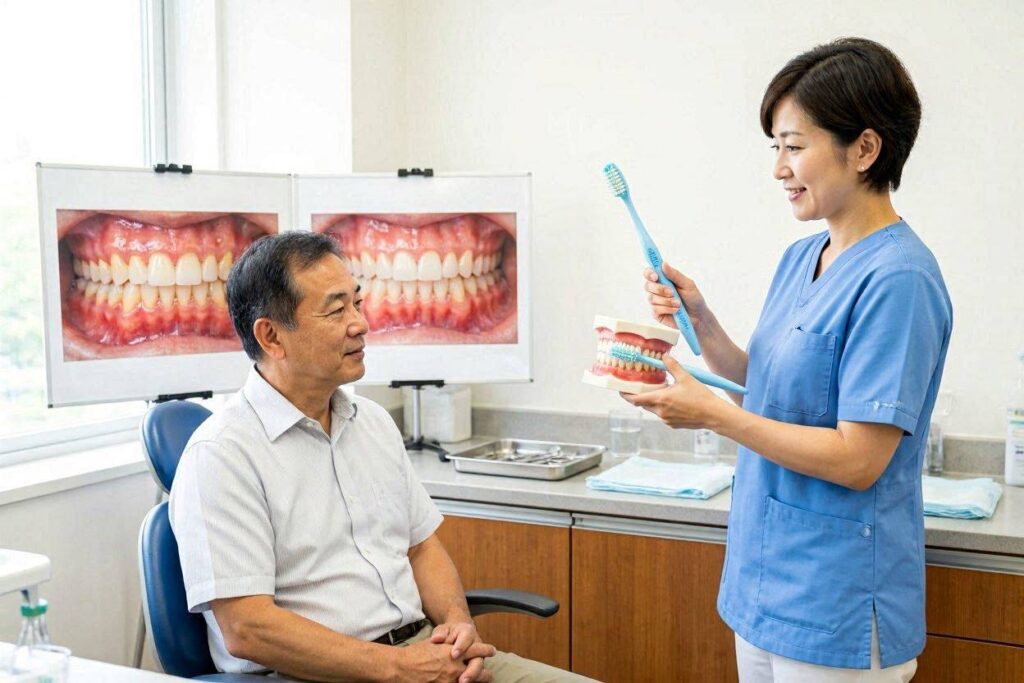
Understanding Gingivitis
Before you can fix the problem, you need to know exactly what you are dealing with. Gingivitis is inflammation of the gums, the soft tissue that surrounds and supports your teeth. It represents the body’s response to bacteria that accumulate along and beneath the gumline.
What Causes Gingivitis
The primary culprit is dental plaque, a sticky, colorless film of bacteria that constantly forms on teeth. When plaque remains on teeth for more than twenty-four to forty-eight hours, it begins to irritate the gum tissue. The bacteria in plaque release toxins that trigger an inflammatory response from your immune system. Blood flow increases to the area, which causes the redness and swelling you see. The gum tissue becomes fragile, which leads to bleeding when you brush or floss.
Plaque that stays on teeth for longer periods absorbs minerals from saliva and hardens into tartar, also called calculus. Tartar creates a rough surface that attracts more plaque and provides a sheltered environment for bacteria. Unlike plaque, tartar cannot be removed by brushing. It adheres firmly to the tooth surface and requires professional instrumentation to dislodge.
The Signs of Gingivitis
Recognizing gingivitis allows you to act before it progresses. The hallmark sign is bleeding gums, especially when brushing or flossing. Healthy gums do not bleed, even with firm brushing. Redness along the gum margin, where the gum meets the tooth, signals inflammation. Swelling gives the gums a puffy, rounded appearance instead of lying flat and firm against the teeth. Tenderness to touch is common, and persistent bad breath or a bad taste in the mouth may also be present.
How Gingivitis Differs from Periodontitis
Gingivitis is confined to the gum tissue. The underlying bone and connective tissue that hold teeth in place remain intact. This is why gingivitis is reversible: once the inflammation resolves, the gums return to health with no permanent damage.
Periodontitis develops when gingivitis goes untreated and the inflammation extends deeper. The gum pulls away from the tooth, forming a pocket. Bacteria colonize this pocket, and the body’s inflammatory response begins to destroy the bone and ligament that support the tooth. Bone loss is permanent and cannot be reversed, only managed to prevent further destruction.
| Characteristic | Gingivitis | Periodontitis |
|---|---|---|
| Tissues Affected | Gums only | Gums, bone, periodontal ligament |
| Pocket Depth | 1-3mm | 4mm or deeper |
| Bone Loss | None | Present and permanent |
| Bleeding | Present | Present, may be spontaneous |
| Reversibility | Fully reversible | Manageable but not reversible |
| Tooth Mobility | None | May be present |
What Brushing Does for Gingivitis
Brushing serves as the frontline defense against gingivitis. Understanding its role clarifies why it is essential but also why it may not be sufficient alone.
How Brushing Disrupts Plaque
The mechanical action of bristles against tooth surfaces physically removes plaque. When you brush correctly, you wipe away the bacterial film before it can mature and cause significant inflammation. Plaque begins to reform within hours, which is why frequency matters. Brushing twice daily resets the clock, preventing plaque from reaching the critical mass that triggers gingivitis.
The key word is “correctly.” Brushing technique determines effectiveness. A toothbrush held at a forty-five-degree angle to the gumline allows bristles to reach slightly beneath the gum, where plaque accumulates most heavily. Short, gentle strokes or small circular motions clean without traumatizing the tissue. Two minutes of brushing provides enough time to address all surfaces of all teeth.
The Limits of Brushing
Brushing cannot reach between teeth. The bristles simply do not access the tight spaces where adjacent teeth touch. Approximately thirty-five percent of tooth surfaces lie in these interdental areas. Plaque that accumulates there remains undisturbed by even the most meticulous brushing.
Brushing cannot remove tartar. Once plaque mineralizes into calculus, it bonds to the tooth with a strength that bristles cannot overcome. Tartar removal requires professional scaling instruments.
Brushing cannot reach deep into periodontal pockets. If pockets have already formed, the bristles cannot penetrate to the base where bacteria are causing destruction. This is why gingivitis that has progressed to periodontitis requires professional intervention.
Brushing with improper technique can actually contribute to gum problems. Overly aggressive brushing with a hard-bristled brush can damage gum tissue and cause recession, which exposes the tooth root and creates new areas vulnerable to decay and sensitivity.
Why Brushing Alone May Not Reverse Gingivitis
If your gingivitis is mild and related entirely to plaque accumulation on accessible tooth surfaces, improved brushing may indeed reverse it. However, several factors limit what brushing can accomplish on its own.
Interdental Plaque Persists
As noted, a significant portion of tooth surface lies between teeth. If you brush perfectly but never floss or use interdental cleaning tools, inflammation continues in the interdental papillae, the small triangles of gum between teeth. You may notice that bleeding occurs primarily when you floss or that the gum between teeth appears more red than the gum on the outer surfaces. This pattern signals that brushing alone is insufficient.
Tartar Acts as a Reservoir
If tartar has already formed, particularly below the gumline, it provides a continuous source of bacteria and irritation. No amount of brushing at home removes subgingival calculus. The inflammation persists as long as the tartar remains, regardless of how diligently you brush the surfaces above it.
Systemic Factors Contribute
Gingivitis is not solely a plaque problem. Systemic factors influence how your gums respond to plaque. Uncontrolled diabetes, hormonal changes during pregnancy, certain medications, smoking, and nutritional deficiencies all affect gum health. Someone with well-controlled blood sugar may see their gingivitis resolve with improved home care. Someone with poorly controlled diabetes may brush and floss meticulously and still struggle with inflamed gums because the body’s inflammatory response is heightened.
Technique Issues Are Common
Many people believe they are brushing effectively when they are not. Studies consistently show that the average person misses significant areas during brushing, particularly the inner surfaces of the lower back teeth and the outer surfaces of the upper back teeth. Rushing through a thirty-second brush, using a worn-out toothbrush, or applying so much pressure that the bristles splay sideways instead of contacting the tooth all undermine the effectiveness of brushing.
What Actually Reverses Gingivitis
Reversing gingivitis requires a multi-pronged approach. Brushing is the foundation, but it works best as part of a complete strategy.
Effective Brushing as the Foundation
Brush twice daily for two full minutes. Use a soft or extra-soft toothbrush. Angle the bristles forty-five degrees toward the gumline. Use gentle pressure; the bristles should not be flattened against the tooth. Replace your toothbrush or electric toothbrush head every three months, or sooner if the bristles become frayed.
An electric toothbrush with a pressure sensor and timer can help overcome common technique deficiencies. The oscillating-rotating or sonic action provides thousands of brush strokes per minute, far more than manual brushing achieves. The timer ensures you brush long enough, and the pressure sensor warns you if you are pressing too hard.
Daily Interdental Cleaning
Cleaning between teeth is not optional for reversing gingivitis. It is essential. Floss reaches the interdental spaces that brushing misses. Proper flossing technique involves guiding the floss gently between teeth, curving it into a C-shape against one tooth, and sliding it up and down, going just below the gumline. Repeat on the adjacent tooth before moving to the next space.
For those who struggle with traditional floss, alternatives exist. Interdental brushes come in various sizes to fit different spaces. Water flossers use a pressurized stream of water to clean between teeth and below the gumline. Floss holders and pre-threaded flossers can help if manual dexterity is a challenge. The best interdental cleaning method is the one you will use consistently.
Professional Dental Cleaning
A professional cleaning, called a prophylaxis, removes the plaque and tartar that home care cannot address. The dental hygienist or dentist uses instruments that scale away tartar from above and just below the gumline. Once the irritants are removed, the gum tissue can begin to heal.
For gingivitis, a standard cleaning is usually sufficient. The gums typically respond within one to two weeks of the cleaning combined with improved home care. If you have not had a cleaning in more than six months and you are noticing signs of gingivitis, scheduling a professional visit is the single most impactful step you can take.
Antimicrobial Support
Therapeutic mouth rinses can supplement brushing and flossing. Mouthwashes containing essential oils, cetylpyridinium chloride, or chlorhexidine reduce the bacterial load in the mouth. Chlorhexidine is available only by prescription and is reserved for short-term use due to potential side effects including tooth staining. Over-the-counter therapeutic rinses with the American Dental Association Seal of Acceptance have demonstrated effectiveness against plaque and gingivitis when used as directed.
Mouthwash does not replace brushing or flossing. It cannot penetrate established plaque biofilm the way mechanical cleaning does. Think of it as an adjunct, not a substitute.
Lifestyle Factors
Smoking impairs blood flow to the gums and weakens the immune response. Smokers often have less obvious bleeding from gingivitis because of this reduced blood flow, which can mask the problem until it has progressed. Quitting smoking dramatically improves gum health and the effectiveness of both home care and professional treatment.
Nutrition supports the body’s ability to fight inflammation and repair tissue. Vitamin C is essential for collagen production and gum integrity. A diet rich in fruits, vegetables, lean proteins, and whole grains provides the nutrients gums need to heal. Limiting sugary and starchy foods reduces the fuel available to plaque bacteria.
Stress management plays a role as well. Chronic stress elevates cortisol and other hormones that can increase systemic inflammation and impair immune function. People under high stress often experience more severe gingivitis for the same amount of plaque.
How Long It Takes for Gingivitis to Resolve
The timeline for reversal depends on the severity of the inflammation and the consistency of your efforts.
Mild Gingivitis
If your gums bleed only occasionally when you floss, and the redness is confined to small areas between teeth, you may see significant improvement within one week of diligent brushing and daily flossing. The bleeding should decrease each day as the inflammation subsides. By two weeks, your gums should appear pink and firm, and bleeding should stop completely.
Moderate Gingivitis
When gums bleed consistently with brushing, appear generally red and swollen, and feel tender, resolution takes longer. A professional cleaning removes the accumulated tartar, and then consistent home care maintains the clean surfaces. You should notice reduced bleeding within the first week and significant improvement by two to three weeks. Complete resolution may take a month.
When Improvement Does Not Occur
If you brush twice daily, floss daily, use an antimicrobial rinse, and still see bleeding and redness after two to three weeks, a professional evaluation is needed. You may have tartar below the gumline that requires scaling and root planing, a deeper cleaning than the standard prophylaxis. Alternatively, an undiagnosed systemic issue may be contributing. Your dentist can assess your situation and recommend next steps.
Common Mistakes That Prevent Reversal
Well-intentioned efforts sometimes fail because of specific errors. Avoiding these mistakes improves your results.
Brushing Harder Instead of Smarter
When gums bleed, some people respond by brushing more aggressively, believing that the bleeding signals a need for more forceful cleaning. This approach backfires. Hard brushing damages the already inflamed gum tissue and can cause recession. Bleeding gums need gentle, thorough cleaning, not forceful scrubbing. If you see blood, do not avoid the area and do not attack it. Clean it gently and consistently.
Stopping When Gums Bleed
The opposite mistake is avoiding the bleeding areas entirely. Some people stop flossing because they see blood and assume they are injuring themselves. In reality, the bleeding indicates that plaque has caused inflammation, and cleaning that area is exactly what it needs. Consistent gentle flossing through the initial bleeding period leads to healthier gums that no longer bleed. If you avoid the area, the inflammation worsens.
Relying Solely on Mouthwash
Swishing with mouthwash feels proactive, and therapeutic rinses do help. However, mouthwash cannot penetrate the sticky biofilm of established plaque. Only mechanical action dislodges plaque. Using mouthwash without brushing and flossing is like rinsing a dirty dish without scrubbing it. The surface may be wet, but it is not clean.
Inconsistent Routine
Brushing and flossing perfectly for three days, then skipping two days, then resuming allows plaque to mature repeatedly. The gums never get the sustained break from inflammation they need to heal. Consistency is the single most important factor. A routine you can maintain every single day works better than an elaborate routine you perform sporadically.
Ignoring the Tongue
The tongue harbors bacteria that recolonize teeth and gums. Cleaning your tongue, either with your toothbrush or a dedicated tongue scraper, reduces the overall bacterial load in your mouth. This simple step, often overlooked, supports gum healing.
The Role of the Dental Professional
Self-treatment of gingivitis has limits. Knowing when and why to involve a professional ensures you do not waste time on approaches that cannot work given the actual state of your mouth.
Assessment and Diagnosis
Only a dental professional can definitively distinguish between gingivitis and periodontitis. Pocket depth measurements using a periodontal probe, assessment of bleeding points, and radiographic evaluation of bone levels provide information you cannot gather at home. If you have periodontitis, your home care efforts will be insufficient regardless of how diligently you perform them. Professional treatment is non-negotiable.
Removal of Tartar
Once tartar forms, it stays until a professional removes it. The dental hygienist or dentist uses scalers and ultrasonic instruments to dislodge tartar from tooth surfaces above and below the gumline. This procedure eliminates the reservoir of bacteria that perpetuates inflammation. After tartar removal, the gum tissue has the clean surface it needs to heal.
Oral Hygiene Instruction
A dental professional can evaluate your specific brushing and flossing technique and offer personalized corrections. They can recommend interdental cleaning tools suited to your specific tooth anatomy and spacing. This individualized instruction often makes the difference between adequate and excellent home care.
Monitoring and Maintenance
After your gingivitis resolves, regular professional maintenance prevents recurrence. Most people benefit from professional cleanings every six months. Those with a history of gum problems may need three-month or four-month recall intervals to stay ahead of plaque accumulation.
Conclusion
Gingivitis can go away with brushing, but only when brushing is performed correctly, consistently, and in combination with daily interdental cleaning and regular professional care to remove tartar. Mild cases caught early may resolve with improved home care alone within one to two weeks. More established gingivitis, or gingivitis complicated by tartar buildup or systemic factors, requires professional intervention as the catalyst for healing. The goal is not just making gingivitis disappear once but building the habits that prevent its return.
FAQ
Can gingivitis be reversed without a dentist?
Mild gingivitis caused entirely by soft plaque that has not yet hardened into tartar can sometimes be reversed with meticulous brushing and flossing at home. However, if any tartar has formed, a professional cleaning is necessary to remove it before the gums can fully heal.
How long does it take for gums to stop bleeding after improving brushing?
With consistent proper brushing and daily flossing, bleeding should noticeably decrease within three to five days. Most mild to moderate gingivitis shows significant improvement within one to two weeks, with bleeding stopping completely during that timeframe.
Is it normal for gums to bleed when starting to floss regularly?
Yes. If you have not been flossing, the gums between your teeth are likely inflamed, and they will bleed when you first begin cleaning those areas. This bleeding should diminish each day you floss. If it persists beyond a week to ten days, see your dentist.
Can electric toothbrushes reverse gingivitis better than manual brushes?
Electric toothbrushes, particularly oscillating-rotating models, have been shown in studies to reduce plaque and gingivitis more effectively than manual brushing over the short to medium term. However, a manual brush used with excellent technique can also maintain gum health. The electric brush helps compensate for technique deficiencies.
Does salt water help gingivitis?
Warm salt water rinses can soothe inflamed gums and may help reduce surface bacteria temporarily. However, salt water does not remove plaque and cannot replace mechanical cleaning. It can be a helpful adjunct but not a primary treatment.
Can gingivitis cause permanent damage?
No. Gingivitis is, by definition, confined to the gum tissue and does not involve destruction of the bone or periodontal ligament. Once the inflammation resolves, the gums return to health without permanent damage. This is why treating gingivitis promptly is so important; it prevents the progression to periodontitis, which does cause permanent bone loss.
Should I brush my gums directly?
You should brush at the gumline, where the tooth and gum meet, angling the bristles at forty-five degrees to reach slightly under the gum margin. You do not need to brush the attached gum tissue directly, but cleaning the gumline is essential for preventing and reversing gingivitis.
Why are my gums still bleeding after a week of better brushing?
Possible reasons include tartar below the gumline that brushing cannot remove, inconsistent or incorrect technique that misses the areas where plaque accumulates, or a systemic factor such as diabetes, hormonal changes, or medication effects that is contributing to inflammation. A dental evaluation can identify the specific reason in your case.
Additional Resource
For comprehensive information on gum disease prevention and treatment, visit the American Dental Association at ada.org and explore their patient education section on gum health. This resource provides evidence-based guidance recognized by dental professionals nationwide.