What Phase Are Dental Offices In Nys?
Dental offices across New York State have navigated a complex landscape of regulations, closures, and reopenings. The question of what phase dental offices operate under stems from the state’s phased reopening plan implemented during the COVID-19 pandemic. While those specific phase designations have largely become historical, the regulatory framework they established continues to shape how dental practices operate today. Understanding where dental services stand, what guidelines currently apply, and what you can expect when you visit a dental office in New York helps you plan your care with confidence.
New York’s approach to dental care during and after the pandemic prioritized safety while recognizing that oral health cannot be indefinitely postponed. The state moved through distinct phases, and dental offices adapted their protocols accordingly. This guide traces that evolution and explains the current state of dental practice regulation in New York.
The Historical Context: New York’s Phased Reopening Plan
When New York State implemented its phased reopening strategy, businesses and services were categorized into specific phases based on their urgency and the level of risk associated with their operation. Understanding this original framework provides context for the current regulatory environment.
Phase One: Construction, Manufacturing, and Select Retail
Phase one allowed the resumption of construction, manufacturing, and retail with curbside pickup. Dental offices were not included in this initial phase. During this period, dental practices remained limited to emergency services only, following an executive order that had suspended all elective dental procedures.
Phase Two: Professional Services, Retail, and Real Estate
Phase two expanded reopening to include professional services, in-person retail, and real estate services. Dental offices were permitted to resume providing all services beginning in phase two, provided they implemented specific safety protocols. This marked the transition from emergency-only care back to comprehensive dental services.
The inclusion of dental care in phase two recognized that dentistry could be practiced safely with appropriate infection control measures. Dental professionals already operated under strict infection control standards long before the pandemic, which positioned them to adapt quickly to enhanced requirements.
Current Regulatory Status of Dental Offices in New York
As of the present day, dental offices in New York State operate without phased restrictions. The formal phase system has been retired. Dental practices are open for all services, from routine cleanings and examinations to complex surgical procedures. However, the protocols and safety measures developed during the phased reopening continue to influence practice operations.
Permanent Changes to Infection Control
The New York State Department of Health, in alignment with Centers for Disease Control and Prevention guidelines and Occupational Safety and Health Administration requirements, established enhanced infection control standards for dental settings. Many of these enhancements remain in place as standard practice.
Dental offices continue to employ rigorous sterilization protocols, air filtration systems, and personal protective equipment beyond what was common before the pandemic. These measures protect both patients and staff from a range of infectious diseases, not only COVID-19.
No Current State-Mandated Restrictions
There are no current state-mandated capacity limits, service restrictions, or phased operation requirements for dental offices in New York. The state of emergency that authorized the executive orders restricting dental services has long since expired. Dental practices determine their own operational protocols based on professional guidelines, their specific practice settings, and the needs of their patient populations.
Guidelines That Continue to Shape Dental Practice
Even without formal phase restrictions, several enduring changes affect how dental offices in New York function. These represent the lasting impact of the pandemic period on dental care delivery.
Enhanced Screening Procedures
Dental offices now routinely screen patients for respiratory symptoms and other signs of acute illness. You may be asked about recent illness, fever, cough, or other symptoms when you schedule an appointment and again when you arrive. This screening helps identify patients who may need to reschedule non-urgent care or who require additional precautions during treatment.
Personal Protective Equipment
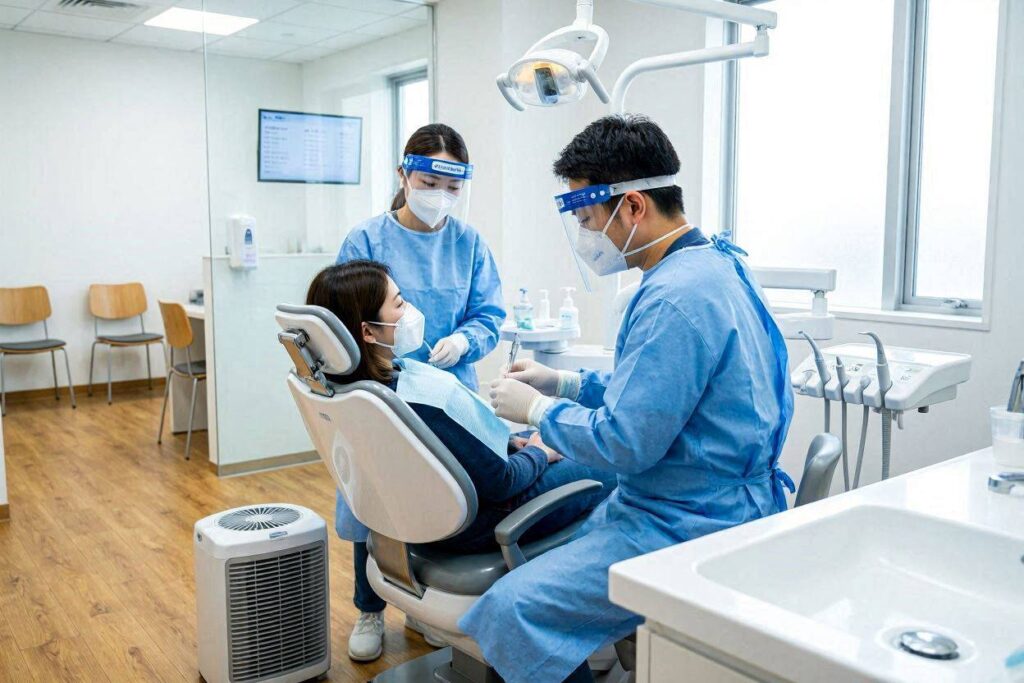
The level of protective equipment worn by dental professionals has increased. N95 or equivalent respirators, face shields, gowns, and head coverings remain common sights in dental operatories. These measures protect both the clinical team and patients during aerosol-generating procedures, which are common in dentistry.
Air Quality Management
Dental offices have invested significantly in air purification systems. High-efficiency particulate air filters, ultraviolet germicidal irradiation units, and improved ventilation systems are now standard in many practices. Fallow time, the period between patients that allows air changes to clear the treatment room, has been integrated into scheduling in many offices, though the specific duration varies based on room size, air exchange rate, and the procedure performed.
Pre-Procedural Mouth Rinses
Many dental offices now routinely ask patients to rinse with an antimicrobial mouthwash, such as one containing hydrogen peroxide or chlorhexidine, before treatment begins. This practice reduces the microbial load in the mouth and may decrease the infectious particles generated during dental procedures.
Teledentistry Integration
New York expanded access to teledentistry during the pandemic, and this option has persisted. Virtual consultations allow dentists to triage concerns, conduct initial evaluations, and provide follow-up care without requiring an in-person visit for every interaction. This reduces unnecessary exposure and improves access for patients with mobility challenges or transportation barriers.
What Patients Can Expect During a Dental Visit
Knowing what to anticipate when you visit a dental office in New York today helps you prepare and reduces anxiety. While practices vary in their specific protocols, common elements characterize the modern dental visit experience.
Before Your Appointment
Most offices will contact you before your scheduled visit to complete a pre-screening questionnaire. This may be done by phone, text message, or through an online patient portal. You will typically be asked about current symptoms, recent illness, and any known exposures to infectious diseases.
You may receive instructions about arrival procedures. Many offices ask patients to wait in their vehicles rather than in the reception area until the treatment room is ready. This practice, which began during the pandemic, has persisted because it reduces crowding and improves efficiency.
Arrival and Check-In
Upon arrival, you will likely encounter hand sanitizer stations and may have your temperature checked. Waiting areas may have reduced seating to maintain distance between patients, and magazines and other shared items may have been removed. Some offices have installed physical barriers at the reception desk.
You may be asked to complete any remaining paperwork electronically before your visit to minimize time spent in common areas. Contactless payment options are widely available.
During Treatment
Your dental team will be wearing enhanced personal protective equipment, which may make them appear more covered than you remember from pre-pandemic visits. The clinical staff will explain any additional precautions they are taking during your specific procedure.
For aerosol-generating procedures such as fillings, crowns, and cleanings with ultrasonic scalers, your dentist or hygienist may use additional suction devices, rubber dams, or other measures to control the spread of droplets. These tools improve both safety and, in many cases, treatment quality.
After Your Appointment
The scheduling of your next appointment may occur in the treatment room rather than at the front desk to minimize your time in common areas. You may receive post-visit instructions electronically.
The overall experience is designed to be efficient, safe, and comfortable. While some protocols add steps to the visit, most patients find the process becomes routine quickly.
Specialty Dental Services and Their Current Status
Different types of dental practices have adapted their protocols to their specific service profiles. Here is how various specialties currently operate in New York.
General Dentistry
General dental offices provide the full range of preventive, restorative, and cosmetic services. Cleanings, fillings, crowns, bridges, and simple extractions are all available. Routine recall appointments are scheduled at normal intervals. The enhanced infection control measures described above are standard.
Oral and Maxillofacial Surgery
Oral surgery practices continue to perform extractions, implant placement, bone grafting, and corrective jaw surgery. These practices already operated under surgical sterility standards that aligned closely with enhanced infection control requirements. Many oral surgery procedures do not generate the same level of aerosols as restorative dentistry, though precautions remain in place.
Orthodontics
Orthodontic offices providing braces and clear aligner treatment have integrated teledentistry for certain monitoring visits. In-person adjustment appointments proceed with standard precautions. Orthodontic treatment generates minimal aerosols compared to other dental procedures, but protective protocols remain.
Pediatric Dentistry
Pediatric dental offices face the additional challenge of treating a population that may not consistently comply with mask-wearing or symptom reporting. These offices have adapted with enhanced air management, extended appointment spacing, and creative approaches to minimizing contact while maintaining the child-friendly atmosphere that helps young patients feel comfortable.
Periodontics
Periodontal practices focusing on gum disease treatment and implant placement follow protocols similar to general dentistry and oral surgery. Deep cleanings and periodontal surgeries are performed with appropriate precautions.
Endodontics
Root canal specialists utilize rubber dams, which isolate the tooth being treated, as a standard of care. This practice aligns naturally with enhanced infection control by containing aerosols generated during treatment. Endodontic offices continue to provide emergency and routine root canal therapy.
Regulatory Bodies Governing New York Dental Practices
Multiple entities establish and enforce the standards that dental offices follow. Understanding this oversight structure clarifies where requirements come from and who to contact with concerns.
New York State Department of Health
The Department of Health issues guidance and regulations that apply to healthcare settings, including dental offices. During the state of emergency, the Department of Health issued specific directives for dental practice. Today, it maintains general health and safety standards for healthcare facilities.
New York State Education Department Office of the Professions
The Office of the Professions licenses dentists, dental hygienists, and dental assistants. It establishes practice standards and investigates complaints about licensed professionals. This office ensures that dental practitioners meet education, examination, and continuing education requirements.
New York State Dental Association
The New York State Dental Association is the professional organization representing dentists in the state. While not a regulatory body, it provides guidance, advocacy, and continuing education to its members. Its recommendations often influence practice standards and inform members about evolving best practices.
Centers for Disease Control and Prevention and OSHA
Federal agencies establish infection control guidelines and workplace safety standards that apply nationwide. New York dental offices comply with these federal standards alongside state-specific requirements.
How to Find a Dental Office Currently Accepting Patients
If you need dental care in New York, several strategies help you locate a practice that meets your needs.
Insurance Provider Directories
Your dental insurance company maintains a directory of in-network providers. Start there to identify dentists in your area who accept your plan. Most insurers offer online search tools that allow you to filter by location, specialty, and whether the practice is accepting new patients.
New York State Dental Association Referral
The New York State Dental Association offers a referral service that connects patients with member dentists. You can contact the association or visit its website for assistance finding a dentist in your community.
Community Health Centers
Federally qualified health centers and community health centers throughout New York provide dental services regardless of insurance status. These centers often offer sliding fee scales based on income, making care accessible to uninsured and underinsured patients.
Dental Schools
New York is home to several dental schools, including those at New York University, Columbia University, Stony Brook University, and the University at Buffalo. These institutions provide reduced-fee care through their teaching clinics, where dental students and residents treat patients under faculty supervision. The cost savings are significant, though appointments may take longer than in private practice.
Hospital Dental Clinics
Many hospitals in New York operate dental clinics that provide both routine and specialized care. These clinics often accept a range of insurance plans and may offer charity care programs for eligible patients.
Emergency Dental Care in New York
Dental emergencies require prompt attention regardless of any regulatory phase. New York dental offices are fully available for emergency care.
What Constitutes a Dental Emergency
Dental emergencies include severe pain that over-the-counter medications cannot control, swelling of the face or gums indicating infection, bleeding that does not stop with pressure, trauma resulting in a knocked-out or loosened tooth, and broken teeth causing pain or sharp edges that injure soft tissue.
Where to Seek Emergency Dental Care
Private dental offices often reserve time in their schedules for emergency patients. If you have an established dentist, call their office first. Many offer an after-hours emergency line.
Hospital emergency departments can provide pain relief and antibiotics for dental infections, but they generally cannot provide definitive dental treatment. An emergency room visit should be followed by prompt dental care.
Urgent care dental clinics in some areas of New York offer extended hours and walk-in availability for acute dental problems. These clinics bridge the gap between private practice and hospital emergency departments.
Teledentistry for Initial Triage
Virtual consultations can efficiently assess dental emergencies. A dentist can review your symptoms via video call, determine the urgency of your situation, prescribe medications if indicated, and arrange for an in-person visit if necessary. This triage step saves time and often provides reassurance for less urgent issues.
The Future of Dental Care in New York
The experience of operating through phases and restrictions has permanently influenced how dentistry is practiced in New York. Several trends are likely to continue.
Continued Emphasis on Infection Control
The enhanced infection control standards adopted during the pandemic are unlikely to be fully reversed. Patients and providers alike have become accustomed to a higher level of visible protection, and the reduction in disease transmission benefits extend beyond COVID-19 to influenza, common colds, and other infectious illnesses.
Expanded Role of Teledentistry
Virtual consultations and follow-up visits are here to stay. Teledentistry improves access for patients in rural areas, those with transportation challenges, and individuals with disabilities that make office visits difficult. Insurance coverage for teledentistry has expanded, and this trend will likely continue.
Technology Integration
Dental offices have accelerated their adoption of digital tools, from online scheduling and electronic paperwork to digital impressions and computer-aided manufacturing of restorations. These technologies improve efficiency and reduce the number of visits needed for certain procedures.
Patient-Centered Flexibility
The pandemic taught dental offices to be flexible in accommodating patient needs and concerns. Extended appointment times that reduce crowding, continued vehicle-waiting options for patients who prefer them, and individualized accommodation of health concerns reflect a more patient-centered approach that many practices will maintain.
Conclusion
Dental offices in New York State no longer operate under a phased restriction system; they are fully open for all services, from routine preventive care to complex surgical procedures. The enhanced infection control protocols, patient screening, and teledentistry options developed during the phased reopening have become lasting features of modern dental practice. Patients can expect a safe, well-regulated environment with multiple layers of protection when they visit any New York dental office today.
FAQ
Are dental offices in New York fully open now?
Yes. Dental offices across New York State are open for all services without phased restrictions. Routine care, emergency treatment, and elective procedures are all available.
Do I still need to wear a mask in a New York dental office?
Current mask requirements vary by facility. Many dental offices continue to recommend or require masks in waiting areas, particularly during periods of elevated respiratory illness in the community. Your dental office will inform you of their specific policy when you schedule your appointment.
Can I get a routine cleaning in New York right now?
Yes. Routine dental cleanings and checkups are fully available. Dental hygienists are providing preventive care, and dentists are performing comprehensive examinations. You can schedule your recall appointments at normal intervals.
Are there any procedures still restricted in New York?
No. There are no state-mandated restrictions on any dental procedures. All specialties are practicing without limitations on the types of services they can provide.
How do I know if my dentist is following current safety guidelines?
New York dental offices are regulated by the State Education Department Office of the Professions and must comply with infection control standards. If you have specific concerns about a practice’s protocols, call the office and ask about their safety measures. Most are happy to explain their procedures.
What should I do if I have a dental emergency?
Contact your dentist immediately. Most offices reserve time for emergency patients. If you do not have a dentist, use an urgent care dental clinic or, for severe swelling or trauma, visit a hospital emergency department. Do not delay seeking care for a dental emergency.
Is teledentistry still an option in New York?
Yes. Many dental practices continue to offer virtual consultations for initial evaluations, follow-up visits, and triage of dental concerns. Check with your dentist about their teledentistry options.
Have dental fees changed due to the enhanced protocols?
Some dental offices have adjusted their fees to account for the increased costs of personal protective equipment, air filtration systems, and other infection control measures. Your dentist should be transparent about any fee changes and can provide an estimate before treatment.
Additional Resource
For current information on dental practice regulations and to verify a dental license in New York State, visit the New York State Education Department Office of the Professions at op.nysed.gov. This official state resource provides license verification, practice guidelines, and information about filing complaints.