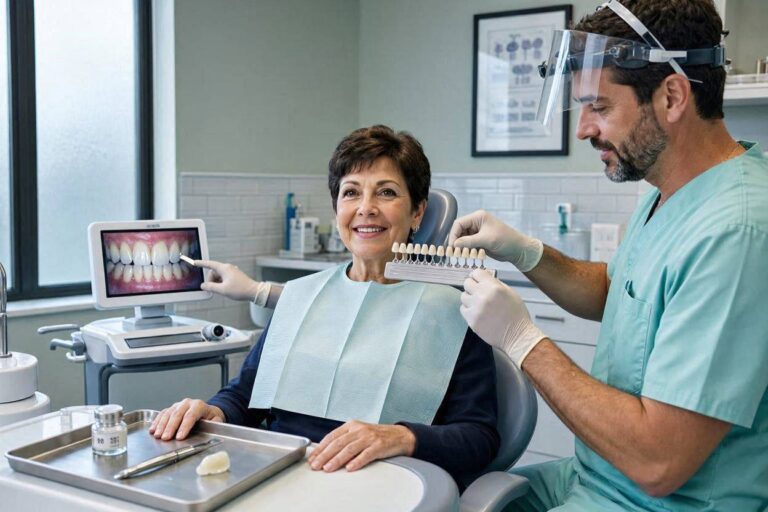
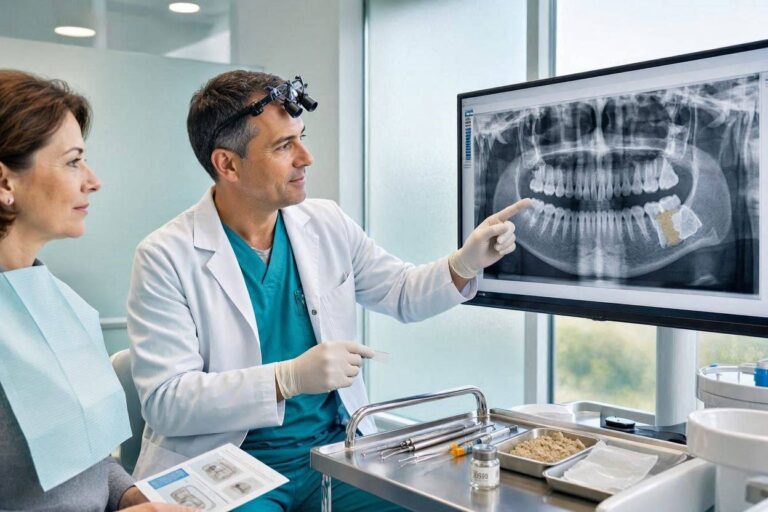
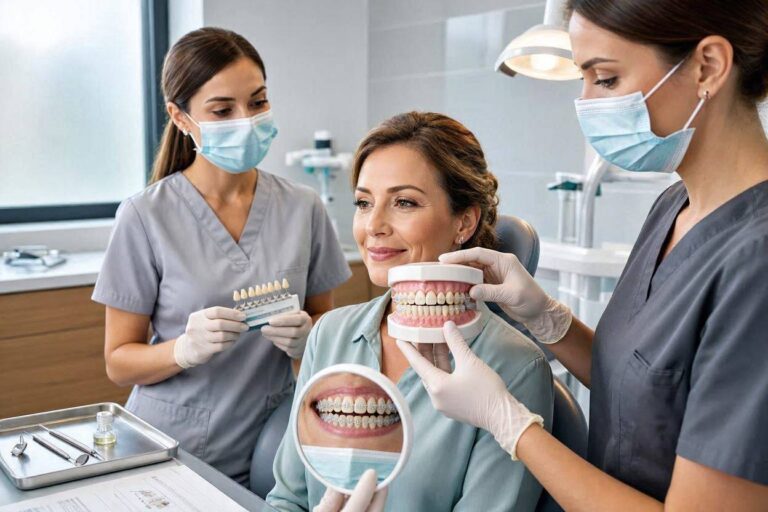
Are You Able To Eat With Dentures?
The question lands with the weight of a life sentence. A patient, facing the loss of all their natural teeth, sits across from the dentist and asks the only thing that truly matters: “Will I ever enjoy a meal again?” The fear is not about appearance or speech—those can be managed. The fear is visceral, primal. It is the fear of a life without steak, without a crisp apple, without the crunch of a fresh carrot. It is the fear of becoming a nutritional exile, condemned to a permanent menu of mashed potatoes, yogurt, and lukewarm soup.
The answer to “Are you able to eat with dentures?” is yes. But that yes comes with a footnote, an asterisk, and a detailed user manual. Eating with dentures is a learned motor skill, not an innate biological function. It is a prosthetic simulation of mastication, and its success depends on the quality of the denture, the condition of the underlying bone, the patient’s neuromuscular adaptability, and a brutally honest recalibration of expectations. A well-made, well-fitted denture on a favorable ridge can restore roughly 20–25% of natural chewing efficiency. A poor denture on a resorbed, knife-edge ridge can make eating a daily torment. This article is an unflinching guide to the physical mechanics of denture eating, the foods that become enemies, the techniques that make meals possible, and the implant technologies that have rendered the “denture diet” obsolete for those who can afford them.

The Physics Problem: Why Dentures Cannot Chew Like Teeth
To understand the denture eating experience, we must first appreciate what was lost. Natural teeth are anchored by periodontal ligaments that sense pressure with exquisitely fine resolution. A natural tooth can detect a grain of sand in a bite of salad with a sensitivity measured in microns. The tooth root is suspended in a bony socket, and the ligament transmits sensory data to the brain, which modulates the force of the masseter, temporalis, and pterygoid muscles in real time. You bite down, feel resistance, and your brain subconsciously throttles the chewing force millisecond by millisecond.
A denture sits on top of the gum tissue. It has no periodontal ligament. It provides no proprioceptive feedback. The force you generate with your jaw muscles is transmitted not to the tooth and then to food, but to the acrylic base, then to the soft mucosal tissue, then to the underlying bone. The mucosa compresses. The denture rocks. The brain, deprived of the fine-tuned feedback loop it relied on for decades, cannot modulate the bite. Patients with new dentures routinely bite down with enough force to fracture a piece of hard candy, only to discover the denture base is digging painfully into their gums because the brain did not get the “stop” signal. Learning to eat with dentures is learning to chew without proprioception. You are flying blind, guided only by the crude sensation of base movement and mucosal pressure. This is the fundamental disability that every denture wearer must overcome.
Chewing Efficiency: The 20% Reality
The literature on denture chewing efficiency is sobering. Studies using standardized test foods and particle size analysis consistently show that complete denture wearers have masticatory efficiency that is 15–25% of that of a fully dentate person. This means a denture wearer must chew food four to five times longer to achieve a similar particle size. The physiological consequence is that many denture wearers swallow food that is inadequately masticated. They do this not out of laziness but out of fatigue. The jaw muscles, working overtime to stabilize a moving denture, exhaust themselves. The meal becomes a race against muscle failure.
This swallowing of larger food particles has downstream gastrointestinal consequences. The stomach must work harder to digest poorly chewed food. Nutrient extraction is less efficient. There is a documented correlation between edentulism (tooth loss) and malnutrition in the elderly, mediated in part by the reduced masticatory efficiency of dentures. This is not to say denture wearers are universally malnourished—many adapt brilliantly—but the biological burden of the 20% efficiency ceiling is real. Patients who upgrade to implant-retained overdentures dramatically improve their chewing efficiency, often approaching 60–80% of natural dentition, because the implants provide stability and partial proprioception through the bone-implant interface.
The Stability Dynamic: Upper vs. Lower Dentures
There is a profound asymmetry in the eating experience between the upper and lower denture. The upper denture, when well-made, covers the entire hard palate and extends to the soft palate. The broad surface area creates a suction seal against the mucosa. Saliva provides a thin film of surface tension. A well-fitted upper denture can be surprisingly stable during eating, staying in place through the forces of chewing because the palate is a large, flat, retentive surface.
The lower denture is a different beast entirely. It is a horseshoe shape that frames the tongue. It has dramatically less surface area. It rests on a moving, muscular floor of the mouth. The tongue, the cheeks, and the lip muscles constantly displace it. There is no suction—the lower denture is gravity-retained, and gravity wants it to drop. Eating with a lower denture is the primary challenge for most patients. Every bite of food, every movement of the tongue to sweep a bolus of food backward, threatens to lift and dislodge the lower plate. This is the denture that “floats.” This is the denture that makes eating in public a nerve-wracking ordeal. The lower denture is the reason many patients eventually seek implant stabilization. Two implants in the anterior mandible, fitted with Locator attachments, can convert a floating lower denture into a stable platform that can handle significantly more varied foods.
The Learning Curve: From Liquid to Solid
The first 30 days with new dentures are a structured dietary ascent. The patient does not go from extraction day to a ribeye on day three. The protocol is incremental, and violating it leads to pain, ulceration, and a psychological aversion to the denture.
- Days 1–7 (Liquid and Puree Phase): The patient is recovering from extractions. The gums are raw sutured wounds. The denture is a surgical stent as much as a prosthesis. Food is liquid—broths, protein shakes, thinned smoothies, clear soups. Chewing is not attempted. The goal is caloric intake without disturbing the healing sockets.
- Days 8–14 (Soft Mechanical Phase): The sutures are dissolving or removed. The patient begins experimenting with soft foods that require minimal mastication—scrambled eggs, yogurt, oatmeal, mashed potatoes, well-cooked pasta, flaked fish. The denture is worn during meals, but the chewing motion is tentative, a vertical “pumping” action rather than a lateral grinding motion.
- Days 15–30 (Transitional Phase): The patient introduces foods requiring moderate chewing—ground meats, soft cooked vegetables, casseroles, bananas, soft breads. The chewing stroke gradually incorporates lateral movements. The patient learns to distribute food bilaterally—placing a small portion on both the left and right posterior teeth simultaneously to balance the denture and prevent rocking.
- Month 2 and Beyond (Advanced Adaptation): The patient slowly challenges the denture with firmer foods—tender cuts of meat, steamed vegetables, thin apple slices. The neuromuscular system adapts. The tongue learns to stabilize the lower denture during the chewing stroke. The patient discovers which foods are “safe” and which are “risky.” This adaptation phase can last six months to a year, and the final ceiling of function is determined by bone anatomy, denture fit, and patient perseverance.
The Bilateral Balancing Act: The Core Technique
The single most important technique for eating with dentures is bilateral chewing. A denture is a seesaw. Bite down on a piece of food on the right side only, and the left side lifts away from the ridge. Bite on the left only, and the right side dislodges. This is the rocking motion that patients find so frustrating.
The solution is to divide the food into smaller portions and distribute it to both sides of the mouth simultaneously. The bilateral bite stabilizes the denture, compressing it evenly onto the ridge. The chewing motion is then a gentle, vertical “chopping” combined with a slight lateral grind, keeping the load balanced. This is not how a dentate person eats—the natural dentition allows unilateral chewing with no consequence. The denture wearer must consciously override the ingrained unilateral chewing pattern and retrain the brain to chew symmetrically. This is a cognitive load during the meal, but with practice, it becomes subconscious. Patients who master bilateral chewing report significantly greater denture stability and food enjoyment.
The Adhesive Question: Glue as a Crutch
Denture adhesives—pastes, powders, and strips—are a divisive topic in prosthodontics. Purists argue that a properly fitted denture should not require adhesive, and reliance on adhesive compensates for a poor fit. Pragmatists argue that adhesive improves stability and psychological confidence, and patients should use whatever tool works.
The truth sits between the poles. A well-fitted denture should be retentive without adhesive, but the lower denture is almost always aided by a thin application of adhesive paste. The adhesive fills the microscopic gaps between the acrylic base and the mucosal surface, increasing surface tension and reducing movement. For a social dinner event where the patient is anxious about denture dislodgement, adhesive is a rational, evidence-based confidence booster. However, adhesive is not a substitute for a reline. If the patient is applying thick layers of paste to keep a loose denture from falling out, the denture needs professional adjustment. The adhesive masks the problem and delays necessary care, while the underlying bone continues to resorb. Adhesive is a temporary bridge, not a permanent foundation.
The Forbidden Foods List: Managing Risk
Every denture wearer develops a personal “do not eat” list through painful trial and error. Certain food textures are inherently hostile to denture stability and should be approached with caution or avoided entirely.
- Sticky Foods: Caramel, taffy, gummi bears, peanut butter on soft bread. These foods adhere to the acrylic teeth and the palate, pulling the denture away from the tissue as the jaw opens. The denture lifts, the seal breaks, and the patient is left with a mouthful of adhesive candy stuck to a dislodged plate. Embarrassment and frustration follow.
- Hard Foods: Raw carrots, whole apples, corn on the cob, crusty artisan bread, popcorn kernels. These foods require high, concentrated bite force that exceeds the comfort threshold of the underlying mucosa. Biting into a whole apple with front denture teeth is a classic denture failure moment—the anterior leverage dislodges the posterior seal, and the denture drops.
- Tough, Fibrous Foods: Steak, pork chops, celery, fibrous greens. These require sustained lateral grinding that destabilizes the lower denture. The patient chews and chews and the bolus never breaks down, while the denture rocks and the gums become sore.
- Small, Hard Particles: Nuts, seeds, popcorn hulls. These can lodge under the denture base, creating a painful point pressure that feels like a pebble under the plate. The patient must immediately remove the denture and rinse it, which is impractical in a restaurant.
This list is not universal. Some patients with excellent ridges and stable dentures can cautiously eat many of these foods with preparation—cutting corn off the cob, slicing apples into thin wedges, stewing meats until tender. The key is mechanical processing of the food before it enters the mouth, compensating for the reduced masticatory efficiency of the denture.
Implant Overdentures: The Game Changer
The invention of the implant-retained overdenture has fundamentally altered the “eating with dentures” conversation. A patient with two implants in the lower jaw and a corresponding overdenture with Locator attachments is not in the same category as a patient with a conventional floating lower denture. The implants provide vertical stop, rotational stability, and a modicum of proprioception through osseoperception.
With an implant-retained overdenture, the forbidden foods list shrinks dramatically. The patient can bite with anterior teeth—a function nearly impossible with a conventional upper denture and completely impossible with a conventional lower. They can eat a hamburger without cutting it. They can chew a salad with confidence. The psychological liberation is profound. The question “Are you able to eat with dentures?” almost exclusively refers to conventional dentures. With implant stabilization, the answer shifts from “yes, but with significant limitations” to “yes, within reasonable expectations.” The cost barrier is the only thing keeping implant overdentures from being the standard of care. As discussed in the palateless denture article, the implant investment transforms the dining table from a battlefield to a place of normalcy.
The Social Dimension: Eating in Public
The greatest challenge for many denture wearers is not the physical act of eating but the psychological terror of eating in public. The business lunch, the wedding reception, the first date at a restaurant—these are high-stakes environments where a denture mishap is a social catastrophe.
Strategies for public eating include:
- Menu Pre-Selection: The patient reviews the menu online before the event, identifying safe choices. Soft fish, pasta, soup, and stewed dishes are reliable. Steakhouse lunches are risky.
- Sauce and Gravy: Dry food is more difficult to manage. Sauces lubricate the bolus and make swallowing easier, reducing the number of chewing cycles required.
- Small Bites, Slow Pace: The denture wearer cuts food into small pieces, places it bilaterally, chews slowly and deliberately, and sips water between bites. The pace of the meal slows, which has the social benefit of appearing unhurried and elegant rather than panicked.
- The Napkin Strategy: If a particle of food (a seed, a grain of rice) lodges under the denture, the patient excuses themselves to the restroom, removes the denture, rinses it, and returns. The napkin covers a discreet exit. This is an accepted, routine part of denture life, not a failure.
- Pre-Event Adhesive Application: If a public meal is anticipated, a fresh application of denture adhesive immediately before the event provides maximum retention during the window of highest need.
Comparative Table: Conventional Denture vs. Implant Overdenture Eating Ability
| Food Type | Conventional Upper/Lower Denture | Implant-Retained Overdenture (2–4 implants) |
|---|---|---|
| Soft Foods (Eggs, Yogurt) | Easily managed. | Easily managed. |
| Tender Meats (Fish, Chicken) | Manageable with bilateral chewing. | Easily managed; normal chewing pattern. |
| Firm Meats (Steak, Pork Chop) | Difficult; requires cutting into very small pieces. | Manageable with some preparation. |
| Raw Vegetables (Carrots, Celery) | Very difficult; often avoided. | Manageable with caution; cut into sticks. |
| Fruits (Apple, Pear) | Must be sliced; biting whole dislodges denture. | Can bite with anterior teeth (implant-supported). |
| Sticky Foods (Caramel, Taffy) | Contraindicated; dislodges denture. | Still problematic due to adhesive forces on acrylic. |
| Nuts and Seeds | Risky; lodges under base. | Reduced risk; still requires caution. |
| Crusty Bread | Difficult; requires high force, risks rocking. | Manageable with implant stability. |
The table illustrates that implant retention is not a magic bullet—sticky foods remain a challenge because the prosthetic teeth are still acrylic and the base is still on tissue—but it dramatically expands the dietary envelope.
The Nutritional Monitoring Imperative
Because denture wearers are at risk for gradual dietary narrowing, nutritional monitoring becomes a medical necessity. The patient who silently gives up steak, then raw vegetables, then fruit, then crusty bread, eventually subsists on a diet of soft carbohydrates and soups. This is a recipe for malnutrition, sarcopenia, and metabolic disease.
Denture wearers should be screened at recall appointments for unintended weight loss and dietary diversity. A simple question—”What did you eat yesterday? Walk me through breakfast, lunch, and dinner.”—can reveal a dangerously restricted diet. If the patient reports oatmeal for breakfast, soup for lunch, and mashed potatoes for dinner, the denture fit, the mucosal health, and the nutritional status all need urgent intervention. Referral to a nutritionist or dietitian with experience in geriatric oral health is appropriate. The goal is not just a denture that fits, but a patient who is nourished.
Important Note: The Persistent Sore Spot
A denture that causes pain during eating is not normal. A new denture will have high spots—areas where the acrylic base presses excessively on the underlying bone, causing focal ischemia and ulceration. These “sore spots” are diagnosed by applying pressure-indicating paste to the tissue side of the denture, seating it, and looking for the points where the paste is thinnest. Those high spots are adjusted with a slow-speed acrylic bur. This is a routine, quick, painless adjustment that transforms an unwearable denture into a comfortable one. A patient suffering in silence with a painful denture is not “toughing it out”; they are allowing a correctable problem to ruin their nutrition and mental health. Multiple adjustment visits in the first few weeks are expected and necessary.
Conclusion
Eating with conventional dentures is possible but represents a significant functional compromise, restoring only 15–25% of natural chewing efficiency and requiring bilateral chewing technique, dietary modification, and psychological adaptation to manage the instability of the lower plate. Implant-retained overdentures dramatically improve stability and biting force, expanding the dietary envelope toward near-normal function, while diligent nutritional monitoring is essential to prevent the silent slide into malnutrition that afflicts long-term denture wearers who progressively restrict their diets in response to prosthetic limitations.
FAQ
Q: How long after getting dentures can I eat normally?
A: “Normally” is a moving target. Soft foods can typically be introduced within the first two weeks. A modified normal diet—tender meats, soft vegetables, pasta—is achievable within 1–3 months. However, many denture wearers never return to a fully unrestricted diet like they had with natural teeth, particularly regarding hard, crunchy, or sticky foods. The adaptation period is ongoing for 6–12 months, and the final functional ceiling is determined by bone anatomy and denture quality.
Q: Can I eat with my dentures without adhesive?
A: An upper denture that fits well should remain stable during eating without adhesive, relying on the palatal suction seal. A lower denture almost always benefits from a thin layer of adhesive during meals to counteract the destabilizing forces of the tongue and cheeks. If an upper denture requires massive amounts of adhesive to stay in place, it is poorly fitted and needs a reline or replacement.
Q: Will I be able to taste food properly with a full upper denture?
A: Taste is partially diminished. The upper denture covers the hard palate, which contains taste buds for sour, bitter, and umami sensations. The insulating effect of the acrylic base also reduces the perception of food temperature. Patients report that food tastes “muted” with a full-coverage denture. Palateless implant-retained dentures expose the palate and improve taste perception, but at a higher financial and surgical cost.
Additional Resource
For evidence-based nutritional guidance and masticatory efficiency data for denture wearers, the Journal of Prosthetic Dentistry and the American College of Prosthodontists offer patient-level summaries at www.gotoapro.org.