Are Transparent Braces A Wise Option?
The desire for straighter teeth battles constantly with the dread of looking like a metal-mouthed adolescent. Adults seeking orthodontic treatment consistently rank aesthetics as their primary concern—not pain, not duration, not even cost. They want the transformation without the hardware store smile. Into this demand vacuum rushed the promise of “transparent braces,” a term that covers two distinctly different technologies: clear aligner systems like Invisalign, and ceramic (tooth-colored) fixed brackets. Both promise discretion. Both have transformed adult orthodontics into a booming industry. Neither is the universal solution that marketing implies.
The question “Are transparent braces a wise option?” cannot be answered without mapping the specific malocclusion, the patient’s compliance psychology, the biological limits of removable appliances, and the aesthetic compromises of ceramic brackets. For mild to moderate crowding in a disciplined adult, transparent braces are not just wise—they are arguably the standard of care. For severe skeletal discrepancies, deep bites, or patients who struggle to brush their teeth twice a day, let alone manage 22 hours of aligner wear, transparent braces can be a costly detour on the road to a compromised result. This article dissects the two transparent modalities, compares their biomechanical capabilities, exposes their failure modes, and provides the decision framework patients need to choose wisely.
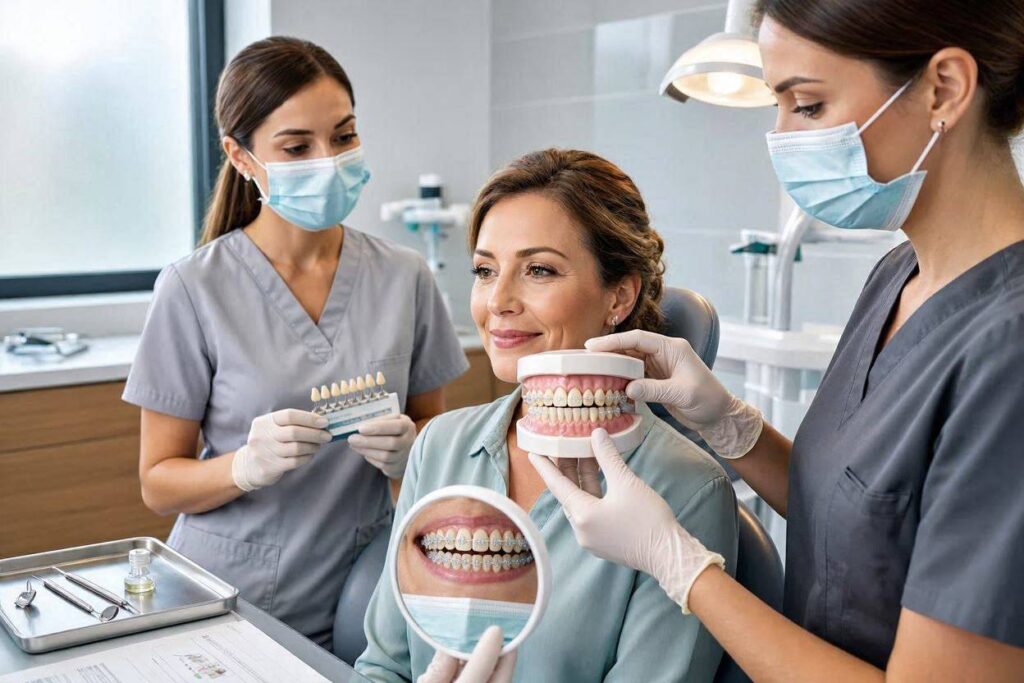
The Terminology Clarification: Aligners vs. Ceramic Brackets
Before any wisdom can be dispensed, the terminology fog must be cleared. “Transparent braces” is a marketing term, not a clinical one. It refers to two completely different orthodontic mechanisms.
Clear aligners—Invisalign, Spark, SureSmile, 3M Clarity Aligners—are removable, thin, transparent plastic trays that snap over the teeth and are replaced every 7–14 days. They are not braces in the traditional sense. There are no brackets glued to the teeth, no wires threading through slots. The force is delivered by the elastic deformation of the plastic as the tray attempts to spring back to its pre-programmed shape, which is the next incremental tooth position in the digital treatment plan.
Ceramic braces—also called clear braces, tooth-colored braces, or aesthetic brackets—are fixed appliances. They are brackets bonded to the facial surface of the teeth, just like traditional metal braces. The bracket material is polycrystalline or monocrystalline alumina, which is translucent or tooth-colored. A white or metal archwire connects the brackets. The mechanism of action is identical to metal braces: the wire applies continuous force, and the bracket slot dictates torque and tip.
The critical distinction is removability. Clear aligners are removable by the patient. Ceramic braces are fixed and cannot be removed until the orthodontist debonds them at the end of treatment. This single difference cascades into every aspect of treatment: compliance burden, hygiene difficulty, force delivery, and duration.
Clear Aligners: The Compliance Tax
Invisalign and its competitors are marvels of digital manufacturing, but they have an Achilles’ heel that no software update can patch: they only work when they are in the mouth. The prescribed wear time is 20–22 hours per day. That leaves 2–4 hours for eating, drinking anything other than water, and oral hygiene. Every minute the aligners are out, the teeth are not being moved. Worse, they are drifting back toward their original positions as the periodontal ligament’s elastic memory exerts its relentless pull.
The compliance tax is the single largest reason aligner treatment fails or extends far beyond the original estimate. A patient who averages 16 hours of wear instead of 22 is not just slowing treatment proportionally; they are creating a chaotic, start-stop biological environment. Teeth move during wear, relapse during non-wear, move again when the aligner is reinserted. This “round-tripping” increases the risk of root resorption and creates a cellular environment of chronic inflammation. The aligners also track poorly—the fit degrades because the teeth are not where the software predicted they would be at that stage. The patient then requires a mid-course correction, a rescan, and a new series of trays, adding months to the timeline.
For the patient who is intrinsically motivated, meticulous, and honest about their habits, aligners are a wise and effective choice. For the patient who loses their phone twice a week, forgets to floss, and snacks constantly throughout the day, aligners are a compliance disaster waiting to happen. The wisdom of transparent braces, in the aligner modality, is a direct function of self-knowledge. Are you someone who will wear the trays faithfully? If the answer is anything less than an emphatic yes, fixed braces—ceramic or metal—are the wiser option.
The Biomechanical Ceiling: What Aligners Cannot Do Well
Aligners are not just removable brackets. They are fundamentally different force delivery systems. A fixed bracket and wire system can apply continuous, three-dimensional force vectors: torque (root movement), bodily translation, extrusion, intrusion, and rotation. The bracket slot grips the wire, and the orthodontist can place intricate bends and select wires of varying stiffness, cross-section, and material to achieve highly specific tooth movements.
Aligners apply force by deforming elastically over the tooth. They are excellent at tipping teeth—pushing the crown in one direction while the root pivots. Tipping is a relatively simple, low-force movement that aligners accomplish efficiently. However, complex bodily movements—moving a tooth through bone without tipping it—require attachments, small composite buttons bonded to the tooth that the aligner grips. Even with attachments, certain movements are notoriously difficult for aligners:
- Extrusion: Pulling a tooth down (or up) out of the bone. Aligners have a weak grip on a tooth being pulled downward because they are essentially a plastic wrap with no rigid handle. Elastics can help, but extrusive movement with aligners is slow and unpredictable.
- Severe Rotation: Rotating a canine or bicuspid more than 20 degrees is challenging for a smooth plastic shell. Fixed brackets can apply rotational couples with precise moments; aligners tend to slip over the convex surface of a round tooth.
- Torque of Incisors: Moving the root of an upper incisor palatally or labially—changing the inclination of the tooth—is difficult because the aligner lacks the rigid lever arm of a bracket and wire. Over-engineered “power ridges” and large attachments help, but the torque expression is often incomplete, resulting in a compromised finish.
For a case that requires significant bodily movement, torque control, or extrusion, fixed ceramic braces are the biomechanically wiser choice. They can deliver forces that aligners struggle to replicate. The orthodontist evaluating the case can look at the ClinCheck or treatment simulation and identify the “difficult” movements. If the digital plan shows heavy reliance on attachments and auxiliaries to achieve a movement that a wire would accomplish straightforwardly, the aligner pathway is the scenic route—longer, less predictable, and potentially more expensive due to refinement phases.
Ceramic Braces: The Aesthetic-Friction Trade-Off
Ceramic brackets solve the aesthetic problem of metal braces elegantly. They blend with the tooth color and are far less visible from a conversational distance. They are the clear choice for adults and image-conscious teens who need the biomechanical reliability of fixed appliances but cannot tolerate the metallic smile.
However, ceramic brackets have their own drawbacks that affect the wisdom of choosing them. The first is friction. Ceramic is harder than metal, but it has a rougher surface. The interface between a metal archwire and a ceramic bracket slot generates higher friction than the interface between a metal wire and a metal bracket slot. This increased friction means that sliding mechanics—pulling a tooth along a wire to close a space—are less efficient. Treatment may progress slightly slower, and the orthodontist may need to use lighter forces to avoid binding. Modern ceramic brackets with metal slot inserts (a metal channel embedded in the ceramic) mitigate this friction problem, and these hybrid brackets are the standard of care for ceramic fixed appliances.
The second drawback is brittleness. Ceramic is harder than enamel but more brittle than metal. A ceramic bracket can fracture if the patient bites on a hard food directly, and fractured ceramic can create sharp edges that irritate the cheek. De-bonding a ceramic bracket at the end of treatment is more technique-sensitive than debonding a metal bracket. If the orthodontist is not careful, a ceramic bracket can fracture during removal, leaving a small piece bonded to the enamel that must be gently ground off—a time-consuming and enamel-risk maneuver. More concerning is the risk of iatrogenic enamel fracture during debonding if the bracket is bonded too aggressively to fragile enamel. This is rare in experienced hands but a recognized complication.
The third drawback is the staining of the elastic ligatures. Ceramic brackets are clear; the tiny rubber O-rings that hold the wire into the bracket slot are not. They discolor rapidly when exposed to coffee, tea, red wine, curry, and smoking. A patient with ceramic braces who drinks black coffee daily will have brackets that are invisible but neon-yellow stains around each tooth. Self-ligating ceramic brackets (which use a sliding door mechanism instead of elastic ties) eliminate this problem but add cost.
The White Spot Lesion Risk: A Hidden Hygiene Challenge
Fixed braces—ceramic or metal—create plaque traps. The brackets, wires, and elastic ties are an oral hygiene nightmare. Food debris and bacterial biofilm accumulate around the bracket margins, and if the patient’s brushing and flossing are inadequate, the enamel under and around the bracket demineralizes. The result is a white spot lesion (WSL)—a permanent, chalky, opaque area of decalcified enamel that becomes visible when the braces are removed. The straight smile arrives with permanent scars on the teeth.
Clear aligners, being removable, eliminate this risk. The patient can brush and floss normally, with no hardware obstructing the tooth surfaces. For patients with a history of poor oral hygiene, active caries, or low motivation for meticulous home care, aligners are the wiser option purely from a caries prevention standpoint. The straight teeth will not be scarred by the process of straightening them. If fixed ceramic braces are chosen, fluoride varnish applications at every adjustment visit, prescription-strength fluoride toothpaste, and meticulous oral hygiene instruction are non-negotiable components of the treatment plan.
Speech and Social Adaptation: The First Week Reality
All transparent braces, whether aligners or ceramic, impose a social adjustment period. Aligners affect speech more noticeably in the first few days. The plastic covers the palatal surface of the upper teeth, creating a slight lisp on sibilant sounds. The tongue, accustomed to contacting the natural rugae of the palate, hits a smooth plastic surface instead. Most patients adapt within 3–7 days and the lisp resolves. A small percentage—particularly those with professions requiring frequent public speaking—find the persistent slight lisp unacceptable and may prefer ceramic braces that sit on the facial surface only and do not alter the palatal tongue space.
Ceramic braces, being thicker and slightly bulkier than metal brackets, can cause initial lip irritation and a sensation of fullness. The lips must accommodate the bracket profile. This adaptation is also rapid. The aesthetic advantage of ceramic braces is realized at conversational distance, but up close, they are still visible brackets on the teeth. Aligners are genuinely invisible from all but the closest inspection, but they come with the speech tax and the compliance tax.
Comparative Table: Clear Aligners vs. Ceramic Braces
| Feature | Clear Aligners (Invisalign, Spark) | Ceramic Fixed Braces |
|---|---|---|
| Aesthetics | Virtually invisible. | Low visibility; brackets visible up close. |
| Removability | Patient-removable. | Fixed; removed only by orthodontist. |
| Compliance Requirement | Very high (20-22 hrs/day). | None (fixed). |
| Hygiene | Easy; normal brushing/flossing. | Difficult; plaque traps around brackets. |
| Force Delivery | Tipping dominant; weak on torque/extrusion. | Full 3D control; bodily movement, torque. |
| Discomfort | Mild pressure on tray changes. | Brackets abrade cheeks; wire changes cause soreness. |
| Speech Impact | Transient lisp. | Minimal. |
| Duration for Complex Cases | Longer; multiple refinements likely. | Shorter; more predictable mechanics. |
| Dietary Restrictions | None (remove to eat). | Hard, sticky, crunchy foods restricted. |
| Cost (Approximate) | $4,000–$8,000. | $4,500–$8,500. |
| Best For | Mild-moderate crowding, compliant adults. | Complex malocclusion, adolescents, low-compliance patients. |
The Hybrid Approach: Combining Aligners and Fixed Braces
A wise option that is often overlooked is the hybrid treatment plan. A patient with a severe deep bite and complex posterior movements may start with fixed braces on the posterior teeth and clear aligners on the anteriors, or wear fixed braces for the initial major biomechanical corrections and then switch to clear aligners for finishing and detailing. This hybrid approach leverages the strengths of each modality.
Some orthodontists stage treatment with fixed appliances on the lower arch (where aesthetics are less critical) and clear aligners on the upper arch (where the cosmetic demand is highest). The lower arch, which is more prone to aligner tracking failure due to the anatomy of the premolars and the tongue forces, benefits from the precision of brackets. The upper arch, which is highly visible, gets the aesthetic and hygiene advantages of aligners. This is a bespoke, patient-specific strategy that reflects sophisticated treatment planning, and it often yields superior results to a “pure” aligner or bracket case.
The “Direct-to-Consumer” Clear Aligner Trap
No discussion of transparent braces would be complete without a stark warning about the direct-to-consumer (DTC) mail-order aligner industry. Companies that ship impression kits to your home, have you take your own molds, and mail you a series of plastic trays without any in-person examination, X-rays, or professional oversight are not a “wise option.” They are a gamble with your dental health.
The DTC model misses several critical diagnostic steps: panoramic radiographs to assess root health, bone levels, and pathology; bite analysis to check for occlusal interferences and TMJ health; periodontal screening for gum disease. Moving teeth in a patient with undiagnosed periodontal bone loss can accelerate tooth mobility and lead to tooth loss. The trays themselves are often limited to anterior cosmetic alignment only, ignoring the posterior occlusion entirely, which can create a posterior open bite or TMJ symptoms.
The American Association of Orthodontists has issued formal consumer alerts about DTC orthodontics. Transparent braces are wise only when supervised by a licensed orthodontist who has performed a comprehensive clinical examination. The tray is a tool; the orthodontist is the treatment. Separating the two is a recipe for irreversible harm.
Important Note: The Retention Phase is Identical
Once the active phase of transparent braces ends—whether aligner or ceramic—the retention phase begins, and the rules are identical to metal braces. The periodontal ligament has elastic memory, and teeth will relapse without indefinite retainer wear. The wisdom of the initial treatment choice extends into the retention commitment. A patient who chose aligners because they wanted less “hardware” may chafe against the recommendation for a fixed bonded lingual retainer, which is a thin wire glued to the back of the teeth—permanent hardware. A patient who chose ceramic braces must still wear a removable retainer at night for life. Transparent braces are not a shortcut to a retainer-free future; they are an alternative path to the same destination, which includes the same maintenance toll.
Conclusion
Transparent braces—whether clear aligners or ceramic brackets—are a wise option for the patient whose malocclusion severity, compliance psychology, and aesthetic priorities align with the biomechanical capabilities and limitations of each modality. Clear aligners excel in mild to moderate anterior crowding in disciplined adults, offering superior hygiene and true invisibility at the cost of strict wear-time compliance. Ceramic braces provide the full three-dimensional force control of traditional fixed appliances with significantly improved aesthetics, making them the wiser choice for complex tooth movements, torque-dependent corrections, and patients who cannot reliably manage removable trays. The unwise choice is selecting either modality without a comprehensive orthodontic diagnosis that includes panoramic imaging, periodontal assessment, and an honest self-audit of personal compliance habits.
FAQ
Q: Are ceramic braces as strong as metal braces?
A: Ceramic brackets are strong in compression but brittle in tension. They can fracture under excessive force, such as biting directly on a hard object. Modern polycrystalline alumina brackets with metal slot inserts are more fracture-resistant and combine the aesthetics of ceramic with the sliding mechanics of metal. They are functionally equivalent to metal braces for most cases, but the ligature ties (if not self-ligating) will stain, and the brackets themselves can still chip if abused.
Q: Can I switch from aligners to ceramic braces mid-treatment if I’m not tracking?
A: Yes. This is a common salvage strategy. If a patient is non-compliant with aligners and the case is falling behind or the teeth are not tracking, the orthodontist can bond ceramic brackets and convert to fixed mechanics. There will be additional costs—the bracket fee and the lost aligner lab fee—but it is a valid, responsible clinical decision. The reverse switch—from braces to aligners—is also possible but less common, usually done at the finishing stage.
Q: Will my dental insurance cover transparent braces the same as metal braces?
A: Orthodontic insurance typically covers a fixed lifetime maximum (e.g., $1,500–$2,500) regardless of appliance type, provided the case meets medical necessity criteria. However, many plans apply a “least expensive alternative treatment” (LEAT) clause, meaning they will only reimburse up to the cost of traditional metal braces. The patient pays the difference for ceramic brackets or Invisalign lab fees, which can be $500–$1,500 extra. Check the specific plan language for “alternative benefit” clauses.
Additional Resource
For a detailed comparison of clear aligner systems, ceramic bracket material science, and clinical case selection criteria, the American Board of Orthodontics provides patient education resources at www.americanboardortho.com.