How Much Does Teeth Whitening Cost?
A bright, white smile is often associated with health, youth, and confidence. It is no surprise that teeth whitening is one of the most requested cosmetic dental procedures in the world. From over-the-counter strips to in-office laser treatments, the options are vast, and the prices vary just as widely.
But how much does it actually cost to get a whiter smile? And more importantly, what is the difference between a $20 box of strips and a $1,000 professional treatment? This guide will break down the costs of every major whitening method, explain the pros and cons of each, and help you decide which route is best for your budget and your teeth.

The Spectrum of Teeth Whitening Options
The cost of teeth whitening depends entirely on the method you choose, who performs it, and the strength of the bleaching agent. Generally, the options fall into three categories:
- In-Office Professional Whitening: The most expensive, fastest, and safest option.
- Take-Home Professional Kits: A mid-range option provided by your dentist.
- Over-the-Counter (OTC) Products: The cheapest and most accessible, but least effective for deep stains.
Let’s dive into the specifics of each.
Option 1: In-Office Professional Whitening (Laser Whitening)
This is the “Hollywood” treatment. You sit in the dental chair, your gums are protected, and a high-concentration bleaching gel (usually hydrogen peroxide or carbamide peroxide) is applied to your teeth. In many cases, a special light or laser is used to activate the gel and speed up the process.
The Process:
The appointment typically takes 60 to 90 minutes. The dentist may apply the gel in several rounds of 15-20 minutes to achieve the desired shade without over-sensitizing the teeth.
The Cost:
The national average cost for in-office teeth whitening ranges from $400 to $1,500. In major metropolitan areas, you might pay up to $2,000 for a premium laser treatment.
What is Included in the Cost:
- The pre-treatment exam to check for cavities or gum disease.
- The protective barriers for your gums.
- The professional-grade bleaching gel (usually 25-40% hydrogen peroxide).
- The dentist’s time and expertise.
- Often, a take-home touch-up kit is included in the price.
The Pros:
- Fastest Results: You leave the office with teeth that are several shades whiter. It is the only option that provides instant gratification.
- Safest: The dentist monitors the process closely, ensuring the gel does not burn your gums.
- Most Effective for Stubborn Stains: It is excellent for tetracycline stains or deep discoloration.
The Cons:
- Cost: It is the most expensive method.
- Sensitivity: The high concentration of bleach can cause significant, though usually temporary, tooth sensitivity.
Option 2: Take-Home Professional Kits (Dentist Supervised)
Many dentists consider this the best value for money. The dentist takes impressions of your teeth and creates custom-fitted plastic trays that look like thin mouthguards. You take these trays home along with a professional-strength bleaching gel.
The Process:
You wear the trays for a specified amount of time each day (often 30 minutes to a few hours, or overnight) for about 1 to 2 weeks.
The Cost:
The cost for custom take-home trays and gel ranges from $200 to $600.
The Pros:
- Fits Your Teeth Perfectly: Because the trays are custom-made, the bleach stays on your teeth and off your gums.
- Lower Cost: Much cheaper than in-office treatment.
- Long-Term Value: You keep the trays forever. In the future, you only need to buy “refill” syringes of gel (typically $20-$40 each) to touch up your smile.
The Cons:
- Time: It takes 1-2 weeks to see the full results.
- Compliance: You must remember to wear the trays.
Option 3: Over-the-Counter (OTC) Products
Walk into any pharmacy or supermarket, and you will see shelves full of whitening products. These are designed for the mass market and contain a much lower concentration of bleach than professional products.
1. Whitening Strips (e.g., Crest Whitestrips)
- Cost: $20 – $60 per kit.
- How it works: Thin strips coated with peroxide are pressed onto the teeth for 30 minutes a day.
- Effectiveness: Good for mild surface stains. Results last a few months.
2. Whitening Toothpaste
- Cost: $5 – $15 per tube.
- How it works: Contains mild abrasives to polish away surface stains. It does not change the internal color of the tooth.
- Effectiveness: Very limited. Only removes superficial coffee or wine stains.
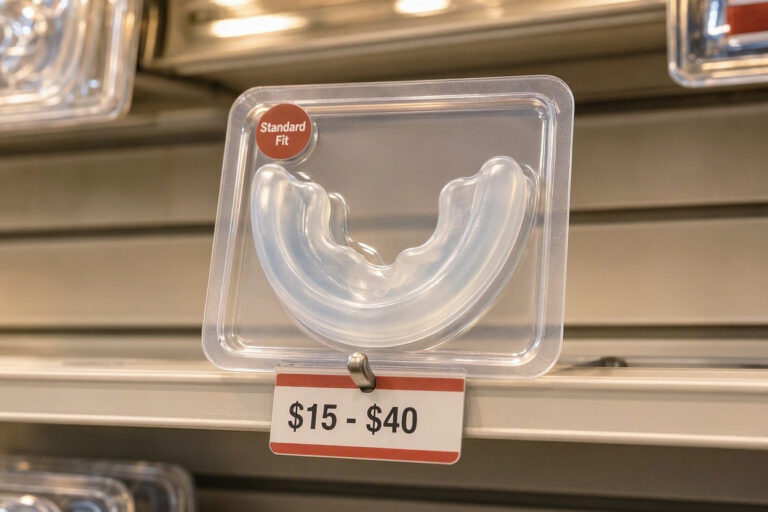
3. “Boil and Bite” Trays
- Cost: $30 – $50.
- How it works: You soften a plastic tray in hot water and bite into it to create a rough mold of your teeth. You then fill it with a low-concentration gel.
- Effectiveness: Moderate, but the fit is poor, which can lead to gel leaking onto the gums and causing irritation.
4. Charcoal Powders and “Natural” Remedies
- Cost: $10 – $30.
- Effectiveness: Dangerous. Charcoal is highly abrasive and can permanently wear away your enamel, making your teeth more yellow over time by exposing the dentin underneath.
A Detailed Cost Comparison Table for Teeth Whitening
| Whitening Method | Average Cost | Time to See Results | Longevity | Risk of Sensitivity |
|---|---|---|---|---|
| In-Office Laser Whitening | $400 – $1,500 | 1 hour | 1-3 years | High (temporary) |
| Custom Take-Home Trays | $200 – $600 | 1-2 weeks | 1-2 years | Moderate |
| Whitening Strips (OTC) | $20 – $60 | 1-2 weeks | 3-6 months | Low |
| Whitening Toothpaste | $5 – $15 | Never (abrasive only) | N/A | None |
| Natural/Charcoal | $10 – $30 | Never (damages enamel) | N/A | High (long-term damage) |
Does Dental Insurance Cover Teeth Whitening?
The short answer is no. Dental insurance is designed to cover procedures that are necessary for your health, such as fillings, crowns, and cleanings. Teeth whitening is classified as a cosmetic procedure.
- Insurance Coverage: $0.
- Payment: You will need to pay out of pocket.
- HSA/FSA: You generally cannot use your Flexible Spending Account (FSA) for purely cosmetic whitening. However, you can often use it for the dental exam required before the whitening.
Hidden Costs and Considerations
Before you decide to whiten, you must consider the health of your mouth.
1. The “White Spot” Problem
If you have white spots on your teeth (from fluorosis or early decay), whitening will make the surrounding tooth brighter, making the white spots more visible, not less.
2. Crowns, Veneers, and Fillings
Bleach only works on natural tooth enamel. It will not whiten dental crowns, veneers, or bonding. If you have a crown on a front tooth and you whiten your natural teeth, the crown will stay the same color, creating a mismatch. You may need to have the crown replaced to match your new, whiter smile.
3. The Root Cause of Stains
If your teeth are yellowing due to internal issues (like a dead nerve), whitening will not work. You may need a root canal or internal bleaching.
Important Note for Patients: “Before you spend money on whitening, get a cleaning. Often, patients are surprised to find that their ‘yellow teeth’ were actually just covered in calculus and stain. A professional cleaning can brighten your smile for a fraction of the cost.” – Dr. Jennifer Jablow, DDS, cosmetic dentist in New York City.
How to Save Money on Teeth Whitening
Even though insurance won’t pay, there are ways to get a professional result for less.
- Ask About “New Patient Specials”: Many dental offices advertise heavily discounted whitening ($99 or $199) to attract new patients. This is often a “loss leader” to get you in the door.
- Groupon and Online Deals: These platforms often feature deep discounts on in-office whitening. However, read the fine print. Ensure the price includes the exam and the trays.
- Go with the Take-Home Kit: As mentioned, this is the best value. You pay $300 once for the trays, and for years after, you only pay $30 for gel refills.
- Maintain Your Diet: If you drink coffee, tea, or red wine, use a straw to bypass your front teeth. Brush or rinse immediately after consuming staining foods. This prolongs the results and saves you money on frequent re-whitening.
The Dangers of “Extreme” Whitening
The desire for the brightest smile possible has led to a dangerous trend: “bleaching” the teeth to an unnatural, opaque white (often called “toilet bowl white”).
- Enamel Erosion: Over-bleaching strips the enamel of its natural luster and protein, making it brittle and chalky.
- Nerve Damage: Repeated, aggressive whitening can lead to permanent nerve sensitivity, where even breathing cold air causes pain.
- Translucency Loss: Natural teeth have a slight translucency at the edges. Over-bleaching makes them look flat and fake.
Conclusion
Teeth whitening costs range from $20 for drugstore strips to over $1,500 for high-end laser treatments. The best choice depends on your budget, your timeline, and the level of supervision you want. For most people, custom take-home trays from a dentist offer the best balance of cost, safety, and long-term effectiveness.
Frequently Asked Questions (FAQ)
1. How long does teeth whitening last?
It depends on your habits. Professional whitening can last 1 to 3 years. If you smoke or drink a lot of coffee, it will fade much faster.
2. Will whitening make my teeth sensitive?
It can. Professional treatments often include desensitizers (like potassium nitrate and fluoride) to minimize this. The sensitivity usually disappears within 24-48 hours after the treatment stops.
3. Can I whiten my teeth if I am pregnant?
Most dentists recommend postponing elective cosmetic procedures, including whitening, during pregnancy and breastfeeding as a precautionary measure, despite the lack of evidence of harm.
4. Is UV light whitening safe?
Some kiosks and salons offer UV light whitening. This has been associated with burns to the lips and gums and is generally discouraged by dental professionals. The “light” does not actually whiten the teeth; the gel does.
5. What is the best way to whiten sensitive teeth?
Use a lower concentration of bleach for a longer period. Desensitizing toothpaste (containing potassium nitrate) used for two weeks before whitening can also help significantly.
Additional Resource
For more information on safe teeth whitening practices, visit the American Dental Association (ADA): https://www.mouthhealthy.org/en/az-topics/w/whitening