Will Dental Implants Last a Lifetime? The Truth About Implant Longevity
A patient considering dental implants asks the most important question: How long will they last? The answer often given is “a lifetime,” but that promise requires careful examination. Dental implants are the most durable and predictable tooth replacement option available. Decades of research demonstrate remarkable survival rates. Yet the word “lifetime” demands nuance. An implant can last for the remainder of a patient’s life, but only under specific conditions that involve patient health, meticulous maintenance, proper prosthetic design, and a measure of biological fortune.
This guide provides an honest, evidence-based exploration of dental implant longevity. We examine survival statistics, the factors that determine whether an implant endures for decades or fails early, the distinction between implant survival and prosthetic survival, and the practical steps patients and clinicians can take to maximize the lifespan of implant treatment.
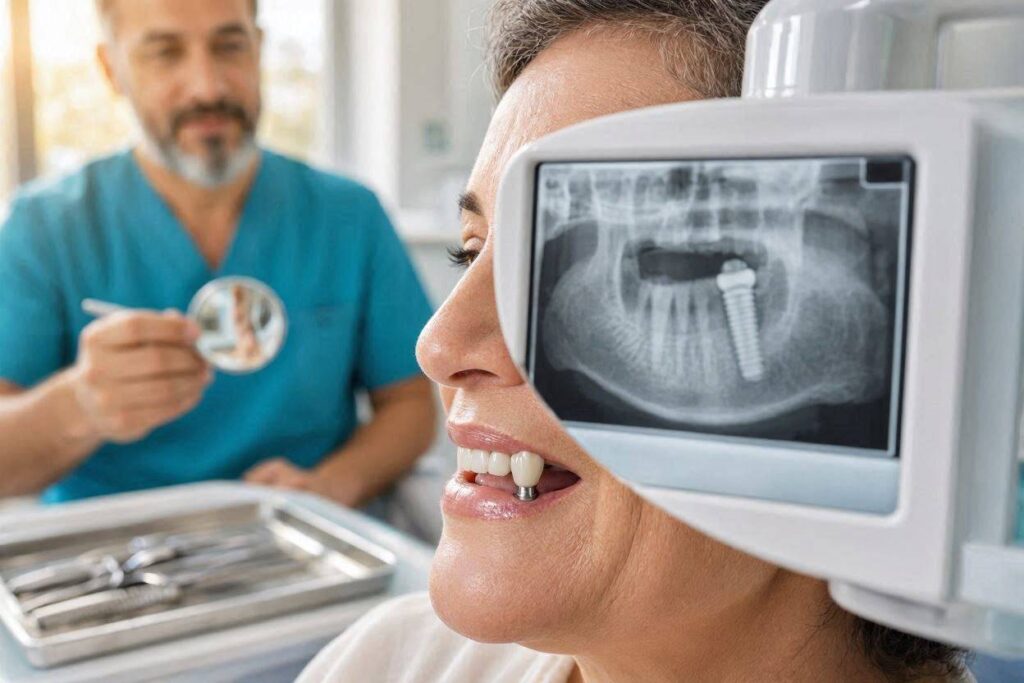
Defining Success and Survival
The terms used in implant research matter.
Implant Survival Versus Implant Success
Survival means the implant is still present in the mouth. It may have bone loss, bleeding on probing, or an unaesthetic appearance, but it has not been removed. Success means the implant meets defined criteria: no mobility, no pain, no progressive bone loss, no infection, and a functional, esthetic restoration. An implant can survive without being successful. Patients want success, not just survival.
The Prosthesis Survival Distinction
The implant fixture and the crown or prosthesis on top of it are distinct entities with different lifespans. The implant itself, embedded in bone, can outlast the crown, which is exposed to occlusal forces, wear, and the oral environment. Studies often report implant survival and prosthesis survival separately. A patient may need a new crown after 15 years while the underlying implant remains healthy and integrated.
The Evidence: What the Numbers Show
Long-term studies provide the factual foundation for claims about implant longevity.
Ten-Year Survival Rates
Multiple systematic reviews and large cohort studies report implant survival rates of 95 to 97 percent over ten years. This means that of 100 implants placed, 95 to 97 are still present and functional a decade later. These numbers are derived from implants placed under controlled conditions, in patients with good health, by experienced clinicians, and with regular maintenance.
Twenty-Year and Longer Data
Studies following implants for twenty years or more show survival rates of approximately 90 to 95 percent in well-maintained populations. The drop from ten to twenty years is modest but real. Implants can and do fail after many years of service, most commonly due to peri-implantitis or biomechanical overload.
Lifetime Projections
Projecting survival beyond twenty years is challenging because the data become sparse, and the patient population ages. The longest documented functioning implants, the original Brånemark implants placed in the 1960s, have lasted over 50 years in some patients. These were placed under primitive conditions by today’s standards, yet they survived because the patients maintained excellent oral hygiene and the implants were protected from overload. This suggests that a well-placed, well-maintained modern implant can indeed last a lifetime.
Factors That Determine Implant Longevity
The difference between an implant that lasts a lifetime and one that fails in a few years is determined by a constellation of factors.
Patient Health and Biology
The patient’s systemic health profoundly influences implant longevity. Well-controlled chronic conditions such as diabetes are compatible with long-term implant success. Poorly controlled diabetes impairs healing, compromises the immune response, and increases the risk of peri-implantitis. Patients with uncontrolled diabetes have higher failure rates.
Smoking is one of the strongest negative predictors of implant longevity. Smokers have higher rates of implant failure and peri-implantitis. The risk is dose-dependent. Heavy smokers face significantly worse outcomes. Smoking cessation improves the prognosis, and many clinicians require it before implant treatment.
Conditions that require immunosuppressive medications, bisphosphonates for osteoporosis, or head and neck radiation can compromise implant survival. These are not absolute contraindications but require careful risk assessment.
Oral Hygiene and Maintenance
An implant is not immune to disease. It requires the same level of care as a natural tooth, arguably more. The patient who brushes and flosses diligently, uses interdental aids, and attends professional maintenance visits every three to six months gives their implant the best chance of lasting a lifetime. The patient who neglects hygiene and skips recall visits invites peri-implant disease and eventual failure.
Professional maintenance is not optional. The dental hygienist uses instruments that clean the implant surface without scratching it, monitors probing depths and bleeding, and takes radiographs at appropriate intervals. Early intervention when problems arise prevents the progression from manageable mucositis to destructive peri-implantitis.
Surgical and Prosthetic Quality
The implant must be placed in the correct three-dimensional position, surrounded by adequate bone, and restored with a prosthesis that distributes forces appropriately. An implant placed too far buccally, too close to an adjacent tooth, or at an unfavorable angle is compromised from the start. A poorly contoured crown that traps food and plaque creates a biological hazard. A prosthesis with heavy occlusal contacts in excursive movements creates a biomechanical hazard.
The clinician’s skill and experience directly affect the implant’s lifespan. This is not a commodity procedure where all providers produce identical outcomes. Board-certified specialists with extensive training in implant surgery and prosthodontics tend to have higher long-term success rates.
The Implant System and Components
Not all implant systems are equal. Major manufacturers with decades of research, rigorous quality control, and documented long-term outcomes provide implants that are more likely to last. Generic or copycat implant systems may have inferior surface treatments, less precise connections, and no long-term data. The abutment-implant connection design affects mechanical stability and bacterial leakage. The implant surface technology affects osseointegration speed and quality.
Biomechanical Factors
The forces of chewing are substantial. The implant and its restoration must withstand these forces millions of times over decades. Factors that increase the risk of mechanical complications include:
- Bruxism and clenching.
- Cantilevered prostheses that create leverage forces.
- Inadequate number of implants supporting a prosthesis.
- Narrow-diameter implants in high-load posterior locations.
- Poorly designed occlusion with heavy excursive contacts.
A patient with heavy parafunctional habits can still have long-lasting implants, but protective measures such as a night guard are essential.
The Failure Timeline: When Implants Fail
Understanding when failures occur helps contextualize the lifetime claim.
Early Failures
These occur before or shortly after the prosthesis is attached, within the first year. Early failure is usually due to failure of osseointegration. The implant is placed, and instead of bone attaching to the surface, fibrous tissue encapsulates it. Causes include surgical trauma, overheating the bone, infection, poor bone quality, or excessive micromotion during healing. Early failure is a surgical and biological problem. If the implant fails early, the site is allowed to heal, and a new implant is placed, often successfully.
Late Failures
These occur after a year or more of function. Late failure is usually due to peri-implantitis, biomechanical overload, or a combination of both. The implant has served well for years, but progressive bone loss or mechanical problems eventually lead to mobility or symptoms requiring removal. Late failure is often a maintenance and patient-factors problem. It is more devastating because the patient has invested years of function and emotional attachment in the implant.
The Prosthetic Lifespan: Crowns and Bridges on Implants
The implant fixture may outlast the crown by decades.
Wear and Tear on Restorations
Ceramic crowns are subject to wear, chipping, and fracture. The forces of chewing and the occasional accidental bite on a hard object take their toll. Over 15 to 20 years, even a well-made crown may need replacement. The porcelain may wear through, exposing the underlying metal or zirconia. The margins may develop gaps as the gum recedes slightly with age. The adjacent natural teeth may shift or wear, creating an esthetic mismatch.
Replacing the Prosthesis
When the crown or bridge on an implant needs replacement, the implant fixture is not disturbed. The dentist removes the old prosthesis, takes new impressions, and fabricates a new restoration. This is a non-surgical, relatively straightforward procedure. The implant lives on under its new crown.
Table: Factors Influencing Implant Longevity
| Factor | Positive Influence | Negative Influence |
|---|---|---|
| Smoking status | Non-smoker, former smoker | Current heavy smoker |
| Diabetes control | Well-controlled (HbA1c < 7%) | Poorly controlled |
| Oral hygiene | Excellent daily care, interdental cleaning | Neglected hygiene |
| Professional maintenance | 3-6 month recall visits | No professional care |
| Implant position | Prosthetically driven, adequate bone all around | Malpositioned, thin bone walls |
| Occlusion | Light contact in MI, no excursive interferences | Heavy contacts, bruxism without guard |
| Implant system | Major manufacturer, documented outcomes | Generic, no long-term data |
| Bone quality | Dense, well-vascularized bone | Porous, compromised bone |
Can a Lifetime Guarantee Be Given?
No ethical clinician can guarantee that an implant will last a lifetime. Too many variables lie beyond the clinician’s control. The patient’s future health, hygiene habits, and life circumstances cannot be predicted with certainty. A clinician can, however, provide a realistic prognosis based on the available evidence and the specific circumstances of the case.
The Difference Between Guarantee and Prognosis
A guarantee is a promise of a specific outcome. A prognosis is a prediction based on probabilities. The prognosis for a well-placed, well-maintained implant in a healthy, compliant patient is excellent, with a high probability of lasting many decades and a reasonable probability of lasting a lifetime. This honest framing serves patients better than an unqualified “it will last forever.”
Maximizing the Chance That an Implant Lasts a Lifetime
Patients and clinicians share responsibility for longevity.
What the Patient Can Do
- Commit to excellent daily oral hygiene around the implant.
- Attend professional maintenance visits without fail.
- Stop smoking. If unable to stop, reduce as much as possible.
- Manage systemic health conditions, especially diabetes.
- Wear a night guard if diagnosed with bruxism.
- Report any signs of trouble immediately: bleeding, swelling, bad taste, looseness, or changes in bite.
What the Clinician Can Do
- Conduct thorough preoperative assessment, including CB-CT imaging.
- Select the appropriate implant system, diameter, and length for the site.
- Place the implant in the prosthetically driven position.
- Restore with a cleansable, biomechanically sound prosthesis.
- Educate the patient thoroughly about maintenance.
- Monitor the implant at recall visits with probing and radiographs.
Conclusion
Dental implants can last a lifetime for many patients, as demonstrated by decades of clinical research and the documented survival of early implants for over fifty years. The typical ten-year survival rate exceeds 95 percent, and twenty-year data show rates above 90 percent. However, lifetime success is not automatic. It depends on the patient’s health and hygiene, the quality of the surgical and prosthetic care, the absence of peri-implant disease, and the management of biomechanical forces. The prosthesis on top of the implant may need replacement over time, but the implant fixture itself can endure. The most accurate answer to “will it last a lifetime” is this: a well-placed, well-maintained implant in a healthy, compliant patient has an excellent chance of lasting for the rest of that patient’s life.
Frequently Asked Questions
What is the average lifespan of a dental implant?
There is no single average. Studies show 95 percent or more survival at ten years and 90 percent or more at twenty years. Many implants last 30, 40, or more years in patients with good health and maintenance.
What is the most common reason implants fail after many years?
Peri-implantitis, a bacterial infection causing progressive bone loss, is the most common cause of late implant failure. Biomechanical overload and implant fracture are less common but also cause late failures.
Can an implant fail after 20 years?
Yes. While less common, late failures do occur. A patient who develops uncontrolled diabetes, starts smoking, or neglects oral hygiene can lose an implant after decades of success.
Does the crown on an implant need to be replaced?
Eventually, yes. The ceramic crown may wear, chip, or become esthetically mismatched with aging natural teeth. Crown replacement is a non-surgical procedure that does not affect the underlying implant.
Is there a warranty on dental implants?
Some implant manufacturers offer a lifetime warranty on the implant fixture itself, replacing it if it fractures. Some dental practices guarantee their work for a defined period. These warranties typically do not cover the costs of surgery to remove and replace a failed implant.
Additional Resources
Academy of Osseointegration – Implant Longevity
https://www.osseo.org
Scientific and patient-oriented information on the long-term performance of dental implants and factors contributing to their durability.