Can My Regular Dentist Do Implants?
You trust your regular dentist. They know your dental history, understand your concerns, and have cared for your teeth through cleanings, fillings, and maybe even more complex procedures. When you need dental implants, the natural first question is whether your familiar, trusted dentist can provide this treatment. The answer depends on your dentist’s specific training, experience, and practice focus.
Some general dentists place dental implants routinely and achieve excellent results. Others refer all implant surgery to specialists while providing the restorative phase. Still others refer the entire implant process to specialists. Understanding where your dentist falls on this spectrum helps you make informed decisions about your implant care.
I wrote this guide because patients deserve clear, honest information about who can provide their implant treatment. The relationship between general dentists and implant procedures has evolved significantly over recent decades, and understanding this evolution helps you evaluate your options effectively.
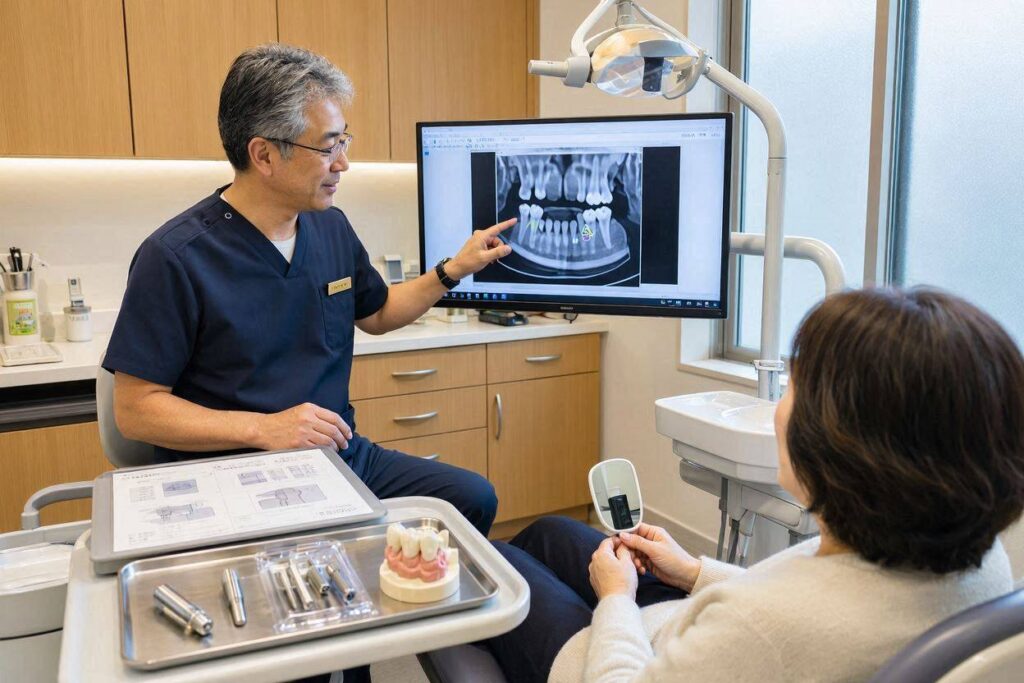
General Dentists and Implant Training
Dental school provides the foundation for all dental practice, but implant training specifically varies significantly among general dentists.
What Dental School Provides
Dental school education includes introduction to implant concepts. Students learn about osseointegration, implant components, and treatment planning principles. They may observe implant surgeries or assist in implant procedures during clinical rotations.
However, dental school typically does not provide comprehensive hands-on implant placement training. Graduating dentists understand implant theory but have not placed enough implants to achieve clinical competence independently. This foundational knowledge requires post-graduate development to translate into clinical practice.
Post-Graduate Implant Education
General dentists develop implant placement skills through continuing education after dental school. The training they pursue varies enormously in depth, duration, and quality.
Comprehensive implant training programs may span a year or more, combining didactic education with extensive hands-on experience. Participants place implants under close supervision, learning surgical techniques, complication management, and restorative principles. These programs produce general dentists with solid implant placement skills.
Weekend courses provide introduction to implant placement but cannot develop full competence in such limited time. Dentists attending these shorter courses must supplement with mentorship, additional training, and carefully selected early cases to build skills responsibly.
Mentorship programs pair less experienced implant dentists with experienced mentors who provide guidance during initial cases. This relationship supports skill development while protecting patient safety. Mentored experience represents a valuable component of implant training.
Residency and Fellowship Programs
Some general dentists pursue hospital-based general practice residencies or advanced education in general dentistry programs that include implant training. These programs provide supervised clinical experience placing implants in diverse situations.
Implant fellowships offer focused training specifically in implant dentistry. These programs vary in length and intensity but provide concentrated implant experience beyond what typical continuing education offers.
Dentists completing these programs bring more extensive supervised training to their implant practice than those relying solely on shorter continuing education courses.
Questions to Ask Your Regular Dentist About Implants
The best way to determine whether your dentist should place your implants involves direct conversation about their training and experience.
Training-Specific Questions
What specific training have you completed in implant placement? When did you complete this training? How many implants did you place during your training? Do you participate in ongoing implant education? Have you completed any implant-specific credentials or certifications?
Your dentist should answer these questions comfortably and specifically. Vague responses about general experience or courses taken years ago may indicate limited current implant focus.
Experience-Specific Questions
How many dental implants do you place annually? How many years have you been placing implants? What types of implant cases do you handle most frequently? What complications have you managed, and how many implant failures have you experienced?
Numbers matter in surgical skill development. Dentists placing hundreds of implants annually develop proficiency that occasional implant placers cannot match. Both the volume and continuity of experience affect clinical competence.
Case-Specific Questions
Based on my examination and imaging, what complexity level would you assign to my case? Do you anticipate any challenges or special considerations? Have you treated many cases similar to mine? Would you recommend involving a specialist for any aspect of my treatment?
Your dentist’s willingness to discuss case complexity honestly indicates professionalism. Dentists who recognize their limitations and refer appropriately serve patients better than those who attempt cases beyond their capabilities.
When Your Regular Dentist Is the Right Choice
Several factors support having your general dentist place your implants.
Straightforward Cases in Healthy Patients
Single implant placement in a healthy patient with adequate bone represents a straightforward case that many trained general dentists can manage successfully. These cases involve predictable anatomy, minimal risk factors, and well-established surgical protocols.
When your dentist has appropriate training and experience with these straightforward cases, they can achieve results comparable to specialist care. The convenience of receiving both surgical and restorative care from one provider adds value for many patients.
Established Provider-Patient Relationship
Your long-term relationship with your regular dentist provides advantages in implant care. They understand your dental history, know your esthetic preferences, and will manage your long-term implant maintenance. This continuity supports coordinated care throughout your implant journey and beyond.
Communication flows more naturally with a provider you know and trust. You may feel more comfortable discussing concerns or asking questions than with a specialist you have just met. This comfort matters for treatment satisfaction.
Coordinated Surgical and Restorative Care
When one provider handles both implant placement and restoration, coordination challenges disappear. The dentist placing the implant understands exactly what the restorative phase requires. The dentist restoring the implant knows exactly what was done surgically.
This integration can streamline treatment, reduce appointments, and improve communication between treatment phases. Patients value the simplicity of working with one provider throughout their implant journey.
When Specialist Referral Makes More Sense
Certain situations warrant specialist involvement, and good general dentists recognize these circumstances.
Complex Medical Histories
Patients with significant medical conditions benefit from specialist surgical care. Uncontrolled diabetes, immunocompromise, bleeding disorders, and certain medications increase surgical risk and require specialized management.
Oral and maxillofacial surgeons train extensively in managing medically complex patients. Their hospital-based residency experience prepares them for situations where medical conditions complicate surgical care.
Challenging Anatomy
Cases involving limited bone volume, proximity to critical structures like nerves and sinuses, or unusual anatomy benefit from specialist surgical expertise. Oral surgeons and periodontists manage these challenges routinely and can perform advanced grafting procedures when needed.
Complications are more likely and potentially more serious in anatomically challenging cases. Specialist training includes extensive experience recognizing and managing these complications.
Extensive or Complex Treatment Plans
Full mouth reconstruction, multiple implant placement, and cases requiring coordination of implants with other treatments benefit from specialist involvement. These complex cases require sophisticated treatment planning and surgical execution that specialists provide through focused experience.
The stakes are higher with extensive treatment. The financial investment and impact on quality of life justify seeking the highest level of surgical expertise available.
The Middle Ground: Shared Care Models
Your dentist and a specialist can collaborate on your implant treatment, combining their respective expertise.
Dentist Coordinates, Specialist Places
In this common model, your general dentist manages your overall care while referring the surgical placement to a periodontist or oral surgeon. After the implant integrates, you return to your general dentist for the restorative phase.
This arrangement leverages surgical expertise for implant placement while maintaining your relationship with your regular dentist for ongoing care. Your dentist and the specialist communicate about treatment planning and progress.
Prosthodontist-Led Complex Cases
For complex restorative cases, a prosthodontist may lead the treatment team, designing the final restoration and directing implant positioning. The prosthodontist may place implants or work with a surgical specialist who places implants according to the prosthodontist’s restorative plan.
This restorative-driven approach ensures that implant positions support optimal final restorations. The prosthodontist’s specialized training in tooth replacement informs the entire treatment sequence.
Red Flags When Discussing Implants with Your Dentist
Certain responses during implant discussions should prompt caution.
Reluctance to Discuss Training
A dentist who deflects questions about implant training or seems uncomfortable discussing their experience may lack the background you seek. Confident, competent providers answer training questions directly and specifically.
No Discussion of Alternatives
Implants represent one of several tooth replacement options. Ethical providers discuss alternatives including bridges and dentures, explaining advantages and disadvantages of each. Dismissing alternatives without discussion raises concern about treatment recommendations.
Dismissal of Specialist Involvement
Dentists who never refer to specialists, insisting they can handle any case regardless of complexity, may overestimate their capabilities. The best general dentists recognize their limitations and maintain referral relationships with trusted specialists.
Unrealistic Promises
No implant treatment carries guaranteed success. Dentists promising perfect results without discussing risks or limitations may prioritize case acceptance over informed consent.
Frequently Asked Questions About General Dentists and Implants
Can any dentist place dental implants?
Legally, any licensed dentist may place dental implants. However, competence requires specific training beyond dental school. Not all dentists have pursued this training. The question is not whether a dentist legally can place implants but whether they are clinically competent to do so.
How do I know if my dentist is qualified to place implants?
Ask about their implant training, years of experience, annual implant volume, and complication rates. Request before and after photos of cases similar to yours. Ask whether they would refer your specific case to a specialist if you presented for consultation.
Is it better to have a specialist place my implant?
For straightforward cases in healthy patients, properly trained general dentists achieve excellent results comparable to specialists. For complex cases, specialists bring additional training and experience that may improve outcomes. The provider’s specific experience with cases like yours matters more than their professional title.
What if my dentist places implants but rarely does so?
Implant placement requires regular practice to maintain skills. A dentist placing only a few implants annually may not maintain optimal proficiency. Consider whether their implant volume supports ongoing competence.
Can my dentist do the implant crown even if a specialist places the implant?
Yes. This shared care model is very common. A periodontist or oral surgeon places the implant, and after healing, your general dentist creates and places the crown. This arrangement combines surgical expertise with your established dental relationship.
What training should a general dentist have before placing implants?
At minimum, comprehensive continuing education including hands-on surgical training, mentored initial experience, and ongoing education to stay current. Ideally, a year-long comprehensive program or hospital-based residency with significant implant experience. Ask specifically about supervised clinical experience during training.
Conclusion
Your regular dentist may be able to place your dental implants if they have pursued appropriate training and maintain active implant experience. Straightforward cases in healthy patients often succeed with properly trained general dentists. Complex medical histories, challenging anatomy, and extensive treatment plans warrant specialist involvement. Honest conversation with your dentist about their training, experience, and assessment of your case complexity helps determine whether they should provide your implant treatment or refer you to a trusted specialist.