How Much For A Bone Graft And Implant?
The journey toward a restored smile with dental implants often involves a critical preparatory step: bone grafting. If you have been told you need a bone graft before your implant, you are likely grappling with two major concerns. The first is the surgical process itself. The second, and often the more pressing question, is financial. How much does this entire package—bone graft and dental implant—actually cost? It is a straightforward question, but the answer lies within a complex matrix of clinical needs, material choices, geographic location, and insurance nuances. The total out-of-pocket investment can feel daunting at first glance, but breaking it down into its component parts makes it understandable and manageable.
The truth is, a bone graft is not an optional upsell. It is the foundation upon which a successful, long-lasting dental implant is built. Without sufficient quality and quantity of bone, the implant simply cannot be placed, or worse, it will be placed and then fail, costing you even more time, money, and heartache. Therefore, the cost of the graft must be viewed as an integral part of the implant investment, not a separate, avoidable expense. This comprehensive guide will walk you through every financial aspect of the bone graft and implant combination. We will examine the average costs in various markets, the factors that cause the price to soar or dip, how insurance and dental savings plans play a role, and what questions you must ask during your consultation to avoid a surprise bill. By the end, you will be equipped with the knowledge to navigate the financial side of your implant surgery with confidence.
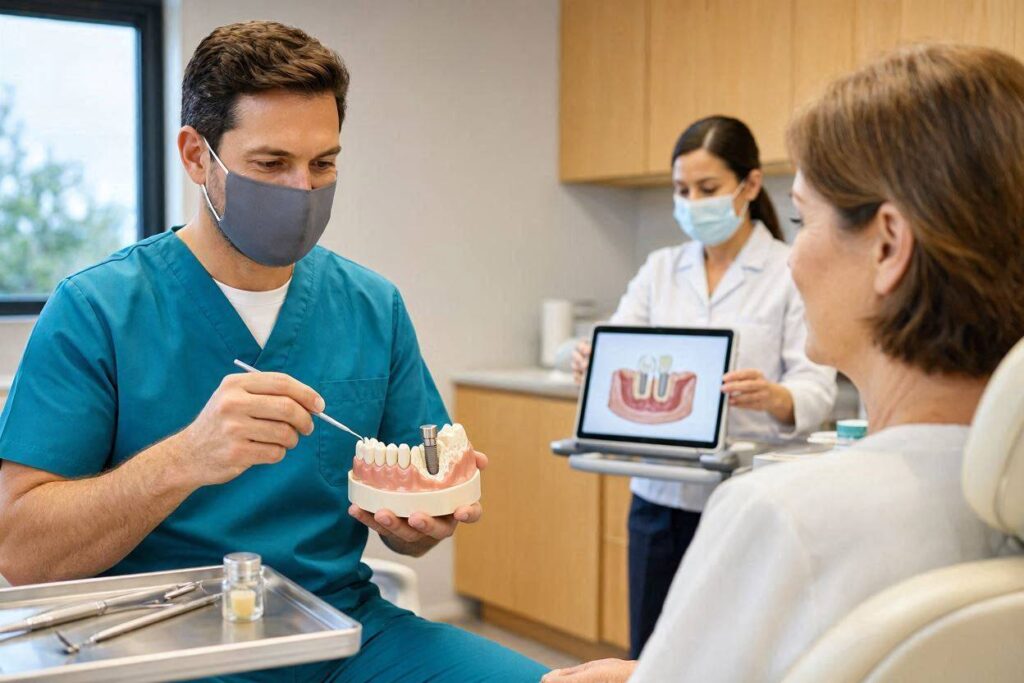
Understanding the Two-Part Investment: Graft and Implant
To understand the cost, you must first understand exactly what you are paying for. A bone graft and a dental implant are two distinct procedures, each with its own set of materials, clinical time, and laboratory fees. Sometimes they are performed simultaneously, which can reduce some facility and anesthesia costs. Other times, they are staged months apart, which results in two separate surgical events and, consequently, two separate bills.
The bone graft procedure is designed to regenerate the jawbone you have lost. When a tooth is extracted, the surrounding bone begins to resorb, or melt away, because it is no longer stimulated by the tooth root. Periodontal disease or trauma can also destroy bone. The graft places a scaffold of bone material into the defect. This material can come from several sources: your own body (autograft, usually from the jaw or chin), a human cadaver donor (allograft), an animal source such as bovine (xenograft), or a synthetic laboratory material (alloplast). The material acts as a framework for your own bone cells to migrate into and eventually replace. A membrane is often placed over the graft to protect it, and the gum is sutured closed. The body then needs months to turn this graft into living, vascularized bone.
The dental implant is the titanium or zirconia screw that replaces the tooth root. Once the graft has matured and the bone is dense and healthy, the implant is surgically placed into the new bone. The implant needs to osseointegrate, or fuse to the bone, for another few months. Finally, an abutment (a connector) and a crown (the visible tooth) are attached.
The total cost of a bone graft and an implant is the sum of these parts, plus the professional fees of the surgeon, the cost of anesthesia, and the diagnostic imaging. The national average for a single dental implant and crown in the United States is often cited between $3,000 and $6,000. The addition of a bone graft can add anywhere from $400 to over $3,000 to that total, depending entirely on the size and complexity of the graft. Therefore, a realistic total range for a single tooth replacement requiring a graft is $3,500 to $9,000 or more.
Cost Breakdown by Component
Let us dissect the total fee into its individual line items. This is the level of detail you want to see on a treatment plan from your dentist. A clinic that provides a clear, itemized quote is one that values transparency.
- Initial Consultation and Imaging: Often $100 to $300. This includes the exam and the essential 3D Cone Beam Computed Tomography (CBCT) scan. The CBCT is not optional for graft and implant planning. It allows the surgeon to measure the exact volume of bone and plan the graft and implant position virtually.
- Bone Graft Material: The material cost itself varies. A small vial of allograft or xenograft particles might cost the practice $100 to $300, and they bill it at $300 to $800. A larger volume required for a major ridge augmentation or sinus lift will cost more. An autograft, which involves a second surgical site to harvest your own bone, incurs additional operating time and therefore higher surgical fees.
- Membrane: The barrier membrane, usually a collagen sheet, costs $200 to $500. This is a critical component that is often itemized separately.
- Grafting Surgical Fee: This is the professional fee for the surgeon’s time and skill. For a minor socket preservation graft at the time of extraction, this might be $300 to $600. For a major sinus lift or lateral ridge augmentation, the surgical fee alone can be $1,500 to $3,500.
- Implant Fixture: The titanium or zirconia post itself. The dental practice buys these from manufacturers like Straumann, Nobel Biocare, or BioHorizons. A premium branded implant fixture might cost the practice $300 to $500, and the patient is charged $800 to $1,800.
- Implant Surgical Fee: The cost for surgically placing the implant into the healed bone, which ranges from $800 to $2,000.
- Abutment and Crown: The final restoration. A custom abutment and a high-quality ceramic crown can cost $1,500 to $3,000. This is separate from the surgical implant cost but is almost always part of the total treatment plan.
Here is a table summarizing the low and high ends of a typical single-tooth scenario with a moderate bone graft.
| Procedure Component | Low-End Estimate | High-End Estimate |
|---|---|---|
| Consultation & CBCT Scan | $150 | $350 |
| Bone Graft (Socket Preservation) | $400 | $1,200 |
| Barrier Membrane | $200 | $500 |
| Implant Fixture | $800 | $1,800 |
| Implant Surgical Placement | $800 | $2,000 |
| Abutment & Crown | $1,200 | $3,000 |
| Total Estimated Range | $3,550 | $8,850 |
This table reflects the range for a single tooth. If multiple teeth are missing and a larger graft block is required, the numbers scale up proportionally, though some costs like the consultation and imaging are one-time fees.
The Clinical Drivers of Cost: Why One Graft Is Not Like Another
Not all bone grafts are equal. The price is directly proportional to the volume of bone needed and the difficulty of the surgical access. This is the most critical concept in understanding the cost variance.
A socket preservation graft is the least expensive type. When a tooth is extracted, the empty socket is filled with graft material immediately. The goal is to preserve the bone width so an implant can be placed months later. This is a straightforward, quick procedure with a small amount of material. It often costs $400 to $800.
A lateral ridge augmentation is more complex. The jawbone has lost width, often because a tooth has been missing for years. The surgeon makes an incision, reflects the gum, and uses bone graft particles and a membrane to build the ridge back to a width of at least 6 millimeters, which is the minimum for most implants. This requires surgical skill to create a space and maintain it without the graft collapsing. This can cost $1,500 to $3,500 per site.
A sinus lift or sinus augmentation is needed for implants in the upper back jaw. The maxillary sinus is an air-filled space above the roots of the upper molars and premolars. After tooth loss, the bone floor of the sinus can be paper-thin. The surgeon gently lifts the sinus membrane and packs bone graft material into the floor of the sinus, creating new bone height. There are two types: a lateral window sinus lift, where a window is created in the side of the sinus wall, and a crestal approach, which is done through the implant osteotomy site. A lateral window sinus lift is a significant surgical procedure, often costing $3,000 to $6,000 for the graft alone, not including the implant.
A block bone graft is the most extensive form of grafting for severe defects. A solid piece of bone, usually harvested from the back of the patient’s own jaw (ramus) or from the chin, is secured to the deficient ridge with tiny titanium screws. This provides a solid foundation and requires the highest surgical skill. The cost for a block graft can easily exceed $3,500 to $5,000 just for the graft procedure.
The type of graft you need is determined by your CBCT scan. A surgeon can look at the three-dimensional image and tell you exactly how many millimeters of bone are present and how many are needed. The difference between the present bone and the required bone dictates the graft size, which dictates the price.
Geographic Variation and Practice Overhead
Where you live in the United States, or in the world, has a dramatic effect on the price you pay. Dental fees are not regulated, and they are highly sensitive to local market forces. The overhead costs of a dental practice—rent, staff salaries, malpractice insurance—vary enormously between a rural clinic in the Midwest and a high-end boutique practice in a metropolitan coastal city.
In a major city like New York, Los Angeles, or San Francisco, you can expect to pay a premium. The rent for the office is high, the laboratory that fabricates the crown charges more, and the specialists—periodontists and oral surgeons—command higher professional fees due to their training and the demand for their services. A complete single implant with a graft in Manhattan could easily reach $7,000 to $9,000.
In a suburban or rural area in the South or Midwest, the same procedure might cost $4,000 to $5,500. The difference is not necessarily an indicator of quality. There are highly skilled surgeons practicing in lower-cost areas. The economic principle is simply that the cost of doing business is lower, and market competition keeps prices stable.
This geographical arbitrage has given rise to dental tourism, where patients travel to countries like Mexico, Costa Rica, Hungary, or Thailand for dental implants. The prices in these countries can be 50 to 70 percent lower than in the United States. A bone graft and implant that costs $6,000 in the U.S. might cost $1,800 in Mexico. However, this comes with significant trade-offs. The standards of sterility, material regulation, and follow-up care vary. A dental implant is not a one-time transaction; it is a long-term relationship. The implant needs to be monitored, the crown may need maintenance, and complications can arise years later. Many American dentists are reluctant to “rescue” a failed implant placed in another country, which can leave the patient in a difficult position. The cost savings must be weighed carefully against the value of local, continuous care and legal accountability.
The Specialist vs. General Dentist Cost Differential
Another significant variable is the type of provider placing your implant. General dentists are placing more implants than ever before, especially straightforward cases in patients with healthy bone. A general dentist’s fee for the surgical portion is often lower than that of a specialist.
Periodontists are gum and bone specialists. They are the experts in bone grafting and managing the soft tissue around implants. An oral and maxillofacial surgeon is a medical doctor of dentistry who specializes in surgery of the jaws and face. Their fees are typically at the higher end of the spectrum, reflecting their extensive hospital-based surgical training and their ability to manage complex medical histories, such as patients with bleeding disorders or severe systemic diseases. If you need a major sinus lift, a block graft, or you have a complex medical history, you will likely be referred to a specialist. Their fee will be higher, but the expertise is directly related to the reduced risk of complications. Paying more for a properly executed sinus lift is cheaper than having a failed sinus lift that leads to chronic sinusitis and the loss of the graft material.
The Role of Dental Insurance and Medical Insurance
A common source of sticker shock is the realization that most standard dental insurance plans provide very limited coverage for implants and bone grafts. Dental insurance is traditionally designed as a maintenance and minor repair plan, not a major reconstructive plan. It usually focuses on prevention and basic services.
A typical dental Preferred Provider Organization (PPO) plan might cover a tooth extraction at 80 percent and a bridge at 50 percent, but it may exclude dental implants entirely as a “cosmetic” or “experimental” procedure, even though they are the standard of care. If the plan does offer implant coverage, it is often limited to a maximum benefit, such as $1,500 per year, and it may only pay 50 percent of the allowed amount for the implant. The bone graft might be classified under “oral surgery” and receive some coverage, but the membrane and the graft material are often bundled into a single allowed fee that may not match the actual cost.
You must call your insurance company and ask very specific questions. Do not just ask, “Do you cover implants?” Ask, “What is the maximum annual benefit for major services? Is there a missing tooth clause? Is the bone graft (CPT D4263 or D4264) a covered service? What is the allowable charge for these codes?” Always get a pre-treatment estimate sent from the dental office to the insurance company. This document will spell out exactly what the insurance will pay and what your patient co-pay will be before you even start the procedure.
There is a ray of hope in medical insurance for the bone graft portion. If the bone loss was caused by a traumatic accident, a pathological condition like a tumor, or a congenital defect, your medical insurance might cover the bone graft procedure. Medical plans do not typically cover the dental implant or the crown, but they may cover the “repair of the skeletal defect.” This is a complex billing process that requires the surgeon’s office to submit medical claims with appropriate ICD-10 diagnosis codes. This is not routine for garden-variety tooth-loss bone resorption, but for a trauma patient, it is a critical financial pathway to explore.
Additional Costs That Patients Often Forget
The quoted fee for the graft and the implant is often a “surgical fee only” price. The final crown cost is frequently presented as a separate phase, and patients may not realize the total financial commitment. Let us list the common ancillary costs that can catch you off guard.
- Anesthesia and Sedation Fees: Local anesthetic is usually included in the surgical fee. However, if you choose or require additional sedation—such as nitrous oxide (laughing gas), oral conscious sedation (a pill you take before the appointment), or intravenous (IV) sedation—there is a separate fee. IV sedation, administered by a specialist or a nurse anesthetist, can cost $500 to $1,000 per hour.
- Diagnostic Fees: A CBCT scan is sometimes bundled in the consultation fee, but if you need a second scan to check graft healing before implant placement, that might be an additional $200 to $400.
- Temporary Teeth: You will need a temporary tooth (a “flipper” or an Essix retainer with a tooth) during the months of healing. A removable temporary appliance can cost $300 to $800. This is rarely included in the surgical fee.
- Complication Management: If the implant fails or the graft becomes infected, the re-treatment will incur new costs. Some surgeons have a warranty policy where they will replace a failed implant fixture at no charge, but you still pay for the surgery and materials. Clarify the failure policy before you start.
Financial Planning Tip: Many practices offer third-party financing through companies like CareCredit or LendingClub. These are healthcare credit cards that often offer interest-free promotional periods of 6, 12, or 18 months. This allows you to break the total cost into monthly payments. If you use financing, ensure you pay off the entire balance within the promotional period, or you will be charged deferred interest retroactively on the full original amount.
The Implant and Graft Product Brands: Do They Matter for Cost?
Walk into any dental implant consultation, and you will hear brand names: Straumann, Nobel Biocare, Biomet 3i, Zimmer Biomet, BioHorizons, and a host of “value” brands like Hiossen or Osstem. The brand of the implant does influence the price. The premium brands have decades of research, proven track records, and extensive patent-protected surface technologies that promote bone healing. They also guarantee that the components—the tiny screws and instruments—will be available for decades to come. This is critical if you ever need to have your crown remade 15 years from now. The dentist can order a new part from the same company, and it will fit your existing implant.
Value brands are often significantly cheaper, and they are not necessarily inferior. Some have excellent research and are widely used globally. The risk is that a smaller company might be acquired or go out of business, making replacement parts impossible to find in the future. Your implant could become an “orphan.” The cost difference per implant between a premium and a value brand might be $300 to $600 at the practice level. A surgeon who is passing this saving on to you might be able to offer a lower fee. It is a valid conversation to have. “What brand of implant are you using? Why did you choose this brand for my case? Will the parts be available in 20 years?”
The Dangers of Bargain Shopping for Implants
The internet is full of advertisements for “implants starting at $999” or “All-in-One Implant for $1,500.” These bait-and-switch prices almost never include the bone graft, the crown, or the necessary diagnostic imaging. They are a marketing tool to get you in the door. You must read the fine print. A $999 implant special typically covers only the implant fixture and its surgical placement. The abutment and crown are separate, often $1,500 to $2,500 more. The bone graft is another add-on. The $999 implant quickly becomes a $5,000 implant.
A deep-discount dental chain might cut corners to make their low price profitable. They might use a cheaper laboratory to fabricate the crown, which results in a less aesthetic and less durable final tooth. They might skip the barrier membrane on a bone graft to save a few hundred dollars, which drastically increases the risk of graft failure. They might not invest in a CBCT scanner, relying instead on 2D x-rays that give an incomplete picture of the bone. This is the definition of “you get what you pay for.” A dental implant is a titanium screw surgically placed in your body. It must last decades. This is not the place to choose the lowest bidder.
Instead of bargain shopping, look for value. Value means a fellowship-trained surgeon, the use of a CBCT, a premium implant brand, a high-quality custom zirconia crown, and a clear, written warranty on the work. The price will be in the mid-to-upper range, but the probability of success is maximized, and the risk of a costly, painful revision is minimized.
Conclusion
The total cost for a bone graft and a single dental implant typically ranges from $3,500 to $9,000, a wide spectrum driven by the specific grafting technique required, the brand of implant, the specialist’s expertise, and your geographic location. Navigating this investment successfully means obtaining an itemized treatment plan, verifying your medical and dental insurance benefits for the graft specifically, and factoring in the often-overlooked costs of temporary teeth and final crowns. Ultimately, the money spent on a properly executed bone graft is a high-return investment in the longevity of the implant, turning a vulnerable site into a foundation that can literally last a lifetime with proper care.
FAQ
Can a bone graft and implant be done on the same day?
Yes, often they can. If the remaining bone is sufficient to stabilize the implant, the graft material is packed around the implant at the same time. This saves a separate surgery and reduces total healing time and cost.
Does medical insurance ever cover the bone graft for an implant?
Yes, medical insurance may cover the bone graft if the bone loss is due to trauma, tumor removal, or a congenital defect. Routine bone loss from extractions is almost always excluded and considered dental.
Why is a sinus lift bone graft so expensive?
A sinus lift is a delicate surgical procedure that involves elevating the sinus membrane and placing graft material into a very limited space. It requires high skill, specialized instruments, and a longer operating time, all of which contribute to a higher professional fee.
How can I reduce the cost of a bone graft and implant?
Consider dental schools, where care is provided by supervised residents at a reduced fee. Dental savings plans offer discounts of 15 to 30 percent at participating dentists. Financing options can also spread the cost over time.
What is the cheapest type of bone graft?
A simple socket preservation graft placed immediately after an extraction is the least expensive, typically costing a few hundred dollars. It uses a small amount of allograft or xenograft material and requires minimal surgical time.
Additional Resources
For information on accredited surgeons and the standards of implant care, visit the American Academy of Periodontology: https://www.perio.org/