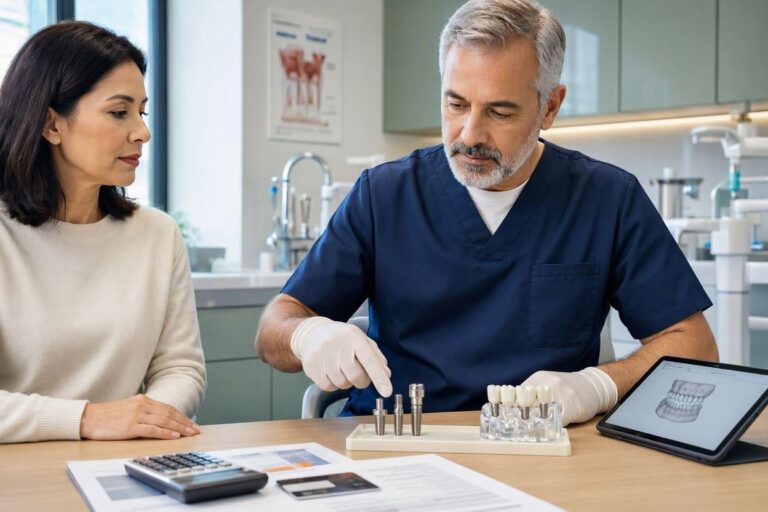
How Much Are Dental Implants In Dubai?
Dubai has rapidly emerged as a global hub for medical and dental tourism, attracting patients from Europe, Asia, Africa, and the Middle East with its unique blend of luxury hospitality and advanced healthcare infrastructure. The gleaming clinics along Jumeirah Beach Road and in Dubai Healthcare City rival the finest facilities in Beverly Hills or London, yet the conversation inevitably turns to one central question: How much are dental implants in Dubai? The answer is nuanced, reflecting the city’s dual nature as a home to both budget-conscious medical tourists and ultra-wealthy residents seeking the absolute finest care that money can buy. You can find a single dental implant for a price that competes with Eastern Europe, or you can invest in a full-arch restoration that exceeds the cost of a luxury car.
The price of dental implants in Dubai is not a single number. It is a spectrum that spans from approximately 2,500 AED to over 12,000 AED per tooth, all-inclusive of the crown. In United States Dollars, this translates to a range of roughly $680 to $3,200, a significant savings compared to the $3,000 to $6,000 per tooth typical in the U.S. market. However, this attractive price point comes with a landscape of its own complexities. The regulatory environment, the credentials of the practitioner, the brand of the implant, and the hidden costs of travel must all be factored into your calculation. This comprehensive guide will dissect the cost of dental implants in Dubai with complete transparency. We will explore why prices vary so dramatically, what is included in a standard quote, how to distinguish a genuine expert from a marketing illusion, and what the total financial picture looks like for an international patient making the journey.
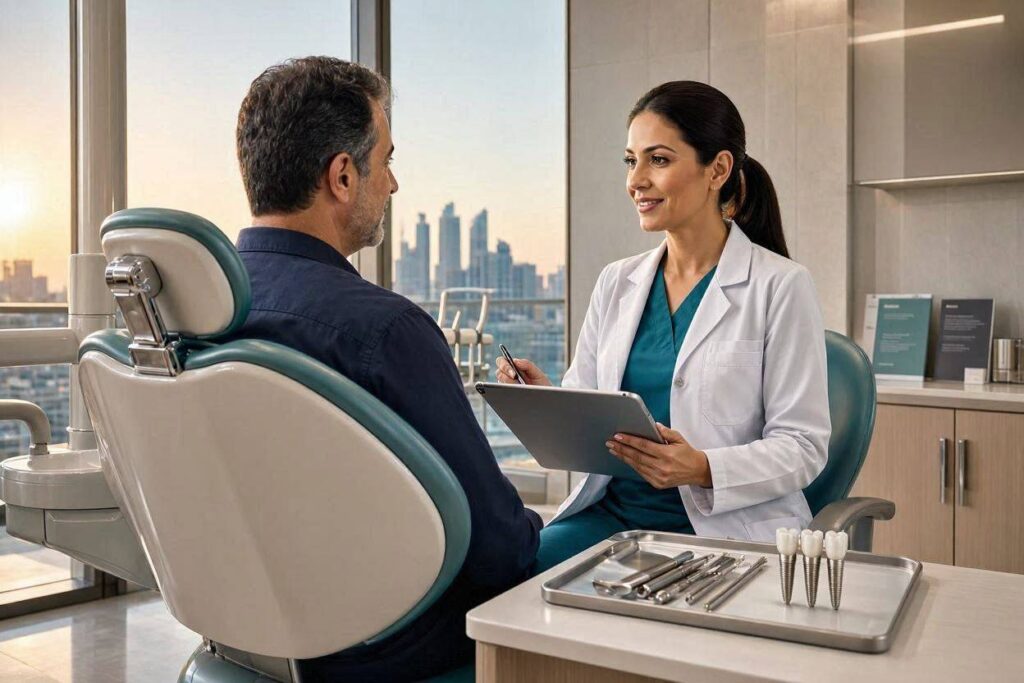
The Price Spectrum: From Affordable Clinics to Luxury Practices
Dubai’s dental market is stratified into distinct tiers, each serving a different demographic and budget. Understanding these tiers is the first step in aligning your financial reality with your clinical expectations.
At the most accessible level, you will find general dental practices in the older, more residential parts of the city, such as Deira, Bur Dubai, and Al Nahda. These clinics primarily serve the local population and long-term expatriate workers. They operate on a high-volume, lower-margin model. A single dental implant with a standard porcelain-fused-to-metal (PFM) crown in such a clinic might be advertised at a starting price of 2,500 to 4,000 AED ($680 to $1,090). These clinics often use value-engineered implant brands from South Korea, such as Dentium or Osstem, which are reliable and widely used globally but lack the century-long track record of the Swiss and German giants. The dentists may be general practitioners with additional implant training rather than board-certified specialists. The quality can be perfectly adequate for a straightforward case in a healthy patient with good bone, but the level of diagnostic technology, such as 3D Cone Beam CT scanning, may be limited.
The mid-tier market is dominated by specialist practices in areas like Jumeirah, Umm Suqeim, and Dubai Marina. Here, you are typically treated by an oral and maxillofacial surgeon or a periodontist with Western board certifications (American, British, Canadian, or German). The clinics feature in-house 3D CBCT scanners, digital intraoral scanning, and in-house dental laboratories. They use premium implant brands like Straumann (Switzerland) or Nobel Biocare (Sweden/USA). The price for a single implant with a high-aesthetic zirconia crown in this tier ranges from 5,500 to 8,500 AED ($1,500 to $2,300). This is the sweet spot for international medical tourists seeking a significant cost saving without compromising on the globally recognized quality of the implant fixture and the surgical expertise.
At the apex of the market are the luxury clinics in Dubai Healthcare City, on Al Wasl Road, and in the five-star hotels. These are the practices of celebrity dentists who cater to royalty, business magnates, and high-net-worth individuals. The fees here are not based on the cost of the implant itself, but on the concierge-level experience. A consultation may involve a virtual smile design, a dedicated patient coordinator, and a bespoke treatment plan. The all-inclusive fee for a single Straumann or Nobel Biocare implant with a custom layered zirconia crown can reach 9,000 to 15,000 AED ($2,450 to $4,100). While this approaches U.S. prices, the appeal to some international patients is the combination of a discreet, ultra-luxurious environment and a price that is still marginally less than a comparable experience in a top-tier London or New York practice.
What Is Typically Included in the Quoted Price?
One of the most dangerous assumptions a patient can make is that a quoted “implant price” includes everything. Marketing materials are designed to attract clicks, and the fine print tells the real story. You must interrogate every quote you receive. Ask the clinic manager, “What exactly does this price include?”
A legitimate, all-inclusive implant quote in Dubai should cover the following line items.
- Consultation and 3D CBCT Scan: The radiograph that allows the surgeon to view your bone in three dimensions and plan the surgery virtually. A clinic that places implants without a 3D scan is practicing below the standard of care.
- The Implant Fixture: The specific brand and model of the titanium post. The quote should state the brand name explicitly.
- The Abutment: The connector piece between the implant and the crown. This should be a custom or stock abutment from the same manufacturer as the implant.
- The Crown: The visible tooth. The material should be specified: E-max (lithium disilicate), layered zirconia, or PFM.
- Surgical Fees and Local Anesthesia: The professional fee for the surgeon and the cost of numbing the area.
Here is a table showing a breakdown of a typical mid-tier, all-inclusive price versus a budget-tier, stripped-down price.
| Component | Mid-Tier Inclusive Quote (e.g., 7,000 AED) | Budget Strip-Down Quote (e.g., 2,500 AED) |
|---|---|---|
| 3D CBCT Scan & Consultation | Included | Often excluded (extra 500-800 AED) |
| Implant Brand | Nobel Biocare / Straumann | Value Korean brand |
| Abutment | Custom titanium or zirconia | Stock titanium |
| Crown | Full contour layered zirconia | Porcelain-fused-to-metal (PFM) |
| Bone Graft (if minor) | Often included | Always extra (1,500-3,000 AED) |
| Surgeon’s Fee | Board-certified specialist | General dentist |
The budget quote of 2,500 AED can quickly balloon to 6,000 AED once the scan, a necessary bone graft, and a better-quality crown are added. The mid-tier quote of 7,000 AED is often a true “walk-out” price for a standard case. Always get a written treatment plan with the total financial commitment before you make any decision.
The Clinical Cost Drivers: Bone Grafts and Sinus Lifts in Dubai
The single biggest factor that escalates the cost of a dental implant in Dubai, just as anywhere else in the world, is the need for a supplementary bone grafting procedure. A patient who has been missing a tooth for several years has experienced jawbone resorption. The bone that once supported the tooth has melted away. An implant needs a minimum of 6 to 8 millimeters of bone width and about 10 millimeters of height. If your CBCT scan reveals a deficiency, a bone graft is not optional; it is a prerequisite.
In Dubai, the cost of a bone graft is highly variable. A simple socket preservation graft, where graft material is placed into an extraction socket immediately after a tooth is pulled, may cost an additional 1,000 to 2,500 AED. A more extensive lateral ridge augmentation, which builds up the width of the jaw, can add 3,000 to 6,000 AED. A sinus lift, which is required for implants in the upper back jaw when the sinus floor has dropped, is the most expensive adjunctive procedure. In Dubai, a sinus lift performed by a specialist can cost between 4,000 and 8,000 AED. The cost is driven by the high skill required to elevate the sinus membrane without perforating it and the use of specialized graft materials and membranes.
The graft material itself is a cost variable. Xenograft (bovine-derived) materials, such as Bio-Oss, are the gold standard globally and are widely used in Dubai. They are expensive. Synthetic alloplast materials are less costly. Some clinics offer Platelet-Rich Fibrin (PRF) therapy, where your own blood is spun in a centrifuge to create a growth-factor-rich membrane that is placed in the surgical site to accelerate healing. This is often an additional charge of 500 to 1,500 AED. The biological benefits of PRF are well-supported, but the added cost is a reality.
Crown Materials and Laboratory Fees
The final crown is the part of the implant you and the world will see. The cost of the crown is not just a flat fee; it is a reflection of the artistry of the dental laboratory technician who fabricates it.
A PFM (Porcelain-Fused-to-Metal) crown is the most economical. It has a metal base covered in tooth-colored porcelain. It is strong but less aesthetic, as the metal can sometimes create a dark line at the gum margin. In Dubai, the laboratory fee for a PFM crown on an implant might be 400 to 600 AED.
A Full Zirconia Crown is milled from a solid block of zirconium dioxide. It is extremely strong and tooth-colored. A monolithic full zirconia crown (solid color) is more affordable, while a layered zirconia crown, where the technician hand-applies layers of porcelain to create depth and translucency, is more expensive. The laboratory fee for a high-aesthetic layered zirconia crown from a top Dubai lab can be 1,200 to 2,000 AED. The clinic marks this up to 2,000 to 3,500 AED for the patient. This is the standard choice in the mid-tier and luxury markets.
An E-max (Lithium Disilicate) Crown is often chosen for front teeth due to its superior optical properties and ability to mimic natural enamel. The lab fee is similar to high-end zirconia, and the patient cost is also in the 2,000 to 3,500 AED range.
The communication between the clinic and the dental lab matters. A clinic with an in-house laboratory can often offer faster turnaround times and potentially a slightly lower lab cost, but not always. An external, world-class lab that works with the finest materials will charge a premium that is passed on to the patient. The quality of the crown is the single greatest predictor of the long-term aesthetics and biological health of the implant. A poorly fabricated crown with a gap between the implant and the abutment will harbor bacteria and cause peri-implantitis. Do not select a clinic based on the cheapest crown option.
The All-on-4 and Full-Arch Pricing Model
Dubai has become a major destination for patients needing full-mouth rehabilitation. The marketing term “All-on-4” or “All-on-6” is ubiquitous. This procedure replaces all the teeth in one jaw with a fixed bridge supported by four or six implants. The cost of this procedure in Dubai is a fraction of what it costs in the U.S. or Western Europe, making it the most profitable arena for the dental tourism industry.
A full-arch restoration in Dubai is typically priced as a package. A “standard” All-on-4 package on a value Korean implant brand with a hybrid acrylic denture bridge might be advertised for 25,000 to 35,000 AED ($6,800 to $9,500) per jaw. This is the price that captures headlines. It is a life-changing sum of money for someone who has been living with failing or missing teeth.
However, there is a significant step-up to the premium version. An All-on-6 protocol using Nobel Biocare or Straumann implants and a final restoration of a milled titanium bar wrapped in high-impact zirconia—which is essentially a permanent, unbreakable set of teeth—will cost 60,000 to 85,000 AED ($16,000 to $23,000) per jaw in a top-tier clinic. This price still represents a 50 to 60 percent saving compared to the same prosthetic on the same implants in the United States.
Patients must be cautious of the “All-on-4” package that comes with a temporary set of teeth but charges separately for the final, permanent bridge. Some clinics quote a low price for the surgery and the temporary bridge, and then months later, the patient learns the final zirconia bridge will cost another 20,000 to 30,000 AED. The total cost then becomes unaffordable, and the patient is left in a treatment trap. A transparent All-on-4 quote must explicitly include the final prosthetic. Ask the direct question: “Is the cost of the final, permanent set of teeth included in this package?”
Dental Tourism: The Hidden Costs Beyond the Dental Chair
If you are traveling to Dubai from abroad specifically for dental implants, the sticker price on the treatment plan is only the starting point of your total financial outlay. You must construct a parallel budget for the travel and logistics.
A single implant, from extraction to final crown, can take 3 to 8 months of total healing time, spread over two surgical visits. A full-arch restoration requires at least two trips. Your travel budget must account for two round-trip flights, two hotel stays, and food and transport for two separate journeys. A stay at a hotel near the clinic can range from a modest 200 AED per night in a budget hotel to 2,000 AED per night in a beachfront luxury resort. You need to budget for at least 3 to 5 nights per visit.
The post-operative healing phase is another hidden cost. After major implant surgery, you should not fly for 24 to 48 hours due to the risk of increased bleeding and swelling from cabin pressure changes. You must build this recovery time into your stay. Some clinics have partnerships with nearby hotels and offer a “patient rate,” which is a small but helpful discount.
Furthermore, you must factor in the cost of complications. What happens if the implant fails or you develop an infection after you return home? Most dental tourists are on their own. The Dubai clinic might offer a guarantee on the implant fixture, but they will not pay for your flight back to have it replaced. You may end up paying a local dentist in your home country to salvage the situation. This risk is rarely factored into the initial cost comparison.
A realistic dental tourism budget for a single implant with a bone graft in a mid-tier Dubai clinic might look like this.
| Expense | Trip 1 (Surgery) | Trip 2 (Crown) |
|---|---|---|
| Implant & Graft Fee | 7,000 AED | – |
| Crown Fee | – | 2,500 AED |
| Round-Trip Flight | 3,500 AED | 3,500 AED |
| Hotel (5 nights) | 2,500 AED | 2,500 AED |
| Food & Transport | 1,000 AED | 1,000 AED |
| Trip Total | 14,000 AED | 9,500 AED |
| Grand Total | 23,500 AED ($6,400) |
At a grand total of $6,400, the savings against a $4,500 U.S. implant may be minimal or even negative once the lost time from work is considered. For full-arch cases, the mathematics changes dramatically because the absolute dollar savings are in the tens of thousands. A thorough, realistic travel budget is the only way to make a sound financial decision.
Regulatory Oversight and Quality Assurance
The Dubai Health Authority (DHA) and the Ministry of Health and Prevention (MOHAP) are the primary regulatory bodies governing medical practice in the Emirate. All dental clinics must be licensed, and all practitioners must hold an active DHA professional license. You can verify a dentist’s license on the DHA website. This is a critical step before you commit to surgery.
The DHA mandates strict infection control protocols that mirror international standards. The quality of sterilization in reputable clinics is excellent. However, the regulatory framework does not control pricing, and it does not guarantee that the marketing claims of a clinic are accurate. A clinic can be fully licensed and still use aggressive, misleading sales tactics.
A potential concern for international patients is the standard of follow-up care and legal recourse. In the event of negligence, pursuing a medical malpractice claim in Dubai is a legal process governed by the UAE civil code. It is not as straightforward as in many Western judicial systems. The patient must go through a medical complaints committee before any legal action can be taken. For a tourist, this is a daunting, expensive, and time-consuming prospect. The best strategy is exhaustive vetting on the front end. Choose a surgeon who is a member of an international implant association, such as the International Congress of Oral Implantologists (ICOI) or the European Association for Osseointegration (EAO), and who has verifiable, long-term Google reviews that discuss surgical complications and how they were resolved.
Conclusion
The price of a single dental implant in Dubai spans a wide corridor from a bare-bones 2,500 AED to a comprehensive, specialist-delivered package of 8,500 AED or more, with full-arch solutions extending into the 85,000 AED range. This variation is driven by the dentist’s specialist credentials, the implant brand’s research pedigree, the artistry of the dental laboratory, and the hidden bone grafting procedures that are often required but not quoted up front. For the international patient, the true cost is the sum of the dental work, the two required trips, the accommodation, and the risk-adjusted value of aftercare, a total that requires rigorous calculation before booking the flight.
FAQ
Is it safe to get dental implants in Dubai?
Yes, in DHA-licensed clinics with board-certified specialists, the safety and infection control standards are world-class. You must verify the surgeon’s credentials and the clinic’s license on the DHA website.
Why are dental implants in Dubai cheaper than in the USA?
The lower cost is due to lower labor costs, lower commercial rent relative to prime U.S. coastal cities, competitive market pressure from a high density of clinics, and a favorable tax environment.
Do Dubai clinics offer a warranty on implants?
Most reputable clinics offer a warranty on the implant fixture itself, typically 5 to 10 years, and a shorter warranty on the crown. The surgical placement is usually guaranteed for a certain period, but you must confirm the specific terms in writing.
How long do I need to stay in Dubai for an All-on-4 procedure?
You usually need two trips. The first trip is for surgery and temporary teeth and lasts about 5 to 7 days. The second trip, 4 to 6 months later, is for the final permanent bridge and lasts about 3 to 5 days.
Can I use my U.S. dental insurance in Dubai?
Generally, no. U.S. dental insurance is not accepted by clinics in Dubai. You will be expected to pay the full fee at the time of treatment and then seek reimbursement from your insurance company yourself, which is usually limited to out-of-network benefits.
Additional Resources
To verify practitioner credentials and clinic licensing in Dubai, visit the official portal of the Dubai Health Authority: https://www.dha.gov.ae/