What Is It Like Having Dental Implants?
The decision to get a dental implant is a profound one. It is not merely a dental procedure; it is an emotional and physical investment in your long-term health, comfort, and self-esteem. Countless patients sit in the consultation chair, nodding along to the explanations of osseointegration and titanium alloys, but their unspoken, burning question remains: “What is it actually like? What will I feel? Will it feel like a real tooth? Will people be able to tell?” These are the human questions behind the clinical brochures. The truth is that the experience of having a dental implant is a transformative journey that unfolds over many months, moving from a period of surgical healing to a state where the implant becomes an invisible, indistinguishable part of your body.
Living with a dental implant is not like having a removable denture. It is not like having a bulky, foreign object in your mouth. When the process is complete and the final crown is in place, the implant is designed to feel, function, and look exactly like the natural tooth it replaced. You do not think about it. You do not take it out at night. You chew with it, you smile with it, and you clean it. The journey to that point of unconscious integration, however, requires patience and a clear understanding of the physical sensations and emotional milestones you will encounter. This article will walk you through the lived, subjective experience of having a dental implant—from the first injection of local anesthetic to the moment you bite into a crisp apple years later without a second thought.

The Surgical Day: Sensations and Surprises
The most anxiety-inducing part of the entire process for most people is the day of the implant surgery itself. Let us demystify what you will actually feel. You will arrive at the dental office, and your vital signs may be checked. If you have chosen sedation, an intravenous line will be started, and you will drift into a comfortable, dream-like state, fully unaware of the procedure. If you are having only local anesthesia, the dentist will apply a topical numbing gel to your gum, which feels cool and slightly thick. Then comes the injection of local anesthetic. You will feel a brief, sharp pinch, not unlike a standard dental filling injection, and then a spreading numbness that engulfs your lip, chin, and tongue. Within minutes, the area is profoundly asleep. You feel no pain.
During the surgery, you will feel pressure, vibration, and a sense of activity, but no sharp or painful sensations. The vibration from the surgical drills is a low-frequency, resonant sensation that can feel strange, especially because it transmits through your skull. It is not painful, but it is a unique physical experience. You might hear the internal sound of the drill through your bone conduction, a muffled, high-pitched whine. Some patients describe the feeling of the implant being threaded into the bone as a sensation of “tightness” or “deep pressure.” This is the feeling of the threads engaging the dense bone, a positive sign of primary stability. The entire surgery for a single implant, from incision to the last suture, often takes only 30 to 60 minutes.
When the surgery is over, the sutures will feel like a rough, scratchy seam when you run your tongue over the site. Your lip and tongue will remain numb for several hours. This is a strange period where you must be careful not to bite your lip or cheek, as you have no protective sensation. You must not drink hot liquids. As the anesthetic wears off, a deep, aching soreness sets in. This is the pain of the surgical inflammation. It is typically managed very effectively with over-the-counter ibuprofen or a prescribed pain medication. The pain peaks in the first 24 to 48 hours and then declines rapidly. You will not be incapacitated. Most patients return to work or normal activities the next day, albeit with a soft food diet and a mild awareness of the surgical site. It is very similar to recovering from a tooth extraction.
The “Phantom Tooth” Phase and Osseointegration
This is the most psychologically challenging phase of the implant journey, because it requires faith. After the sutures dissolve and the gum heals, which takes about two weeks, you are left with a smooth, healed ridge of gum tissue. If you had a two-stage implant, the implant is completely buried underneath. You will see nothing. You will feel a subtle firmness if you press on the gum, but there is no tooth there. This is the waiting period for osseointegration, which typically lasts three to six months.
During this phase, you essentially “forget” about the implant. You chew on the other side of your mouth. The absence of a tooth in the space can feel profoundly empty, especially if it is a visible tooth. Your tongue will repeatedly explore the empty gap, a subconscious habit called tongue-thrusting or tongue-wandering. This is normal. The body misses the tooth. If you are wearing a temporary removable flipper or an Essix retainer with a false tooth, you will feel this plastic appliance pressing against your gums, which can be a minor irritation, but it provides the mental comfort of filling the space.
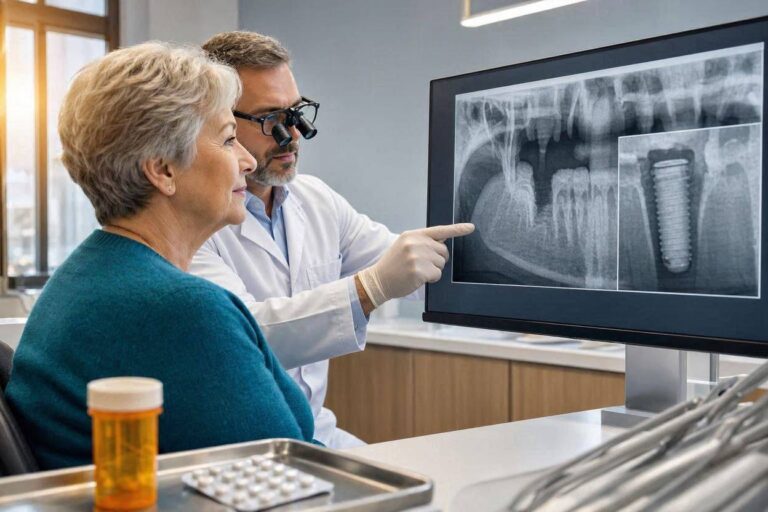
There is no pain associated with osseointegration. This is a silent, biological process. You will not feel the bone fusing to the titanium. It is an act of cellular-level construction happening deep within your jaw. The only sensation you might experience is a slight awareness that the area feels “solid” and different from the movable, spongy feel of the healing gum in the first few weeks. The lack of sensation is a sign that everything is proceeding normally. Pain, swelling, or a pimple-like bump on the gum during this waiting period are warning signs that warrant a call to your dentist, as they could indicate a failing integration or an infection.
The Uncovering and Final Restoration
The day you return for the second stage—if you had a two-stage implant—or the day you have your impressions for the final crown marks a turning point. The surgeon makes a tiny incision to expose the implant cover screw or simply removes the healing abutment if it was already exposed. This is a minor procedure, often requiring just a little topical anesthetic. You feel a brief moment of pressure, and then there it is: the shiny, metallic top of the implant, visible in your mouth for the first time.
Your dentist will then take a digital or traditional impression of the implant. This involves placing a small metal pin, called an impression coping, into the implant. It feels like a clicking, precise fit. The impression material may be a soft putty or a digital scanner wand that photographs your teeth. This process is quick and painless. You will then have a healing abutment or a temporary crown placed while the final restoration is fabricated in the dental laboratory.
The moment of truth is the delivery of the final crown. The dentist removes the temporary and tries in the new, custom-made porcelain or zirconia tooth. The first thing you will notice is the sensation of “fullness.” The empty space is finally occupied. The dentist will check the bite by having you close down on a colored articulating paper. You will feel the paper between your teeth, and you will feel the new crown making contact with the opposing tooth. The sensation of a high bite—the feeling that the new tooth is hitting first and keeping your other teeth from touching—is the most common immediate sensation. The dentist will carefully adjust the crown until your bite feels completely even and natural. When the bite is correct, the crown disappears from your conscious perception.
Then the dentist tightens the abutment screw or cements the crown. If it is a screw-retained crown, the access hole is sealed with a small Teflon pellet and a white filling material. You feel only the slight pressure of the filling being packed and cured. You look in the mirror. The transformation is complete. The tooth looks real. The gum hugs it naturally. You smile, tentatively at first, and then with growing confidence.
Does It Feel Like a Real Tooth?
This is the ultimate question, and the answer is a qualified “yes, with subtle differences.” A natural tooth is attached to the bone via the periodontal ligament, a network of collagen fibers that acts as a biological shock absorber and a sensory organ. This ligament provides what is called proprioception. You can feel the tiny, microscopic movements of a natural tooth. You can sense the texture and hardness of food through the feedback loop of the ligament. A dental implant is ankylosed to the bone. It is fused directly to the bone with no intervening ligament. This means the implant lacks the finely tuned proprioceptive sensitivity of a natural tooth.
In daily function, however, patients overwhelmingly report that their implant “feels like a real tooth.” When you chew a piece of steak, you will not notice a lack of sensation in the implant itself. The force of chewing is transmitted through the crown, into the implant, and into the bone, which has its own sensory nerves. You will feel the resistance, the texture, and the vibration through the bone, not through a ligament. It is a different sensory pathway, but the brain adapts to it so seamlessly that the conscious experience is one of normalcy. You will not think, “My implant feels weird.” You will simply chew.
The only time the difference becomes apparent is if you deliberately tap on the implant crown with your fingernail and then tap on a natural tooth. The implant crown will sound sharper, higher-pitched, and more metallic, while the natural tooth will have a duller, cushioned thud. This is the acoustic signature of the missing periodontal ligament. It is a trick you might show your friends once and then never think about again. The tongue, which is the most sensitive tactile organ in your body, will explore the crown. The crown’s contour, the smoothness of the polished surface, and the way it emerges from the gum will be fed back to your brain. A crown that is beautifully fabricated by a skilled ceramist will feel indistinguishable from enamel to your tongue’s touch.
Eating, Talking, and Smiling: The Functional Experience
Once the implant is restored and fully healed, you will eat normally. You must still use common sense. An implant crown is a man-made device. It is strong, but it is not indestructible. You will not crack open walnuts with it or chew on ice, just as you should not do that with your natural teeth. You will bite into a sandwich, chew a crunchy apple, and enjoy a chewy piece of bread without anxiety. The implant is anchored in bone, and it does not move. There is no wobbling, no clicking, no food trapping that is not immediately resolved by proper flossing.
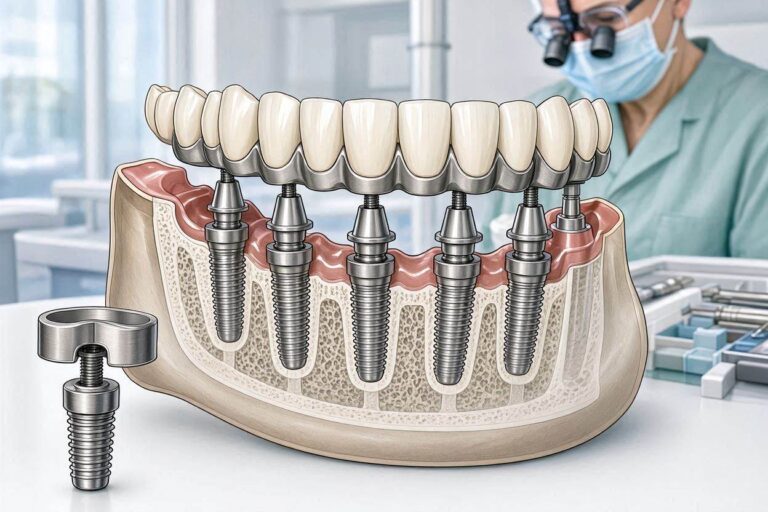
Speaking with a single implant is entirely natural. The implant replaces a tooth, and its presence in the arch restores the tongue’s reference point for forming sounds. If the missing tooth was causing a lisp or a whistling sound when you spoke, the implant crown eliminates that immediately. For full-arch implant bridges, the speech adaptation takes a bit longer. The tongue needs to learn the new contours of the prosthetic palate. Patients may have a transient lisp for a week or two after receiving a large implant-supported bridge, but this resolves as the soft tissue adapts and the tongue relearns the space.
Smiling is the emotional payoff. An implant in the aesthetic zone, the front of the mouth, that has been placed with precision and restored with a high-aesthetic crown, is invisible. Your closest friends will not know you have an implant unless you tell them. The gum tissue around a well-placed implant will have a natural pink color, a scalloped contour, and will hug the crown just like it hugs your other teeth. You will smile in photographs, laugh in conversation, and greet the world without the reflexive hand-over-the-mouth gesture that so many people with missing teeth develop.
The Maintenance Routine: What Daily Life Looks Like
Having a dental implant changes your oral hygiene routine slightly. You do not need to remove anything at night. The implant and crown are fixed. You brush them just like your other teeth, using a soft-bristled toothbrush and a non-abrasive toothpaste. You floss the implant, but you must use a special technique. A natural tooth is surrounded by a cuff of gum tissue that seals against the enamel. An implant crown is surrounded by a cuff of tissue that seals against the abutment. This seal is more delicate and less robust than the natural attachment.
Your dentist or hygienist will teach you to use implant-specific floss, which is thicker and has a stiff end to thread under the crown, or to use interdental brushes with a soft coating to clean the sides of the implant. You will gently work the floss in a “shoe-shine” motion around the abutment. You should never force the floss deep into the gum, as you could break the fragile seal. You may also use a Waterpik with a non-metal tip, set on a low pressure, to flush out any debris. Your professional hygiene visits will continue every six months, and the hygienist will use special non-metal instruments to clean the implant so as not to scratch the titanium or the abutment surface. A scratched implant surface becomes a haven for bacterial plaque.
The daily reality is that caring for an implant takes perhaps 30 seconds more than caring for a natural tooth. It is a small, mindful addition to your routine that protects your investment for decades.
Conclusion
The lived experience of having a dental implant is a journey from the brief, pressure-filled moments of surgery to the silent, unconscious integration where the implant feels exactly like a natural, functioning tooth embedded in your body. After the initial healing, which involves a few days of manageable soreness and months of patient waiting for bone integration, the final crown restores not just a gap in your smile but the confident ability to eat, speak, and laugh without hesitation. In daily life, you will brush it, floss it, and chew with it, and you will rarely think about it at all, which is the very definition of a successful body replacement.
FAQ
Does it hurt to get a dental implant?
The procedure itself is painless due to local anesthetic or sedation. The recovery period involves a deep ache for 24 to 48 hours, well-managed with over-the-counter pain relievers, followed by a rapid decline in discomfort.
Can I feel the dental implant screw in my bone?
You do not feel the screw itself. You feel pressure and force transmitted through the tooth to the bone, which the brain interprets as chewing sensation. You will not be aware of the implant’s presence inside the bone.
Will my dental implant set off metal detectors?
Airport metal detectors are calibrated to detect ferromagnetic metals in large masses, such as weapons. A single titanium or zirconia dental implant is too small and non-ferromagnetic to trigger an alarm.
How does the flossing feel different on an implant?
Flossing around an implant requires a specific technique to clean under the crown without damaging the gum seal. You will use a thicker, specialized floss or an interdental brush and will feel a smooth, firm surface against the instrument.
Is it weird having a fake tooth in my mouth?
Initially, your tongue will explore the new crown incessantly. After a few weeks, the sensory novelty wears off, and the brain accepts the tooth as a natural part of the oral landscape. You will stop noticing it.
Additional Resources
For educational resources on what to expect after dental implant surgery, visit the American College of Prosthodontists: https://www.gotoapro.org/