What Is Cheaper Veneers Or Implants? A Definitive Cost Comparison
The quest for a beautiful smile often arrives at a financial crossroads where two of cosmetic and restorative dentistry’s most powerful tools are weighed against each other. The question “What is cheaper, veneers or implants?” is deceptively simple, because the two procedures are not clinical substitutes for one another. A veneer is a thin shell of porcelain bonded to a healthy, existing tooth to improve its appearance. A dental implant is a surgical replacement for a missing tooth root and crown. You do not choose between a veneer and an implant for the same tooth; the condition of the tooth makes the choice for you. However, when a patient is planning a smile transformation and is facing a treatment plan that includes both options on different teeth, or is comparing a full set of veneers to a full-arch implant bridge, the cost comparison becomes the central, driving question.
The answer, on a pure per-unit basis, is that a porcelain veneer is significantly cheaper than a dental implant. A single high-quality porcelain veneer in the United States costs between $1,200 and $3,000. A single dental implant with a crown costs between $3,000 and $6,000. The implant is roughly double the cost of the veneer. However, this simple numerical comparison masks a vast ocean of clinical context, biological trade-offs, and long-term financial implications. A veneer preserves the natural tooth root and the jawbone, costs less upfront, and can last 15 years. An implant replaces the entire missing organ, preserves the jawbone from resorption, and can last a lifetime. Comparing their cost without comparing their purpose is a category error. This comprehensive guide will dismantle the cost structures of both treatments, compare them in the specific clinical scenarios where a patient might actually be making a choice, and provide the long-term value analysis that transforms a simple price tag into a lifetime investment strategy.

The Per-Unit Cost Breakdown: Veneer vs. Implant
Let us begin with the pure, unadorned numbers. The cost of a single porcelain veneer and a single dental implant are calculated on completely different clinical pathways, which is why the implant is inherently more expensive.
The Cost of a Porcelain Veneer
A porcelain veneer is a restorative procedure, not a surgical one. The tooth is prepared by removing a thin layer of enamel, an impression is taken, and a master ceramist fabricates a custom shell of feldspathic porcelain or pressed ceramic. At a second visit, the veneer is bonded to the tooth with a light-cured resin cement. The procedure involves no bone surgery, no anesthesia beyond the initial tooth preparation, and no healing period. The costs are the dentist’s professional fee, the laboratory fee for the ceramist, and the minimal disposable materials.
The national average fee for a single porcelain veneer from a skilled cosmetic dentist ranges from $1,500 to $2,500. A top-tier, celebrity cosmetic dentist in a major city may charge $3,000 to $4,000 per veneer. A composite resin veneer, which is sculpted directly on the tooth by the dentist in a single visit, is cheaper, ranging from $400 to $1,000, but it is less durable and more prone to staining.
The Cost of a Dental Implant
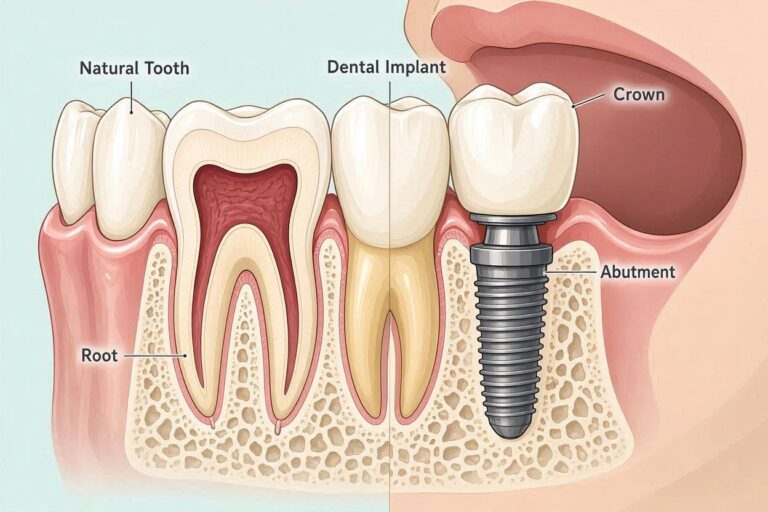
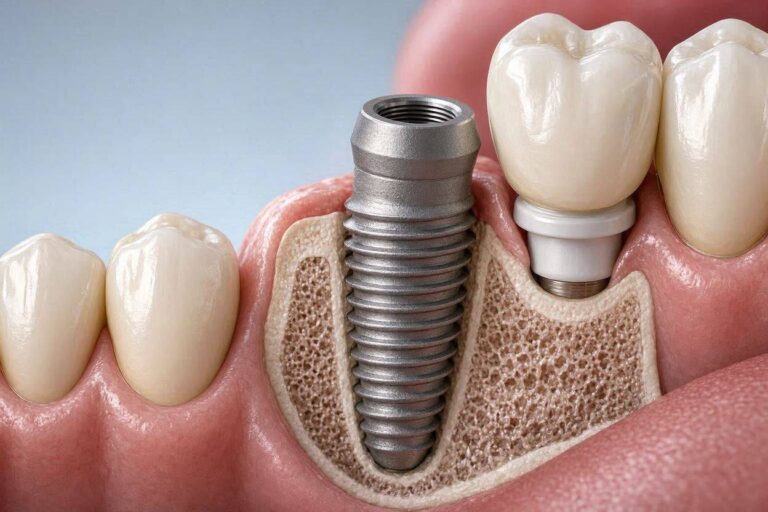
A dental implant is a surgical, multi-phase procedure. It involves a 3D CBCT scan, a surgical osteotomy in the jawbone, the placement of a sterile titanium fixture, a months-long healing period of osseointegration, a second surgery or uncovery, and the final fabrication of a custom abutment and a ceramic crown. The fees are divided among the oral surgeon or periodontist for the surgical phase, the restorative dentist for the crown, and the dental laboratory for the abutment and crown.
The total, all-inclusive cost for a single dental implant and crown in the United States ranges from $3,000 to $6,000. If a bone graft or a sinus lift is required, the total cost can escalate to $7,000 to $10,000. The implant cost is driven by the surgical expertise, the medical device cost of the implant itself, the sterile surgical supplies, and the multiple, separate clinical visits.
| Treatment | Clinical Purpose | Average Cost Per Tooth | Expected Longevity |
|---|---|---|---|
| Porcelain Veneer | Cosmetic enhancement of a healthy tooth | $1,500 – $2,500 | 10 – 20 years |
| Composite Veneer | Minor cosmetic correction | $400 – $1,000 | 5 – 7 years |
| Dental Implant & Crown | Replacement of a missing or non-restorable tooth | $3,000 – $6,000 | 25 years to lifetime |
This table confirms the simple answer: the veneer is cheaper. But the story does not end here.
The Clinical Scenarios Where a Choice Exists
You do not choose between a veneer and an implant for the same tooth in the same clinical moment. But there are two major scenarios where a patient is presented with both options and must make a financial and biological decision.
Scenario 1: The Failing Front Tooth
A single front tooth has a large, old filling, is discolored, and the dentist says the remaining tooth structure is compromised. The root is healthy, but the tooth is aesthetically and structurally failing. The patient has two choices. Option A: a porcelain crown or veneer, possibly after root canal treatment and a post. The cost is $2,000 to $3,000. The tooth is saved. Option B: extract the tooth and place a dental implant and crown. The cost is $4,500 to $7,000. The tooth is replaced.
The veneer or crown is the cheaper, more conservative option. It preserves the natural root and the periodontal ligament. It avoids a surgical extraction. The long-term risk is that the compromised tooth may eventually fracture at the root or develop recurrent decay, necessitating extraction and an implant anyway. The implant is more expensive upfront but eliminates the risk of future decay and preserves the bone. The choice is a financial gamble: pay less now to save the tooth, accepting the risk of a future implant, or pay more now for a definitive, decay-proof replacement. Biologically, saving the natural tooth is almost always preferred if the long-term prognosis is good.
Scenario 2: The Full-Mouth Smile Makeover
A patient with worn, discolored, but structurally intact teeth desires a complete smile transformation. Option A: a full set of 8 to 10 upper porcelain veneers, costing $15,000 to $25,000. Option B: extraction of all upper teeth and placement of a fixed full-arch implant bridge (All-on-4 or Hybridge), costing $25,000 to $40,000.
The veneers are cheaper and preserve the natural teeth. The full-arch bridge is more expensive, involves the surgical removal of all teeth, but provides a permanent, non-decaying, bone-preserving solution that never requires a veneer replacement. For a patient with healthy teeth, the veneer option is the clear, conservative winner. For a patient with severely broken, failing teeth, the full-arch bridge is the superior long-term value despite the higher upfront cost.
The Long-Term Value Equation: Maintenance and Replacement
The true cost of a dental restoration is not the initial fee; it is the lifetime cost of maintenance, repair, and replacement. A veneer is a durable but ultimately replaceable cosmetic shell. The porcelain can chip, the bond can fail, and decay can form at the margin. A well-maintained veneer lasts 10 to 20 years. When it fails, it must be replaced. The replacement cost is similar to the original, often slightly less if no additional tooth preparation is needed. A patient who gets veneers at age 30 will likely face two or three replacement cycles over their lifetime. The $20,000 smile makeover at 30 becomes a $60,000 to $80,000 lifetime investment.
A dental implant is a permanent, osseointegrated fixture. The titanium implant itself, if successfully integrated and protected from peri-implantitis, can last a lifetime. The prosthetic crown on the implant is the replaceable component. The crown may chip, wear down, or need replacement after 15 to 25 years. Replacing an implant crown is a restorative procedure that does not involve bone surgery. It costs $1,500 to $3,000. The implant fixture remains. The initial $5,000 implant investment may have a single $2,500 crown replacement at year 20, for a total lifetime cost of $7,500. This long-term cost is remarkably close to a single veneer replacement cycle.
The implant has a higher “down payment” but a lower long-term maintenance cost per decade than a veneer that is simply glued to the surface of an aging tooth. The veneer has a lower entry fee but a recurring replacement expense. The financially optimal choice for a single tooth is to save the natural tooth with a veneer or a crown whenever the long-term prognosis is good. The financially optimal choice for a missing tooth is the implant, because the alternative—a tooth-supported bridge—requires the destruction of adjacent healthy teeth and has its own replacement cycle.
Conclusion
A porcelain veneer is significantly cheaper than a dental implant on a single-tooth basis, costing $1,200 to $3,000 compared to the implant’s $3,000 to $6,000, but the two treatments serve completely different purposes: the veneer enhances a present tooth, while the implant replaces a missing one. The true financial comparison emerges over a lifetime, where the implant’s single, large upfront investment may result in a lower total cost of ownership than the recurring replacement cycles of veneers on aging, compromised teeth. The biological rule always prevails: if the natural tooth is healthy and savable, a veneer or a crown is the conservative, affordable choice; if the tooth is lost, the implant is the definitive investment that pays dividends in preserved bone and permanent function.
FAQ
Can I get a veneer on a dental implant?
No. A veneer is a thin shell bonded to natural tooth enamel. An implant crown is a full-coverage cap that is cemented or screwed onto an abutment. The aesthetic porcelain is part of the crown.
Is a full set of veneers cheaper than All-on-4 implants?
Yes. A full set of 8 to 10 upper veneers costs $15,000 to $25,000. An All-on-4 full-arch implant bridge costs $25,000 to $40,000 per arch. The veneers are cheaper but require healthy natural teeth.
Why are dental implants so much more expensive than veneers?
Implants involve a surgical team, a medical device, a 3D CT scan, sterile operating supplies, and multiple months of healing. Veneers are an adhesive restorative procedure with no surgery.
Which lasts longer, a veneer or an implant?
The implant fixture can last a lifetime with proper care. A porcelain veneer typically lasts 10 to 20 years before replacement. The implant is a more permanent solution biologically.
Can I switch from veneers to implants later?
Yes, but it is a significant, costly conversion. The teeth with veneers would need to be extracted, and implants would be placed. It is far better to make the right biological choice at the outset.
Additional Resources
For a deeper understanding of the cosmetic and restorative treatment planning process, visit the American Academy of Cosmetic Dentistry: https://aacd.com/