What Dental Implant Is That Com?
The internet has transformed the patient experience from passive recipient to active researcher. When you are told you need a dental implant, one of the first things you do—often while still sitting in the dental chair, scrolling on your phone—is to search for the specific name or description the dentist gave you. You might type into the search bar a phrase that reflects a moment of confusion: “What dental implant is that com?” This seemingly simple query reveals a fundamental truth about modern implantology: the dental implant market is a vast, global landscape of brands, models, and proprietary technologies, and a patient, without a guide, is like a consumer trying to identify a specific screw in a vast hardware store using only a blurry photo.
The phrase “that com” is a fragment, likely an attempt to remember a brand name or a website associated with an implant. It represents the frustration of the patient who has been handed a treatment plan that says “Straumann Bone Level Tapered 4.1 x 10mm” or “NobelReplace Conical Connection” and is trying to understand what that means, whether it is a good implant, and whether the cost is justified. This comprehensive guide will help you decode dental implant brand names and model numbers, teach you how to research an implant system using the information your dentist provides, and arm you with the specific questions to ask to identify exactly what medical device is being placed in your jawbone. Your implant is a lifelong investment, and you have an absolute right to know its make, model, and serial number.
The Major Implant Manufacturers and Their Web Domains
The first step in identifying “that com” is to understand the major corporate players in the implant industry and their official web domains. When a patient remembers a fragment of a name, it is often one of these global brands.
Straumann is a Swiss company, one of the world’s largest and most respected implant manufacturers. Its official domain is straumann.com. If your dentist uses a Straumann implant, your treatment plan might list a specific product line such as “Straumann BLX,” “Straumann Bone Level Tapered,” or “Straumann Tissue Level.” The Straumann Group also owns other implant brands, including Neodent (a Brazilian value brand, neodent.com) and Anthogyr (a French brand, anthogyr.com). A patient might hear “Straumann” or the subsidiary name and search for the corresponding “.com.”
Nobel Biocare is the Swedish pioneer of the osseointegrated implant. Its domain is nobelbiocare.com. The product lines include “NobelActive,” “NobelParallel Conical Connection,” and “NobelReplace.” The Nobel Biocare brand also encompasses the Zygomatic implant, a specific long implant for severe maxillary atrophy. A patient might recall the word “Nobel” and search for “Nobel implant com.”
Dentsply Sirona is a massive dental conglomerate that owns several implant brands. The primary implant brand is Astra Tech (astratechdental.com), known for its unique marginal bone maintenance design. Dentsply Sirona also owns Ankylos (ankylos.com), a German implant with a unique tissue-care connection, and Xive (xive.com).
Zimmer Biomet is another large medical device company. Its dental division (zimmerbiometdental.com) markets the T3, Tapered Screw-Vent, and Trabeclar Metal implant lines.
BioHorizons (biohorizons.com) is a prominent U.S.-based implant company known for its Laser-Lok surface technology, which has been shown to create a connective tissue attachment.
MegaGen (megagen.com) is a South Korean manufacturer with a growing global presence, known for its AnyRidge implant system with a unique knife-thread design.
If the patient remembers a “.com” fragment, it is almost certainly one of these major, globally branded companies that maintains a robust English-language website. The implant your dentist uses is a medical device from a legitimate corporation with a professional web presence, not a generic, unbranded object.
The Implant Passport: Your Definitive Identification Document
The most direct way to answer “what dental implant is that com?” is not an internet search; it is a physical document. Every legitimate implant manufacturer provides an Implant Passport or an Implant ID Card with the sterile, packaged implant. This card is intended for the patient. It is your lifelong medical record of the specific device.
The implant passport will list the manufacturer’s name and logo, the specific product line, the implant diameter and length, the lot number, and the serial number. After your surgery, your dentist or oral surgeon should give you this card. If they do not, you must ask for it. The card enables any dentist, anywhere in the world, to identify your implant and order the exact, proprietary abutment and screw required to restore or repair it. Without this card, you are in the dark, and a future dentist may need to take a guess based on an X-ray, which is imprecise and risky.
If you did not receive a passport, you can still obtain the information. Call your dentist’s office and ask them to pull your chart. The specific implant brand, model, diameter, length, and lot number should be recorded in your surgical notes and on the implant packaging sticker that is routinely placed in the patient’s chart. The office can provide you with a written document with this information. Your right to this medical record information is absolute. A dental practice that is evasive, vague, or claims they “don’t know” what implant they used is a massive red flag, and it strongly suggests the use of a non-branded, potentially unregulated, or gray-market implant.
Decoding the Model Number on Your Treatment Plan
Your treatment plan or the surgical report might contain a string of numbers and letters that looks like a code. This is the specific model designation of your implant. Let us decode a common example.
“Straumann BLT 4.1 x 10mm RC, SLAactive”
- Straumann: The manufacturer.
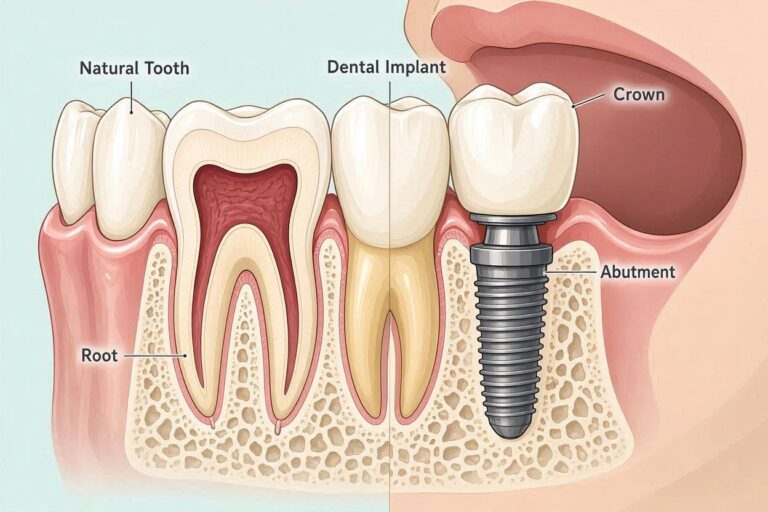
- BLT: The product line, Bone Level Tapered. This describes the implant’s shape and its placement relative to the bone crest.
- 4.1 x 10mm: The dimensions. 4.1 millimeters is the diameter of the implant body. 10 millimeters is the length of the implant.
- RC: The connection type, Regular CrossFit. This is the specific internal geometric connection. The abutment must be an RC abutment.
- SLAactive: The surface technology. Sand-blasted, Large grit, Acid-etched, hydrophilic surface. This is the bioactive coating that accelerates bone healing.
Another example: “NobelActive NP 3.5 x 13mm”
- NobelActive: The product line, known for its self-drilling, aggressive thread design for high primary stability.
- NP: Narrow Platform. The diameter of the connection is designed for narrow spaces.
- 3.5 x 13mm: A narrow, long implant.
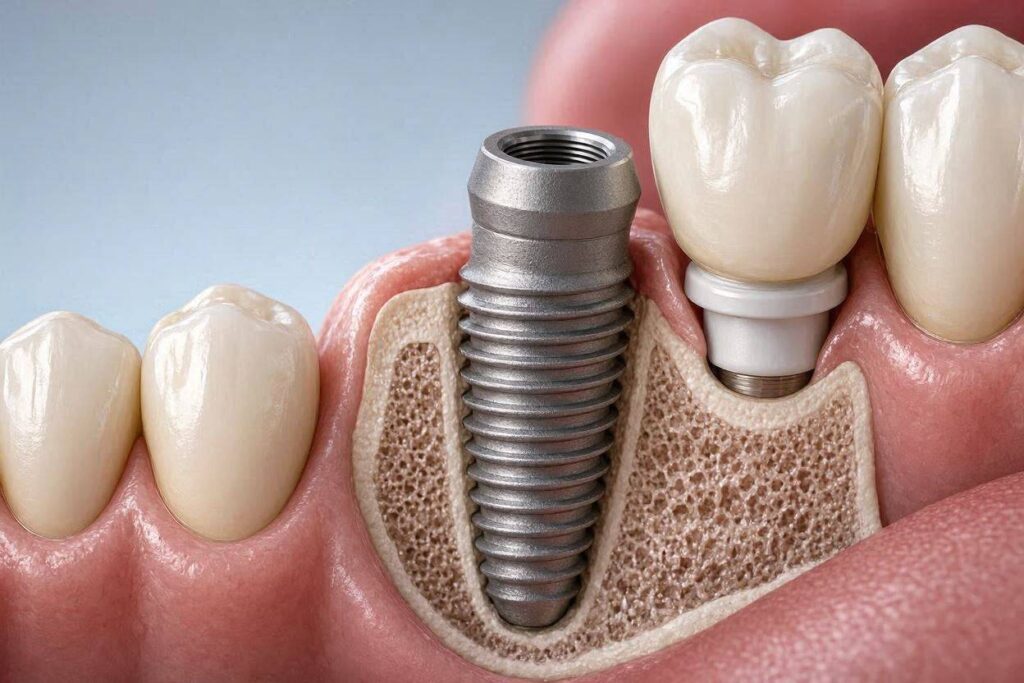
This level of specificity is exactly what you need. It defines the precise part that was placed. If you have this string of codes, you can go to the manufacturer’s “.com” website, navigate to their product catalog, and see a picture of your exact implant. You can download the product brochure, read about the surface technology, and understand the scientific evidence behind it. This is the informed, empowered patient.
Searching for “That Com”: How to Investigate an Unknown Implant
If you have a fragment of a name or a website that you remember, follow these steps. First, type the fragment exactly as you remember it into a search engine, along with the words “dental implant.” For example, search for “biohorizons dental implant,” “megagen implant com,” or “ankylos implant system.” The legitimate manufacturer’s website will almost always be the first organic result. Do not click on paid advertisements at the top of the page, as these can be from third-party resellers of counterfeit or unauthorized parts.
Second, look for the “About Us” or “Company” section of the website. A legitimate implant manufacturer will have a corporate history, a list of global offices, an investor relations page, and a detailed product catalog with scientific references. The website will list the specific regulatory clearances, such as FDA (United States) and CE (European Union) marks. If the website is a single page with a phone number and a “Buy Now” button, you are looking at a reseller of gray-market or cloned products.
Third, search for the implant brand on the U.S. Food and Drug Administration (FDA) database of cleared medical devices. The FDA’s 510(k) Premarket Notification database is searchable. You can enter the brand name and see if the implant has a legitimate 510(k) clearance, which means it is legally marketed in the United States. If the implant is not in the FDA database, it may be an imported product with no U.S. regulatory clearance, a major safety concern.
The Danger of Third-Party “Dot Com” Retailers
A search for a dental implant component can lead you to third-party commercial websites that sell implant parts directly to dentists. You, as a patient, should never purchase any implant component from these sites. The implant and all of its prosthetic parts are prescription medical devices. They must be purchased by a licensed dentist through an authorized, official distributor. Buying a “repair screw” or an “abutment” from an unauthorized online retailer and asking your dentist to install it is dangerous and unethical. The component is an unverified, potentially counterfeit product that will void the manufacturer’s warranty and can cause catastrophic implant failure and infection.
Conclusion
The search for “what dental implant is that com” is a search for the identity of a lifelong medical device, and the answer lies in the manufacturer’s official website for brands like Straumann, Nobel Biocare, or BioHorizons, which is confirmed by the implant passport you must receive after surgery. Your treatment plan contains a specific model code that decodes the exact brand, dimensions, and surface technology, enabling you to research the device on the manufacturer’s product catalog. The implant is not a generic product; it is a proprietary, precision medical device, and your absolute right to know its make, model, and serial number is the foundation of informed consent and long-term patient safety.
FAQ
What is the website for Straumann dental implants?
The official global website for Straumann is straumann.com.
How do I find out what brand my dental implant is?
Ask your dentist for the Implant Passport or the surgical record. The brand, model, diameter, and lot number are documented in your chart and on the implant packaging label.
Can I search my implant by serial number online?
Most manufacturers have a secure portal for dentists to verify serial numbers, but this is not generally a public-facing tool. Your dentist can verify the implant for you.
What if I search the implant name and find nothing?
It may be an older, discontinued product, a very small local manufacturer, or a non-branded implant. Your dentist is the only reliable source for this information.
Is it safe to buy an implant abutment from a website?
No. Implant components are prescription medical devices and must be sourced through authorized dental distributors to ensure authenticity and sterility. A patient should never purchase implant parts online.
Additional Resources
To search the FDA’s database for cleared dental implant devices, visit the FDA 510(k) Premarket Notification database: https://www.accessdata.fda.gov/scripts/cdrh/cfdocs/cfpmn/pmn.cfm