Can Dental Implant Be Extended In Size?
You look at the X-ray with your dentist, and a question forms. The implant is already in your jaw, but something needs to change. Maybe the crown does not quite match the adjacent teeth. Maybe the implant was placed years ago and the gum has receded. Maybe you need more support than the original implant provides. You wonder: can a dental implant be extended in size after it has been placed?
The answer is not a simple yes or no. It depends on what you mean by “extended,” which part of the implant system you want to modify, and why you need the change. This guide explores every dimension of this question, from abutment changes to crown modifications to the fundamental question of whether the implant fixture itself can be enlarged.
Understanding What “Extending” a Dental Implant Means
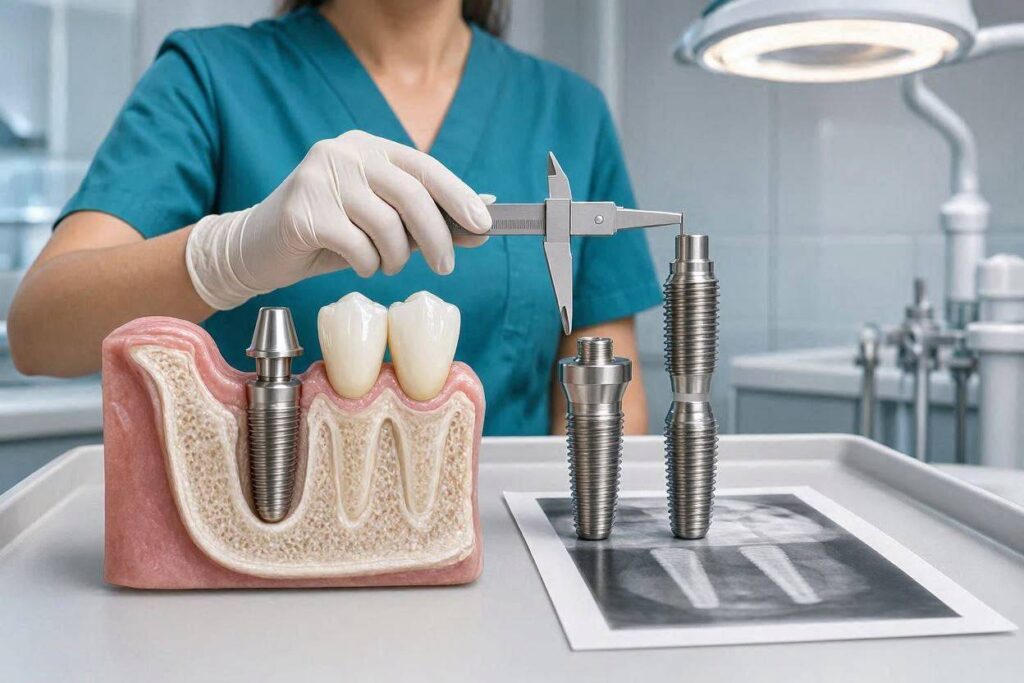
“Dental implant” is not a single piece. It is a system of components. Whether extension is possible depends entirely on which component you want to modify.
The Implant Fixture
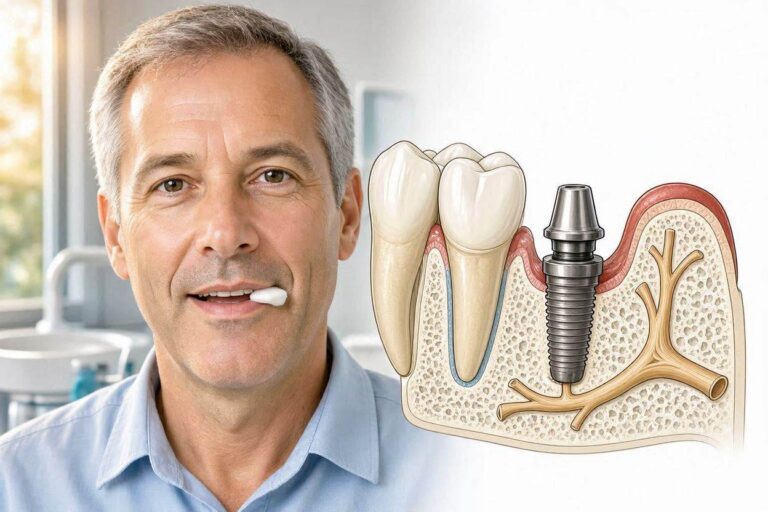
The implant fixture is the titanium or zirconia post surgically embedded in your jawbone. This component undergoes osseointegration, fusing directly with living bone. Once integrated, the fixture cannot be extended, enlarged, or modified without removing it entirely. You cannot add length to an implant that is already in the bone. You cannot increase its diameter. The fixture is a fixed, permanent entity.
The Abutment
The abutment is the connector piece that screws into the implant fixture and extends through the gum to support the visible crown. Abutments can be changed. A different abutment can provide more height, a different angle, or a wider emergence profile. In this sense, the implant system can be “extended” above the gum line.
The Restoration
The restoration is the visible tooth-like portion attached to the abutment or directly to the implant. Crowns, bridges, and dentures can be remade, reshaped, and extended. This is the most modifiable component of the system.
Summary Table
| Component | Can It Be Extended? | How? |
|---|---|---|
| Implant fixture | No | Cannot be enlarged or lengthened in the bone |
| Abutment | Yes | Can be replaced with a taller, wider, or differently angled version |
| Restoration | Yes | Can be remade with different dimensions |
Can the Implant Fixture Itself Be Extended
The short answer is no. The implant fixture, once placed and osseointegrated, cannot be extended, expanded, or enlarged.
Why Fixtures Cannot Be Extended
Osseointegration creates a direct structural bond between living bone and the implant surface. The implant is biologically integrated. You cannot add material to it, lengthen it, or widen it while it remains in the bone. Any attempt to modify the fixture would require removing it, which destroys the osseointegration and the bone surrounding it.
What Happens When the Fixture Is Too Small
If an implant fixture is too short or too narrow for its intended purpose, the options are:
| Scenario | Solution |
|---|---|
| Implant too short for proper support | Remove the implant, allow healing, place a longer implant |
| Implant too narrow for the restoration | Remove the implant, place a wider-diameter implant |
| Implant placed years ago; now bone loss has occurred | Evaluate for peri-implantitis treatment or implant removal and replacement |
| Implant is adequate but crown needs modification | Change the restoration without altering the implant |
Implant Removal and Replacement
When a fixture truly needs to be larger, the only option is removal and replacement. This is a significant decision. The procedure involves:
- Surgical exposure of the implant
- Using specialized instruments to break the osseointegration
- Removing the implant (sometimes with a small amount of surrounding bone)
- Allowing the site to heal (often with bone grafting)
- Waiting for healing (typically 3–6 months)
- Placing a new, larger implant
- Waiting for osseointegration of the new implant
- Fabricating a new restoration
This process takes many months and involves additional surgery and expense. It is not undertaken lightly.
Abutment Changes: Where Extension Happens
The abutment is the component where meaningful dimensional changes can occur without disturbing the implant fixture.
Changing Abutment Height
Abutments come in various heights. If the existing abutment is too short, whether because the original was chosen incorrectly or because gum recession has exposed more of it, a taller abutment can be placed.
Reasons for changing abutment height:
- Gum recession exposing the abutment or implant collar
- Need for more retention for the crown
- Change in the gingival architecture around the implant
- Aesthetic concerns about the implant-to-crown transition
Changing Abutment Width or Emergence Profile
The emergence profile describes how the abutment transitions from the narrow implant platform to the wider contours of a natural tooth. Custom abutments can be fabricated to create a broader, more anatomical emergence profile. This effectively “extends” the implant system in width at the gum level.
Changing Abutment Angle
Some implant systems offer angled abutments. If the implant was placed at a less-than-ideal angle, a different abutment can redirect the path of the restoration. While this does not extend the implant in size, it changes the spatial relationship between the implant and the crown.
Abutment Change Procedure
Changing an abutment is typically straightforward:
- Remove the existing crown (may require cutting it off)
- Unscrew the existing abutment from the implant
- Select or fabricate the new abutment
- Torque the new abutment into place
- Fabricate a new crown to fit the new abutment
- Cement or screw-retain the new crown
This procedure does not require bone healing and can often be completed in a few appointments.
Restoration Modifications and Extensions
The visible crown or bridge can be modified more easily than any other component.
Crown Replacement with Different Dimensions
If the existing crown is too small, too short, or aesthetically unsatisfactory, a new crown can be fabricated. The new crown can be:
- Taller (within the limits of the bite relationship)
- Wider or more contoured (within the limits of the implant position)
- Different in shape to better match adjacent teeth
- Different in color for aesthetic improvement
Adding to an Existing Crown
Adding material to an existing implant crown is generally not recommended. Composite additions may not bond reliably to porcelain or zirconia. The best approach for changing crown dimensions is fabrication of a new crown.
Extending a Bridge
If an implant-supported bridge needs to be extended to replace additional missing teeth, this typically requires:
- Evaluation of whether the existing implants can support the additional load
- Possible placement of additional implants
- Fabrication of a new, longer bridge
- The existing bridge cannot simply be “added to”
Clinical Scenarios: When Extension Is Considered
Scenario 1: Gum Recession Around an Existing Implant
A patient received an implant five years ago. Over time, the gum has receded, exposing the metal collar of the implant or abutment. The implant itself is healthy and well-integrated.
Solution: Change the abutment and crown. A new abutment with a different emergence profile can mask the exposed metal. A new crown with a longer clinical appearance can restore aesthetics. The implant fixture remains unchanged.
Scenario 2: Implant Placed in a Young Patient
A patient received an implant at age 18. Now, at age 25, the surrounding natural teeth have continued to erupt slightly, making the implant crown appear shorter than adjacent teeth.
Solution: Replace the crown. A new crown with greater height can restore harmony with the natural dentition. If significant vertical change is needed, a new abutment and crown combination may be required.
Scenario 3: Need for More Support
A patient with an existing single implant wants to replace additional missing teeth. The existing implant is too small or poorly positioned to support a larger bridge.
Solution: Place additional implants rather than trying to extend the existing one. The new implants provide the needed support, and a new prosthesis connects them all.
Scenario 4: Implant Too Short for Adequate Support
An implant was placed years ago in compromised bone. It is shorter than current standards recommend. The patient experiences mobility or discomfort.
Solution: Remove and replace. This is the scenario where implant extension is truly needed but cannot be performed. The existing implant must be removed, the site prepared, and a longer implant placed.
The Limits of Implant Extension
Understanding what cannot be done is as important as knowing what can.
Physical Limitations
| Desired Change | Feasibility | Alternative |
|---|---|---|
| Make the implant fixture longer in the bone | Not possible | Remove and replace with longer implant |
| Make the implant fixture wider in the bone | Not possible | Remove and replace with wider implant |
| Change the implant’s position in the bone | Not possible | Remove and replace in correct position |
| Change the abutment height | Possible | Replace abutment |
| Change the crown size and shape | Possible | Fabricate new crown |
| Add more teeth to an existing bridge | Sometimes possible | Evaluate implant support; may need additional implants |
Biological Limitations
Even when technical extension is possible, biological factors may limit what can be achieved:
- Bite relationship: The opposing teeth determine how tall a crown can be
- Bone support: Adding load to an implant requires adequate bone
- Gum tissue: The soft tissue must be healthy enough to support changes
- Forces: Larger restorations generate more force; the implant must be able to withstand them
The Role of Custom Abutments in Dimensional Changes
Custom abutments deserve special attention because they are the primary tool for changing the dimensions of the implant system above the bone.
What Custom Abutments Are
A custom abutment is individually designed and fabricated for a specific implant in a specific patient. Unlike stock abutments, which come in standard shapes and sizes, custom abutments are made from a digital or physical impression of the implant and surrounding tissues.
How Custom Abutments Extend Dimensions
Custom abutments can:
- Increase height: Fabricated taller than stock options
- Modify emergence profile: Create a broader or more gradual transition from implant to crown
- Change angulation: Correct for implant positioning
- Support larger restorations: Provide a more substantial foundation for the crown
The Fabrication Process
- Impression or digital scan of the implant and surrounding tissues
- Design of the custom abutment using CAD/CAM software
- Milling from titanium, zirconia, or other materials
- Finishing and polishing
- Delivery and torquing into the implant
- Crown fabrication on the new abutment
Implant Design and Future Modifications
Some implant systems are more amenable to future modifications than others.
Platform-Switched Implants
Platform switching uses an abutment narrower than the implant platform. This design may preserve bone levels better than traditional designs. When changes are needed, the platform-switched interface may offer flexibility in abutment selection.
Conical Connection Implants
Implants with conical (Morse taper) internal connections provide a secure, stable interface. They typically allow for abutment changes without compromising the connection integrity.
External Hex Implants
Older external hex designs may be more challenging to modify. The external hex is more susceptible to wear, and repeated abutment changes may affect the connection stability.
One-Piece Implants
Some implant systems are one-piece designs where the implant and abutment are a single unit. With these systems, changing the abutment is not possible without removing the entire implant. Modifications are limited to the crown portion only.
What to Discuss with Your Dentist
If you are considering modifying an existing implant restoration, bring these questions to your consultation.
Questions to Ask
- Which component needs to be changed: the crown, the abutment, or the implant itself?
- Is the implant fixture healthy and adequately integrated?
- What are the limitations of my current implant system?
- Can a custom abutment achieve what I need?
- What is the risk of disturbing the implant during abutment removal?
- How long will the process take?
- What are the costs compared to leaving things as they are?
- What are the consequences of not making any changes?
Information Your Dentist Needs
- When was the implant placed?
- Who placed it? (Records from the original surgeon are helpful)
- What implant system was used? (Brand, model, size if known)
- What symptoms or concerns prompted you to seek modification?
- Any changes in your medical history since the implant was placed?
- Any medications that affect bone metabolism or healing?
Alternatives to Extending an Implant
When extension is not possible or advisable, alternative approaches may address the underlying problem.
Soft Tissue Grafting
If gum recession is the aesthetic concern, soft tissue grafting can restore gum volume around the implant. This does not extend the implant but can improve the appearance of the implant restoration.
Orthodontic Extrusion of Adjacent Teeth
If the concern is that natural teeth have erupted and made the implant crown look short, orthodontic intrusion (pushing teeth back up into the bone) may be possible in some cases.
Additional Implant Placement
If the problem is insufficient support, placing additional implants is often preferable to attempting to extend or overload existing ones.
Accepting the Current Situation
Sometimes, the risks and costs of modification outweigh the benefits. If the implant is functional and healthy, accepting minor aesthetic imperfections may be the wisest choice.
The Cost Perspective
Modifying implant components involves costs that differ from initial placement.
| Modification | Approximate Cost Range | Factors Affecting Cost |
|---|---|---|
| New crown only | $1,000–$3,000 | Material, laboratory fees, complexity |
| New abutment and crown | $1,500–$4,000 | Custom vs. stock abutment, material |
| Implant removal and replacement | $3,000–$8,000+ | Bone grafting needs, number of procedures |
| Soft tissue grafting | $500–$2,000 | Extent of grafting, number of sites |
These are approximate ranges. Actual costs vary by location, provider, and specific clinical circumstances.
Conclusion
A dental implant fixture cannot be extended in size once it has osseointegrated into the jawbone. The titanium or zirconia post is a fixed entity that cannot be lengthened or widened. However, the abutment and the visible restoration can be changed to modify the dimensions of the implant system above the gum line. A new abutment can provide greater height, a different emergence profile, or corrected angulation. A new crown can be taller, wider, or differently shaped. When the implant fixture itself is truly inadequate, the only option is removal and replacement with a larger implant, a procedure that requires significant additional surgery and healing time. Understanding which component needs modification and what the available options are allows informed decision-making in partnership with your dental team.
Frequently Asked Questions
Can you add length to an existing dental implant?
No. The implant fixture in the bone cannot be lengthened. If a longer implant is needed, the existing one must be removed and replaced.
Can an implant crown be made taller?
Yes. A new crown can be fabricated with greater height, within the limits of your bite relationship. This does not change the implant fixture, only the visible restoration.
What if my implant is too narrow?
A narrow implant fixture cannot be widened. If a wider implant is needed, the existing one must be surgically removed and replaced after healing.
Can the abutment be changed without removing the implant?
Yes. Abutments are designed to be removable and replaceable. The existing abutment can be unscrewed and a new one placed without disturbing the osseointegrated implant.
Does gum recession mean my implant needs to be extended?
Not necessarily. Gum recession may be addressed with a new abutment and crown, soft tissue grafting, or a combination. The implant fixture itself rarely needs to be changed for gum recession.
Additional Resources
- American Academy of Implant Dentistry: www.aaid.com
- American College of Prosthodontists: www.prosthodontics.org
- International Team for Implantology: www.iti.org