Can You Sleep With Mini Dental Implants?
You pull the covers up, settle into your pillow, and then pause. A question surfaces as your tongue instinctively finds the new mini implants in your mouth. Can you sleep with these? Will rolling onto your side dislodge them? Will clenching during dreams damage them? Are there special precautions you should take?
These questions reflect a common anxiety among new mini dental implant patients. The implants feel foreign at first. The idea of losing consciousness for eight hours while these small metal posts sit in your jaw can feel unsettling. This guide addresses every aspect of sleeping with mini dental implants, from the first night after surgery through long-term nighttime care.
The Short Answer
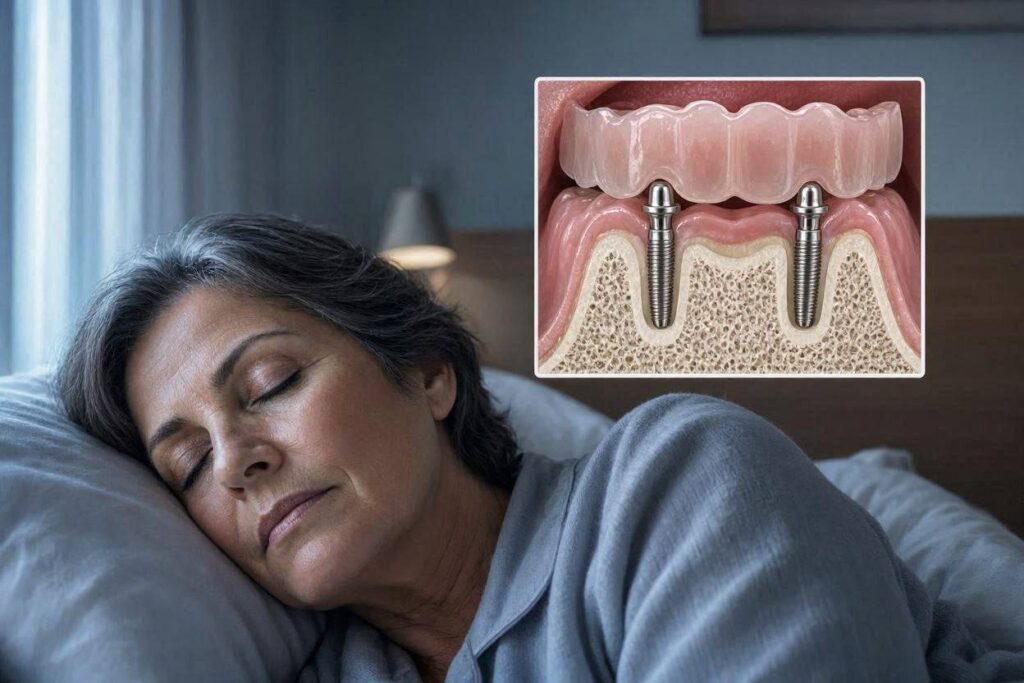
Yes, you can sleep with mini dental implants. In fact, you are supposed to sleep with them. Mini dental implants are designed to remain in your mouth permanently, 24 hours a day, just like natural teeth. They do not need to be removed for sleeping, and you should not attempt to remove them.
The real question is not whether you can sleep with them but how to sleep safely and comfortably, particularly during the initial healing period. The answer depends on whether your mini implants are supporting a fixed prosthesis (permanently attached) or a removable overdenture (which snaps on and off).
Understanding Mini Dental Implants and Sleep
Before discussing sleep specifically, you need clarity on what mini dental implants are and how they function.
What Are Mini Dental Implants
Mini dental implants are smaller-diameter versions of conventional dental implants. While standard implants typically measure 3.5 to 6 millimeters in diameter, mini implants measure less than 3 millimeters, often between 1.8 and 2.9 millimeters.
They consist of:
- A titanium post with a screw-like threaded body
- A ball-shaped or O-ring attachment head that protrudes from the gum
- An abutment portion that the prosthesis connects to
Mini implants are most commonly used to stabilize lower dentures, though they have other applications as well.
Fixed vs. Removable Restorations
How mini implants interact with sleep depends on what they support:
| Restoration Type | Description | Sleep Implications |
|---|---|---|
| Fixed prosthesis | Teeth permanently attached to implants | Implants and teeth remain in place during sleep |
| Removable overdenture | Denture snaps onto implants for stability | Denture is typically removed at night; implants remain in the jaw |
The Critical Distinction
Mini dental implants themselves are always fixed in the bone. They are not removed. The prosthesis attached to them may be fixed (not removable by the patient) or removable (taken out for cleaning and sleep).
Understanding this distinction is essential. The implants stay in. The question is whether the teeth attached to them stay in during sleep.
Sleeping After Mini Implant Surgery: The First Nights
The immediate post-surgical period requires specific sleep precautions.
The First 48 Hours
During the first two nights after mini implant placement, follow these guidelines:
- Head elevation: Sleep with your head elevated on two to three pillows. Keeping your head above your heart reduces blood pressure in the surgical area, which decreases swelling, bleeding, and throbbing discomfort.
- Position: Sleep on your back if possible. This avoids pressure on the surgical sites and keeps the implants protected.
- Ice before bed: Apply cold therapy to your cheeks for 20 minutes before sleeping to reduce swelling during the night.
- Pain management: Take prescribed or recommended pain medication as directed before bed to ensure comfortable sleep.
- No prosthesis at night (if removable): If your mini implants support a removable overdenture, your surgeon will likely instruct you to leave it out for the first several nights to allow healing.
Avoiding Pressure on the Surgical Site
The most important principle during early healing is protecting the implants from pressure:
- Do not sleep face-down
- If you must sleep on your side, sleep on the side opposite the implants if they are unilateral
- Use a soft pillow that conforms to your head without creating pressure points
- Consider using a travel pillow to keep your head positioned on your back
Managing Nighttime Bleeding
Some oozing may occur during the first night. To manage this:
- Place an old pillowcase on your pillow in case of slight bleeding
- Keep gauze pads on your nightstand
- If bleeding occurs, bite gently on moistened gauze for 20 minutes
- Do not sleep with gauze in your mouth (choking hazard)
Sleeping with Mini Implants Long-Term
Once the surgical sites have healed, sleeping with mini implants becomes routine.
For Fixed Prostheses
If your mini implants support permanently attached teeth, sleeping with them is identical to sleeping with natural teeth. No special precautions are needed beyond normal oral hygiene before bed.
The implants are firmly integrated in your jawbone. Sleeping position will not affect them. Normal sleep movements, including rolling over and side sleeping, pose no risk.
For Removable Overdentures
If your mini implants retain a removable overdenture, the standard recommendation is to remove the denture at night.
Why nighttime removal is recommended:
- Allows the gum tissue to rest and recover from daytime pressure
- Reduces the risk of fungal infections under the denture
- Permits thorough cleaning of both the denture and the implant abutments
- Gives the implants a period without functional load
- May reduce nighttime clenching forces on the implants
Can you sleep with the overdenture in place?
Some patients choose to sleep with their overdentures in place for personal comfort or convenience. While occasional nighttime wear is generally tolerated, consistent nighttime wear can:
- Increase the risk of tissue inflammation
- Promote fungal growth (denture stomatitis)
- Accelerate wear on the denture and its attachments
- Potentially increase stress on the implants from nocturnal clenching
Discuss your preferences with your dentist. They may recommend nighttime removal for long-term tissue health while acknowledging that occasional nighttime wear is acceptable.
Nighttime Clenching, Grinding, and Mini Implants
Bruxism, the nighttime clenching and grinding of teeth, raises specific concerns for implant patients.
The Concern
Natural teeth have a periodontal ligament that acts as a shock absorber, cushioning the forces of clenching and grinding. Dental implants lack this ligament. They are rigidly fixed to bone. Excessive forces from bruxism transmit directly to the bone-implant interface, potentially causing:
- Screw loosening
- Prosthesis fracture
- Bone loss around the implant
- Implant failure in severe cases
Are Mini Implants More Vulnerable?
Mini implants, with their smaller diameter, have less surface area for bone contact and lower resistance to fracture than standard implants. They may be more susceptible to overload from bruxism than larger-diameter implants.
Protection Strategies
| Strategy | Description |
|---|---|
| Night guard | Custom-fabricated appliance that protects implants and prosthesis from grinding forces |
| Occlusal adjustment | Ensuring even bite forces across all teeth and implants |
| Stress-breaker attachments | Components in the prosthesis that absorb some occlusal forces |
| Muscle relaxants or Botox | In selected cases, reducing bruxism at its muscular source |
If you know you grind your teeth at night, discuss this with your implant dentist before treatment begins. A night guard should be part of your treatment plan from the start.
Practical Sleep Tips for Mini Implant Patients
These tips apply to different stages of the implant journey.
Pre-Surgery Preparation
- Arrange pillows for post-surgical head elevation
- Fill any prescriptions for pain medication so they are ready
- Prepare ice packs in advance
- Plan to sleep on your back; practice if you are not accustomed to it
- Place a glass of water and your medications on the nightstand
First Week After Surgery
- Maintain head elevation for at least 3 nights
- Take pain medication on schedule, including before bed
- Apply cold therapy before sleep for the first 2 nights
- Keep a towel on your pillow in case of minor oozing
- Set an alarm if you need to take medication during the night
Long-Term Sleep Habits
- Brush and clean around your implants before bed
- Remove and clean your overdenture nightly if applicable
- Store removable prostheses in water or cleaning solution overnight
- Wear your night guard if prescribed
- Maintain regular dental check-ups to monitor implant health
Common Sleep-Related Concerns and Solutions
Concern: “I will roll onto my face and damage the implants.”
Once healed, your implants are integrated into the bone. Rolling onto your face during sleep will not damage them. The forces of normal sleep movement are far less than the forces of chewing, which implants are designed to withstand.
During the first week of healing, conscious attention to sleep position is appropriate. After that, your body’s natural protective mechanisms will prevent you from causing harm during sleep.
Concern: “My implant feels loose when I wake up.”
If you have a removable overdenture, the denture itself may feel loose in the morning due to changes in saliva flow and tissue hydration during sleep. The implants in the bone should not feel loose.
True implant mobility is a serious concern that warrants immediate dental evaluation. A successfully integrated implant should never feel loose.
Concern: “I wake up with a bad taste near the implants.”
This may indicate:
- Accumulated plaque and bacteria overnight (improve bedtime cleaning)
- Food debris trapped around the implants (use interdental brushes before bed)
- Early signs of peri-implant inflammation (schedule an evaluation)
- Normal morning breath
Improving bedtime oral hygiene often resolves this issue. Persistent bad taste warrants professional evaluation.
Concern: “My jaw aches in the morning.”
Morning jaw pain may indicate nighttime clenching or grinding that you are not aware of during sleep. Discuss this with your dentist. A night guard may be indicated.
The Relationship Between Sleep Quality and Implant Success
Sleep and implant healing are connected in ways that patients may not appreciate.
Sleep and Healing
Quality sleep supports every aspect of healing:
- Growth hormone, essential for tissue repair, is released primarily during deep sleep
- Immune function depends on adequate sleep
- Cellular repair processes accelerate during sleep
- Pain perception is modulated by sleep quality
Poor sleep in the days following implant surgery can impair healing. Prioritizing sleep is a meaningful part of post-operative care.
Implant Discomfort and Sleep Disruption
Pain and discomfort from recent implant surgery can disrupt sleep, creating a cycle where poor sleep impairs healing and prolonged discomfort further disturbs sleep.
Breaking this cycle:
- Take pain medication as prescribed before bed during the first few days
- Use cold therapy to reduce swelling, which reduces pain
- Maintain head elevation to minimize throbbing
- Address anxiety about the implants through information and communication with your surgeon
Special Considerations for Different Implant Configurations
Single Mini Implants
A single mini implant supporting one tooth requires the same sleep considerations as any single implant. Once healed, sleep normally. Wear a night guard if you have bruxism.
Multiple Mini Implants Supporting a Fixed Bridge
Multiple implants splinted together with a fixed bridge distribute forces across all the implants. This is protective against the forces of nocturnal clenching. Sleep considerations are the same as for any fixed implant restoration.
Mini Implants Retaining an Overdenture
This is the most common application of mini implants. The standard recommendation is:
- Remove the overdenture at night
- Clean the implants and abutments before bed
- Store the overdenture appropriately
- Sleep without the overdenture in place
- Replace the overdenture in the morning after cleaning
Conclusion
You can and should sleep with your mini dental implants, as they are permanently fixed in your jawbone. During the first few nights after surgery, sleep with your head elevated on pillows, rest on your back when possible, and manage discomfort with prescribed medication and cold therapy. For removable overdentures supported by mini implants, remove the prosthesis at night to allow tissue rest and maintain hygiene. Once healing is complete, sleeping with mini implants requires no special precautions beyond good bedtime oral hygiene and, if you grind your teeth, consistent use of a night guard. The implants remain secure through all normal sleep movements, just as natural teeth do.
Frequently Asked Questions
Can I sleep on my side after mini implant surgery?
During the first few nights, sleeping on your back is ideal. If you must sleep on your side, choose the side opposite the surgical area if the implants are unilateral. After the first week, side sleeping is generally safe.
Do I need to remove my overdenture every night?
The standard recommendation is yes. Nighttime removal allows gum tissue to rest, reduces infection risk, and permits thorough cleaning. Occasional nighttime wear is acceptable but should not become habitual.
Can I use a night guard with mini implants?
Yes. A properly designed night guard protects both mini implants and their restorations from bruxism forces. Your dentist should fabricate a guard specifically designed for your implant configuration.
What if I accidentally slept with my removable overdenture in?
A single night with the overdenture in place is unlikely to cause harm. Resume your normal routine of nighttime removal the following night. Monitor your gums for signs of irritation.
Will mini implants fall out during sleep?
No. Once osseointegrated, mini implants are firmly anchored in the jawbone. Normal sleep movements cannot dislodge them. If an implant feels loose, contact your dentist immediately, as this indicates a problem with integration.
Additional Resources
- American Academy of Implant Dentistry: www.aaid.com
- American College of Prosthodontists: www.prosthodontics.org
- International Congress of Oral Implantologists: www.icoi.org