Can You Vape After Dental Implants?
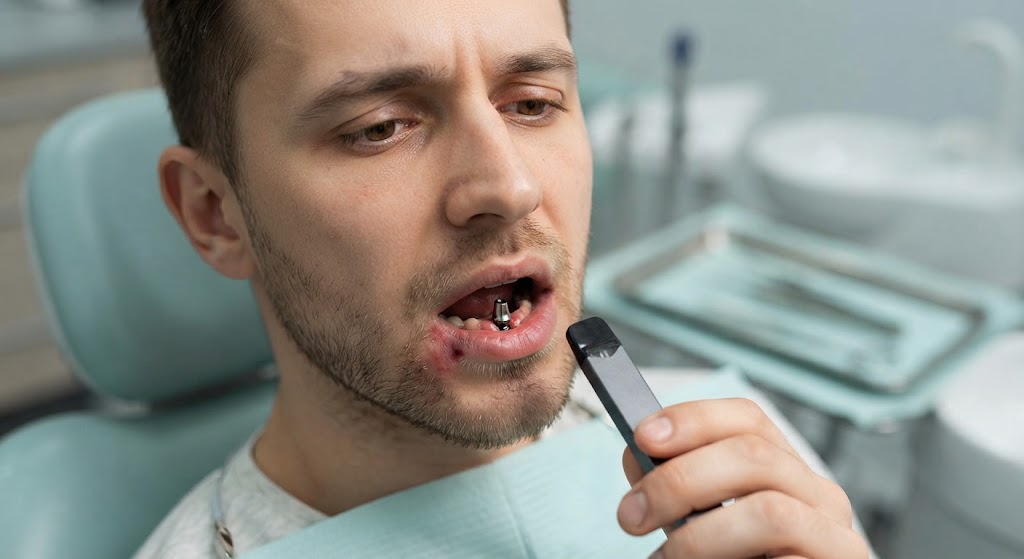
You reach for your vape, then pause. The implant surgery was just days ago. The post-operative instructions warned against smoking, but does vaping count? The vapor feels less harsh than cigarette smoke. It lacks the tar, the combustion, the thousands of chemicals that make traditional cigarettes so harmful. Surely it must be safer for healing, you think. Maybe the warnings apply only to real cigarettes.
This line of thinking is common, and it is dangerously wrong. Vaping after dental implant surgery poses serious risks to healing, jeopardizes the success of your implant, and can lead to complications ranging from delayed recovery to complete implant failure. This guide explains exactly why vaping is harmful after implant surgery, how it affects each stage of healing, and what you should do instead.
The Short Answer
No, you should not vape after dental implant surgery. Vaping, like smoking, significantly impairs healing, increases the risk of infection, reduces blood flow to the surgical site, and dramatically raises the likelihood of implant failure. The recommendation to avoid smoking after implant surgery applies equally to vaping. Most surgeons recommend abstaining from all nicotine products and inhalation of any foreign substances for at least 2 to 8 weeks after surgery, and preferably quitting permanently.
Why Vaping Is Not a Safe Alternative to Smoking After Surgery
Many patients believe vaping is safer than smoking in the context of healing. This belief is based on a misunderstanding of what makes smoking harmful to surgical recovery.
What Makes Smoking Harmful to Healing
Cigarette smoke harms healing through multiple mechanisms:
| Harmful Component | Effect on Healing |
|---|---|
| Nicotine | Potent vasoconstrictor; reduces blood flow by up to 30–50% |
| Carbon monoxide | Binds to hemoglobin, reducing oxygen-carrying capacity |
| Tar and particulates | Physical irritants; deposit on tissues |
| Heat | Thermal injury to oral tissues |
| Thousands of chemicals | Many impair immune function and wound healing |
What Vaping Shares with Smoking
Vaping eliminates combustion, which removes carbon monoxide and many of the chemicals found in cigarette smoke. However, vaping retains the single most harmful component for surgical healing: nicotine.
Nicotine in vaping:
- Most vape liquids contain nicotine, often at concentrations comparable to or higher than cigarettes
- Nicotine salts, used in many pod-based systems, deliver nicotine more efficiently
- A single JUUL pod can contain as much nicotine as a pack of cigarettes
- Even “nicotine-free” vape liquids sometimes contain trace amounts
Other harmful components in vapor:
| Component | Potential Harm |
|---|---|
| Propylene glycol | Irritant to mucous membranes; may cause inflammation |
| Vegetable glycerin | Creates a coating on oral tissues |
| Flavoring compounds | Many are irritants; some are cytotoxic to healing cells |
| Heavy metals | Trace amounts from heating coils |
| Ultrafine particles | Deposit in tissues; cause inflammation |
The Bottom Line
Vaping eliminates some harmful components of cigarette smoke but retains the most critical one for implant healing: nicotine. Additionally, the vapor itself contains substances that irritate healing tissues. Vaping is not a safe alternative to smoking after implant surgery.
How Vaping Affects Each Stage of Implant Healing
To understand the full impact of vaping, you need to understand how it interferes with every phase of the healing process.
The Immediate Post-Operative Period (Days 1–7)
During the first week, the surgical site is most vulnerable.
Nicotine’s effects during this critical period:
- Vasoconstriction: Nicotine constricts blood vessels, reducing blood flow to the gum and bone. Healing tissues need maximum blood flow to deliver oxygen, nutrients, and immune cells. Reduced blood flow starves the healing wound.
- Reduced oxygen: With less blood flow comes less oxygen. Oxygen is essential for collagen synthesis, bacterial killing by immune cells, and the formation of new blood vessels.
- Impaired immune function: Nicotine suppresses the activity of neutrophils and macrophages, the immune cells responsible for clearing bacteria and debris from the surgical site.
- Dehydration: The propylene glycol in vapor absorbs moisture, potentially drying oral tissues and interfering with the moist environment wounds need to heal.
The suction effect:
The physical act of drawing on a vape device creates negative pressure in the mouth. This suction can dislodge the blood clot protecting the surgical site, leading to:
- Bleeding that had stopped resuming
- Exposure of underlying bone (painful and delays healing)
- Entry of bacteria into the wound
- A condition analogous to dry socket after extractions
The Soft Tissue Healing Phase (Weeks 1–3)
During this phase, the gum tissue should be closing and strengthening around the implant.
How vaping interferes:
| Healing Process | How Vaping Disrupts It |
|---|---|
| Collagen synthesis | Nicotine impairs fibroblast function; less collagen produced |
| Epithelial closure | Reduced cell migration; wound stays open longer |
| Angiogenesis (new blood vessel formation) | Nicotine inhibits new vessel growth |
| Immune surveillance | Impaired; higher infection risk |
| Salivary function | Vaping alters saliva composition; reduced protective factors |
The result is delayed wound closure, weaker scar tissue, and a longer window of vulnerability to infection.
The Osseointegration Phase (Weeks 3–26)
Osseointegration is the biological process by which bone cells attach directly to the implant surface. This is the defining process that determines implant success or failure.
Vaping’s impact on osseointegration:
- Reduced bone blood flow: Nicotine-induced vasoconstriction reduces blood flow in the bone surrounding the implant. Bone is already a tissue with modest blood supply compared to soft tissues; further reduction is particularly damaging.
- Osteoblast suppression: Nicotine directly inhibits the activity of osteoblasts, the cells responsible for building new bone. Studies show reduced osteoblast proliferation, differentiation, and function in the presence of nicotine.
- Increased osteoclast activity: Some evidence suggests nicotine increases the activity of osteoclasts, the cells that break down bone. This creates an unfavorable balance of bone formation versus resorption.
- Altered bone metabolism: Nicotine affects calcium metabolism and vitamin D processing, both essential for bone health.
The clinical result:
Research consistently shows that nicotine users, whether from smoking or vaping, have:
- Significantly higher implant failure rates (2–3 times higher than non-users)
- Slower osseointegration
- Poorer bone-to-implant contact
- Higher risk of early implant mobility
- Increased long-term marginal bone loss
Research Evidence
The evidence against nicotine use during implant healing is extensive and consistent.
What Studies Show
A landmark systematic review published in the Journal of Dental Research found that smokers had implant failure rates 2.23 times higher than non-smokers. Studies specifically examining nicotine’s effects on bone healing demonstrate:
- Reduced bone density around implants in nicotine-exposed animals
- Lower removal torque values (a measure of osseointegration strength) in nicotine groups
- Impaired new bone formation in grafted sites
- Significantly higher complication rates
While vaping-specific studies are fewer (due to the relative novelty of vaping), the effects of nicotine are well-established regardless of delivery method. Nicotine is nicotine, whether it comes from a cigarette, a vape, a patch, or gum. The vasoconstrictive and bone-inhibiting effects are pharmacological properties of the molecule itself.
Vaping-Specific Research
Emerging research on vaping and oral health paints a concerning picture:
- Vapor exposure alters the oral microbiome, potentially favoring pathogenic bacteria
- Vaping is associated with increased inflammatory markers in oral tissues
- Flavoring compounds in vape liquids have been shown to be cytotoxic to oral cells in laboratory studies
- Vapers show altered wound healing in oral tissues compared to non-users
Nicotine Replacement and Healing: The Uncomfortable Truth
Some patients ask whether they can use nicotine patches or gum as a “safe” alternative while healing. This is a logical question, but the answer is not what many patients hope to hear.
Nicotine Is the Problem
The primary harm to implant healing comes from nicotine itself, not from the other components of cigarette smoke. Nicotine in any form causes vasoconstriction and impairs bone healing.
Nicotine replacement products and healing:
| Product | Contains Nicotine | Implant Healing Risk |
|---|---|---|
| Nicotine patch | Yes | High |
| Nicotine gum | Yes | High (plus physical irritation from chewing) |
| Nicotine lozenge | Yes | High |
| Nicotine inhaler | Yes | High (plus physical irritation) |
| Nicotine-free vaping | No (if truly nicotine-free) | Lower but not zero (other irritants) |
The Surgeon’s Dilemma
Many surgeons recognize that asking a nicotine-dependent patient to quit cold-turkey before surgery is unrealistic. Some adopt harm-reduction approaches, encouraging patients to reduce nicotine intake as much as possible rather than demanding complete abstinence. However, the ideal from a healing perspective is complete nicotine cessation for at least 2 weeks before and 8 weeks after surgery.
The Suction Problem
Beyond the chemical effects of nicotine, the physical act of vaping creates mechanical problems for healing.
Suction and the Blood Clot
Drawing on a vape device requires suction. This suction creates negative pressure in the mouth, which can:
- Dislodge the protective blood clot from the surgical site
- Cause bleeding to restart
- Introduce bacteria into the open wound
- Delay the formation of granulation tissue
The suction risk is highest in the first 48–72 hours but remains a concern for at least the first week.
Dry Socket Risk
If your implant surgery involved tooth extraction (as many implant procedures do), the suction from vaping significantly increases the risk of dry socket. Dry socket occurs when the blood clot in the extraction socket is dislodged, exposing the underlying bone and nerve endings. It is exquisitely painful and delays overall healing.
Oral Pressure Changes
Even after the initial clot is secure, the pressure changes from vaping can:
- Disturb delicate new tissue formation
- Cause micro-movement at the healing implant site
- Stress suture lines
The Heat Factor
While vapor is cooler than cigarette smoke, it is not necessarily cool enough to be harmless to healing tissues.
Temperature of Vapor
The temperature of vapor at the mouthpiece varies by device and settings but can range from 100°F to over 400°F, though it cools rapidly. Even moderately warm vapor can:
- Increase local blood flow in a way that promotes swelling
- Irritate healing mucosal tissues
- Contribute to tissue dryness
If You Absolutely Cannot Stop: Harm Reduction
The strongest recommendation is complete abstinence from vaping for at least 8 weeks after implant surgery. However, if you feel unable to stop completely, these harm-reduction strategies may reduce risk (though they do not eliminate it):
Minimizing Harm
| Strategy | Rationale | Effectiveness |
|---|---|---|
| Reduce nicotine concentration | Less vasoconstriction | Partial benefit |
| Reduce frequency of use | Less total nicotine exposure | Partial benefit |
| Use lowest possible power setting | Cooler, less dense vapor | Minimal benefit |
| Avoid direct draw; take gentle puffs | Reduce suction pressure | Partial benefit for clot protection |
| Rinse mouth with water after each use | Clear residual vapor components | Minimal benefit |
| Use nicotine-free liquid | Eliminates nicotine effects | Better, but other irritants remain |
| Switch to nicotine patch temporarily | Eliminates oral exposure | Does not eliminate nicotine’s systemic effects on bone |
None of these strategies make vaping safe after implant surgery. They are harm-reduction measures of last resort for patients who would otherwise vape without any modification.
Timeline for Resuming Vaping
If you plan to resume vaping after the critical healing period, understanding the timeline helps you minimize risk.
Recommended Abstinence Timeline
| Time After Surgery | Recommendation | Rationale |
|---|---|---|
| First 48–72 hours | Absolute abstinence | Clot stabilization; highest risk period |
| First week | Absolute abstinence | Soft tissue closure; suction risk remains |
| Weeks 2–4 | Strongly recommended abstinence | Soft tissue maturation; early bone healing |
| Weeks 4–8 | Strongly recommended abstinence | Active osseointegration; bone formation |
| After 8 weeks | Reduced risk but still not ideal | Osseointegration continues; lower risk if resumed |
| After 3–6 months | Implant fully integrated; vaping still harmful to long-term health | Lower risk to implant specifically |
The Honest Truth
Many patients resume vaping well before the 8-week mark. Those who do should understand they are increasing their risk of implant complications and failure. The risk is dose-dependent: more frequent vaping with higher nicotine concentrations causes more harm than occasional use of lower-nicotine products.
The Impact on Long-Term Implant Success
The effects of vaping extend beyond the initial healing period.
Long-Term Risks for Vapers with Implants
| Risk | Mechanism |
|---|---|
| Peri-implantitis | Nicotine impairs immune response; higher bacterial colonization |
| Progressive bone loss | Ongoing vasoconstriction and altered bone metabolism |
| Soft tissue recession | Impaired blood flow to gum tissue |
| Implant failure years later | Cumulative effects on bone health |
Vapers with dental implants face a higher lifetime risk of implant complications than non-users, even after successful initial integration.
What Surgeons Want You to Know
Implant surgeons see the consequences of vaping firsthand.
The Reality in Practice
Surgeons report:
- Higher complication rates among vapers, including infection and delayed healing
- More implant failures in patients who continue nicotine use
- Frustration when patients invest significant money and time in implants but compromise outcomes through vaping
- The difficulty of treating complications that might have been prevented with abstinence
The Investment You Are Protecting
Dental implants represent a significant investment. The financial cost, the time commitment, and the surgical experience all represent resources you have committed to improving your oral health. Vaping during healing puts that entire investment at risk.
Strategies for Quitting or Reducing During Healing
If you want to give your implant the best chance of success, consider these strategies.
Before Surgery
- Begin reducing nicotine consumption weeks before surgery
- Consult your primary care physician about cessation aids
- Consider counseling or support groups
- Set a quit date before your surgery date
After Surgery
- Remove all vaping devices and supplies from your immediate environment
- Tell your support network about your intention to abstain
- Use the post-surgical period as an opportunity to quit permanently
- Identify triggers and plan alternative responses
- Consider the money saved by not vaping, in addition to protecting your implant investment
Nicotine Cessation Resources
| Resource | Description |
|---|---|
| Quitlines (1-800-QUIT-NOW) | Free telephone counseling |
| Smokefree.gov | Online resources and support |
| Mobile apps | QuitGuide, quitSTART, others |
| Healthcare provider | Medications to assist with cessation |
| Support groups | In-person and online communities |
Conclusion
You should not vape after dental implant surgery. Vaping delivers nicotine, the same vasoconstrictive, bone-healing-impairing compound found in cigarettes, while the physical act of drawing on a vape device creates suction that can dislodge the protective blood clot. Nicotine significantly reduces blood flow to healing tissues, suppresses osteoblast function, impairs immune response, and increases implant failure rates by two to three times compared to non-users. Complete abstinence from all nicotine products for at least 8 weeks after surgery provides the best chance for successful implant integration. If you cannot stop completely, harm-reduction strategies offer partial protection, but no amount of vaping is truly safe during the critical healing period. Consider this surgery an opportunity to quit permanently, protecting not only your implant investment but your long-term oral and overall health.
Frequently Asked Questions
Is vaping worse than smoking for implant healing?
Both are harmful. Vaping delivers comparable amounts of nicotine with fewer additional toxins than cigarette smoke, but nicotine itself is the primary problem for implant healing. Neither is safe after implant surgery.
Can I vape without nicotine after dental implant surgery?
Nicotine-free vaping eliminates the vasoconstrictive effects of nicotine but still exposes healing tissues to propylene glycol, vegetable glycerin, flavoring compounds, and the physical effects of suction. It is less harmful than nicotine-containing vaping but still not recommended.
How long after dental implant surgery can I vape?
The minimum recommended abstinence period is 8 weeks, covering the critical phases of soft tissue healing and early osseointegration. Longer abstinence provides greater protection.
What happens if I vape after implant surgery?
Possible consequences include delayed healing, wound dehiscence, infection, failed osseointegration, and implant failure. The risk is dose-dependent, but any nicotine exposure increases the likelihood of complications.
Can I use nicotine patches instead of vaping after surgery?
Nicotine patches still deliver nicotine systemically, causing vasoconstriction and impaired bone healing. While they eliminate the oral and suction-related risks, they do not protect against the systemic effects of nicotine on osseointegration.
Additional Resources
- American Academy of Implant Dentistry: www.aaid.com
- Smokefree.gov: www.smokefree.gov
- National Institute of Dental and Craniofacial Research: www.nidcr.nih.gov