Why Do People Get Dental Implant?
A missing tooth is never just a missing tooth. It is a gap in a smile, a limitation on a menu, a hesitation in a conversation. The decision to pursue a dental implant is rarely made lightly. It involves cost, time, surgery, and commitment. Yet millions of people around the world choose this path every year. Understanding why they make that choice reveals the profound impact that tooth loss has on a human life and the equally profound restoration that an implant provides. This article explores the full spectrum of reasons people get dental implants, from the obvious to the subtle, from the functional to the deeply personal.
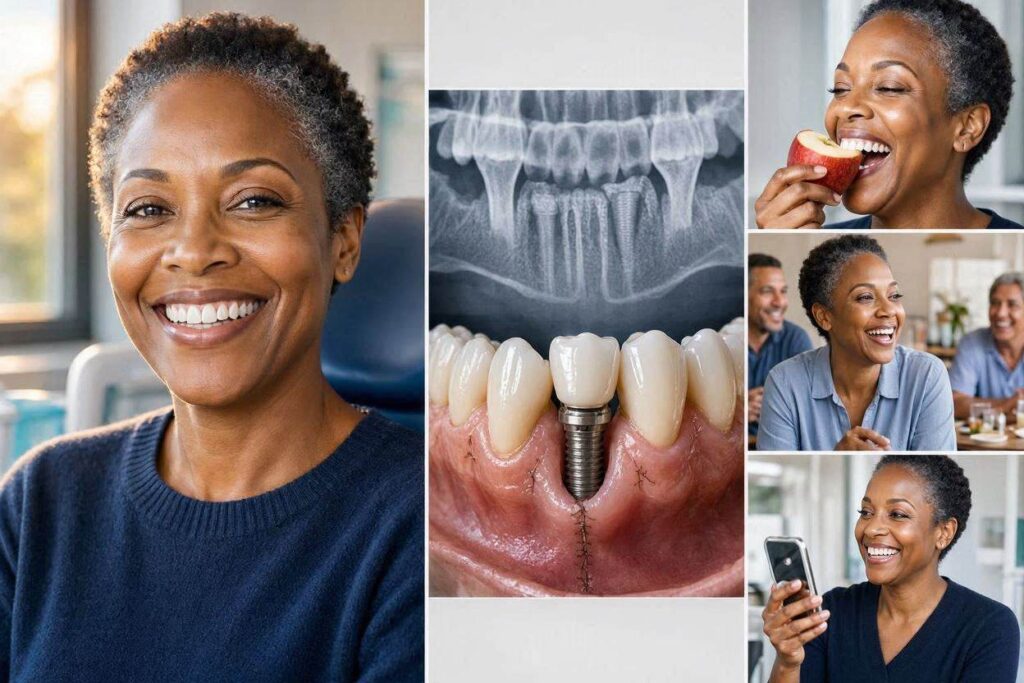
To Restore the Ability to Chew
The most immediate and practical reason people seek dental implants is the loss of chewing function. A missing molar makes it difficult to grind food. A missing front tooth makes biting into an apple or a sandwich awkward or impossible. Over time, the patient adapts, shifting chewing to the other side, cutting food into small pieces, avoiding certain foods entirely.
These adaptations come at a cost. The diet narrows. Crunchy vegetables, nuts, seeds, and fibrous meats disappear from the plate. Nutrition suffers. The pleasure of eating, one of the fundamental joys of human existence, diminishes. Meals become functional rather than enjoyable.
A dental implant restores the ability to chew with near-normal force. Because the implant is anchored in the bone, it can withstand the loads of mastication. A single implant crown can restore approximately 90% of the chewing efficiency of a natural tooth. A full arch implant restoration can allow a patient to eat virtually anything. The testimonials of implant patients often center on food: the first steak in years, the first apple bitten without cutting, the first meal eaten in public without anxiety. This restoration of function is perhaps the single most powerful motivator for implant treatment.
To Prevent Bone Loss and Facial Collapse
The biological consequence of tooth loss is bone resorption. The alveolar bone that supports the teeth exists for one purpose: to hold teeth. When a tooth is lost, the mechanical stimulation of chewing, transmitted through the root into the bone, ceases. The body interprets this as a signal that the bone is no longer needed and begins to resorb it.
This process is relentless and irreversible. In the first year after extraction, a significant percentage of bone width and height can be lost. Over decades, the jawbone can shrink dramatically. This bone loss has aesthetic and functional consequences. The face takes on a sunken appearance. The lips lose support. The chin rotates forward and upward. The person looks older than they are.
A dental implant is the only tooth replacement option that transmits force into the bone, mimicking the natural root and preserving the bone. Bridges rest on top of the gum. Dentures sit on the ridge and can actually accelerate bone loss through pressure. Only an implant says to the body, “This bone is still needed. Maintain it.” The desire to preserve facial structure and prevent the skeletal deterioration that follows tooth loss is a powerful and rational motivation for choosing implants.
To Protect Adjacent Teeth
A traditional fixed bridge requires the dentist to prepare the teeth on either side of the gap. This involves removing healthy enamel and dentin, sometimes a significant amount, to create space for the bridge retainers. These prepared teeth are permanently altered. They become more susceptible to decay, nerve damage, and fracture. If a bridge fails after ten or fifteen years, the abutment teeth are often in worse condition than when the process began.
A dental implant fills the gap without touching the adjacent teeth. The neighboring teeth remain intact, undrilled, and uncompromised. This is a profound long-term biological advantage. The patient who chooses an implant over a bridge is choosing to preserve their natural tooth structure. This conservative approach to dentistry aligns with the core principle of doing the least harm to achieve the desired outcome.
To Stabilize a Loose Denture
Lower denture instability is one of the most common and distressing complaints in dentistry. The anatomy of the lower jaw provides little surface area for suction. The tongue and the muscles of the floor of the mouth constantly displace the denture. Adhesives are messy, unreliable, and embarrassing. The patient lives in fear of the denture slipping during a meal or a conversation.
Even two implants placed in the front of the lower jaw, supporting a removable overdenture with Locator attachments, can transform this experience. The denture snaps securely into place. It does not lift during function. The patient chews, speaks, and laughs without anxiety. The psychological liberation of a stable lower denture cannot be overstated. It is one of the most life-changing procedures in dentistry, and it requires only a modest number of implants.
To Regain Confidence and Aesthetic Normalcy
The psychological impact of visible tooth loss is profound. A missing front tooth, or multiple missing teeth, alters how a person is perceived and how they perceive themselves. Studies have documented the social penalties of poor dental aesthetics. People with missing or visibly damaged teeth are judged as less intelligent, less employable, and less trustworthy, fairly or unfairly. The person who has lost teeth knows this. They feel it in the averted gazes, the truncated conversations, the photographs they avoid.
A dental implant with a well-crafted ceramic crown can be virtually indistinguishable from a natural tooth. The patient can smile without the instinctive hand covering the mouth. They can laugh without self-consciousness. They can face the world without the background hum of dental shame. This aesthetic and psychological restoration is not vanity. It is the reclamation of a normal social existence. Patients often describe the implant as giving them their life back.
To Improve Speech
Teeth play a critical role in speech. The tongue uses the teeth as landmarks for the production of sounds, particularly “s,” “z,” “th,” “f,” and “v.” Missing teeth, especially in the anterior region, can cause a lisp, a whistle, or difficulty articulating certain words. Dentures, if they move, can interfere with tongue movement and produce slurring or clicking.
Dental implants, being fixed and stable, provide the same articulatory reference points as natural teeth. Speech normalizes. For professionals who rely on clear communication—teachers, attorneys, salespeople, performers—this functional restoration can have direct career implications.
Because a Previous Restoration Failed
Many implant patients are not first-time tooth replacers. They have been through the cycle of dental repair. They had a large filling that became a crown. The crown failed, and the tooth needed a root canal. The root canal tooth fractured, and now it cannot be saved. They received a bridge that lasted a decade and then decayed at the margin, requiring extraction of an abutment tooth. They have worn dentures for years and are tired of the instability and the gradual loss of fit.
These patients arrive at the implant decision through hard experience. They have learned that conventional dentistry has limits. They have spent money on restorations that ultimately failed. They are looking for a definitive solution, a treatment that addresses the root cause—the missing root—rather than patching the problem. The implant represents an exit from the cycle of repair and replacement.
To Implement a Long-Term Strategy
Some patients choose implants as part of a strategic, long-term approach to their oral health. They have a tooth with a questionable prognosis. The dentist presents the options: attempt to save the tooth with a root canal, post and core, and crown, a sequence that may cost several thousand dollars and still result in eventual tooth loss, or extract the tooth and place an implant, accepting a higher initial cost but a more predictable long-term outcome.
This is a rational calculation. The patient who can afford the implant and who wants to avoid the cascade of future problems that often follow heroic attempts to save compromised teeth may choose the implant. This is not giving up on the tooth. It is making a strategic decision based on the best available evidence about long-term survival rates.
The Emotional Journey: From Loss to Restoration
The decision to get a dental implant is rarely purely clinical. It is embedded in an emotional journey. The loss of a tooth, whether through trauma, decay, or the natural consequences of aging, is a loss. It carries grief. It alters self-image. It reminds the person of their mortality and vulnerability.
The implant process is a restoration in both the physical and psychological sense. The patient moves from a state of deficit and limitation to a state of wholeness and capability. The implant is not merely a medical device. It is a symbol of repair, of the body made right again. The patients who express the greatest satisfaction with their implants are often those who had suffered the most from their tooth loss. For them, the implant is not an expense. It is an investment in their own restoration.
Conclusion
People get dental implants for reasons that extend far beyond the simple mechanical replacement of a missing tooth. They seek to restore the ability to eat comfortably and nutritiously, to preserve the jawbone and facial structure, to protect adjacent healthy teeth, to stabilize loose dentures, to regain the confidence to smile and speak without inhibition, and to break the cycle of failing conventional restorations. The decision is both practical and deeply personal. It reflects a desire not just for a tooth, but for a return to normalcy, function, and a full engagement with life.
Frequently Asked Questions
Is a dental implant better than a bridge?
An implant preserves bone and leaves adjacent teeth untouched. A bridge requires drilling healthy teeth. Implants generally last longer. The best choice depends on the specific clinical situation.
How soon after tooth extraction can I get an implant?
Implants can be placed immediately, after a few weeks of healing, or after several months of full bone healing. The timing depends on the presence of infection and the bone condition.
Can anyone get a dental implant?
Most healthy adults are candidates. Factors like smoking, uncontrolled diabetes, and certain medications can increase risk. A thorough evaluation determines candidacy.
How long does a dental implant procedure take from start to finish?
A straightforward single implant typically takes four to eight months. Cases requiring grafting take longer.
Does getting a dental implant hurt?
The procedure is performed under local anesthesia and is generally not painful. Post-operative discomfort is mild to moderate and resolves within days.
How do I care for my dental implant?
Brush and floss daily, using implant-specific cleaning aids. See your dentist for regular professional maintenance. An implant requires the same diligent care as natural teeth.
Additional Resource:
American Academy of Implant Dentistry – Patient Education
https://www.aaid.com/patient_education/