Can My Upper Dentures Be Implanted?
You have worn an upper denture for years. You have learned to manage it. You use adhesive to keep it in place. You avoid certain foods. You speak carefully, always aware that a slip could cause embarrassment. But you are tired of the compromises. You have heard about dental implants and the life-changing stability they can provide. You wonder if your specific situation, your upper arch, can benefit from this technology. Can an upper denture truly be secured with implants? Will it stay put when you laugh, when you eat a crisp apple, when you kiss your partner? The answer is a resounding yes, but the solution is more nuanced than for the lower arch.
This comprehensive guide will walk you through everything you need to know about implanting an upper denture. We will explore the anatomical challenges unique to the upper jaw. We will discuss the different types of implant-supported and implant-retained upper dentures. We will examine the number of implants required, the cost, the surgical considerations, and the transformative benefits. By the end of this article, you will have a clear, realistic understanding of how your upper denture can be implanted and what life will be like with a stable, secure upper prosthesis.
The Unique Challenge of the Upper Arch
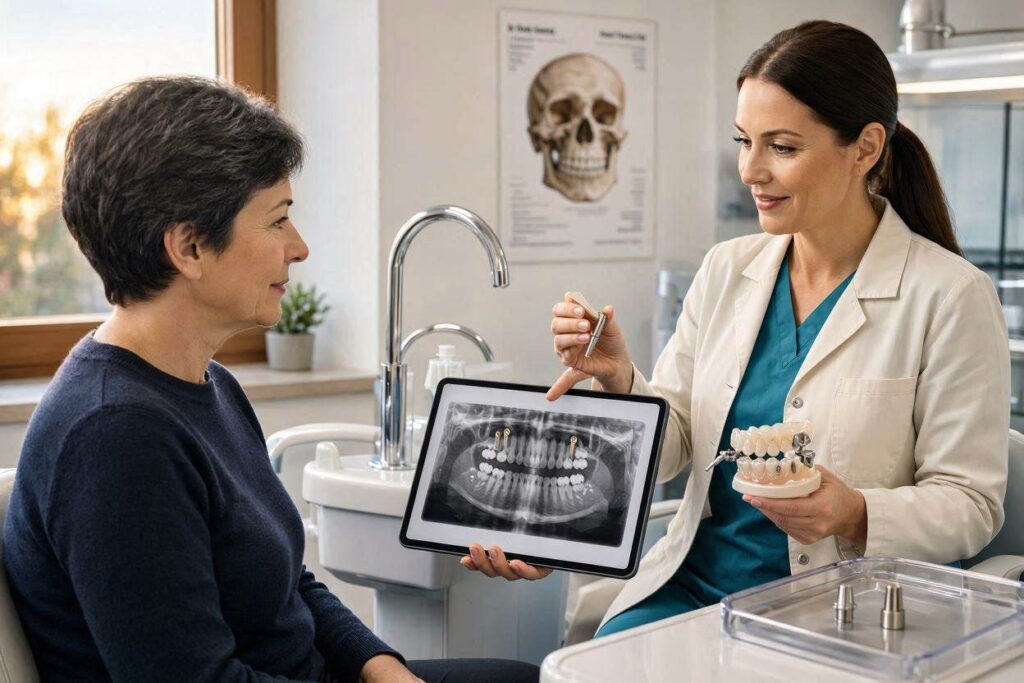
The upper jaw, the maxilla, presents challenges that the lower jaw does not. Understanding these challenges is the first step to appreciating the solutions.
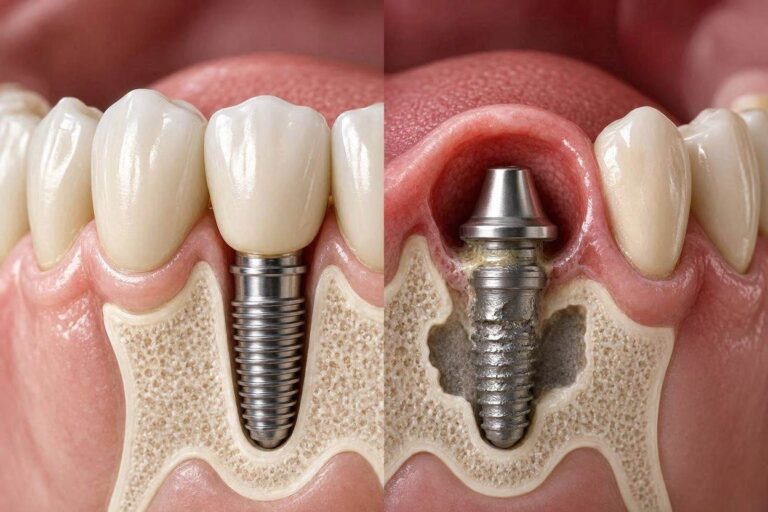
The bone in the upper jaw is less dense than the bone in the lower jaw. The lower jaw has a thick, dense cortical plate that provides excellent anchorage for implants. The upper jaw has a thinner cortical layer and a more porous cancellous interior. This difference in bone quality means that implants in the upper jaw have a slightly lower survival rate and require more careful planning and often a longer healing period.
Behind the upper front teeth, above the roof of the mouth, lies the maxillary sinus. These are air-filled cavities that can expand downward after teeth are extracted. Over time, the floor of the sinus drops, leaving very little bone height in the posterior upper jaw for implant placement. This often necessitates a sinus lift procedure to elevate the sinus membrane and place bone graft material, creating enough bone height to accommodate an implant.
The upper jaw also has a rich nerve and blood vessel supply. The incisive canal in the front and the greater palatine foramen in the back must be avoided during implant placement. Despite these challenges, modern implant dentistry has developed highly successful protocols for the upper arch.
Conventional Upper Denture: The Problem
To appreciate the implant solution, you must understand the fundamental problem with a conventional upper denture. An upper denture stays in place primarily through suction and a peripheral seal. The denture covers the entire palate, creating a large surface area for retention. Saliva creates a thin film between the denture and the palate, generating a vacuum effect. The edges of the denture extend into the vestibule, the space between the gum and the cheek, creating a seal.
This suction works reasonably well for many patients, far better than a lower denture, which is a floating horseshoe with no suction. However, the suction is disrupted by any movement that breaks the seal. Coughing, laughing, or biting into food with the front teeth can lever the back of the denture away from the palate. The denture drops. Adhesive helps but is a messy, temporary fix that many patients find distasteful. The palatal coverage also impairs taste and temperature sensation and can trigger a gag reflex in sensitive patients. The denture is retained, but it is not truly stable.
Types of Implant-Supported Upper Dentures
There are two fundamentally different approaches to stabilizing an upper denture with implants. The choice depends on the number of implants placed, the amount of bone available, your budget, and your desires regarding removability.
Implant-Retained Removable Overdenture
This is the most common and cost-effective solution for the upper arch. Typically, four implants are placed in the upper jaw, often in the positions of the canines and the second premolars or first molars. Locator abutments are attached to the implants. The denture has corresponding housings with nylon inserts that snap onto the locators.
The denture is still removable. You take it out at night for cleaning. You can soak it. The implants provide retention and stability, preventing the denture from dropping or rocking. However, the denture still covers the palate. It is a conventional denture that has been converted or fabricated with locator housings. The difference is that it no longer relies on suction. It relies on the mechanical snap of the locators. For many patients, this is a night-and-day improvement over a floating denture. The denture is secure. It does not drop. You can eat and speak with confidence.
Implant-Supported Fixed Hybrid Prosthesis (All-on-4 or All-on-6)
This is the premium solution. A fixed hybrid prosthesis is a full arch of teeth, typically made of acrylic wrapped around a milled titanium bar or a monolithic zirconia structure, that is screwed directly into four to six implants. The prosthesis is not removable by the patient. Only the dentist can remove it. The palate is completely uncovered. The prosthesis is a horseshoe shape, leaving the roof of the mouth free.
This solution is transformative. The patient experiences something close to having natural teeth again. There is no palatal coverage, so taste and temperature sensation are restored. The prosthesis is rigid and stable. You can bite into an apple with the front teeth without the prosthesis dislodging. You clean it with a water flosser and a soft brush, similar to natural teeth. The fixed hybrid is the closest modern dentistry has come to replicating a full arch of natural teeth.
Bar-Overdenture
A middle-ground option is a bar-retained overdenture. Four to six implants are placed. A custom-milled metal bar is screwed to the implants, spanning the arch. The denture has clips or other attachments on its underside that clip onto the bar. The denture is removable, but the bar provides excellent stability. This option is less common now that locator attachments have become so reliable and cost-effective, but it remains a valid choice for certain clinical situations.
How Many Implants Are Needed for an Upper Denture?
The number of implants is a critical decision point that balances stability, cost, and surgical feasibility.
Two Implants. Placing only two implants in the upper arch to retain an overdenture is generally not recommended. The upper bone is too soft, and the forces of mastication are too high. Two implants can be used successfully in the lower arch, but in the upper arch, the risk of implant failure and denture rocking is unacceptably high. Most clinicians will not offer this option.
Four Implants. Four implants are the minimum standard of care for an upper implant overdenture. This configuration provides adequate retention and stability for a removable prosthesis. The implants are typically distributed in a broad arch, maximizing the support base. Four implants can also support a fixed hybrid prosthesis if they are placed with adequate bone density and angulation.
Six Implants. Six implants provide a greater margin of safety. If one implant fails, the remaining five can still support the prosthesis. Six implants allow for a rigid, full-zirconia fixed prosthesis. For patients who have adequate bone and want the most secure, long-term solution, six implants are often recommended.
Eight Implants. In rare cases of extreme bone deficiency or when a patient has a history of implant failures, eight implants may be placed. This is a highly customized treatment plan.
The Sinus Lift: A Critical Adjunct Procedure
We mentioned the maxillary sinus earlier. Many patients who have been edentulous, toothless, in the upper arch for many years have experienced significant bone resorption and sinus pneumatization, the expansion of the sinus downward. When the bone height in the posterior maxilla is less than 5 to 8 millimeters, an implant cannot be safely placed without violating the sinus membrane. A sinus lift, or sinus augmentation, is required.
The surgeon creates a small window in the lateral wall of the maxilla, gently elevates the sinus membrane, and packs bone graft material into the space. The implant can sometimes be placed at the same time as the sinus lift, a simultaneous approach, if there is enough existing bone to stabilize the implant. More often, the sinus lift is performed first, and the implant is placed six to nine months later after the graft has matured and integrated, a staged approach.
A sinus lift adds cost, typically $1,500 to $5,000 per side, and time to the treatment. However, it is a highly predictable and successful procedure. It opens the door to posterior implant placement for patients who thought they were not candidates for fixed implant solutions.
Bone Grafting for the Anterior Maxilla
The front part of the upper jaw, the anterior maxilla, can also be deficient. After tooth loss, the bone resorbs from the outside in and from the top down. The ridge becomes narrow and short. To place implants in the correct positions for a good prosthetic outcome, bone grafting may be needed. A ridge augmentation graft uses particulate bone to rebuild the width and height of the deficient ridge. This is a common and predictable procedure. The cost ranges from $800 to $2,500 per site.
The Conversion of an Existing Upper Denture
If you have an existing upper denture that fits reasonably well, you can often have it converted into a temporary or even a final implant-retained overdenture. The process is similar to the lower denture conversion described in a previous article. The implants are placed. After healing, locator abutments are attached. Your existing denture is hollowed out slightly in the areas corresponding to the implants, the locator housings are picked up in the denture with acrylic, and the denture now snaps onto the implants.
This conversion saves the cost of a new denture. However, the limitations discussed previously apply. Your converted denture will still cover your palate. It will still have the same tooth position and aesthetics. If your denture is old or poorly fitting, a new implant overdenture or fixed hybrid is a better investment.
The All-on-4 Concept for the Upper Arch
The All-on-4 treatment concept, pioneered by Dr. Paulo Malo and Nobel Biocare, deserves specific mention. The All-on-4 philosophy places four implants in the upper arch. The two posterior implants are tilted at an angle, typically 30 to 45 degrees, to avoid the maxillary sinuses. By tilting the implants, the surgeon can use the available bone anterior to the sinus and place longer implants that anchor into denser bone. The two anterior implants are placed straight. The tilted posterior implants provide a broad support polygon, reducing the cantilever, the unsupported back portion of the prosthesis.
The All-on-4 technique often eliminates the need for sinus lifts, which dramatically reduces the cost and the treatment time. A fixed hybrid prosthesis is attached to the four implants, often on the same day as the surgery, a concept called immediate loading. The patient walks out with a fixed set of temporary teeth. After healing, a final, stronger prosthesis is fabricated. The All-on-4 has made fixed full-arch implant rehabilitation accessible to many patients who would otherwise require extensive grafting.
The All-on-6 and Beyond
For patients with adequate bone who want the maximum stability and longevity, six implants are placed. The All-on-6 provides a more even force distribution. If one implant fails, the prosthesis can often remain in place while the failed implant is replaced. The All-on-6 allows for a zirconia prosthesis, which is stronger and more aesthetic than the traditional acrylic-titanium hybrid. Zirconia does not stain, does not wear down the opposing teeth, and feels more like natural teeth. The cost of a full-zirconia prosthesis is higher, but the long-term value is significant.
The Surgical Procedure for Upper Arch Implants
The surgical placement of upper arch implants is performed under local anesthesia, intravenous sedation, or general anesthesia, depending on the number of implants, the need for grafting, and the patient’s preference. The procedure typically takes two to four hours for a full arch.
The surgeon makes an incision along the crest of the ridge, reflecting the gum tissue to expose the underlying bone. The implant sites are prepared using a series of precision drills, guided by a surgical stent fabricated from the 3D CT scan. The implants are screwed into place. If grafting is needed, it is performed at this time. The gums are sutured closed. If an immediate load protocol is being followed, the abutments are attached, and a pre-fabricated temporary prosthesis is screwed into place before the patient leaves the office.
Recovery and Post-Operative Care
Recovery from full-arch implant surgery involves swelling, bruising, and discomfort that typically peak at 48 to 72 hours and subside over one to two weeks. A soft diet is required for several weeks. If a temporary fixed prosthesis was placed, the patient must be extremely careful not to overload the implants. The osseointegration period for the upper arch is often longer than for the lower arch, typically four to six months, due to the softer bone.
During this healing period, regular follow-up visits are scheduled to monitor the implants, the gum tissue, and the stability of the temporary prosthesis. If the patient is wearing a removable healing denture, it is adjusted regularly to ensure it does not put pressure on the healing implants.
The Final Prosthesis
After osseointegration is confirmed, the final prosthesis is fabricated. For an overdenture, final impressions are taken, and a new denture with locator housings is processed in the laboratory. For a fixed hybrid, a series of precision impressions, bite registrations, and try-in appointments ensure that the final prosthesis fits perfectly, functions harmoniously, and looks beautiful. The final prosthesis is delivered, and the patient embarks on a new chapter of life with a secure smile.
The Financial Investment
Implanting an upper denture is a significant financial investment. The cost varies widely based on geographic location, the expertise of the surgeon, the number of implants, the need for grafting, and the type of final prosthesis.
A four-implant removable overdenture with locator attachments, including the implants, abutments, and a new denture, typically costs between $8,000 and $20,000 per arch. An All-on-4 fixed hybrid prosthesis, including surgery, implants, a temporary fixed bridge, and a final fixed prosthesis, typically costs between $20,000 and $35,000 per arch. A full-zirconia All-on-6 can range from $30,000 to $50,000 per arch. Sinus lifts, bone grafts, and extractions add to the total cost.
Dental insurance may cover a portion, typically the amount of a conventional denture, with the patient responsible for the implant and surgical fees. Financing through companies like CareCredit or Sunbit, as well as in-house payment plans, makes the treatment accessible by spreading the cost over time.
The Priceless Benefits
Beyond the financial cost, you must consider the value of what you are gaining. Patients who transition from a conventional upper denture to an implant-supported prosthesis report a dramatic improvement in quality of life. They eat a healthier, more varied diet because they can chew fruits, vegetables, and proteins without restriction. They speak clearly and confidently, without fear of their teeth falling out. They smile fully and spontaneously. Their facial structure is preserved because implants stimulate the bone, preventing the sunken, aged appearance that accompanies long-term denture wear. The psychological transformation is profound. Patients often say they feel like themselves again, that they have been given back a part of their identity that they lost when they lost their teeth.
Summary of Key Information on Implanting Upper Dentures
- The upper jaw presents unique challenges, including softer bone and the maxillary sinuses, but implant solutions are highly successful.
- A minimum of four implants is the standard of care for an upper implant overdenture or fixed hybrid.
- Implant-retained overdentures snap onto implants and are removable; fixed hybrid prostheses are screwed in and not removable by the patient.
- The All-on-4 technique uses angled posterior implants to avoid sinus lifts and often allows for immediate loading.
- Bone grafting and sinus lifts are common adjunctive procedures to create adequate bone volume.
- The investment is significant, ranging from $8,000 for a basic overdenture to $50,000 for a premium fixed zirconia prosthesis, with transformative quality-of-life benefits.
Conclusion
Your upper denture can absolutely be implanted, and the result can be life-changing. Whether you choose a removable snap-on overdenture retained by four implants or a fixed hybrid prosthesis that restores the feeling of natural teeth, you can say goodbye to adhesive, suction, and the constant fear of your denture dropping. The key is to seek a comprehensive evaluation from an experienced implant dentist or oral surgeon who can assess your bone, discuss your goals, and design a treatment plan that fits your anatomy and your budget. A stable upper smile is within your reach.
Frequently Asked Questions (FAQ)
1. Will I still taste my food with an implanted upper denture?
If you have a fixed hybrid prosthesis that is horseshoe-shaped and does not cover the palate, your taste and temperature sensation will be significantly restored. A removable overdenture still covers the palate.
2. Can I have my upper denture implanted the same day as my teeth are extracted?
Yes, in many cases. The All-on-4 or Teeth-in-a-Day protocols allow for extraction of the remaining teeth, placement of implants, and delivery of a temporary fixed prosthesis all in one day.
3. How long does the process take from start to finish?
With immediate loading, you leave the surgery with a fixed temporary bridge. The final prosthesis is delivered approximately four to six months later. If a traditional healing protocol is used, you wear a removable denture for four to six months while the implants integrate, then the final prosthesis is made.
4. Is the upper implant procedure more painful than the lower?
Post-operative discomfort is similar. The upper jaw may feel more congested or produce a sensation of pressure in the sinus area if sinus lifts are performed. Pain is managed effectively with medication.
5. How do I clean an implanted upper denture?
A removable overdenture is taken out and cleaned like a regular denture. A fixed hybrid is cleaned with a water flosser, super floss, and a soft toothbrush. You cannot remove it.
6. Will people be able to tell I have an implanted denture?
High-quality implant prostheses are designed to look like natural teeth and gums. In most cases, no one will be able to tell. The absence of a visible acrylic flange and the natural emergence of the teeth from the gums create a very lifelike appearance.
7. What is the success rate of upper arch implants?
The success rate for upper arch implants is high, typically over 95% for the implants themselves over ten years. Success depends on good bone quality, proper surgical technique, excellent oral hygiene, and regular maintenance visits.
Additional Resource
For more information on full-arch implant rehabilitation and finding a qualified surgeon, visit:
American Academy of Implant Dentistry