Is Quinoa Good For Dental Implant?
You have a dental implant. You are committed to protecting your investment. You brush, you floss, you see your dentist for maintenance. But you also love food, and you want to eat a healthy, varied diet. You have heard that quinoa is a superfood, packed with protein, fiber, and minerals. You wonder if this trendy grain is good for your implant, or if its small, seedy texture could cause problems. Can quinoa get stuck under your implant crown? Will it damage the implant? Is quinoa a friend or foe to your dental implant? This guide will explore the relationship between quinoa and dental implant health from multiple angles: mechanical, nutritional, and biological. By the end, you will know exactly how quinoa fits into an implant-friendly diet.
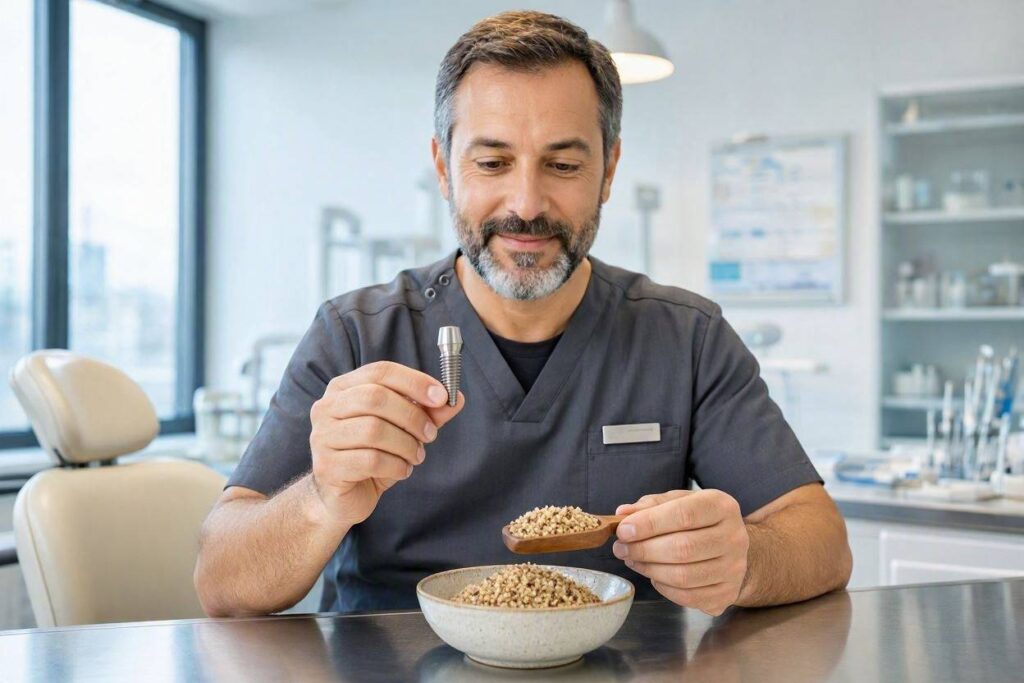
Understanding the Implant Interface
To answer the question, you must first understand the vulnerable area of an implant. The implant fixture itself, the titanium post in the bone, is not exposed to food. It is buried under the gum or covered by the crown. The area that interacts with food is the crown, the abutment, and the gum tissue around the implant, the peri-implant mucosa. The junction between the crown and the gum is a small sulcus, a crevice, where bacteria and food debris can accumulate. A healthy peri-implant sulcus is shallow and tight, resisting the ingress of food. An unhealthy sulcus, inflamed by peri-implant mucositis or deepened by peri-implantitis, is a trap for debris. The contour of the implant crown, how it emerges from the gum, is designed to deflect food away from the sulcus. A well-contoured crown is self-cleansing to a degree.
The question with any food, including quinoa, is whether its physical properties cause it to become lodged in the peri-implant sulcus, whether it can abrade or damage the implant components, and whether it contributes to inflammation or, conversely, supports healing.
The Physical Properties of Quinoa
Quinoa is a seed, not a grain. When cooked, the seeds absorb water and expand. The outer germ ring separates from the seed, creating a tiny, curled tail. A single quinoa seed is small, about 1 to 2 millimeters in diameter. Cooked quinoa is soft, slightly chewy, and has a mild, nutty flavor. It does not shatter into sharp fragments. It is not hard or crunchy like nuts or popcorn kernels. From a purely mechanical standpoint, cooked quinoa is a soft, low-risk food. It is highly unlikely to scratch the polished surface of a porcelain or zirconia implant crown. Titanium abutments are also highly scratch-resistant. Quinoa poses no mechanical threat to the implant components.
The Food Trap Concern
The main concern with small seeds and grains is that they can become trapped between the implant crown and the adjacent natural tooth, or in the sulcus around the implant. An open contact, a gap between the implant crown and the neighboring tooth, is a known risk factor for food impaction and peri-implant inflammation. Even a well-contoured crown can have a small embrasure space, the triangular area between teeth below the contact point, that can catch food.
Quinoa’s small size means that individual seeds could potentially slip into a gap. However, quinoa is soft and breaks apart easily when chewed. It forms a bolus, a soft mass, mixed with saliva, that is less likely to wedge forcefully between teeth than a fibrous food like stringy meat or a seed with a hard husk like a popcorn kernel. The risk of quinoa causing problematic, persistent food impaction is low compared to many other foods. If you have a well-fitted implant crown with tight contacts and a healthy, shallow sulcus, quinoa should not pose a significant food trap problem. If you have an open contact or an inflamed, deep pocket, any small food particle can become lodged, and quinoa would be no exception.
The Nutritional Benefits of Quinoa for Implant Health
Now we move from the mechanical to the biological. Is quinoa good for the tissues that support the implant? The answer is a resounding yes. The health of the bone and gum around an implant depends on good nutrition, just like any other tissue in the body. Quinoa is exceptionally nutrient-dense and supports oral health in several ways.
Complete Protein. Quinoa is one of the few plant foods that contain all nine essential amino acids, making it a complete protein. Protein is essential for tissue repair and regeneration. The gum tissue and the bone around the implant are constantly remodeling. Adequate protein intake supports wound healing after implant surgery and the ongoing maintenance of the peri-implant tissues.
Magnesium. Quinoa is a rich source of magnesium. Magnesium is critical for bone health. It is involved in the formation of bone mineral crystals and the regulation of calcium metabolism. A magnesium-deficient diet can impair bone density. The jawbone that supports your implant needs adequate magnesium to maintain its strength and resist resorption.
Phosphorus. Quinoa contains phosphorus, another essential mineral for bone and tooth structure. Phosphorus, along with calcium, forms hydroxyapatite, the mineral that gives bones and teeth their rigidity. Adequate phosphorus intake is necessary for bone maintenance.
Manganese. Quinoa is very high in manganese. This trace mineral is a cofactor for enzymes involved in bone formation and the synthesis of connective tissue, including the collagen fibers of the gum tissue. Healthy gum tissue around an implant requires robust collagen production.
Iron and Zinc. Quinoa provides iron, which is essential for oxygen delivery to tissues, and zinc, which is vital for immune function and wound healing. A strong immune system fights off the bacteria that cause peri-implant mucositis and peri-implantitis.
Fiber. Quinoa is a good source of dietary fiber. While fiber does not directly affect the implant, it promotes overall health, satiety, and a healthy gut microbiome, which is increasingly linked to systemic inflammation. Lower systemic inflammation benefits the oral environment.
Quinoa and Inflammation
Peri-implantitis is an inflammatory disease. The body’s immune response to the bacterial biofilm around the implant drives the bone destruction. Diet can influence the body’s overall inflammatory state. A diet high in refined carbohydrates, sugars, and unhealthy fats promotes systemic inflammation. A diet rich in whole foods, antioxidants, and anti-inflammatory nutrients helps to quell it.
Quinoa contains several anti-inflammatory compounds, including flavonoids like quercetin and kaempferol. These plant polyphenols have antioxidant and anti-inflammatory properties. They help neutralize free radicals, unstable molecules that can damage cells and fuel inflammation. While eating quinoa will not cure peri-implantitis, a diet rich in anti-inflammatory foods like quinoa can support the body’s ability to maintain a balanced, non-destructive immune response around the implant.
Quinoa vs. Other Grains for Implant Patients
How does quinoa compare to other common staples for an implant patient?
Refined White Rice and Pasta. These are low in fiber, protein, and minerals. They break down quickly into simple sugars, which feed oral bacteria and can contribute to plaque formation. Quinoa is nutritionally superior and less cariogenic, less cavity-causing.
Brown Rice. Brown rice is a whole grain with fiber and some minerals. However, its texture is slightly harder and chewier than quinoa. Undercooked brown rice grains could theoretically be more challenging to clear from around an implant. Quinoa’s softer texture gives it a slight mechanical advantage.
Popcorn. Popcorn is a dental implant patient’s enemy. The hard, unpopped kernels can fracture a crown or an implant. The thin, sharp husks can wedge deeply between teeth and the implant crown, causing painful, persistent food impaction and inflammation. Popcorn should be avoided or eaten with extreme caution by implant patients.
Nuts and Seeds. Whole nuts and hard seeds like sunflower seeds require caution. Biting down hard on a nut with the implant crown could potentially damage the porcelain or, in rare cases, overload the implant. Quinoa, being soft and small, poses no such risk.
How to Safely Include Quinoa in Your Implant-Friendly Diet
Quinoa is a safe and healthy food for dental implant patients. Here are some practical tips.
Cook It Properly. Ensure the quinoa is fully cooked and soft. Undercooked quinoa is harder and more likely to have a grainy texture that could be bothersome.
Rinse Your Mouth After Eating. A simple rinse with water after eating quinoa, or any meal, helps to flush out any small particles that may be lingering around the implant crown. This is good practice for all implant patients.
Maintain Excellent Interdental Cleaning. Use your interdental brushes, floss threaders, or water flosser daily to clean between the implant crown and the adjacent teeth. Even if a quinoa seed gets stuck, your cleaning routine will dislodge it.
Address Open Contacts. If quinoa or any other food consistently gets stuck between your implant crown and a neighboring tooth, the contact is likely open. See your dentist. The crown may need to be adjusted or remade. A persistent food trap is a significant risk factor for peri-implant inflammation.
Summary of Quinoa and Dental Implants
- Cooked quinoa is a soft food that poses minimal risk of mechanical damage to the implant crown or abutment.
- Quinoa’s small seed size means it could potentially lodge in open contacts or deep pockets, but its soft texture makes persistent impaction less likely than with hard or fibrous foods.
- Nutritionally, quinoa is excellent for implant health, providing complete protein, magnesium, phosphorus, manganese, and anti-inflammatory flavonoids.
- Quinoa is a superior dietary choice compared to refined grains, hard seeds, or popcorn for patients with dental implants.
Conclusion
Quinoa is not only safe for your dental implant, it is actively good for it. The soft, cooked seed poses no threat to the implant components, and its rich nutritional profile supports the bone and gum tissues that keep your implant healthy. The only potential concern is food impaction in the presence of an open contact or a deep peri-implant pocket, which is a risk with any small food particle. Maintain your professional maintenance visits, practice excellent home care, and enjoy quinoa as part of a balanced, anti-inflammatory diet that nourishes your implant and your whole body.
Frequently Asked Questions (FAQ)
1. Can quinoa get stuck under my implant crown?
If the crown is well-contoured and the contacts are tight, it is unlikely. If you have an open contact or a deep pocket, small quinoa seeds could become lodged temporarily.
2. Is quinoa hard enough to scratch my implant crown?
No. Cooked quinoa is very soft. It will not scratch porcelain, zirconia, or titanium implant components.
3. Should I avoid quinoa after implant surgery?
In the immediate post-operative period, you should stick to very soft foods as directed by your surgeon. Once you are cleared to eat a normal diet, cooked quinoa is an excellent soft, nutritious food to incorporate during healing.
4. Is quinoa better than rice for my implant?
Quinoa is more nutrient-dense than white rice and has a softer texture than some undercooked brown rice. It is an excellent choice.
5. Can quinoa cause an allergic reaction around my implant?
Quinoa allergy is rare. If you have a known quinoa allergy, you should avoid it, but the reaction would be systemic, not localized to the implant site.
6. Does quinoa contain calcium for my implant bone?
Quinoa contains some calcium, about 30 milligrams per cup, but it is not a primary source. Its magnesium and phosphorus content are more supportive of bone health.
7. What other foods are good for dental implant health?
Foods rich in calcium, such as dairy, leafy greens, and fortified alternatives, lean proteins, vitamin C-rich fruits and vegetables for gum health, and omega-3 fatty acids for their anti-inflammatory properties.
Additional Resource
For more information on nutrition and oral health, visit the Academy of Nutrition and Dietetics:
Academy of Nutrition and Dietetics – Oral Health