All On 4 Dental Implants in Columbus Ohio
Losing your teeth changes more than just your smile. It affects the way you eat, the way you speak, and even the way you feel about yourself. If you live in Columbus, you have probably heard about a life-changing solution called “All On 4.”
But what exactly is this procedure? Is it right for you? And most importantly, what should you expect if you get it done right here in Columbus, Ohio?
This guide answers all those questions. We will walk you through the process step by step. No jargon. No sales pitch. Just honest, practical information to help you make a smart decision for your health.
A note from our team: Dental implants are a serious medical procedure. Every case is unique. This article provides general information. Always consult with a licensed oral surgeon or prosthodontist in Columbus for a personal evaluation.
What Are All On 4 Dental Implants? (A Simple Explanation)
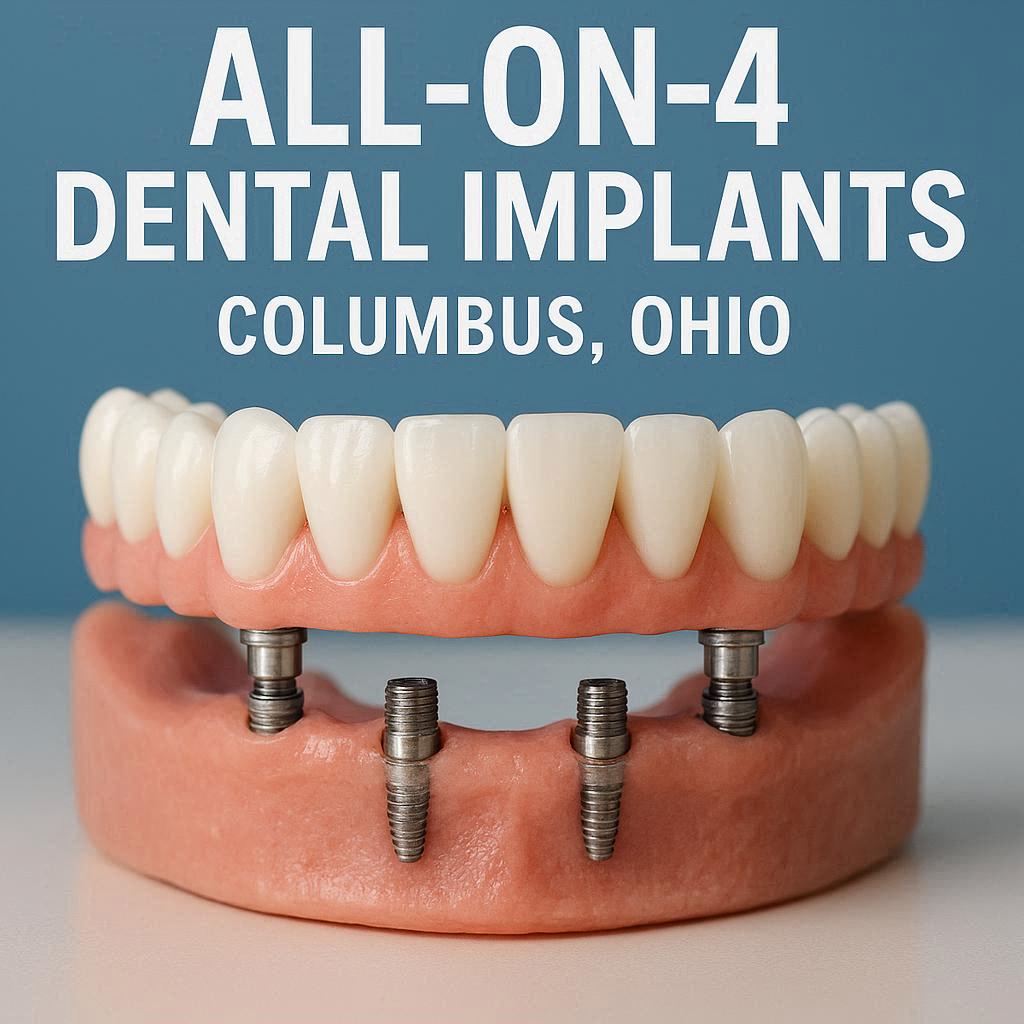
Imagine replacing an entire arch of teeth (upper or lower) using only four titanium screws. That is the core idea of the All On 4 system.
Traditional dentures sit on top of your gums. They move. They click. They require messy adhesives. All On 4 implants do not sit on your gums. They lock into your jawbone.
Here is the simple breakdown:
- Four implants: A surgeon places four titanium posts into specific areas of your jawbone.
- Strategic angles: The two back implants are angled. This avoids the sinus cavity in the upper jaw and the nerve canal in the lower jaw.
- Fixed bridge: A permanent, non-removable bridge (made of acrylic or zirconia) screws onto those four implants.
The result? A full set of teeth that feel, function, and look like natural teeth.
Why “All On 4” is different
Many people think they need one implant per missing tooth. That is eight to ten implants per arch. That is expensive and invasive.
All On 4 reduces the number of implants. This lowers the cost. It speeds up recovery. And it often eliminates the need for bone grafting.
For residents of Columbus who have been told they have “too much bone loss” for implants, this is excellent news.
Why Columbus, Ohio is a Great Place for All On 4
Columbus is not just the state capital. It is becoming a regional hub for dental innovation. You have access to world-class oral surgeons and prosthodontists without traveling to Chicago or New York.
Several factors make Columbus ideal for this procedure:
- Competitive pricing: Compared to coastal cities, dental implant costs in the Midwest are significantly lower.
- Academic influence: The presence of The Ohio State University College of Dentistry means local professionals have access to the latest training and technology.
- High-density of specialists: Columbus has multiple board-certified oral surgeons who perform All On 4 daily.
You do not need to fly to Costa Rica or Mexico for affordable implants. You can get quality care right here in Central Ohio.
Who is a Good Candidate? (Realistic Expectations)
Not everyone is a perfect candidate on day one. But many people are.
You might be a good candidate for All On 4 if:
- You are missing most or all of your teeth on one arch.
- Your existing teeth are failing (loose, cracked, severe decay).
- You have worn a traditional denture for years and hate it.
- You have enough bone in the front of your jaw (the back can be thin).
- You do not smoke heavily (smoking affects healing).
- You are healthy enough for outpatient surgery.
Who might need extra steps?
Some patients require preliminary work. This is normal. Do not get discouraged.
- Heavy smokers: You will need to quit or drastically reduce smoking for at least two months.
- Uncontrolled diabetes: Your blood sugar must be stable before surgery.
- Severe bone loss: If the front of your jaw lacks bone, you may need a small bone graft.
- Gum disease: Active infection must be treated first.
A good Columbus provider will never rush you into surgery. They will perform a CBCT scan (3D X-ray) to measure your bone volume precisely.
The Step-by-Step Process in Columbus, Ohio
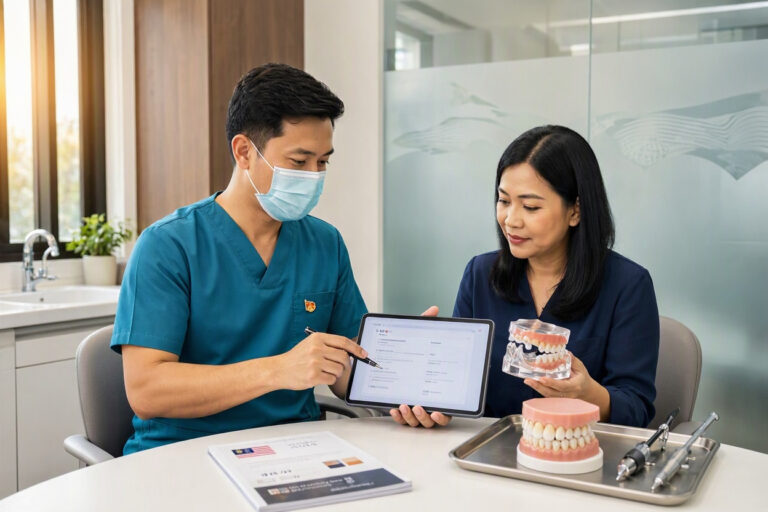
Let us walk through what actually happens. Most patients complete the procedure in three to four visits over six to eight months.
Step 1: The Consultation (60-90 minutes)
You meet with a prosthodontist or oral surgeon. They will:
- Review your medical history.
- Take a CBCT scan (painless, low radiation).
- Discuss your goals (do you want a natural look? A bright Hollywood smile?).
- Provide a written treatment plan with costs.
Pro tip for Columbus residents: Bring your existing denture to the consultation. The doctor can often replicate the tooth position so you look the same, just better.
Step 2: Preparatory Work (if needed)
This might include:
- Extracting remaining bad teeth.
- Treating gum disease.
- A small bone graft (rare for All On 4, but possible).
Step 3: Surgery Day (2-3 hours)
You will receive sedation or general anesthesia. You will not feel pain. You will not remember the procedure.
The surgeon:
- Removes any remaining teeth.
- Places the four implants into the jawbone.
- Attaches a temporary fixed bridge (made of acrylic).
You leave the office the same day with non-removable temporary teeth. Yes, you walk out with teeth.
“I drove from Dublin, Ohio to get my All On 4 done. I walked in at 8 AM with failing teeth. I walked out at noon with a full, fixed smile. That is not a miracle. That is modern dentistry.” – Robert, Columbus patient
Step 4: Healing Phase (4-6 months)
This is critical. Your jawbone needs to fuse to the titanium implants. This process is called osseointegration.
During this time:
- You eat soft foods.
- You avoid hard or sticky items.
- You follow a special cleaning routine.
- You visit your Columbus dentist for check-ups.
The temporary bridge looks decent, but it is not the final product. Be patient.
Step 5: Final Bridge Placement (1 visit)
Once the implants are fully healed and stable, your prosthodontist:
- Removes the temporary bridge.
- Takes impressions for the final bridge.
- Fits your new, permanent teeth (usually zirconia or high-grade acrylic).
The final bridge is stronger, more natural-looking, and stain-resistant.
All On 4 vs. Alternatives (A Comparison Table)
Many patients do not realize they have options. Here is how All On 4 compares to other solutions available in Columbus.
| Feature | All On 4 | Traditional Denture | Traditional Implants (8 per arch) |
|---|---|---|---|
| Removable? | No (fixed) | Yes | No (fixed) |
| Number of implants | 4 | 0 | 6–10 |
| Bone grafting often needed? | Rarely | No | Often yes |
| Feels like natural teeth? | Yes | No | Yes |
| Cost (per arch) | 15,000–25,000 | 1,500–5,000 | 30,000–45,000 |
| Longevity | 20+ years | 5–7 years | 20+ years |
| Requires adhesive? | No | Yes | No |
| Eating restrictions | Minimal | Significant | Minimal |
Verdict: If budget is extremely tight, dentures are cheaper upfront but more expensive over time. If you want the best function and aesthetics, All On 4 offers a middle ground between cheap dentures and very expensive individual implants.
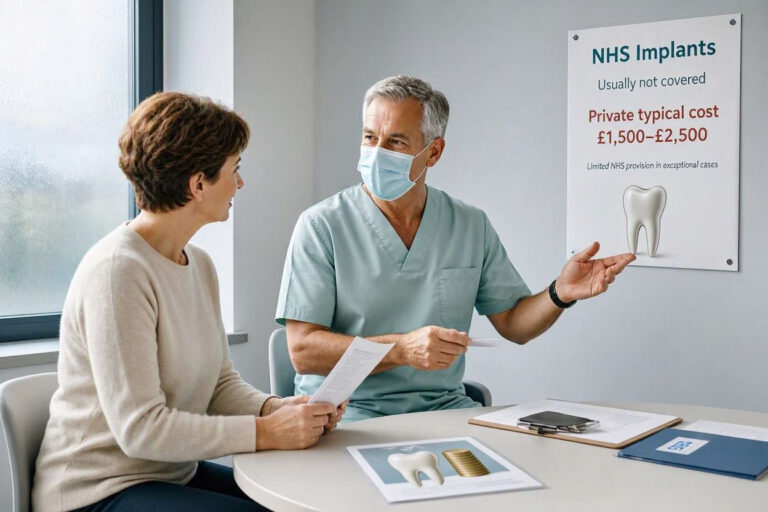
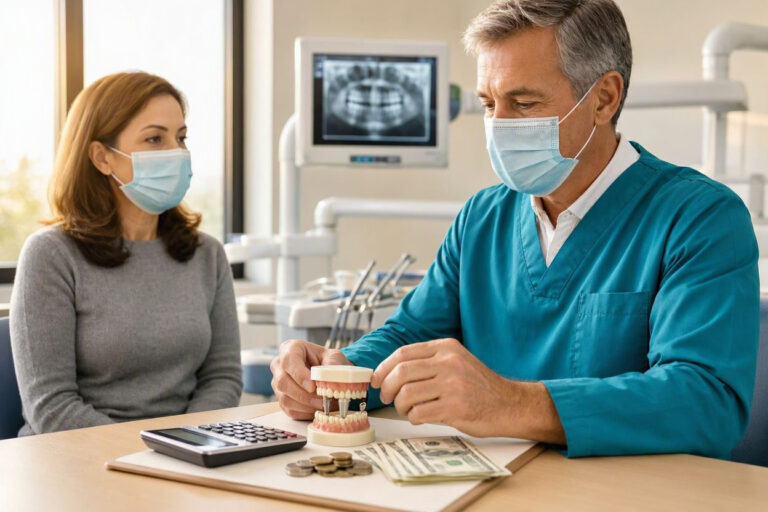
The Real Cost of All On 4 Dental Implants in Columbus Ohio
Let us talk money. This is the most common question.
In Columbus, Ohio, the price for one arch (upper or lower) typically ranges from 15,000to15,000to25,000. For both arches (full mouth), expect 28,000to28,000to45,000.
What does that price include?
A reputable clinic will provide an all-inclusive fee. It should cover:
- Consultation and CBCT scan.
- Extractions of existing teeth.
- Surgery and anesthesia (sedation or general).
- Four implants (brands like Nobel Biocare or Straumann).
- Temporary fixed bridge.
- Final permanent bridge (acrylic or zirconia).
- All follow-up visits for one year.
What is NOT included?
- Travel costs (if you live outside Columbus).
- Bone grafting (rare for All On 4, but possible).
- Sinus lifts (for upper jaw if bone is very poor).
- Long-term maintenance (cleanings every 6 months).
Why is Columbus cheaper than NYC or LA?
Overhead costs are lower in Ohio. Rent, staff salaries, and lab fees are significantly less than in Manhattan or San Francisco. You are not sacrificing quality. You are just paying less for the same materials and the same level of training.
Does insurance cover it?
Medical insurance rarely covers dental implants. However:
- Some PPO dental plans cover a portion (often 1,000–3,000).
- If tooth loss is due to an accident or tumor, medical insurance may contribute.
- Check with your HR department if you have a Health Savings Account (HSA) or Flexible Spending Account (FSA). These can be used tax-free.
Financing options in Columbus
Most Columbus implant centers offer financing through:
- CareCredit (healthcare credit card).
- LendingClub (patient solutions).
- In-house payment plans (ask specifically about this).
Do not let price scare you away. Many patients pay 300to500 per month over 60 months.
Types of Final Bridges: Acrylic vs. Zirconia
You have a choice. The material of your final bridge affects the look, feel, and price.
Acrylic (PMMA) Bridge
- Pros: Lighter, cheaper, easier to repair.
- Cons: Scratches easier, can stain over time, less durable.
- Best for: Lower arch (less biting force) or patients on a tighter budget.
Zirconia Bridge
- Pros: Extremely strong, highly natural translucency, stain-proof, lasts longer.
- Cons: Heavier, more expensive, harder to adjust.
- Best for: Upper arch (visible smile line) and patients who want the most durable solution.
Hybrid option: Some Columbus labs create a titanium frame inside an acrylic bridge. This gives you strength without the weight of full zirconia.
Important note: Do not let a dentist pressure you into zirconia if your budget is tight. A high-quality acrylic bridge can last 10-15 years with proper care. You can always upgrade later.
The Recovery Timeline (What to Expect)
Every patient heals differently. But here is a general week-by-week guide.
Day 1 (Surgery day)
- You will be groggy from sedation.
- Bite on gauze to control bleeding.
- Some swelling and minor pain (manageable with medication).
- Sleep with your head elevated.
Days 2-5
- Swelling peaks on day 2 or 3.
- Stick to cold foods: smoothies, yogurt, pudding, cold soup.
- No hot drinks (they increase bleeding).
- Use ice packs on your cheeks (15 minutes on, 15 off).
Days 6-14
- Swelling goes down.
- You return to soft foods: mashed potatoes, scrambled eggs, oatmeal.
- Start gentle salt water rinses (do not spit forcefully).
- Most patients return to work after 5-7 days.
Weeks 3-8
- You feel almost normal.
- You can eat soft chicken, fish, cooked pasta.
- Avoid nuts, chips, steak, and sticky candy.
- The temporary bridge may feel “springy.” That is normal.
Months 4-6
- Bone is fusing to implants.
- You transition to the final bridge.
- You can gradually resume normal eating.
After 6 months
- Eat steak. Eat apples. Eat corn on the cob.
- But clean meticulously every day.
Daily Care and Maintenance
This is not a “set it and forget it” solution. All On 4 implants require daily hygiene. Neglect leads to peri-implantitis (bone loss around implants).
Your daily toolkit
- Water flosser (Waterpik): Use it every night. Aim the water between the bridge and the gum.
- Superfloss or implant floss: Thread it under the bridge to clean the abutments.
- Soft-bristle brush: Brush the bridge like natural teeth.
- Interdental brushes: Small brushes that go under the bridge.
What to avoid
- Smoking: The #1 cause of implant failure.
- Chewing ice or hard candy: This can crack the acrylic.
- Using your teeth as tools: Do not open packages.
- Skipping cleanings: You still need professional cleanings every 6 months.
Lifespan
With excellent care, All On 4 implants can last 20+ years. The acrylic bridge may need replacement after 10-15 years. The zirconia bridge may last 20+ years.
Risks and Complications (Honest Discussion)
You deserve the truth. No surgery is risk-free.
Common (manageable)
- Swelling and bruising: Normal, resolves in 1-2 weeks.
- Soreness: Controlled with ibuprofen or prescribed pain meds.
- Speech changes: Very minor lisp for a few days. Your tongue adapts quickly.
Less common but serious
- Implant failure (2-5%): An implant does not fuse to bone. The surgeon can usually replace it.
- Infection: Proper oral hygiene and antibiotics prevent this.
- Nerve damage: Very rare with All On 4 because the angled posterior implants avoid nerves. But temporary numbness can occur.
- Sinus issues: Upper implants can protrude into the sinus. This is usually asymptomatic but may require a minor procedure.
Failure rates by smoking status
| Smoking habit | Estimated 5-year failure rate |
|---|---|
| Non-smoker | 2-4% |
| Light smoker (less than 10/day) | 8-12% |
| Heavy smoker (1+ pack/day) | 15-25% |
If you smoke, be honest with your Columbus surgeon. They may still treat you, but they will set realistic expectations.
Finding the Right Provider in Columbus
Not all “implant dentists” are equal. Some have taken a weekend course. Others have completed a three-year surgical residency.
Credentials to look for
- Board-certified oral surgeon (DDS, MD): Best for complex cases and sedation.
- Prosthodontist (DDS, MS): Specialist in replacing teeth. They design the final bridge.
- Periodontist: Specialist in gums and bone. Good for patients with gum disease history.
Questions to ask before scheduling surgery
- “How many All On 4 procedures have you personally done?” (Look for 50+ cases)
- “Do you have before-and-after photos of Columbus patients?”
- “What happens if an implant fails? Do you replace it for free?”
- “Which implant brand do you use?” (Nobel Biocare and Straumann are gold standards)
- “Is the final bridge made in a local lab or shipped overseas?” (Local is better for adjustments)
Red flags to avoid
- A dentist who quotes less than $12,000 per arch (quality materials alone cost more).
- No CBCT scan in the office (they cannot assess bone properly).
- Promising “teeth in one day” without a healing period (temporary teeth, yes. Permanent teeth, no).
- No written warranty or guarantee.
Top-rated locations in Columbus (examples, not endorsements)
Many patients recommend starting your search in:
- Dublin (high concentration of prosthodontists).
- Upper Arlington (several oral surgery groups).
- Near Easton Town Center (modern clinics with in-house labs).
- The Ohio State University Dental Faculty Practice (academic oversight, often more affordable).
Always read Google Reviews specifically for All On 4. Look for reviews that mention “full arch” or “implant bridge.”
Frequently Asked Questions (FAQ)
Does All On 4 hurt?
During surgery, no. You are sedated. After surgery, you will feel pressure and soreness. Most patients rate the pain 2-4 out of 10. Over-the-counter ibuprofen usually controls it.
Can I get All On 4 if I already have dentures?
Yes. This is the most common scenario. The surgeon extracts nothing (your teeth are already gone). They place four implants under your existing denture. Then they convert your denture into a temporary fixed bridge.
How long does the procedure take in Columbus?
Surgery day: 2-3 hours per arch. Full mouth (both arches): 4-5 hours. You go home the same day.
Will I be without teeth at any point?
No. You leave the clinic with temporary fixed teeth. You are never “toothless” during the process.
Can All On 4 fail after 10 years?
Yes, but it is rare with proper maintenance. Most failures happen in the first year (poor healing) or after 10+ years (severe neglect or smoking).
Is it worth traveling from outside Columbus?
If you live in Newark, Lancaster, or Delaware, Ohio – yes. Columbus offers more specialists and competitive pricing than smaller towns. But if you live in Cincinnati or Cleveland, you can find comparable care locally.
What is the success rate?
95-98% at five years for non-smokers. This is higher than traditional dentures (which have a 0% success rate at restoring function and bone).
Do I need to take time off work?
Plan for 5-7 days. Many patients return to desk jobs after 3-4 days. Physical laborers should wait 2 weeks.
Additional Resource
For peer-reviewed, non-commercial information on All On 4 implants, visit the American Academy of Implant Dentistry (AAID) patient education center.
👉 Link: [Insert your internal or external link here. Example: www.aaid.com/patient-resources/all-on-4]
This resource provides:
- A “Find a Fellow” search tool (dentists with advanced training).
- Educational videos on the surgical process.
- Cost comparison worksheets.
A Realistic Sample Budget (Columbos, Ohio)
Here is what a typical patient might pay at a mid-range clinic in Columbus.
| Item | Cost |
|---|---|
| Consultation and CBCT scan | $350 (often free if you proceed) |
| Extractions (8 remaining teeth) | $1,200 |
| All On 4 surgery (upper arch) | $16,000 |
| Sedation (IV) | $800 |
| Temporary fixed bridge | Included |
| Final zirconia bridge (upgrade) | +$3,500 |
| Total (one arch, zirconia) | $21,850 |
| Financing option | Monthly payment |
|---|---|
| 60 months at 9.9% APR | $463 |
| 48 months at 7.9% APR | $543 |
| Out-of-pocket (cash discount) | $19,665 (10% off) |
Conclusion
All On 4 dental implants in Columbus, Ohio offer a permanent, natural-feeling solution for people who have lost most or all of their teeth. The procedure uses four strategically placed implants to support a fixed bridge, eliminating the need for dentures or bone grafting in many cases. With competitive pricing, skilled specialists, and a predictable recovery timeline, Columbus is an excellent place to restore your smile.
Disclaimer
This article is for informational purposes only. It does not constitute medical or dental advice. Every patient’s situation is unique. Always seek the advice of a licensed dentist or oral surgeon in Columbus, Ohio with any questions you may have regarding a medical condition or dental procedure. Never disregard professional medical advice because of something you have read in this article. The author and publisher are not responsible for any adverse effects or consequences resulting from the use of any information contained herein.