Can You Oil Pull With Dental Implants?
You have embraced a holistic approach to your health. You have heard about oil pulling, an ancient Ayurvedic practice of swishing oil in your mouth to improve oral health. Proponents claim it whitens teeth, reduces bad breath, and pulls toxins from the mouth. You also have dental implants, a significant investment in your smile. You want to know if these two worlds can coexist. Can you oil pull without damaging your implants, the abutments, the crowns, or the surrounding gum tissue? Is oil pulling safe for the titanium post buried in your jaw? This guide will provide a thorough, evidence-based answer, examining the interaction between oil pulling and each component of your dental implant.
Understanding Oil Pulling
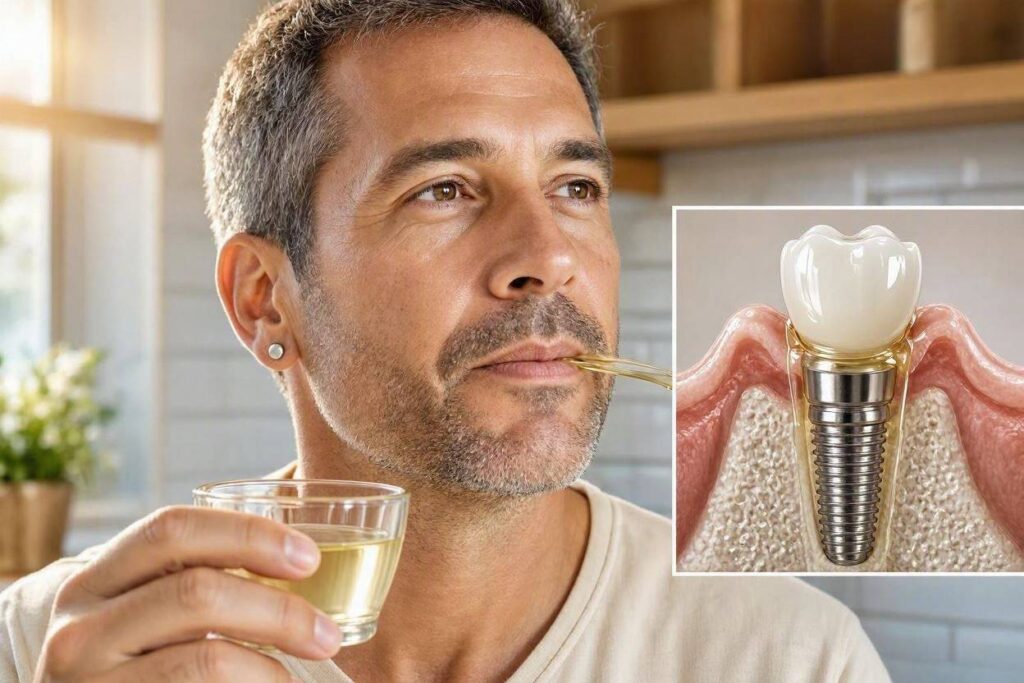
Oil pulling involves taking a tablespoon of edible oil, most commonly coconut oil, sesame oil, or sunflower oil, and swishing it around the mouth, pulling and pushing it through the teeth, for a period of 15 to 20 minutes. The practice is traditionally performed first thing in the morning, before eating or drinking. After the session, the oil is spat out into a trash can, not the sink to avoid clogging, and the mouth is rinsed thoroughly with water. The claimed mechanism is that the oil emulsifies and traps bacteria, toxins, and debris, which are then expelled when the oil is spat out.
Scientific research on oil pulling is limited. Some small studies have shown that oil pulling with coconut oil, which contains lauric acid, can reduce the levels of Streptococcus mutans, the main cavity-causing bacteria, and can reduce plaque and gingivitis comparable to chlorhexidine mouthwash in the short term. However, the evidence is not robust enough for the American Dental Association to endorse oil pulling as a substitute for standard oral hygiene practices like brushing and flossing.
The Interaction with Titanium Implants
The implant fixture is made of commercially pure titanium or a titanium alloy. Titanium is highly resistant to corrosion and chemical attack. It forms a stable, inert oxide layer on its surface that protects it from the oral environment. The oils used in oil pulling, coconut, sesame, sunflower, are mild, non-acidic, non-corrosive substances. They do not contain solvents or harsh chemicals that could attack the titanium oxide layer. The pH of these oils is neutral. Swishing oil in the mouth will not corrode, pit, or degrade the titanium implant. From a materials science perspective, oil pulling is safe for the implant fixture.
Some implant surfaces are treated to be roughened or micro-textured to promote osseointegration. Once the implant has integrated with the bone, this surface is buried in the bone and is not exposed to the oral cavity. The oil cannot reach the textured surface. It only contacts the polished collar of the implant or the abutment, which are smooth and designed to resist plaque accumulation. There is no plausible mechanism by which oil pulling could loosen or destabilize a well-integrated implant.
The Interaction with the Abutment and Crown
The abutment is typically made of titanium or zirconia. The crown is made of porcelain, zirconia, or porcelain fused to metal. These are all inert, non-porous materials used in restorative dentistry precisely because they resist staining, corrosion, and chemical degradation. The oils used in oil pulling will not etch, stain, or erode these materials.
Some patients worry that the oil could seep under the crown and loosen the cement. If the implant crown is screw-retained, there is no cement to loosen. If the crown is cemented, the cement margin at the junction of the crown and the abutment should be sealed. The viscosity of oil is higher than that of water, but oil is not a solvent for dental cements like resin-modified glass ionomer or resin cement. The brief, 20-minute exposure to oil is highly unlikely to cause cement dissolution or crown loosening. However, a poorly fitted crown with an open margin could allow oil and bacteria to penetrate, but this is a problem with the crown, not with the practice of oil pulling.
The Effect on Peri-Implant Soft Tissue
The gum tissue around the implant is the most vulnerable area. The sulcus, the small crevice between the gum and the implant abutment, can harbor bacteria. The primary concern with oil pulling and implants is not damage to the hardware. It is whether the oil pulling has a positive, neutral, or negative effect on the health of the peri-implant mucosa.
There are theoretical benefits. If oil pulling reduces the overall bacterial load in the mouth, it could reduce the bacterial challenge to the peri-implant sulcus. By reducing plaque formation on the crown and the abutment surfaces, oil pulling might contribute to a cleaner implant environment. The anti-inflammatory properties of coconut oil, particularly its lauric acid content, could soothe inflamed gum tissue. For patients with peri-implant mucositis, a reversible inflammation of the gum around the implant, oil pulling might serve as an adjunctive anti-inflammatory measure, though it is not a substitute for professional debridement and improved mechanical cleaning.
There is also a theoretical risk. The action of oil pulling involves forcefully swishing and pulling oil through the teeth. This physical manipulation could, in theory, disturb the delicate soft tissue attachment to the implant abutment if done too aggressively. The junctional epithelium, the seal where the gum attaches to the abutment, is a fragile biological interface. Vigorous, forceful swishing might irritate this tissue. Gentle pulling is unlikely to cause harm.
Clinical Evidence on Oil Pulling and Implants
There are no randomized controlled trials specifically examining the effect of oil pulling on dental implant outcomes. The literature is silent on this specific combination. Recommendations must be extrapolated from what is known about the materials, the biology, and the general effects of oil pulling. Given the inert nature of implant materials and the gentle nature of the practice when done correctly, there is no reason to believe that oil pulling would harm dental implants. The potential benefits for gingival health might indirectly support the health of the peri-implant tissues, but oil pulling should never replace the mechanical cleaning of the implant surfaces with brushes, floss, and water flossers.
Oil Pulling vs. Recommended Implant Care
The gold standard for maintaining dental implants is meticulous mechanical plaque control. This means brushing the implant crown and the abutment surface with a soft toothbrush, cleaning between the implant and the adjacent teeth with interdental brushes or floss, and using a water flosser to flush the sulcus. Antimicrobial mouth rinses, such as those containing chlorhexidine or essential oils, may be recommended for short-term use in cases of inflammation.
Oil pulling is not a replacement for these proven methods. It does not physically scrub the biofilm off the implant surface the way a brush or interdental cleaner does. The oil may emulsify some bacteria, but it does not mechanically disrupt the sticky biofilm matrix. If you choose to incorporate oil pulling into your routine, it should be as an adjunct to brushing, flossing, and water flossing, not as a substitute.
Practical Recommendations for Implant Patients Who Oil Pull
If you have dental implants and you want to practice oil pulling, follow these guidelines to do so safely.
1. Wait Until Healing Is Complete. Do not oil pull during the immediate post-operative healing phase after implant placement. The surgical site needs to heal undisturbed. The swishing action could dislodge the blood clot and disrupt wound healing. Wait until your surgeon has cleared you to resume normal oral hygiene practices, typically two to four weeks after surgery.
2. Use a Gentle Technique. Swish and pull the oil gently through your teeth. Do not swish forcefully or vigorously. A gentle, slow motion is effective and less likely to irritate the peri-implant gum tissue.
3. Use High-Quality Oils. Use virgin, organic coconut oil, sesame oil, or sunflower oil. Avoid oils with added flavors, preservatives, or chemicals. Coconut oil is a popular choice due to its pleasant taste and the antimicrobial properties of lauric acid.
4. Do Not Swallow the Oil. The oil is trapping bacteria and toxins from your mouth. Spit it into a trash can to avoid clogging your drain. Rinse your mouth thoroughly with water afterward.
5. Maintain Your Brushing and Flossing Routine. Brush your teeth and your implant crown at least twice a day. Clean between your teeth daily with the tools recommended by your dentist or hygienist. Use oil pulling as an extra step, perhaps before brushing, not as a replacement.
6. Do Not Oil Pull If You Have an Active Infection. If you have signs of peri-implant mucositis or peri-implantitis, such as bleeding, pus, swelling, or a dull ache, see your dentist. Oil pulling will not cure an established infection. You need professional debridement and possibly antibiotics.
Summary of Oil Pulling with Dental Implants
- Oil pulling is safe for the titanium implant fixture, the abutment, and the crown materials. The oils are non-corrosive and will not damage the hardware.
- The gentle swishing action is unlikely to harm the peri-implant soft tissue attachment if done carefully, but aggressive swishing should be avoided.
- Oil pulling may provide adjunctive benefits by reducing oral bacterial load and inflammation, but it is not a substitute for mechanical implant cleaning.
- Do not oil pull during the immediate post-surgical healing phase.
- If you have concerns about your implant health, see your dentist before relying on oil pulling as a remedy.
Conclusion
You can oil pull with dental implants, provided you do so gently and as a supplement to, not a replacement for, your standard implant hygiene routine. The inert, corrosion-resistant materials of your implant are not at risk from contact with edible oils. The potential benefits for overall gingival health may indirectly support your implant, but the critical factors for long-term implant success remain meticulous mechanical cleaning and regular professional maintenance. Oil pulling is an ancient practice that can peacefully coexist with modern implant dentistry.
Frequently Asked Questions (FAQ)
1. Can coconut oil loosen my dental implant?
No. Coconut oil has no mechanism to loosen a well-osseointegrated dental implant. The implant is fused to the bone, not held in place by a bond that oil could dissolve.
2. Will oil pulling whiten my implant crown?
Oil pulling does not change the intrinsic color of porcelain or zirconia. Implant crowns are color-stable. Oil pulling may help remove superficial stains from natural teeth, but it will not whiten the crown material itself.
3. Is it safe to oil pull with a full-arch implant bridge?
Yes. You can swish oil gently under and around a fixed full-arch bridge. It is important to also clean under the bridge with super floss or a water flosser.
4. Should I oil pull before or after brushing my teeth?
Traditionally, oil pulling is done first thing in the morning, before brushing. You can then brush and floss your teeth and implants after you have spat out the oil and rinsed.
5. Can oil pulling cure peri-implantitis?
No. Peri-implantitis requires professional treatment, including mechanical debridement of the implant surface and possibly surgery. Oil pulling is not a cure for established peri-implant disease.
6. Does oil pulling help with bad breath from implants?
Halitosis around implants is often a sign of bacterial buildup or peri-implant inflammation. Oil pulling may temporarily reduce odor-causing bacteria, but the underlying cause must be addressed with better cleaning or professional care.
7. What is the best oil for oil pulling with implants?
Virgin coconut oil is widely recommended due to its pleasant taste and the antimicrobial properties of lauric acid. Sesame oil is the traditional Ayurvedic choice.
Additional Resource
For more information on oral hygiene practices and implant care, visit the American Dental Hygienists’ Association:
American Dental Hygienists’ Association