Do Dental Implants Hurt Over Time?
Pain is the body’s alarm system. It signals that something is wrong, that tissue is being damaged, that attention is required. When you invest thousands of dollars and months of healing into a dental implant, the prospect of ongoing pain is deeply unsettling. You want the implant to become a silent, seamless part of your body, like the natural tooth it replaced. The question, then, is whether this expectation is realistic. Do dental implants hurt over time, or is persistent discomfort an inevitable companion to this titanium replacement?
The answer, grounded in the biology of osseointegration and the clinical experience of millions of implant patients, is reassuring. A healthy, successfully integrated dental implant should be completely pain-free in the long term. Once the surgical site has healed and the implant has fused to the bone, there are no nerve endings within the implant itself to generate pain, and the surrounding bone and gum tissue should exist in a state of healthy equilibrium. Pain that emerges months or years after implant placement is not normal. It is a signal of a developing complication—peri-implantitis, occlusal overload, nerve injury, or a mechanical failure of the prosthetic components. This pain demands investigation, not endurance.
This guide traces the expected pain trajectory of a dental implant, from the immediate postoperative period through the months of healing to the years of function. We will describe what normal healing feels like, when discomfort should fade, and how to distinguish between the benign aches of integration and the warning signals of a failing implant. Understanding this timeline empowers you to recognize when your implant is healing as expected and when it is calling for help.
The Normal Postoperative Pain Timeline
Implant surgery is a controlled injury to the jawbone and the overlying gum tissue. A drill prepares an osteotomy site. The implant is threaded into place. The gum is sutured closed. The body responds to this injury with inflammation, the first phase of healing. Inflammation brings blood flow, immune cells, and the chemical signals that initiate bone formation and soft tissue repair. Inflammation also brings pain.
The peak of postoperative pain occurs 24 to 72 hours after surgery. This is when the inflammatory response is at its height. Patients typically describe the pain as a dull ache, a throbbing sensation, or a feeling of pressure localized to the implant site. The pain is generally well-controlled with over-the-counter analgesics such as ibuprofen or acetaminophen, often combined with the prescribed pain medication for the first day or two. Ice packs applied to the cheek in 20-minute intervals during the first 24 hours reduce swelling and provide significant relief.
By the end of the first week, the acute surgical pain should have largely subsided. Some residual tenderness when touching the area, a feeling of tightness from the sutures, and mild swelling that gradually resolves are all normal. The patient should be able to return to work and most normal activities within a day or two, avoiding strenuous exercise and heavy chewing on the surgical side for the first week. If the surgeon placed a healing abutment that protrudes through the gum, the tongue and cheek may explore this new object, causing some transient irritation as the soft tissue adapts.
By the end of the second week, most patients report minimal to no discomfort at the surgical site. The sutures may have dissolved or been removed. The gum tissue should be pink and firm, not red, puffy, or draining. A mild, occasional ache at the site, particularly if the patient inadvertently chews on that side, can persist for several weeks as the bone remodels around the implant. This is not a sharp, persistent pain but a fleeting reminder that deep healing is underway. By the end of the first month, the implant site should feel essentially normal, with the possible exception of a healing abutment still feeling unfamiliar to the tongue.
Osseointegration: The Silent Phase
The months following the initial surgical recovery are the osseointegration phase. The bone is forming new tissue in direct contact with the implant surface. This process is biologically active but clinically silent. The patient should feel nothing. There is no “healing pain” during osseointegration. The implant is either submerged under the gum or capped with a healing abutment, and the surrounding tissue is maturing quietly.
If pain, swelling, or tenderness emerges during this phase, it is not a sign of robust healing. It is a red flag. A dull, persistent ache that develops weeks after surgery may indicate a low-grade infection, a failing bone graft, or early implant mobility. The patient should contact the implant surgeon immediately for evaluation. A radiograph and a clinical examination can determine whether the implant is integrating normally or is in trouble. Ignoring pain during the osseointegration phase can allow a reversible problem to progress into an irreversible failure.
The Painless State of the Healthy Long-Term Implant
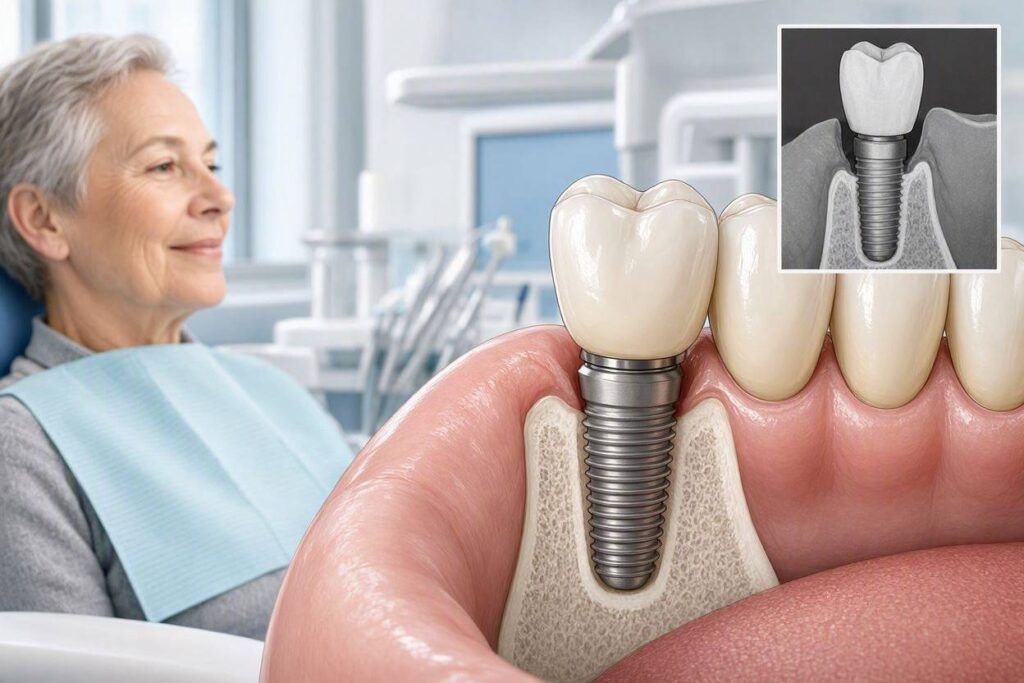
Once the implant has osseointegrated and the final crown has been delivered, the restoration should enter a state of comfortable, silent function. The implant itself has no nerve supply. The titanium post cannot feel pain. The crown on top is a non-living prosthetic. The bone around the implant should be healthy and pain-free, just like the bone around any other part of the skeleton.
Chewing with an implant-supported crown feels different from chewing with a natural tooth, but this difference is sensory, not painful. The natural tooth has a periodontal ligament with proprioceptive nerve endings that provide fine tactile feedback. The implant lacks this ligament, so the patient senses pressure through receptors in the periosteum, the muscles, and the jaw joint. This altered sensation is often described as a “wooden” or “dead” feeling. It is normal and should not be painful. The brain adapts to this new sensory input over time.
The gum tissue around the implant should be pink, firm, and non-tender. It should not bleed when brushed or probed gently. The patient should be able to floss around the implant crown without discomfort. There should be no awareness of the implant as a foreign object. Successful implants achieve what clinicians call “prosthetic anonymity”: the patient forgets the implant is there. This is the goal, and for the vast majority of compliant patients with well-executed treatment, it is the long-term reality.
When Pain Signals a Problem
Pain that develops in a previously comfortable implant is a symptom that something has changed. The causes of late-onset implant pain fall into several categories, each requiring a specific diagnostic workup and intervention.
Peri-Implantitis: This is the most common cause of pain in a previously healthy implant. Bacterial biofilm accumulates on the implant surface, particularly in the submucosal zone where the abutment meets the implant. The host inflammatory response destroys the supporting bone. Early peri-implantitis may be painless, but as the disease progresses, the patient may notice tenderness, bleeding on brushing, a bad taste or odor, and eventually mobility. The pain is typically a dull ache, exacerbated by chewing. Treatment involves mechanical debridement, chemical decontamination, and possibly surgical regenerative therapy. The earlier it is caught, the more likely the implant can be salvaged.
Occlusal Overload: An implant crown that strikes too heavily against the opposing tooth transmits excessive force directly into the bone. The patient may experience pain on chewing, particularly with hard or crunchy foods. The pain resolves when the pressure is released. The tooth may feel “high” or “bruised.” The dentist diagnoses occlusal overload by checking the bite with articulating paper and adjusting the high spots. A night guard may be indicated for patients with bruxism. Unchecked occlusal overload can lead to bone loss, screw loosening, or implant fracture.
Nerve Injury: If the implant was placed too close to the inferior alveolar nerve in the lower jaw, the patient may experience neuropathic pain, numbness, tingling, or a burning sensation in the lip, chin, or teeth on that side. This pain may be constant or intermittent. A nerve injury that causes persistent pain or altered sensation requires evaluation by an orofacial pain specialist or a micro-neurosurgeon. In some cases, removing or backing out the implant can relieve the pressure on the nerve and allow recovery.
Cement Residue: In a cemented implant crown, excess cement that extrudes below the gum line and is not removed acts as a foreign body, triggering chronic inflammation and bone loss. The patient may experience a dull, persistent ache, bleeding, and a bad taste. This pain can develop months after crown delivery. Treatment involves surgically accessing the implant margin, removing the retained cement, and decontaminating the site. This is an entirely preventable complication, which is why many implant dentists now favor screw-retained restorations.
Loose Abutment Screw: As discussed in the previous article on loose implants, a loose abutment screw can cause localized gum tenderness and a sensation of movement. The pain is typically mild and directly related to the mobility of the components. Tightening the screw resolves the pain.
The Important Distinction: Implant Pain vs. Referred Pain
Not all pain perceived in the region of a dental implant originates from the implant itself. The human nervous system can be imprecise. Pain from a neighboring natural tooth, the jaw joint, the chewing muscles, or even the sinuses can be felt in the area of the implant. This is called referred pain.
A natural tooth adjacent to the implant may develop a cavity, a crack, or a root canal infection that radiates pain to the implant site. The patient may mistakenly believe the implant is failing when the problem is actually a natural tooth. The dentist differentiates between implant pain and referred tooth pain through percussion testing, thermal testing on natural teeth, and radiographs of both the implant and the adjacent teeth.
Temporomandibular joint disorders can cause facial pain that localizes to the implant area. Patients who clench or grind their teeth may develop muscle pain in the masseter or temporalis muscles that feels like implant pain. A thorough examination of the masticatory muscles and the jaw joints distinguishes myofascial pain from true implant pathology.
Maxillary sinusitis can refer pain to the upper posterior teeth and implants. An implant that protrudes slightly into the sinus can trigger chronic sinus inflammation. The patient may feel pain that varies with head position, air travel, or seasonal allergies. A CBCT scan and an ENT evaluation may be necessary to determine whether the implant is contributing to the sinus problem.
When to Contact Your Implant Dentist
Pain is a signal. The appropriate response is not to ignore it or to self-medicate indefinitely, but to seek professional evaluation. The following symptoms warrant a prompt call to your implant dentist or surgeon:
- Any pain that persists for more than a few days without an obvious, self-limiting cause.
- Pain that increases in intensity over time rather than fading.
- Pain accompanied by swelling, redness, bleeding, pus, or a bad taste.
- A feeling of movement, clicking, or shifting of the implant crown.
- Numbness, tingling, or burning in the lip, chin, or tongue.
- Pain that awakens you at night or is not relieved by over-the-counter analgesics.
Early intervention for implant complications is consistently more successful, less invasive, and less costly than delayed treatment.
Conclusion
A healthy, osseointegrated dental implant should be completely pain-free in the long term, with the normal postoperative soreness resolving within one to two weeks after surgery and no discomfort during the months of silent osseointegration. Pain that develops in a previously comfortable implant is a warning signal of a specific, diagnosable problem—most commonly peri-implantitis, occlusal overload, nerve injury, or loose prosthetic components—and demands prompt professional evaluation. Distinguishing between implant pain and referred pain from adjacent teeth, the jaw joint, or the sinuses is an essential part of the diagnostic process.
Frequently Asked Questions
Q: Is it normal for my implant to hurt when I have a cold or sinus infection?
A: For upper posterior implants near the maxillary sinus, sinus pressure and congestion can cause transient discomfort or a feeling of pressure around the implant. This should resolve when the sinus infection clears. If the pain persists after the sinus condition resolves, the implant may be encroaching on the sinus or there may be a separate implant-related problem that requires evaluation.
Q: Can changes in weather or barometric pressure cause implant pain?
A: There is no scientific evidence that weather changes cause pain in healthy dental implants. Some patients anecdotally report sensitivity in implants or natural teeth with changes in pressure, but this is not a recognized clinical phenomenon for well-integrated implants. If you experience weather-related pain, it may be originating from a natural tooth or the sinus and referred to the implant area.
Q: Should I take pain medication before my implant surgery to get ahead of the pain?
A: Many surgeons recommend taking an over-the-counter anti-inflammatory medication, such as ibuprofen, one hour before the procedure, provided you have no medical contraindications. This preemptive analgesia can reduce the intensity of postoperative pain and inflammation. Follow your surgeon’s specific pre-operative instructions, as some medications, such as aspirin, can increase bleeding and should be avoided.
Q: How long after implant surgery can I expect to need pain medication?
A: Most patients require prescription pain medication for only the first 24 to 48 hours, transitioning to over-the-counter analgesics thereafter. By the end of the first week, the vast majority of patients require no pain medication at all for the implant site. Extended need for pain relief beyond the first week is unusual and should prompt a call to the surgeon.
Additional Resource:
For information on postoperative pain management in oral surgery, visit the American Association of Oral and Maxillofacial Surgeons: https://www.aaoms.org/