Can Dental Implant Work If You Smoke?
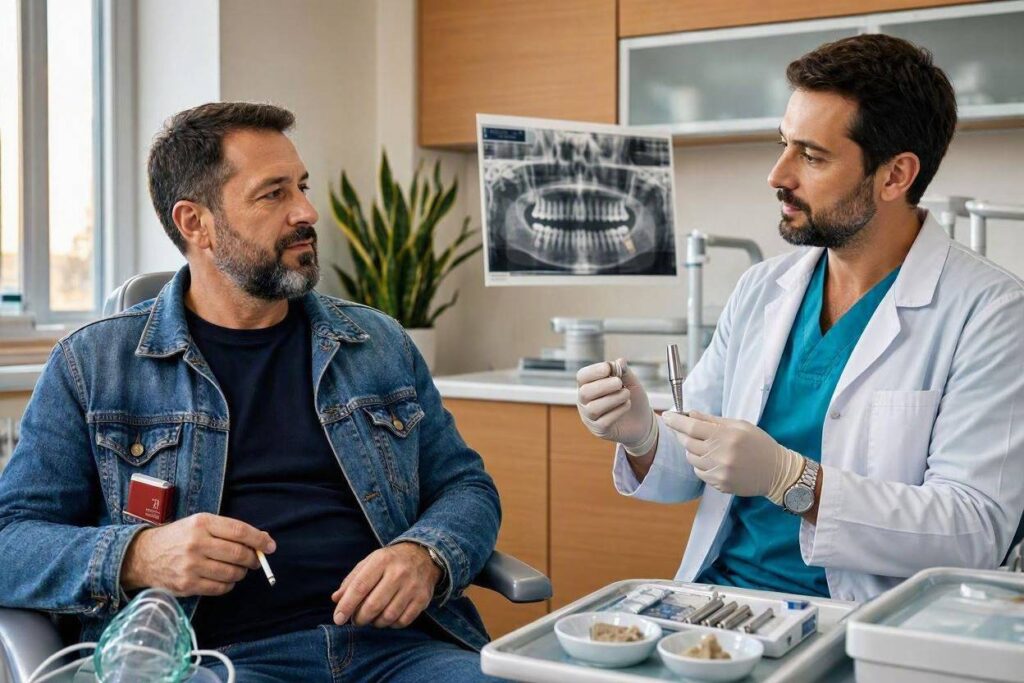
You are a smoker. You know it is not a healthy habit. You have tried to quit, perhaps many times. But smoking is a deeply ingrained physical addiction and a psychological crutch. You also have a missing tooth, and you desperately want a dental implant. You have heard whispers and read warnings online that smokers cannot get implants, that they are doomed to fail. You want the truth, not a lecture. Can a dental implant work if you smoke?
The answer is not a simple yes or no. It is a statement of calculated, elevated risk. Yes, dental implants can work in smokers, but the failure rate is significantly, undeniably higher. A responsible implant surgeon views a heavy smoker not as an automatic rejection, but as a patient with a profound, self-administered biological handicap. This article is a blunt, evidence-based explanation of what cigarette smoke does to the implant site, the numerical risks you are accepting, and the rigid protocols that might give your implant a fighting chance.
The Vascular Assault: How Smoke Destroys the Healing Environment
The core biological event that makes an implant successful is osseointegration, the direct fusion of bone to the titanium surface. This is a delicate, blood-dependent healing process. Osteoblast cells must migrate to the implant surface, lay down a matrix, and mineralize it into solid bone. This process requires a rich, uninterrupted supply of oxygen, nutrients, and immune cells delivered by the bloodstream.
Cigarette smoke is a direct, multi-pronged assault on this healing environment. Nicotine is a potent vasoconstrictor. It causes the small blood vessels, the capillaries and arterioles in the surgical site, to clamp down and narrow. This dramatically reduces the flow of oxygenated blood to the healing implant. The jawbone becomes a desert of low oxygen tension. Bone cells starved of oxygen cannot function. The healing process stalls.
Simultaneously, carbon monoxide from the inhaled smoke binds to hemoglobin in the red blood cells with an affinity 200 times greater than oxygen. Your blood is carrying a toxic, useless gas instead of the oxygen your healing bone desperately needs. The combined effect of nicotine-induced vasoconstriction and carbon monoxide-induced hypoxia creates a profoundly compromised surgical site. The body’s ability to grow new bone onto the implant surface is severely, measurably crippled.
The Immune Suppression: A Mouth Ripe for Infection
The mouth is a sewer of bacteria. A successful implant relies on the body’s immune system to keep this bacterial load at bay during the healing phase and to maintain a healthy, non-inflamed gum seal around the implant for life. Smoking compromises this immune defense.
Smoking impairs the function of neutrophils, the white blood cells that are the first responders to bacterial invasion. It reduces the production of antibodies in the saliva. It creates a chronic, low-grade inflammatory state in the gums. The smoker’s mouth is a more pathogen-friendly environment. The risk of a post-operative infection at the surgical site is elevated. More critically, the smoker is dramatically predisposed to peri-implantitis, a destructive, progressive infection of the bone around a successfully integrated implant. This is the leading cause of late implant failure, the slow-motion loss of an implant years after it was placed.
The Numerical Risk: What the Statistics Show
The dental literature is filled with studies comparing implant survival and success rates in smokers versus non-smokers. The numbers paint a clear and sobering picture. A non-smoker with good oral hygiene can expect an implant survival rate, defined as the implant remaining in the mouth, of 95-98% over ten years. A smoker’s survival rate is lower, but still often quoted in the 85-90% range. This can be misleading.
The more meaningful metric is the success rate, which includes not just survival, but the absence of peri-implantitis, marginal bone loss, and bleeding. The success rate in heavy smokers can drop to 60-70% over the long term. The risk of implant failure is two to three times higher in a smoker. The risk of peri-implantitis is significantly elevated. These are not small, marginal differences. They represent a substantial, statistically significant handicap.
The effect is dose-dependent. A light smoker, fewer than five cigarettes a day, is at a moderately elevated risk. A heavy smoker, more than a pack a day, is at a markedly elevated risk. The surgeon is not being judgmental. They are reading the numbers and calculating the probability of your implant becoming a failed, infected, and costly problem.
The Protocol of Last Resort: The Strict Smoker’s Contract
A responsible implant surgeon who agrees to treat a smoker will not do so casually. They will impose a strict protocol, a contract of behavior that is non-negotiable. The failure to adhere to this contract is grounds for the surgeon to refuse treatment or to void any warranty on the implant’s success.
The Pre-Operative Cessation Window
The surgeon will require you to stop smoking completely for a defined period before the surgery. This window is typically a minimum of one to two weeks, and ideally four weeks. The goal is to allow the vasoconstrictive and carbon monoxide effects to wash out of your system, giving the surgical site a chance to start with a relatively normal blood supply.
The Critical Osseointegration Period
The most important mandate is total abstinence from smoking during the entire osseointegration period, the first three to six months after implant placement. This is the window where the bone is actively fusing to the implant. Smoking during this window is the biological equivalent of drowning your seedling in poison. The surgeon may require you to verify your smoking cessation with a cotinine test, a simple urine or saliva test that detects a metabolite of nicotine. This is not a lack of trust. It is a clinical verification of a biological variable that will directly determine the success of a surgery they are performing.
The Lifelong Maintenance Commitment
Even after successful osseointegration, the smoker must commit to a rigorous, lifelong maintenance schedule. This means professional implant hygiene cleanings every three to four months, not the standard six months. It means meticulous daily home care with a water flosser and interproximal brushes. And it means a brutally honest acknowledgment that continuing to smoke, even after the implant has healed, continues to elevate the risk of peri-implantitis, a disease that can destroy the implant’s bone support slowly and silently.
The Painful Truth: If you are unwilling or unable to stop smoking for the defined peri-operative window, a responsible surgeon will and should decline to place the implant. This is not a rejection of you as a person. It is a refusal to perform an expensive, skill-intensive surgical procedure that your habit is highly likely to cause to fail. The surgeon is ethically obligated to do no harm. Placing an implant into a smoking-choked environment, knowing the predictable outcome, is a violation of that principle.
The Alternative: The Non-Implant Solution for the Committed Smoker
For the patient who cannot quit smoking but needs to replace a missing tooth, the standard of care must shift to alternatives that are less vulnerable to the systemic effects of smoking. A conventional fixed dental bridge, supported by the adjacent natural teeth, does not rely on the osseointegration of a metal post into bone. While the gums and the supporting teeth can still suffer from the smoker’s periodontal disease, the restoration itself does not carry the same risk of a catastrophic, total osseointegration failure. A removable partial denture is an even simpler, though less desirable, option that avoids the surgical risk altogether. The implant is the gold standard, but it is not the only standard, and for the heavy, committed smoker, it may not be the wisest one.
Conclusion
A dental implant can work in a smoker, but the path is narrow, steep, and paved with strict conditions. The biological assault of nicotine and carbon monoxide cripples the healing blood supply and elevates the risk of both early failure and late peri-implantitis. The smoker’s implant success rate is significantly, statistically lower. A responsible surgeon will require a rigid contract of pre- and post-operative smoking cessation, verified by testing, as the non-negotiable price of admission. For the smoker who cannot quit, a non-implant tooth replacement option is the more predictable and honest choice.
Frequently Asked Questions
How soon after quitting smoking can I get a dental implant?
Most surgeons require a minimum of two to four weeks of complete smoking abstinence before surgery, with a commitment to remain abstinent for the entire three to six months of osseointegration. The longer the period of pre-operative cessation, the better the healing environment. A cotinine test may be required to confirm compliance.
Does vaping pose the same risk as smoking for dental implants?
The data on vaping and implant osseointegration is still emerging, but the preliminary evidence is concerning. Nicotine, in any inhaled form, is a vasoconstrictor. The propylene glycol and flavoring chemicals may have their own inflammatory effects on the oral tissues. A cautious surgeon will treat vaping with the same level of concern and protocol as cigarette smoking. Nicotine is the enemy, regardless of the delivery vehicle.
What is peri-implantitis, and why is it a higher risk for smokers?
Peri-implantitis is a destructive inflammatory process affecting the soft and hard tissues surrounding an osseointegrated implant. It begins as gum inflammation (peri-implant mucositis) and progresses to progressive bone loss around the implant. Smoking impairs the immune response and promotes a more pathogenic oral microbiome, making the smoker far more susceptible to this slow-motion, implant-killing disease.
Additional Resource:
For a comprehensive review of the effects of smoking on oral health and surgical outcomes, including implant therapy, visit the American Academy of Periodontology’s resource on smoking and periodontal disease: https://www.perio.org/consumer/smoking-and-periodontal-disease