How To Keep A Dental Implant Cleaned?
Dental implants are a significant investment in your oral health. With proper care, they can last a lifetime. However, many patients assume that because implants are artificial, they do not require the same level of care as natural teeth. This is a dangerous misconception.
This guide explains how to keep your dental implant clean and healthy. You will learn about daily hygiene routines, specialized tools, professional maintenance, and common mistakes to avoid.
Why Cleaning Your Dental Implant Matters
Dental implants themselves cannot develop cavities. However, the tissues surrounding the implant are vulnerable to infection. If plaque and bacteria accumulate around the implant, they can cause inflammation and infection.
Peri-Implant Mucositis
Peri-implant mucositis is inflammation of the gum tissue around an implant. It is similar to gingivitis around natural teeth. If caught early, it is reversible with proper cleaning.
Peri-Implantitis
Peri-implantitis is a more serious condition that affects both the gum tissue and the bone supporting the implant. It causes bone loss and can lead to implant failure. Peri-implantitis is difficult to treat and often requires surgery.
The key to preventing these conditions is keeping the implant and surrounding tissues free of plaque and bacteria.
Daily Cleaning Routine for Dental Implants
A consistent daily routine is essential for implant health. Here is what you should do every day.
Brushing Twice Daily
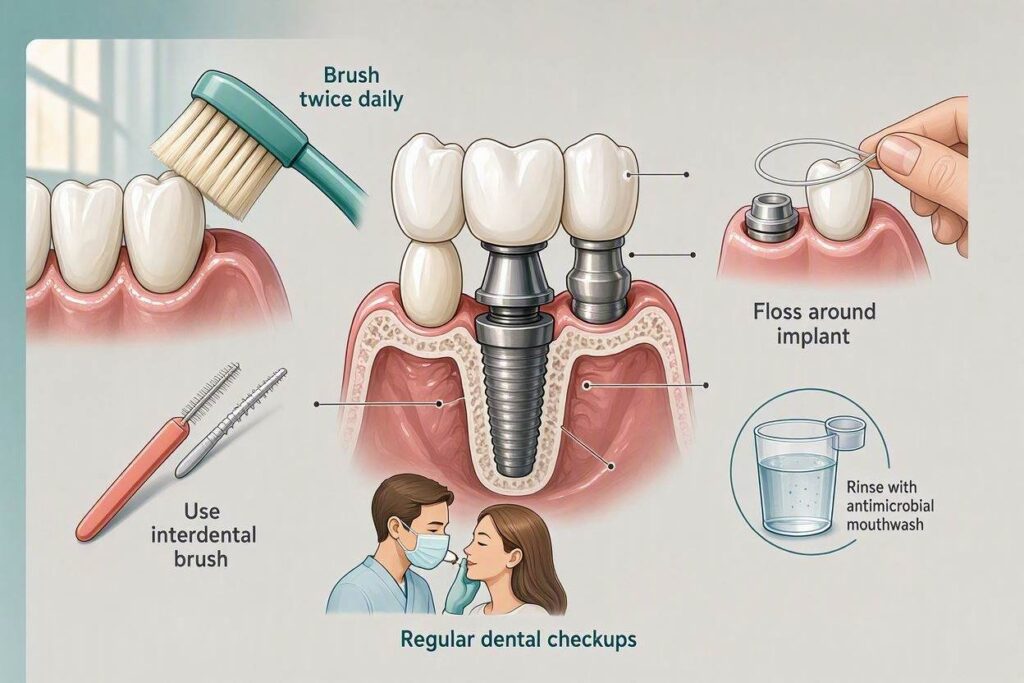
Brush your teeth at least twice a day with a soft-bristled toothbrush. Use gentle, circular motions to clean all surfaces of the teeth and implants. Pay special attention to the area where the implant meets the gum line.
Flossing Daily
Floss at least once a day to remove plaque from between the teeth and around the implant. Special floss designed for implants is available. Floss threaders can help you clean around implant-supported bridges.
Using an Antimicrobial Mouthwash
Rinse with an antimicrobial mouthwash to reduce bacteria in the mouth. Choose a mouthwash that is alcohol-free to avoid drying out the tissues.
Cleaning Around Abutments
The abutment is the connector between the implant and the crown. Plaque can accumulate around the abutment, especially just below the gum line. Use interdental brushes or special implant brushes to clean this area.
Specialized Tools for Implant Cleaning
Several tools can make implant cleaning easier and more effective.
Interdental Brushes
Interdental brushes are small brushes designed to clean between teeth and around implants. They come in various sizes. Your dentist can recommend the right size for your mouth.
Water Flossers
Water flossers use a stream of water to remove plaque and food particles from around implants. They are especially useful for patients with implant-supported bridges or dentures.
Soft Picks
Soft picks are flexible rubber picks that gently clean between teeth and around implants. They are easy to use and gentle on the gums.
Implant-Specific Floss
Some floss is designed specifically for implants. It is thicker and more durable than regular floss. It may have a stiff end that makes threading easier.
Rubber Tip Stimulators
Rubber tip stimulators help remove plaque from the gum line and stimulate blood flow. They are useful for cleaning around the abutment.
Professional Maintenance for Dental Implants
In addition to daily home care, professional maintenance is essential.
Regular Dental Check-Ups
Visit your dentist at least twice a year for check-ups. Your dentist will examine the implant, check for signs of inflammation, and assess the health of the surrounding tissues.
Professional Cleanings
Professional cleanings remove plaque and tartar that home care cannot reach. Your dental hygienist uses special instruments designed for implants. These instruments are typically made of plastic or titanium to avoid scratching the implant surface.
X-Rays
Periodic X-rays allow your dentist to check the bone level around the implant. Changes in bone level can indicate peri-implantitis or other problems.
Periodontal Probing
Your dentist may use a periodontal probe to measure the depth of the gum pockets around the implant. Increasing pocket depth indicates inflammation and potential problems.
Cleaning Different Types of Implant Restorations
The cleaning routine varies depending on the type of implant restoration.
Single Tooth Implants
Single tooth implants are cleaned like natural teeth. Brush, floss, and use interdental brushes as needed. Pay attention to the area where the implant meets the gum.
Implant-Supported Bridges
Implant-supported bridges replace multiple teeth. Cleaning under the bridge is essential. Use floss threaders, interdental brushes, or water flossers to clean beneath the bridge.
Implant-Supported Dentures
Implant-supported dentures can be removable or fixed. Removable dentures should be removed daily for cleaning. Clean the denture and the implants separately. Fixed dentures require special tools to clean around the implants and under the denture.
Full Arch Restorations
Full arch restorations like All-on-4 require diligent cleaning. Use water flossers, interdental brushes, and special floss to clean around the implants and under the restoration.
Common Mistakes to Avoid
Avoid these common mistakes to protect your dental implants.
Using Abrasive Toothpaste
Abrasive toothpaste can scratch the surface of the implant and crown. Scratches create rough areas where bacteria can accumulate. Use a non-abrasive toothpaste.
Using Metal Instruments
Metal instruments can scratch the implant surface. This is why dental hygienists use special plastic or titanium instruments for implant cleaning.
Smoking
Smoking significantly increases the risk of peri-implantitis and implant failure. If you smoke, quitting is one of the best things you can do for your implant health.
Skipping Dental Visits
Regular dental visits are essential for monitoring implant health. Skipping visits allows problems to develop undetected.
Ignoring Bleeding Gums
Bleeding gums around an implant are a sign of inflammation. Do not ignore this symptom. Contact your dentist for evaluation.
Signs of Implant Problems
Be aware of signs that may indicate a problem with your implant.
Bleeding Gums
Bleeding when brushing or flossing around the implant is a sign of inflammation.
Swelling or Redness
Swelling or redness around the implant indicates infection or inflammation.
Bad Taste or Odor
A persistent bad taste or odor from around the implant may indicate infection.
Implant Mobility
A properly integrated implant should not move. If the implant feels loose, contact your dentist immediately.
Pain or Discomfort
Pain or discomfort around the implant is a warning sign. Some sensitivity is normal after placement, but persistent pain needs evaluation.
Important Notes for Patients
- Dental implants require the same level of care as natural teeth.
- Peri-implantitis is a serious condition that can lead to implant failure.
- Use specialized tools designed for implant cleaning.
- Visit your dentist regularly for professional maintenance.
- Do not ignore signs of inflammation or infection.
Frequently Asked Questions
How often should I clean my dental implant?
Clean your dental implant at least twice daily, just like natural teeth. Brush in the morning and evening, and floss daily.
Can I use a regular toothbrush on my dental implant?
Yes, use a soft-bristled toothbrush. Avoid hard-bristled brushes that can scratch the implant surface.
What is the best floss for dental implants?
Implant-specific floss is designed for use around implants. It is thicker and more durable than regular floss. Floss threaders help clean around bridges.
Can I use a water flosser on my dental implant?
Yes, water flossers are excellent for cleaning around implants. They remove plaque and food particles from hard-to-reach areas.
How often should I see the dentist after getting an implant?
Visit your dentist at least twice a year for check-ups and cleanings. Some patients with a history of gum disease may need more frequent visits.
What is peri-implantitis?
Peri-implantitis is inflammation and infection around a dental implant that causes bone loss. It is a serious condition that can lead to implant failure.
Can dental implants get cavities?
No, dental implants cannot get cavities because they are made of titanium and porcelain. However, the surrounding tissues can become infected.
What should I do if my gums bleed around my implant?
Bleeding gums indicate inflammation. Improve your cleaning routine and contact your dentist for evaluation. Early treatment prevents more serious problems.
Conclusion
Keeping a dental implant clean requires the same diligence as caring for natural teeth. Brush twice daily, floss daily, and use specialized tools like interdental brushes and water flossers. Visit your dentist regularly for professional cleanings and check-ups. Avoid smoking and abrasive products that can damage the implant. By following these guidelines, you can protect your investment and enjoy a healthy smile for decades.
Additional Resource
For more information on dental implant care and maintenance, visit the American Academy of Implant Dentistry at www.aaid.com. This professional organization offers patient education resources on implant care.