Are Braces Compatible With Dental Implants?
Many patients wonder if they can have both dental implants and braces. This is an important question because orthodontic treatment and dental implants serve different purposes, and combining them requires careful planning. The short answer is that braces and implants can be compatible, but the timing and approach matter significantly.
This guide explains the relationship between braces and dental implants. You will learn about the challenges, the correct sequence of treatment, and what to expect if you need both.
Understanding Braces and Dental Implants
Braces and dental implants are fundamentally different treatments. Understanding how they work helps explain their interaction.
How Braces Work
Braces apply controlled pressure to teeth, gradually moving them through the jawbone. The bone responds to this pressure by remodeling, allowing teeth to shift into new positions. This process works because natural teeth have periodontal ligaments that allow movement.
How Dental Implants Work
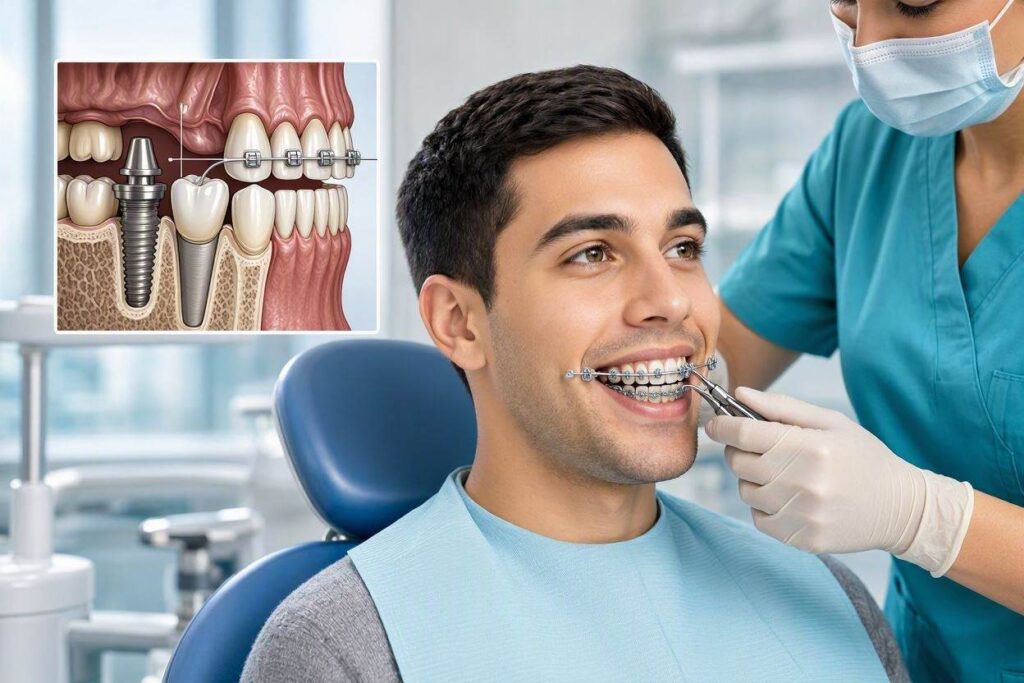
Dental implants are titanium posts that fuse with the jawbone through osseointegration. Once integrated, the implant becomes firmly anchored in the bone. Unlike natural teeth, implants cannot be moved by orthodontic forces.
The Key Difference
The critical difference is that natural teeth can move through bone, but implants cannot. Once an implant is placed and integrated, it is fixed in position. This has important implications for orthodontic treatment.
Can You Get Braces If You Already Have Implants?
Yes, you can get braces if you already have dental implants. However, the implants will not move. The orthodontist will work around the implants, using them as anchors if needed.
Using Implants as Anchors
In some cases, implants can serve as stable anchors for orthodontic treatment. The orthodontist can use the implant to apply force to move other teeth. This is called using the implant as an anchorage point.
Limitations
While braces can be placed with implants present, there are limitations. The implant remains in its original position. If the implant is not in the ideal position for the final bite, this can complicate treatment.
Treatment Planning
Careful treatment planning is essential when braces are needed with existing implants. The orthodontist must design the treatment around the fixed implant position.
Can You Get Implants If You Are Planning Braces?
If you are planning orthodontic treatment, it is usually better to complete braces before getting implants. This is the recommended sequence for most patients.
Why Braces Should Come First
Braces move teeth into their ideal positions. If you get implants first, the implants may end up in the wrong position after orthodontic treatment. By completing braces first, the orthodontist can create the proper space for the implant.
Creating Space for Implants
If you have a missing tooth and need an implant, braces can help create the ideal space for the implant. The orthodontist can move the adjacent teeth to open up or close the gap as needed.
The Ideal Sequence
The ideal sequence is braces first, then implants. This allows the orthodontist to position the teeth properly before the implant is placed. The implant can then be placed in the optimal position.
What Happens If You Have an Implant and Need Braces?
If you already have an implant and need braces, treatment is still possible. Here is what to expect.
Evaluation
Your orthodontist will evaluate the position of the implant and determine how it fits into the overall treatment plan. X-rays and 3D scans help assess the implant’s position.
Treatment Planning
The orthodontist designs the treatment around the implant. In some cases, the implant serves as an anchor. In other cases, the treatment focuses on moving the natural teeth while leaving the implant in place.
Possible Compromises
Having an implant in place may limit the orthodontic possibilities. The final result may be a compromise compared to what could be achieved if braces were done first.
Special Considerations
Several special considerations apply when combining braces and implants.
Timing
The timing of implant placement is critical. If you need braces and implants, plan the sequence carefully. Braces should generally come first.
Healing Period
If you have recently received an implant, you must wait for osseointegration to complete before starting braces. This takes three to six months. Applying orthodontic force to a healing implant can cause failure.
Implant-Supported Restorations
If you have an implant-supported crown or bridge, braces can still be placed. However, the restoration may need to be adjusted or replaced after orthodontic treatment.
Bone Grafting
If you need bone grafting before implant placement, this adds another step to the timeline. The grafting must heal before the implant is placed, and the implant must integrate before braces begin.
The Correct Sequence for Braces and Implants
For most patients, the correct sequence is:
- Complete orthodontic treatment with braces
- Wait for teeth to stabilize in their new positions
- Place the dental implant
- Allow the implant to integrate
- Place the final crown on the implant
This sequence ensures that the implant is placed in the ideal position after the teeth have been aligned.
What If You Need Braces After Implants?
If you need braces after already having implants, do not worry. Treatment is still possible. Here is what you should know.
Consult an Experienced Orthodontist
Choose an orthodontist who has experience treating patients with implants. They can develop a treatment plan that works around the implants.
Understand the Limitations
Be aware that the implants will not move. The final result may be a compromise. Discuss the expected outcome with your orthodontist.
Consider Alternatives
In some cases, alternatives like clear aligners may be more suitable than traditional braces when implants are present. Discuss all your options.
Important Notes for Patients
- Dental implants cannot be moved by orthodontic forces.
- Braces should generally come before implants.
- If you have implants, braces can still be placed, but the implants serve as fixed points.
- The ideal sequence is braces first, then implants.
- Consult an experienced orthodontist if you need both treatments.
- Healing periods must be respected between procedures.
Frequently Asked Questions
Can braces move dental implants?
No, braces cannot move dental implants. Once an implant has integrated with the bone, it is fixed in position.
Should I get braces before or after implants?
In most cases, you should get braces before implants. This allows the orthodontist to position the teeth properly before the implant is placed.
Can I get braces if I already have an implant?
Yes, you can get braces with an existing implant. The implant will not move, but the orthodontist can work around it.
Will braces damage my dental implant?
No, braces will not damage a properly integrated implant. The implant is firmly anchored in the bone.
Can implants be used as anchors for braces?
Yes, implants can serve as stable anchors for orthodontic treatment. This is called using the implant as an anchorage point.
How long should I wait between braces and implants?
After braces, you should wait until the teeth have stabilized before getting implants. This usually takes a few months. After implant placement, wait three to six months for integration before any orthodontic treatment.
What if I need an implant but my teeth are crooked?
Complete orthodontic treatment first to align the teeth. Then place the implant in the ideal position.
Can clear aligners be used with dental implants?
Yes, clear aligners can be used with implants. The implants will not move, but the aligners can move the natural teeth around them.
Conclusion
Braces and dental implants can be compatible, but the sequence of treatment matters. Dental implants cannot be moved by orthodontic forces, so braces should generally come before implants. If you already have implants, braces can still be placed, with the implants serving as fixed points. The ideal approach is to complete orthodontic treatment first, then place implants in the optimal position. Consult an experienced orthodontist to develop the best treatment plan for your needs.
Additional Resource
For more information on orthodontic treatment and dental implants, visit the American Association of Orthodontists at www.aaoinfo.org. This professional organization offers patient education resources and a directory of certified orthodontists.