Can An Old Person Have Dental Implants?
The loss of teeth is often accepted as an inevitable part of aging. For many older adults, the transition to dentures feels like a rite of passage. But it does not have to be this way. Dental implants have revolutionized tooth replacement, offering a permanent, stable, and comfortable solution. However, a persistent myth prevents many older adults from exploring this option: the belief that they are “too old” for implants.
This is a dangerous misconception. Age alone is almost never a barrier to receiving dental implants. A healthy 80-year-old can be a better candidate for an implant than an unhealthy 40-year-old. The decision is based on overall health, not the number of candles on your birthday cake.
This guide will explore the realities of dental implants for older adults. We will address the concerns, examine the health factors that actually matter, and highlight the profound benefits implants can offer to seniors.
Breaking the Age Myth
The dental industry has seen a massive shift in recent years. More and more seniors are opting for dental implants instead of traditional dentures. The reason is simple: implants work.
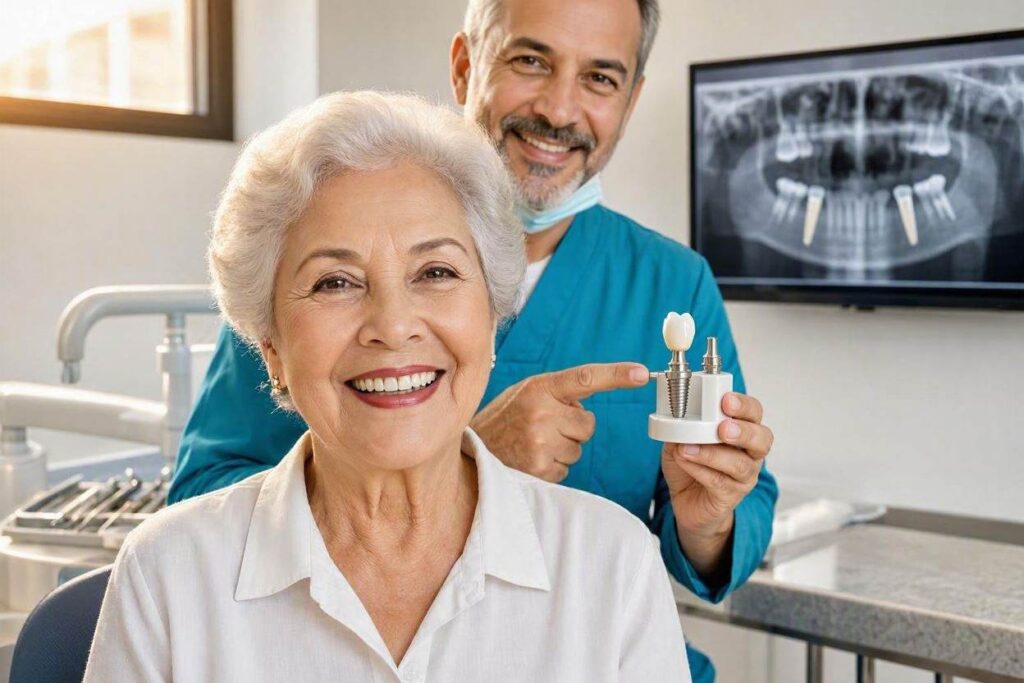
A dental implant is a titanium post that is surgically placed into the jawbone. It acts as a replacement for the root of a missing tooth. Once healed, a crown, bridge, or denture is attached to the implant.
The success rate for dental implants in healthy older adults is comparable to that of younger patients—over 95%. The body does not reject titanium based on age. The biological process of bone healing (osseointegration) works the same way in a 70-year-old as it does in a 30-year-old.
Important Note: The primary concern is not chronological age, but biological age. A person who is 75 and active, with well-managed health conditions, is an excellent candidate. A person who is 65 but has uncontrolled diabetes or is a heavy smoker may face a higher risk of complications.
The Real Factors That Determine Candidacy
If age is not the deciding factor, what is? A dentist or oral surgeon will evaluate several aspects of your health before clearing you for surgery.
1. Bone Density and Volume
This is the most critical clinical factor. A dental implant needs a certain amount of healthy jawbone to fuse to. When you lose a tooth, the bone in that area begins to shrink (resorb). The longer a tooth has been missing, the more bone is lost.
- For seniors who have been wearing dentures for decades, significant bone loss in the jaw is common.
- However, this does not mean you are out of luck. A procedure called a bone graft can rebuild the lost bone. This adds time and cost to the treatment, but it makes implants possible for nearly everyone.
2. Chronic Health Conditions
Certain systemic diseases can affect healing. This is where the dentist will ask detailed questions about your medical history.
- Diabetes: Uncontrolled diabetes impairs the immune system and slows healing. However, patients with well-controlled diabetes (a stable, low A1C level) are generally safe candidates for implants.
- Osteoporosis: This condition weakens bones. However, it primarily affects the long bones of the body (hips, spine), not the jawbone. Having osteoporosis does not automatically disqualify you. The main concern is the use of certain medications for osteoporosis (bisphosphonates), which can, in rare cases, cause a condition called osteonecrosis of the jaw. You must discuss your medications with your surgeon.
- Heart Disease: Patients with stable, well-managed heart conditions are usually fine. However, you may need clearance from your cardiologist before undergoing surgery.
3. Smoking
Smoking is a major risk factor for implant failure. Nicotine constricts blood vessels, reducing blood flow to the gums and bone. This inhibits healing. Smokers have a significantly higher rate of implant failure than non-smokers. Many dentists will refuse to place implants in heavy smokers. If you are a smoker, you will be strongly advised to quit before the procedure.
4. Oral Hygiene Habits
The success of an implant depends on keeping the surrounding gums healthy. If you have a history of poor oral hygiene and gum disease, you will need to address this before getting an implant. The implant itself cannot get cavities, but the gums around it can become infected (a condition called peri-implantitis), which can lead to implant failure.
The Benefits of Implants for Seniors
For older adults, the benefits of dental implants often go beyond simple aesthetics. They can dramatically improve quality of life.
1. The End of Denture Pain and Discomfort
Many seniors suffer with ill-fitting dentures that slip, rub, and cause painful sores. Implants can anchor a denture securely in place (an “implant-supported overdenture”). This eliminates the pain and embarrassment of slipping dentures.
2. The Ability to Eat Properly
Chewing with traditional dentures is difficult. You lose a significant amount of biting force. This forces many seniors to give up healthy, nutritious foods like raw vegetables, nuts, and lean meats. Implants restore nearly full chewing power. You can eat whatever you like. This has a direct impact on nutrition and overall health.
3. Preservation of Jawbone and Facial Structure
This is a huge benefit. When you lose teeth, the jawbone shrinks. This leads to the sunken, aged appearance often associated with denture wearers. Implants stimulate the bone, halting the resorption process. They preserve the structure of your face, helping you look younger.
4. Increased Confidence and Social Life
Living in fear of your dentures falling out when you laugh or talk is socially isolating. Implants are fixed. They feel like your own teeth. This restores confidence and encourages a more active social life.
The Financial Consideration for Seniors
The cost of dental implants is the biggest barrier for many seniors, especially those on a fixed income. A single implant can cost $3,000 to $6,000, and a full set of implant-supported dentures can cost $15,000 to $40,000 or more.
Medicare does not cover dental implants. Most seniors lose their dental insurance when they retire.
However, there are options:
- Dental Schools: This is the most affordable route for high-quality implant work.
- Negotiating a Cash Discount: As discussed in previous articles, this is a powerful tool.
- Dental Tourism: Some seniors combine travel with affordable dental care abroad, though the risks must be carefully weighed.
- Phased Treatment: Getting one or two implants now and adding more later spreads the cost over time.
The Verdict
Can an old person have dental implants? The answer is a resounding yes. Age is not a disease. A healthy, motivated senior citizen can enjoy the same success rate and life-changing benefits as a younger patient. If you are tired of living with missing teeth or uncomfortable dentures, you owe it to yourself to schedule a consultation with a dentist who places implants. You may be surprised to learn that you are an excellent candidate.
Frequently Asked Questions (FAQ)
Q: Is there an age limit for dental implants?
A: No, there is no upper age limit. As long as you are in reasonably good health and have adequate bone (or are willing to get a bone graft), you can get an implant. Some of the most successful implant patients are in their 80s and 90s.
Q: Can I get implants if I have been wearing dentures for 30 years?
A: Yes, but you will likely need a bone graft. Long-term denture wear causes significant bone loss in the jaw. The dentist will evaluate the bone volume with a 3D scan and determine how much grafting is needed.
Q: Is the surgery more risky for an older person?
A: The risk of surgery is slightly higher for older adults, but it is still very low. The dentist will review your medical history and medications. In some cases, they may consult with your primary care physician or cardiologist to ensure you are cleared for the procedure.
Q: How can I afford dental implants on a fixed income?
A: The best options are dental schools (which offer discounts of 40-60%), negotiating a cash discount with a private dentist, or setting up a payment plan. Some seniors also choose to use a portion of their retirement savings, viewing the implant as a long-term investment in their health and quality of life.
Q: Are implant-supported dentures better than regular dentures?
A: For most patients, yes. Implant-supported dentures snap securely onto implants, so they do not slip or move. They are more comfortable, make it easier to eat, and help preserve the jawbone. They are more expensive than regular dentures, but the benefits are substantial.
Additional Resource:
For more information on oral health for older adults, you can visit the National Institute of Dental and Craniofacial Research (NIDCR) page on seniors: https://www.nidcr.nih.gov/