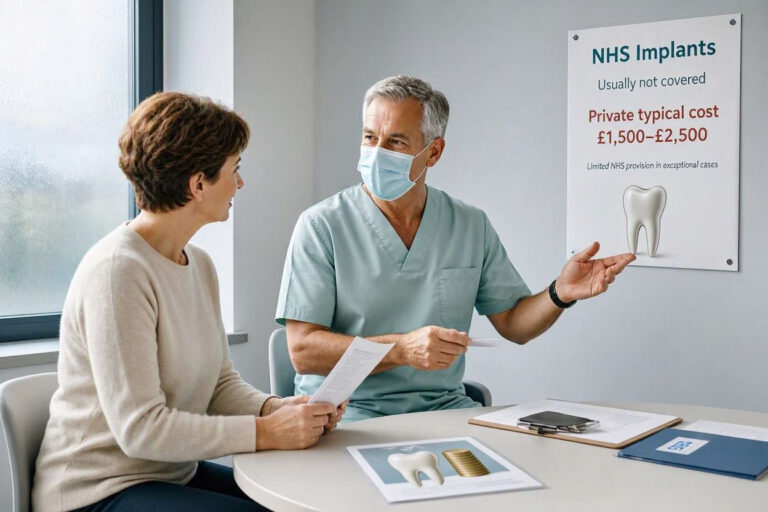
Can You Get A Dental Implant On The NHS?
The National Health Service (NHS) in the United Kingdom is a source of national pride. It provides healthcare that is free at the point of service for all residents, funded through taxation. When it comes to medical care, the NHS is comprehensive. But when it comes to dentistry, the rules are different.
Dental care on the NHS is subsidized, but not free for most adults. Furthermore, the NHS operates on a principle of “clinical need” rather than patient desire. This leads to a common question: Can you get a dental implant on the NHS?
The short answer is: Yes, but only in very specific and limited circumstances. This guide will explain the NHS criteria for dental implants, how the system works, and what your options are if you do not qualify.
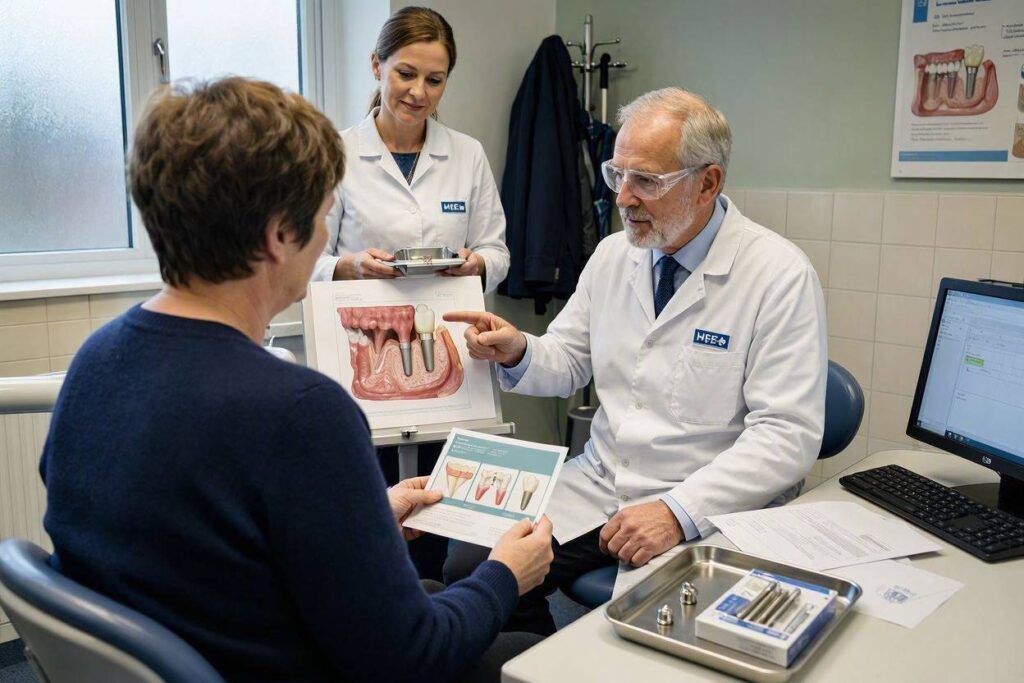
The Core Principle: Clinical Need vs. Cosmetic Choice
The NHS is designed to provide treatment that is necessary to maintain the health of your mouth. It is not designed to provide every possible treatment option.
When you lose a tooth, there are several ways to replace it: a denture, a bridge, and a dental implant. For the NHS, a dental implant is considered a “high-end” or “premium” treatment. It is the most expensive option.
To qualify for an implant on the NHS, you must demonstrate that there is a clinical need for it, not just a preference. In other words, you must prove that a denture or a bridge would not be a suitable or effective solution for your situation.
The NHS Criteria for Dental Implants
The NHS provides dental implants primarily through hospital dental services, not general dental practices. The criteria are strict.
You may be eligible for an NHS dental implant if you meet one of the following conditions:
1. Congenital Absence of Teeth (Hypodontia)
This is the most common reason for NHS implants. Some people are born with missing teeth (a condition called hypodontia). This can affect their ability to chew and speak. The NHS often provides implants for patients with this condition, particularly if multiple teeth are missing.
2. Trauma or Injury
If you have lost teeth due to a severe accident or injury, the NHS may provide implants as part of your reconstructive treatment. This is especially true if the injury also involved the jawbone.
3. Oral Cancer or Other Diseases
Patients who have had surgery to remove tumors in the mouth or jaw often require extensive reconstruction. Implants are frequently used to anchor prosthetic teeth for these patients. This is considered essential medical care.
4. Inability to Wear a Conventional Denture
This is a very specific clinical situation. Some patients have severe anatomical issues (like a very shallow palate or extensive bone loss) that make it impossible to wear a traditional denture successfully. If a dentist can document that a denture simply will not work, an implant-supported denture may be authorized.
Important Note: The key word here is “clinical need.” If you have lost a single back tooth and you could wear a partial denture or get a bridge, the NHS will likely not pay for an implant, even if the implant would be more comfortable and convenient for you. The NHS will steer you toward the most cost-effective solution that meets your basic health needs.
How the NHS System Works
If you think you may qualify for an NHS implant, you cannot simply book an appointment with an implant surgeon. You must go through the system.
- See Your General Dentist: Your first stop is your NHS general dentist. They will assess your mouth.
- Referral: If your dentist believes you meet the criteria for an implant, they will write a referral to a local hospital’s dental department (usually an oral surgery or restorative dentistry department).
- Hospital Assessment: You will be assessed by a consultant at the hospital. They will review your medical history, take X-rays and scans, and determine if an implant is clinically justified.
- Waiting List: If you are accepted, you will be placed on a waiting list. NHS waiting lists for non-urgent procedures like implants can be very long (often many months or even years).
- Treatment: The treatment will be performed at the hospital.
The Cost of an NHS Implant
This is where the NHS system differs from the US system. If you are accepted for an NHS implant, you do not pay the full private market price.
NHS dental treatment is charged in “bands.”
- Band 1: Covers examination and diagnosis.
- Band 2: Covers fillings, root canals, and extractions.
- Band 3: Covers complex work like crowns, dentures, and bridges.
An implant is classified as Band 3 treatment. The current Band 3 charge is approximately £300 (this changes annually). This is a flat fee. It does not matter if the lab work costs thousands of pounds; you only pay the Band 3 fee.
This is an incredible bargain for those who qualify.
What If You Don’t Qualify? Private Implants
If you are told you do not meet the criteria for an NHS implant, you have one option: private treatment.
A private dental implant in the UK costs significantly more than the NHS Band 3 fee.
- Single Implant (Private): The cost typically ranges from £2,000 to £3,500 per tooth, including the surgery and the crown.
This is a substantial investment. However, private treatment offers advantages:
- No waiting lists: You can start immediately.
- Choice of materials: You can choose the best, most aesthetic crown.
- Choice of provider: You can select a highly experienced implant surgeon.
The Postcode Lottery
It is important to be aware that NHS dental services vary across the UK. The availability of NHS dental care, including implants, can depend on where you live. This is often referred to as the “postcode lottery.” Some health boards or trusts may have more funding for dental services than others. Your experience in London may be different from your experience in rural Scotland or Wales.
Conclusion
Getting a dental implant on the NHS is possible, but it is not easy. It is reserved for patients with a genuine clinical need, such as those born without teeth, victims of trauma, or cancer patients. If you qualify, the cost is remarkably low (a flat Band 3 fee). If you do not qualify, you will need to seek private treatment, which is significantly more expensive.
Frequently Asked Questions (FAQ)
Q: Will the NHS pay for a dental implant for a single missing back tooth?
A: It is very unlikely. If you lost a back tooth to decay or gum disease, the NHS will typically offer a partial denture or a bridge. An implant is only considered if these alternatives are deemed clinically unsuitable for your specific case.
Q: How long is the waiting list for an NHS dental implant?
A: It varies greatly depending on the hospital and the region. For non-urgent cases, the wait can be anywhere from several months to over a year.
Q: Can my NHS dentist refer me for a private implant?
A: Yes. Your NHS dentist can refer you to a private specialist for an implant consultation. You will pay the private fee for the treatment.
Q: What is the difference between an NHS crown and a private crown on an implant?
A: The quality of the crown may differ. NHS crowns are functional but may be more basic in their aesthetics. Private crowns offer a wider choice of high-end materials (like layered zirconia) and may be more meticulously crafted to match your natural teeth.
Q: Are dental implants free on the NHS for anyone?
A: Some patients, such as those under 18 (in some cases), pregnant women, or those on certain benefits, may be exempt from the Band 3 charge. However, the strict clinical criteria for the implant itself still apply.
Additional Resource:
For the most up-to-date information on NHS dental charges and eligibility, visit the official NHS website: https://www.nhs.uk/