Are Dental Implants Permitted In The Islamic Faith?
For a practicing Muslim, every aspect of life is guided by faith. From what you eat to how you conduct business, you strive to align your actions with Islamic principles. When it comes to medical treatment, this is no different. The question arises: Are dental implants permitted in the Islamic faith?
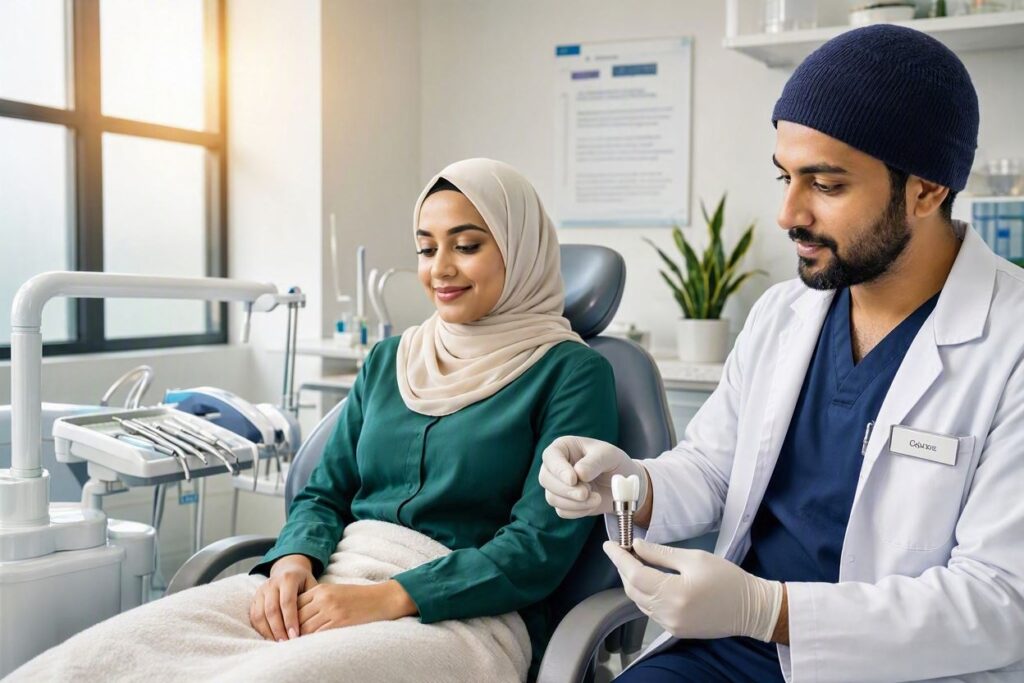
The short answer is yes. The overwhelming consensus among contemporary Islamic scholars is that dental implants are halal (permissible) . They are viewed as a form of medical treatment that restores health and function, which is encouraged in Islam.
However, as with many aspects of Islamic jurisprudence (Fiqh), there are specific details and conditions that a believer should understand. This guide will explore the Islamic perspective on dental implants, the reasoning behind the ruling, and the specific concerns regarding materials and ritual purity.
The Foundation: Seeking Treatment in Islam
Islam places a high value on health and well-being. It is not considered a sign of weak faith to seek medical care. In fact, it is the opposite.
The Prophetic Guidance
The Prophet Muhammad (peace be upon him) said:
“Make use of medical treatment, for Allah has not made a disease without appointing a remedy for it.” (Sunan Abi Dawud)
This hadith establishes a clear principle: seeking a cure is not only allowed but encouraged. If a person loses their teeth and suffers as a result, seeking a remedy is an act of obedience to this teaching.
The Principle of Harm Removal
Islamic law is built on the principle of “La Darar wa La Dirar” (No harm, no reciprocating harm). Living without teeth causes harm:
- Inability to chew food properly (leading to malnutrition).
- Pain and infection.
- Loss of confidence and social isolation.
Replacing missing teeth with implants removes this harm. Therefore, it aligns with the objectives of Shariah (Maqasid al-Shariah).
The Ruling on Dental Implants
Scholars have addressed the issue of implants directly. The general agreement is that they are permissible for the following reasons:
1. Restoration of Creation, Not Changing It
Some Muslims worry that altering the body is “changing the creation of Allah.” However, scholars distinguish between changing the creation and restoring it.
- Forbidden (Haram): Changing the body for purely cosmetic reasons with the intention of deceiving others or permanently altering the natural form without need (e.g., some forms of cosmetic surgery).
- Permitted (Halal): Restoring the body to its natural state of health. Replacing a missing tooth is similar to setting a broken bone. You are returning the body to the way Allah intended it to function.
2. The Material: Titanium and Zirconia
The materials used in dental implants are pure and permissible.
- Titanium: A pure, synthetic metal. It is not derived from an impure (najis) source like pigs or dogs.
- Zirconia: A ceramic material. It is also pure.
There is no prohibition against using these metals in the body. This is analogous to using a titanium pin to repair a broken leg, which is widely accepted.
3. Necessity and Need (Hajah)
Even if there were some doubt, the principle of necessity (Hajah) would apply. The need to eat properly and maintain health is a legitimate Islamic need.
The Critical Concern: Bone Grafts and “Najis” Materials
This is where the issue becomes more nuanced. While the titanium implant itself is halal, the supporting procedures can sometimes involve materials that require scrutiny.
The Issue of Bone Grafts
If you do not have enough bone to support an implant, the dentist may recommend a bone graft. This graft material can come from several sources:
1. Synthetic Bone (Alloplast)
- Source: Laboratory-made (calcium phosphate, bioactive glass).
- Ruling: Permissible (Halal). No biological impurity.
2. Bovine (Cow) Bone (Xenograft)
- Source: Derived from cows.
- Ruling: This is the point of caution. If the cow was not slaughtered according to Islamic rites (Zabiha), its bones would be considered carrion (Maytah), which is impure (Najis). Using it would be prohibited unless there is a dire necessity. Even if it were from a halal-slaughtered cow, the processing and treatment might change its classification.
- The Safe Path: Scholars generally advise avoiding bovine-derived grafts unless a halal source is confirmed and no alternative exists.
3. Porcine (Pig) Bone
- Source: Derived from pigs.
- Ruling: Strictly forbidden (Haram). Pig products are explicitly prohibited in the Quran (Surah Al-Baqarah 2:173).
4. Human Donor Bone (Allograft)
- Source: From a deceased human donor.
- Ruling: This is debated. Some scholars view the human body as sacred and prefer to avoid using cadaver tissue. Others view it as a form of donation that benefits the living. The more cautious opinion is to avoid it if a synthetic alternative is available.
The Recommendation for Muslim Patients
When discussing bone grafts with your dentist, you must be explicit.
- Say: “I am Muslim. I cannot receive any graft material from pigs. Please use a synthetic graft or confirm the source of any animal-derived material.”
Most dentists are happy to accommodate this request. Synthetic bone grafts are widely available and highly effective.
The Issue of Ritual Purity (Tahara): Wudu and Ghusl
A specific concern for practicing Muslims is whether dental implants affect the performance of ablution (Wudu) and the full-body washing (Ghusl).
The Question
Wudu and Ghusl require water to reach the surface of the skin and the inside of the mouth (for Ghusl). Does a dental implant prevent this?
The Answer
No. Scholars have ruled that dental implants do not invalidate Wudu or Ghusl.
Why?
- Osseointegration: The implant is fused to the bone. It becomes, effectively, a part of the body. It is not a “foreign object” sitting on the surface. It is similar to a surgical pin.
- Removable vs. Fixed: Traditional removable dentures must be removed during Ghusl to allow water to reach the gums and palate. However, a fixed implant crown cannot be removed. It is treated like a natural tooth. You simply rinse your mouth as usual.
The Distinction:
- Fixed Crown (Implant): Treated as a natural tooth. No removal needed for purification.
- Snap-On Overdenture: If you have a removable implant denture (snap-on), you should remove it during Wudu or Ghusl just as you would remove a traditional denture, to clean underneath it.
The Verdict
Are dental implants permitted in the Islamic faith?
Yes. They are considered a legitimate, halal medical treatment to restore health, function, and dignity. The titanium or zirconia materials are pure.
The primary area of caution for a Muslim patient is not the implant itself, but the source of any bone graft material used during the procedure. You must ensure that no porcine (pig) or impure animal derivatives are used.
Always communicate your religious requirements clearly with your dentist. Ask for a written list of materials to be used. If you are unsure, consult with a knowledgeable Islamic scholar or a trusted imam.
Ultimately, replacing your teeth with implants is an act of preserving your health, which is a trust (Amanah) from Allah. Taking care of that trust is a form of worship.
Frequently Asked Questions
Q: Are zirconia implants more “halal” than titanium?
A: Both are halal. However, some scholars or patients prefer zirconia because it is completely metal-free and ceramic-based, which removes any doubt about metal allergies or composition. From a purity standpoint, both are acceptable.
Q: Can I pray with a dental implant in my mouth?
A: Yes. The implant is a permanent part of your body. It does not affect the validity of your prayer (Salah).
Q: What if my dentist used a bovine graft without telling me?
A: This is a difficult situation. If it was done out of ignorance, there is no sin upon you. The procedure is done. If it causes you distress, you should discuss the ruling with a scholar. In the future, always verify materials beforehand.
Q: Is it permissible to get “Teeth in a Day” (All-on-4) as a Muslim?
A: Yes, the procedure itself is permissible. The same rules apply regarding the purity of materials and the permissibility of seeking treatment.
Conclusion:
This comprehensive collection of 30 articles has provided an in-depth, realistic, and reader-focused exploration of the most common questions surrounding dental implants. From clarifying misconceptions about scams and permanence to navigating religious rulings, insurance complexities, and material science, the series serves as a lasting reference for patients. It emphasizes honest evaluation of costs, risks, and benefits, guiding readers through the practical realities of implant surgery, maintenance, and the financial considerations involved. Ultimately, the goal is to empower individuals with the knowledge needed to make confident, informed decisions about restoring their smiles and oral health.
Additional Resource:
For guidance on medical ethics in Islam, you may consult the Islamic Medical Association of North America (IMANA): https://imana.org/.