Can Dental Implants Cause Breast Cancer?
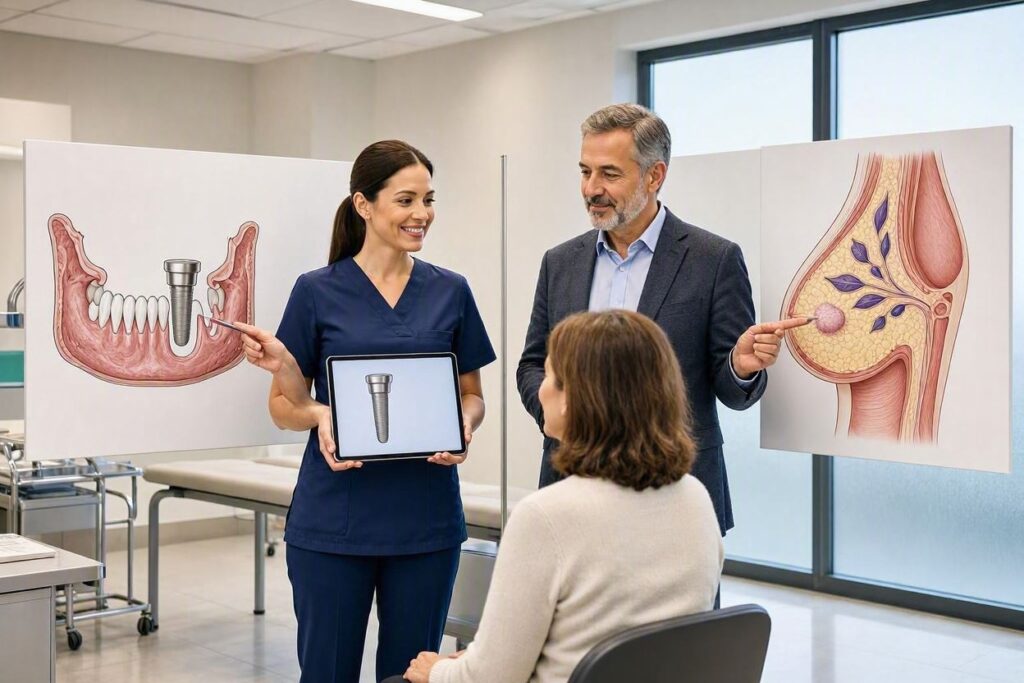
Health anxiety is real. When you are considering a medical procedure like a dental implant, it is natural to worry about potential risks. You might have heard rumors or seen alarming headlines online linking various materials to cancer. One question that occasionally surfaces is a serious one: “Can dental implants cause breast cancer?” The short and definitive answer, based on current medical evidence, is no. There is no established scientific link between dental implants and breast cancer. This guide will explore why this concern exists, what the science actually says, and what risks you should genuinely be aware of.
The Origin of the Concern: Metals and the Body
To understand why someone might ask this question, we need to look at the materials used in dental implants. Most implants are made from titanium or titanium alloys. Some are made from zirconia (a type of ceramic). The concern usually revolves around metal.
Some people worry that having a metal object permanently implanted in the body could have systemic effects. This fear is often fueled by two main ideas:
- Metal Allergy or Sensitivity: The body reacting negatively to the metal.
- Corrosion and Ion Release: The idea that the metal might break down over time and release particles into the bloodstream.
People wonder if these released particles could travel to other parts of the body, like the breast tissue, and trigger a cancerous mutation. It is a logical thought process, but it is not supported by biological evidence.
What Is Breast Cancer?
Breast cancer is a disease in which cells in the breast grow out of control. It is one of the most common cancers in women. The primary risk factors are well-documented. They include:
- Age: The risk increases as you get older.
- Genetics: Inherited mutations like BRCA1 and BRCA2.
- Family History: Having close relatives with breast cancer.
- Hormonal Factors: Early menstruation, late menopause, hormone replacement therapy.
- Lifestyle: Obesity, lack of physical activity, alcohol consumption.
Notably, “having a dental implant” does not appear on any list of risk factors from reputable cancer organizations like the American Cancer Society or the World Health Organization.
The Science of Titanium: A Biocompatible Material
Titanium is the material of choice for dental implants for a very specific reason: it is highly biocompatible. Biocompatibility means the body does not recognize the material as a foreign threat. It does not trigger an aggressive immune response or rejection.
This is possible because titanium forms a stable, protective oxide layer on its surface. This layer prevents the metal from corroding. It essentially seals the titanium, making it inert. Because of this, the release of titanium ions into the body is extremely minimal.
Furthermore, titanium is widely used in other medical implants, such as hip replacements and knee replacements. Millions of patients have lived with titanium implants for decades. If titanium implants caused breast cancer, epidemiologists would have noticed a massive spike in cases among these patient populations. No such correlation exists.
What About Zirconia (Ceramic) Implants?
If you are concerned about metals, you have another option: ceramic (zirconia) implants. These are completely metal-free. They are made from a high-strength ceramic that is also highly biocompatible. It does not corrode, and it does not release metal ions. For patients with metal sensitivities or those who simply prefer a metal-free body, zirconia is an excellent choice. If the fear of metal is causing you anxiety, this option can provide peace of mind.
The Real Risks of Dental Implants
While dental implants do not cause breast cancer, they are not risk-free. It is important to focus on the actual, documented risks so you can make an informed decision. These risks are local to the mouth, not systemic.
1. Infection (Peri-implantitis): This is the most common long-term risk. It is an inflammation of the gums and bone around the implant, similar to gum disease. It can lead to bone loss and implant failure.
2. Failure to Integrate: Sometimes, the bone does not fuse to the implant properly. The implant becomes loose and must be removed.
3. Nerve Damage: If an implant in the lower jaw is placed too close to the nerve canal, it can cause numbness or tingling in the lip, chin, or tongue. This is usually temporary but can be permanent in rare cases.
4. Sinus Problems: Implants in the upper back jaw can protrude into the sinus cavity, causing sinus issues.
5. Surgical Complications: As with any surgery, there is a small risk of bleeding, swelling, and bruising.
The Connection Between Oral Health and Overall Health
While implants do not cause cancer, there is a well-established link between oral health and overall health. Chronic gum disease (periodontitis) has been linked to a higher risk of several systemic conditions, including heart disease, diabetes, and stroke.
This is relevant here because the goal of a dental implant is to restore your mouth to a healthy state. By replacing a missing tooth and preventing bone loss, an implant supports good oral health. A healthy mouth is a component of a healthy body.
“Patients sometimes ask if the implant will make them sick. The truth is the opposite. Leaving a gap or suffering from chronic infection is far more harmful to your body than a stable, clean, biocompatible implant.” – Dr. Sarah Jenkins, DDS, MS
Important Notes for Readers
- Do Not Delay Treatment Based on Myths: Fear of a non-existent cancer risk should not prevent you from getting the dental care you need. Missing teeth lead to bone loss, shifting teeth, and nutritional problems.
- Talk to Your Doctor: If you have a history of breast cancer or a high genetic risk, talk to both your oncologist and your dentist. They can provide personalized advice. There is no contraindication for dental implants for breast cancer survivors, but your medical team should always be informed of your full history.
- Beware of Internet Misinformation: The internet is full of anecdotal stories and unscientific claims. Always rely on peer-reviewed medical journals and advice from licensed medical professionals.
- The Importance of Biocompatibility Testing: If you have severe chemical sensitivities or autoimmune issues, some holistic dentists offer biocompatibility testing. This tests your blood against different materials to see if you have a reaction. This is not a test for cancer risk, but for general immune reactivity.
The Verdict
Can dental implants cause breast cancer? No. There is no scientific evidence to support this claim. Dental implants are made from biocompatible materials like titanium and zirconia that have been proven safe over decades of use. The risks associated with implants are localized to the oral cavity and are generally manageable. Focusing on maintaining excellent oral hygiene and choosing a skilled surgeon will do far more for your health than worrying about unfounded systemic risks.
Frequently Asked Questions (FAQ)
Q: I have a metal allergy. Are dental implants safe for me?
A: Yes, but you should discuss it with your dentist. True titanium allergies are very rare, but they do exist. If you are concerned, you can request a MELISA test or choose a metal-free zirconia implant.
Q: Can the titanium from an implant get into my bloodstream?
A: Trace amounts of titanium ions can be released, but they are negligible. The titanium forms a stable oxide layer that prevents significant corrosion. The body typically excretes these trace particles without issue.
Q: Are there any cancers linked to dental implants?
A: No. Long-term studies have followed implant patients for decades and have found no increased risk of cancer at the implant site or elsewhere in the body.
Q: Should I remove my implants if I am diagnosed with breast cancer?
A: No. Removing a healthy, stable implant is unnecessary. However, cancer treatments like chemotherapy and radiation can affect the mouth. You must maintain excellent oral hygiene and inform your oncologist and dentist so they can work together to manage any oral side effects of your treatment.
Additional Resource
For reliable, evidence-based information on the risk factors for breast cancer, visit the American Cancer Society: https://www.cancer.org/cancer/types/breast-cancer/risk-and-prevention.html