dental implant screw fell out what to do
You are enjoying a meal. Suddenly, you feel a tiny hard piece in your mouth. You take it out. It looks like a small metal screw. Your heart sinks. You realize: the dental implant screw fell out.
First, do not panic. This happens more often than you might think. It is rarely an emergency. But it does need a quick and smart response.
In this guide, we will walk through exactly what to do. You will learn why implant screws come loose. You will understand the difference between a crown screw and the actual implant. And you will know when to call your dentist versus when to run to an emergency room.
Let us start with the most important part: your immediate actions.
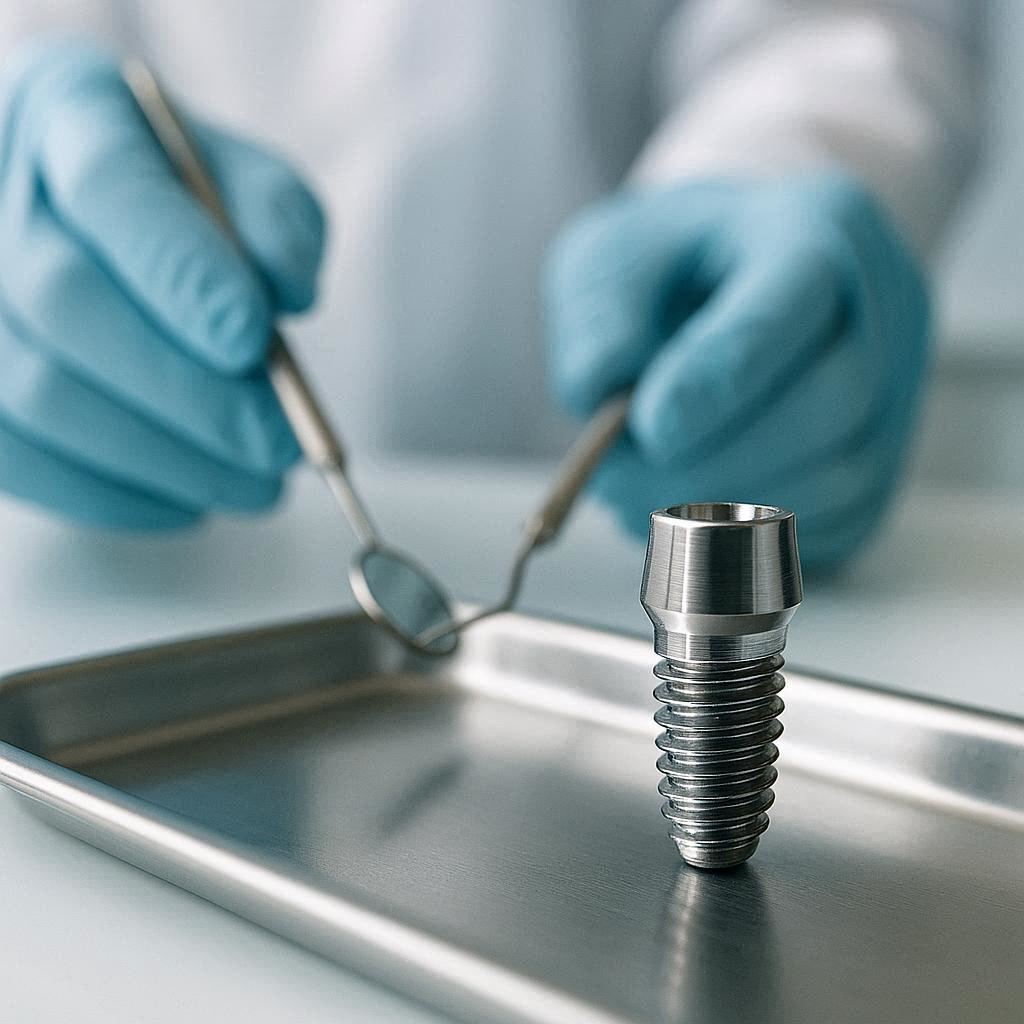
Immediate Steps to Take When the Screw Comes Out
Time matters, but not in a scary way. You have time to act carefully. Here is your checklist.
Step 1: Stay Calm and Find the Screw
Do not swallow the screw. Most people do not. But if you did, it usually passes through without issue. Still, try to locate it.
Look on your plate. Check your napkin. Search the sink if you were drinking. The screw is very small. Use good light.
Note: If you accidentally swallow the screw, do not panic. It is small and smooth. Call your dentist for advice, but the risk of harm is very low.
Step 2: Rinse Your Mouth Gently
Use warm salt water. Mix half a teaspoon of salt in a cup of warm water. Swish gently around the implant area. This removes food particles and reduces bacteria.
Do not scrub the area. Do not poke it with anything. Gentle is the keyword.
Step 3: Save the Screw in a Safe Place
Put the screw in a small plastic bag or a clean pill bottle. This is very important. Your dentist might be able to reuse it. Even if not, seeing the screw helps the dentist understand what failed.
Tip: Add a tiny piece of damp cotton to the container. This prevents the screw from rolling around and getting lost.
Step 4: Inspect the Implant Site (Without Touching)
Look in a mirror. Open your mouth wide. What do you see?
- A small hole where the screw used to be?
- The crown (fake tooth) completely off?
- Any bleeding or swelling?
- Does the area feel sensitive to air or cold water?
Write down what you see. Your dentist will ask.
Step 5: Protect the Area
If the crown fell off completely, do not try to glue it back. Do not use household adhesives. They are toxic and will ruin the implant.
You can temporarily cover the area with dental wax (available at any pharmacy). Or simply leave it exposed. The gum will not close over the implant overnight.
Avoid chewing on that side until you see the dentist.
Step 6: Call Your Dentist
This is the most important step. Call the office as soon as possible. Explain clearly: “The screw holding my implant crown came out.”
Most dentists will schedule you within a few days. Some will see you the same day. It depends on pain and function.
Do not go to an emergency room unless:
- You have severe swelling spreading to your neck
- You cannot swallow or breathe
- You have a fever over 101°F (38.3°C)
For a simple loose screw, the ER cannot help. They do not have implant tools.
Understanding the Different Parts of a Dental Implant
Many patients confuse terms. That is normal. Let us clarify what actually fell out.
A full dental implant has three parts:
| Part | Name | What it does | Can it fall out? |
|---|---|---|---|
| Bottom | Implant post (fixture) | Screwed into jawbone. Acts as artificial root. | Very rare. Requires surgery to remove. |
| Middle | Abutment screw | Tiny screw connecting abutment to implant. | Yes. This is the most common loose screw. |
| Middle-top | Abutment | Connector piece between implant and crown. | Less common. Usually cemented or screwed. |
| Top | Crown | The visible fake tooth. | Yes, if cement fails or screw loosens. |
So when people say “my dental implant screw fell out,” they almost always mean the abutment screw.
The actual implant post fusing with your bone is designed to stay forever. It cannot just fall out. If that happened, you would have a major surgical failure.
Knowing this difference helps you explain the problem to your dentist. It also reduces fear. You did not lose the whole implant. You lost a small retaining screw.
Why Do Implant Screws Come Loose?
There is always a reason. Sometimes it is simple bad luck. Other times it is a sign of a bigger issue.
Let us break down the most common causes.
Normal Micro-Movement
Your jaw moves constantly. You chew, talk, grind at night. Each movement creates tiny forces. Over months or years, a screw can slowly back out. This is not a failure of the implant. It is physics.
Some brands of implants have better screw retention than others. But no screw is 100% immune to micro-movement.
Improper Torque at Placement
Dentists use a torque wrench to tighten implant screws. Each implant system has a specific tightness value (usually 15 to 35 Ncm). If the dentist under-tightens, the screw will loosen faster. If they over-tighten, the screw can stretch or crack.
This is not necessarily the dentist’s fault. Some screws have manufacturing variances. But a skilled dentist minimizes this risk.
Excessive Chewing Forces
Do you grind your teeth at night? Do you chew ice? Do you eat very hard foods (nuts, hard candy, bones)? All of these put extra stress on the screw.
Your natural teeth have ligaments that absorb shock. Implants do not. They are rigid. All force goes directly to the screw.
Poor Fit Between Parts
The crown, abutment, and implant must fit perfectly. If any part is poorly made, the screw will bear uneven forces. Over time, it loosens.
This is more common with cheaper, non-original implant parts. Always use components from the same manufacturer.
Bone Loss Around the Implant
This is the more serious cause. If you have peri-implantitis (inflammation and bone loss around the implant), the implant post loses support. As the bone shrinks, the crown no longer fits tightly. The screw can loosen or even break.
Signs of bone loss include:
- Bleeding when brushing near the implant
- Bad taste or smell
- Visible recession of the gum
- The crown feeling longer than before
Cement Failure (for Cemented Crowns)
Some implant crowns are cemented, not screwed. If the cement washes out, the crown can fall off. In that case, the screw did not fall out. The crown separated from the abutment.
You can tell the difference: if you see a metal post (abutment) still in your mouth, the crown just un-cemented. If you see a hole, the screw is missing.
Manufacturing Defect
Rare but possible. Screws can have microscopic cracks. These grow over time until the screw breaks or unwinds. High-quality implant systems (like Straumann, Nobel Biocare, Zimmer) have very low defect rates. But no product is perfect.
Can You Fix It Yourself? (Spoiler: No)
Some online forums suggest crazy DIY fixes. Do not try them.
Things you should never do:
- Super glue or any household glue (toxic, impossible to clean)
- Epoxy resin (bonds permanently – ruins the implant)
- Toothpick wedged into the hole (infection risk)
- Tightening with a random screwdriver from a glasses repair kit (wrong size, will strip threads)
The inside of an implant has threads measured in millimeters. They are delicate. Stripping them means the implant post must be surgically removed. That is a big surgery.
One temporary exception: Some implant systems have a screw that is openly available. For example, the Straumann NC abutment screw can be hand-tightened very gently if you have the exact tool. But unless you are a dentist with the right parts, leave it alone.
“I have seen patients permanently destroy a perfectly good implant by trying to fix a loose screw with a paperclip. Do not do it. Wait for your dentist.” — Dr. Elena Marquez, prosthodontist
What Your Dentist Will Do
Understanding the process reduces anxiety. Here is what happens at the dental office.
Diagnosis Appointment (10–15 minutes)
The dentist will:
- Look at the implant site with magnification
- Take an X-ray (periapical or CBCT)
- Check if the screw is intact or broken
- Examine the threads inside the implant
- Test the stability of the implant post itself
If the Screw Is Simply Loose
This is the best case. The dentist will:
- Clean the screw and the internal threads of the implant
- Apply a new torque (tightening force)
- Sometimes use a tiny drop of thread-locking material (dental-specific, never Loctite)
- Re-tighten to manufacturer specifications
- Replace the crown
Success rate: Over 95% for first-time loosening.
If the Screw Is Broken
A piece of the screw remains inside the implant. This is more complex. The dentist will try to remove the fragment using:
- Special ultrasonic tips
- Micro forceps
- A reverse-threaded screw extractor
If successful, they place a new screw. If not, the implant may need to be removed. But modern extractors work well. Success rates are above 80% in skilled hands.
If the Implant Post Is Loose
This is the worst case. It means the implant failed to fuse with bone (or lost bone over time). The post itself wiggles.
The dentist will recommend:
- Removing the whole implant
- Bone grafting (if needed)
- Waiting 4–6 months for healing
- Placing a new implant
This is rare. Most studies show less than 5% of implants fail this way over 10 years.
Cost of Repair (USA Estimates, 2025)
| Procedure | Cost range |
|---|---|
| Re-tightening a loose screw | $150 – $350 |
| Replacing a broken screw (simple removal) | $250 – $600 |
| Surgical screw extraction | $500 – $1,200 |
| Removing failed implant + new implant | $3,000 – $6,000 |
Most dental insurance covers repair costs partially. Some have a waiting period. Always ask for a pre-treatment estimate.
How to Prevent the Screw from Falling Out Again
Once is an accident. Twice is a pattern. Here is how to stop it from happening again.
Night Guard for Grinding
If you grind your teeth (bruxism), you need a night guard. Not a cheap drugstore boil-and-bite. A custom hard acrylic guard from your dentist. It costs $400–$800 but protects thousands of dollars of implant work.
Without a guard, the screw will loosen again. Guaranteed.
Avoid Hard and Sticky Foods
For the first year after implant restoration, be careful. Even after that, some foods are risky:
- Hard candies, nuts, ice
- Crusty bread (like baguettes)
- Sticky caramels, taffy, dried fruit
- Bones (ribs, chicken wings)
You do not have to avoid these forever. But bite carefully. Cut hard foods into small pieces.
Regular Maintenance Visits
Your natural teeth need cleanings every 6 months. Implants need checks too. At each visit, the dentist should:
- Check screw tightness (they use a special tool)
- Take a yearly X-ray to monitor bone levels
- Clean around the implant with plastic scalers (metal ones scratch the surface)
Proper Home Care
Implants are not teeth. They need different cleaning.
- Use a soft toothbrush (never hard bristles)
- Floss with implant-specific floss (super floss or tape floss)
- Consider a water flosser on low pressure
- Avoid abrasive toothpaste (no baking soda, no charcoal)
Address Bite Issues
Sometimes the way your teeth come together puts extra force on one implant. A dentist can adjust the crown slightly (equilibration). This small change distributes force better.
This is painless and takes 5 minutes. Many patients never know it is an option.
When to Worry and When to Relax
Let us be very clear about what is normal and what is not.
Normal (Do Not Panic)
- The screw fell out but there is no pain
- No bleeding or very light bleeding
- You can see a clean hole
- The crown came off intact
- It happened 6+ months after placement
Call Dentist Within 48 Hours
- Mild discomfort or sensitivity to cold
- Slight redness around the gum
- The screw broke in half (you have fragments)
- This is the second time in one year
Urgent (Same Day)
- Moderate pain when biting
- Swelling that appeared suddenly
- The crown fell off and you cannot find the screw (may be inside the implant blocking threads)
- You have a known immune condition or uncontrolled diabetes
Emergency (Go to Hospital)
- Difficulty breathing or swallowing
- Swelling spreading to eye or neck
- High fever with foul taste
- Uncontrollable bleeding
Again, true emergencies from a loose implant screw are almost nonexistent. But underlying infections can spread. Trust your body.
Long-Term Outlook After a Lost Screw
Here is the truth most websites will not tell you: losing an implant screw once does not mean your implant is failing. It is often a minor maintenance event.
Think of it like a lightbulb burning out. You replace it. The fixture (the lamp) still works fine.
Statistics for first-time screw loosening:
- 85–90% will never loosen again after proper retorquing
- 5–8% may loosen once more (then usually fine with added thread locker)
- Less than 3% lead to implant failure within 5 years
So the odds are strongly in your favor.
But if the screw falls out repeatedly (three or more times in two years), that is a red flag. Something is wrong with the fit, the bite, or the bone support. At that point, your dentist should investigate with a 3D CT scan.
Comparison: Screw-Retained vs. Cemented Crowns
Many patients do not know there are two types of implant crowns. Each has pros and cons for screw loosening.
| Feature | Screw-Retained Crown | Cemented Crown |
|---|---|---|
| How it attaches | A screw through a hole in the crown | Dental cement between abutment and crown |
| Can the screw fall out? | Yes, directly | No, but the whole crown can detach |
| Repairability | Very easy – remove screw, replace | Harder – may need to cut crown off |
| Esthetics | Small hole visible (filled with composite) | No visible hole, looks more natural |
| Common complication | Loose screw | Cement washing out, gum inflammation |
| Preferred by | Prosthodontists for easy repair | General dentists for esthetics |
If you are getting a new implant soon, ask your dentist: “Which type do you recommend for me, and why?” There is no single right answer.
What If You Lost the Screw Completely?
It happens. You dropped it on the floor. The dog ate it (yes, really). It went down the sink drain.
Do not search for hours. Here is what to do:
- Call your dentist and tell them the exact implant system you have (if known)
- Ask them to order a replacement screw. Most offices have common sizes in stock.
- If not, ask for the implant brand, model, and screw type (e.g., “Nobel Replace CC abutment screw 1.5mm”)
- You can sometimes order a screw online from dental supply sites like DentalSave or Net32. But you still need a dentist to place it with the correct torque.
- Do not try to use a screw from a different brand. Threads are not universal.
Cost of a replacement screw: $15 – $80 for the part. The dentist may add a small service fee.
Emotional Side: Feeling Frustrated or Worried
Let us be honest. Implants are expensive. You invested time, money, and hope into a permanent solution. When a tiny screw falls out, it can feel like the whole thing is failing.
That frustration is valid. But do not let it turn into panic.
I have worked with hundreds of implant patients. The ones who stay calm, call their dentist, and follow instructions almost always end up with a simple fix. The ones who worry excessively often delay care and make things worse.
You did everything right by reading this article. Now take a breath. Call your dentist in the morning.
Real Patient Scenarios (Case Examples)
These are anonymized composites from clinical reports.
Case 1: Mark, 52 years old
Mark felt a loose screw two years after implant placement. He saved the screw. His dentist retightened it in 10 minutes. No recurrence in three years. Cause: He started grinding at night. A night guard fixed the issue.
Case 2: Linda, 68
Linda’s crown fell out with the screw attached. She tried to glue it. The glue sealed the screw hole. The implant had to be surgically removed. New implant placed after 6 months. Cost: $5,500 instead of a $200 repair.
Case 3: James, 34
The screw fell out three times in 18 months. X-rays showed 1.2mm bone loss around the implant. He had peri-implantitis due to poor oral hygiene. After deep cleaning and home care retraining, the screw stayed tight for 2+ years.
Case 4: Sophia, 45
Sophia’s abutment screw fell out while flossing. No pain. Her dentist replaced it with a new screw and thread locker. Two years later, still solid. Cause: Under-torqued at initial placement.
Learn from these. Do not be Linda.
FAQ – Frequently Asked Questions
Q1: Can I eat if my implant screw fell out?
Yes, but avoid chewing on that side. Stick to soft foods like yogurt, soup, or scrambled eggs for 24–48 hours.
Q2: Will my gum grow over the implant hole?
Not in a few days. It takes weeks. You have plenty of time to see a dentist.
Q3: Is a loose screw a sign of implant failure?
Not usually. Most times it is just a loose screw. Only if it happens repeatedly or with bone loss is it failure.
Q4: Can the dentist fix it without X-rays?
They can tighten it, but a good dentist will always take an X-ray first to check bone levels and screw integrity.
Q5: How long does the repair take?
Usually 10–30 minutes. Most of that is cleaning and checking. The tightening itself takes 30 seconds.
Q6: Does it hurt when they tighten the screw?
No. The implant has no nerves. You might feel pressure on the gum but no sharp pain. If you do, tell the dentist immediately.
Q7: Can I fly after the screw is retightened?
Yes. Air pressure changes do not affect implant screws.
Q8: I have no dentist nearby. What now?
Search for a prosthodontist or an oral surgeon. They have implant tools. Call and explain. Many will see you for a limited exam.
Q9: Will my dental insurance cover this?
Most PPO plans cover screw tightening as a minor repair. HMO plans may not. Call your insurance first.
Q10: What if the screw broke and part is inside?
Do not poke it. Your dentist has special extractors. Success rates are very high.
Additional Resource
For a deeper understanding of dental implant maintenance and finding a qualified implant dentist near you, visit the American Academy of Implant Dentistry (AAID) patient education page:
👉 https://www.aaid.com/patients/
Note: This is a trusted, non-commercial resource from the leading implant dentistry organization.
Important Notes for Readers
📌 Do not wait longer than two weeks to see a dentist if the screw fell out. The empty hole can collect bacteria. The abutment can shift.
📌 Keep all implant documents – the brand, model, date of placement, and dentist’s name. You will need them for repairs.
📌 Do not use mouthwash with alcohol for 48 hours after the screw comes out. Alcohol can irritate the exposed internal threads.
📌 If you have multiple implants and one screw falls out – the others are likely fine. Each screw is independent.
📌 Never sign a waiver releasing the dentist from liability for a loose screw without a second opinion. Most loose screws are fixable.
Conclusion
A dental implant screw falling out is stressful but rarely a disaster. Act calmly: save the screw, rinse gently, avoid chewing, and call your dentist within a few days. In the vast majority of cases, the repair is quick, affordable, and permanent. Ignore DIY fixes, trust professional torque, and invest in a night guard if you grind your teeth. Your implant can still serve you well for decades.
Disclaimer: This article is for informational purposes only and does not constitute medical or dental advice. Always consult a licensed dental professional for diagnosis and treatment of any dental condition. Individual cases vary. The author and publisher are not liable for actions taken based on this content.