How Much Does A Dentest Teeth Cleaning Cost?
Maintaining oral hygiene is a critical component of overall health. While brushing twice a day and flossing are essential, they are not enough to remove the hardened tartar (calculus) that builds up over time. This is where a professional dental cleaning, often called a prophylaxis or “prophy,” comes in.
Whether you are a new patient, someone without insurance, or just looking to budget for your next visit, one question is universal: how much does a dentist teeth cleaning cost? The answer is not always straightforward, as the price depends on the type of cleaning you need and where you live.
This guide will serve as your comprehensive reference for dental cleaning costs in 2024. We will break down the different types of cleanings, explain why some cost more than others, and provide realistic price ranges to help you plan.
The Four Types of Dental Cleanings
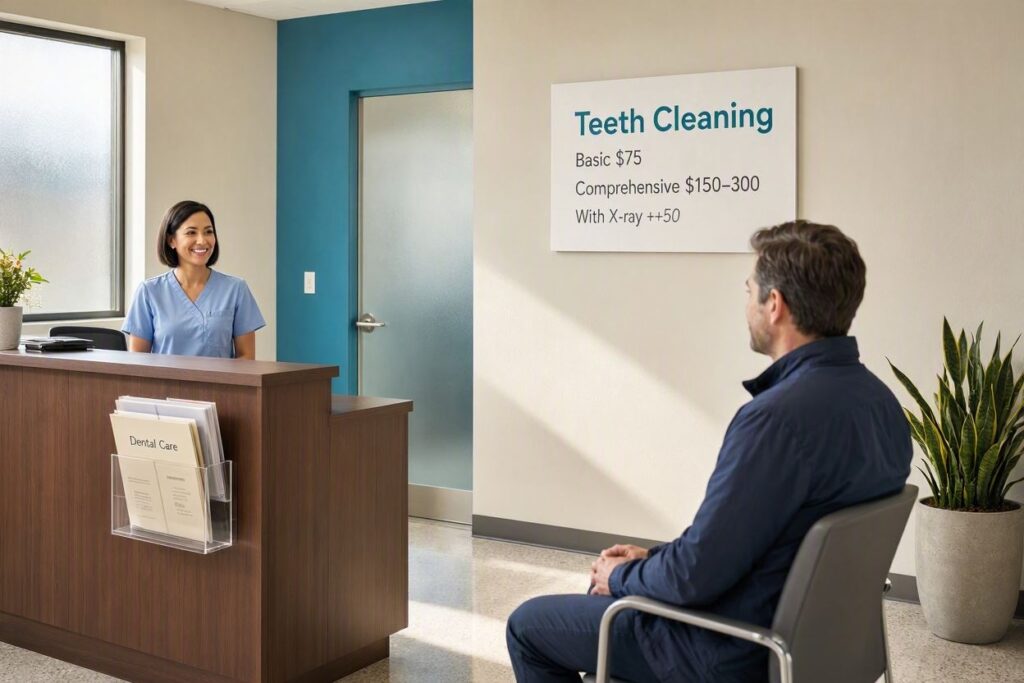
One of the biggest reasons for price confusion is that not all “cleanings” are created equal. When you call a dentist and ask for a cleaning, the front desk might not know which type you need until the dentist examines you.
Here are the four standard categories recognized by the American Dental Association (ADA) and their respective cost implications.
1. Prophylaxis (Standard Cleaning)
This is the routine cleaning for healthy patients. It removes plaque and tartar from the visible surface of the teeth and polishes them.
- Who needs it: Patients with healthy gums (no bleeding, no deep pockets).
- Cost: Generally the cheapest option.
2. Scaling and Root Planing (Deep Cleaning)
Often referred to as “SRP” or “gum therapy.” This is not a routine cleaning. It is a treatment for gum disease (periodontitis). It involves numbing the gums and scraping tartar from below the gum line, down to the root surfaces.
- Who needs it: Patients with bleeding gums, bad breath, receding gums, or deep pockets measured by the dentist.
- Cost: Significantly more expensive because it requires more time, skill, and anesthesia. It is often charged “per quadrant” (a quarter of the mouth).
3. Gross Debridement
This is for patients who have not seen a dentist in many years and have massive buildup of tartar.
- Who needs it: Patients where the teeth are so covered in tartar that the dentist cannot even see the teeth to examine them.
- Cost: A separate procedure often required before a standard cleaning can be done.
4. Periodontal Maintenance
This is a specialized cleaning for patients who have already been treated for gum disease. Once you have periodontitis, you have it for life; you just manage it.
- Who needs it: Patients who have undergone Scaling and Root Planing in the past.
- Cost: More expensive than a standard cleaning, but cheaper than the initial deep cleaning. Usually performed every 3-4 months instead of every 6 months.
Average Costs by Cleaning Type
To understand the financial impact, let’s look at the national average costs in the United States. Remember, these are “list prices” before insurance.
| Type of Cleaning | Average Cost (Without Insurance) | Frequency |
|---|---|---|
| Child Prophylaxis | $60 – $100 | Every 6 months |
| Adult Prophylaxis (Standard) | $100 – $170 | Every 6 months |
| Gross Debridement | $150 – $250 | Once (if needed) |
| Scaling and Root Planing | $200 – $350 per quadrant | As needed (often split into 2 visits) |
| Periodontal Maintenance | $150 – $250 | Every 3-4 months |
| Full Mouth Debridement + SRP (Full mouth) | $800 – $1,400 | Total for full treatment |
Insight: If a dentist tells you that you need a “deep cleaning” and quotes you $1,000, they are likely quoting you for all four quadrants of your mouth. This is usually split into two appointments (Right side vs. Left side) to make it more comfortable and affordable.
Why Does the Cost Vary So Much by Location?
The cost of living in your city directly impacts the cost of a dental cleaning.
High-Cost Areas (New York, San Francisco, Seattle, Boston):
- Expect to pay 20-40% above the national average. A standard adult cleaning here can easily cost $150 – $250.
- Reason: High commercial rent and high staff wages.
Mid-Cost Areas (Suburbs, Mid-sized cities like Austin, Denver, Atlanta):
- Prices hover around the national average ($100 – $150).
Low-Cost Areas (Rural Midwest, South, Small Towns):
- Prices can be below average ($80 – $120).
The “Bait and Switch” in Dental Advertising
If you live in a big city, you have likely seen mailers or online ads offering a “New Patient Special: Cleaning, Exam, and X-Rays for $59!” This is a marketing strategy.
The Reality:
- Loss Leader: The clinic is losing money on that $59 visit. They are hoping to get you in the door to find other problems (fillings, crowns) that make them money.
- The “Upgrade”: You might arrive for the $59 special, but after the X-ray, the dentist says, “You have gum disease. You don’t qualify for the standard cleaning; you need a deep cleaning.” You suddenly face a $1,000 bill.
- The Bait: This is very common in corporate dental chains. While not always unethical (sometimes you do need a deep cleaning), it is a common sales tactic.
Advice from a Dental Hygienist: “Patients get angry when we tell them they need a deep cleaning. They feel tricked. But I show them the X-rays and the gum measurements. Healthy gums don’t bleed. If I touch your gums with a probe and they bleed, that’s infection. A standard polish won’t fix that. You need the deep cleaning to save your teeth.”
The Insurance Factor
If you have dental insurance (PPO), your out-of-pocket cost for a standard cleaning is usually zero dollars.
Preventive Care Coverage:
Most PPO plans follow the 100-80-50 model:
- Preventive (Cleanings, Exams, X-rays): Covered at 100%. You pay $0.
- Basic (Fillings): Covered at 80%. You pay 20%.
- Major (Crowns, Root Canals): Covered at 50%. You pay 50%.
The Catch with Deep Cleanings:
Scaling and Root Planing is usually classified as “Basic” or “Major,” not “Preventive.” Therefore, you will likely have to pay your 20% or 50% coinsurance.
- Example: A deep cleaning costs $800. If your insurance covers it at 80%, you pay $160. If it is classified as Major at 50%, you pay $400.
How Much is a Cleaning Without Insurance?
If you lack insurance, you might be paying the “list price,” which can feel punishing. Here are ways to save:
1. Dental Savings Plans (DSPs)
These are not insurance, but discount memberships (like Aetna Dental Access or Cigna Dental Savings). You pay an annual fee (e.g., $100), and you get access to a network of dentists who have agreed to charge 15-50% less.
- Result: A $150 cleaning might drop to $80.
2. Hygiene Schools
Local colleges that train dental hygienists offer deep discounts for patients willing to be treated by students.
- Cost: Often $20 – $50 for a cleaning.
- Catch: The appointment will take 2-3 hours because the instructor must check every surface. But the quality is usually excellent.
3. In-House Membership Plans
Many private dentists now offer their own “membership.” You pay $300-$400 a year directly to the dentist. In return, you get two cleanings, two exams, and X-rays included, plus discounts on other work.
- Value: If you need two cleanings a year, this often works out cheaper than paying the list price twice.
The Cost of Skipping a Cleaning
It is tempting to skip the cleaning to save the $150. Here is why that is a false economy.
1. Gum Disease
Tartar is like a splinter under the gum. It causes inflammation (gingivitis). If left, the inflammation destroys the bone holding your teeth in place (periodontitis). This leads to loose teeth and extractions.
2. Higher Future Costs
A standard cleaning costs ~$130. A deep cleaning costs ~$800. A gum graft (to fix severe recession) costs ~$1,500 per tooth. An implant (to replace a tooth lost to gum disease) costs ~$4,000. The math favors the cleaning.
3. Systemic Health
Gum disease is linked to heart disease, diabetes complications, and stroke. A dental cleaning is an investment in your cardiovascular health.
FAQ
Q: Does a “cleaning” include whitening?
A: No. A cleaning removes surface stains (from coffee, tea) and tartar. It restores your natural tooth color. If you want teeth whiter than their natural state, you need a separate whitening treatment (bleaching).
Q: Why do I need X-rays for a cleaning?
A: The dentist needs to see between the teeth and under the gum line. You cannot diagnose cavities between teeth with the naked eye. X-rays are required for a comprehensive exam. If you had X-rays taken recently elsewhere, you can ask the old office to send them to avoid retakes.
Q: Can I just buy an ultrasonic scraper online and do it myself?
A: Absolutely not. Professional scalers are sharp and require training. You can chip your enamel, cut your gums, and push tartar deeper into the pockets, causing severe infections. This is a job for a licensed professional only.
Q: How often should I get my teeth cleaned?
A: For most healthy people, every 6 months is standard. However, if you smoke, have diabetes, or are prone to cavities, the dentist might recommend every 3-4 months.
Additional Resource
For reliable information on oral hygiene and finding care, visit the American Dental Association (ADA) consumer site: MouthHealthy.org
Conclusion
In summary, the cost of a dentist teeth cleaning varies from $60 for a child to over $300 per quadrant for a deep cleaning. The type of cleaning required is determined by your gum health, not your preference. Investing in regular standard cleanings is the most cost-effective strategy to avoid expensive gum disease treatment in the future.