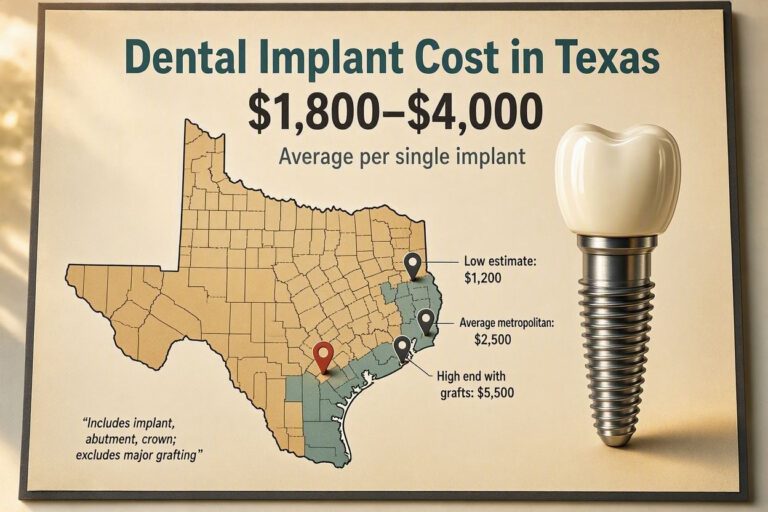
How Much Does Each Dental Implant Cost?
Losing a tooth is more than a cosmetic problem. It affects how you chew, speak, and feel about your smile. Dental implants offer a permanent, natural-looking solution. But before you book a consultation, you probably want to know one thing: how much does each dental implant cost?
The short answer? Anywhere from $1,500 to $6,000 per implant. That’s a wide range, and it can feel confusing. Why such a big difference? Because the final price depends on where you live, the dentist you choose, the type of implant, and whether you need extra procedures like bone grafting.
This guide breaks down the real costs of dental implants. You’ll learn what’s included, what’s not, and how to make treatment more affordable. By the end, you’ll have a clear idea of what to expect—and how to plan for it.

What Exactly Is a Dental Implant?
A dental implant is a titanium post that replaces the root of a missing tooth. It’s surgically placed into your jawbone. Over a few months, the bone grows around the implant, holding it securely in place. Then your dentist attaches an abutment and a crown on top. The result looks and works like a natural tooth.
There are three main parts:
- The implant fixture – the titanium screw that goes into your jaw.
- The abutment – the connector that holds the crown.
- The crown – the visible tooth replacement.
When people ask about the cost of a dental implant, they often mean the entire process. But some dentists quote only the fixture. Others quote the full package. Always ask what’s included.
Average Cost Per Dental Implant: A Global Snapshot
Prices vary dramatically around the world. Here’s a realistic look at what you can expect to pay for a single implant, including the crown.
| Country/Region | Average Cost Per Implant (Local Currency) | Approx. USD |
|---|---|---|
| United States | $3,000 – $5,500 | $3,000 – $5,500 |
| Canada | CAD $3,000 – $5,500 | $2,200 – $4,000 |
| United Kingdom | £2,000 – £3,500 | $2,500 – $4,400 |
| Australia | AUD $4,000 – $6,500 | $2,600 – $4,300 |
| Spain | €1,500 – €3,000 | $1,600 – $3,200 |
| India | ₹25,000 – ₹60,000 | $300 – $720 |
| Mexico | MXN $20,000 – $45,000 | $1,000 – $2,300 |
Note: These ranges are for a single implant with a crown. They do not include extractions, bone grafting, or sedation. Those add to the total.
What’s Included in the Price?
Not every quote covers the same things. Some dentists bundle everything into one fee. Others charge separately for each step. Here’s what a complete implant treatment usually includes:
- Initial consultation and X-rays
- CT scan (often required for planning)
- Implant fixture
- Abutment
- Crown
- Surgical placement
- Follow-up visits
- Post-operative care
Important: Some offices quote a low price for the implant fixture only. Then they charge extra for the abutment, crown, and surgery. Always ask for a written breakdown.
Factors That Influence the Cost of Each Implant
Why does one person pay $2,000 and another pays $5,000? Several factors come into play.
Geographic Location
Big cities have higher overhead costs. A clinic in New York or London charges more than one in a small town. Rural areas often have lower prices, but fewer specialists.
Dentist’s Experience and Credentials
An experienced implantologist with advanced training charges more. You’re paying for skill, precision, and a lower risk of complications. A general dentist who places implants occasionally may charge less, but experience matters.
Implant Brand and Quality
Premium brands like Straumann, Nobel Biocare, and Astra Tech cost more. Budget brands from Korea or China cost less. Premium implants have more research and often better long-term success rates.
Bone Grafting and Sinus Lifts
If you’ve lost bone density, you may need a bone graft. This adds $500 to $3,000. A sinus lift for upper back teeth costs $1,500 to $4,000. These procedures are common and often necessary.
Extractions and Other Prep Work
If the damaged tooth is still in place, you’ll need an extraction. That’s $150 to $500. Sometimes a temporary crown or flipper is needed while the implant heals.
Sedation or Anesthesia
IV sedation, oral sedation, or general anesthesia adds $300 to $1,000. Local anesthesia is usually included.
Number of Implants
The more implants you need, the higher the total cost. But some clinics offer discounts for multiple implants.
Clinic Type
A private specialist clinic charges more than a dental school or community clinic. Dental schools offer lower prices but longer treatment times.
Types of Dental Implants and Their Costs
Not all implants are the same. Here are the main types and their typical price ranges.
Endosteal Implants
These are the most common. They’re placed directly into the jawbone. Most people get this type.
Cost: $3,000 – $5,000 per implant
Subperiosteal Implants
These sit on top of the jawbone, under the gum. They’re used when there’s not enough bone for endosteal implants. They’re less common today.
Cost: $4,000 – $7,000 per implant
Zygomatic Implants
These are very long implants anchored in the cheekbone. They’re for severe upper jaw bone loss. They’re complex and expensive.
Cost: $10,000 – $20,000 per implant
Mini Implants
These are smaller and thinner. They’re often used to stabilize dentures, not to replace single teeth. They’re cheaper but less durable.
Cost: $500 – $1,500 per implant
Single Implant vs. Multiple Implants vs. Full Mouth
The cost per implant goes down when you get more. But the total bill goes up.
| Treatment Type | Average Total Cost |
|---|---|
| Single implant + crown | $3,000 – $5,500 |
| Two implants + crowns | $6,000 – $11,000 |
| All-on-4 (one arch) | $20,000 – $30,000 |
| All-on-6 (one arch) | $25,000 – $35,000 |
| Full mouth (both arches) | $50,000 – $100,000+ |
Note: All-on-4 and All-on-6 use four or six implants to support a full arch of teeth. They’re more affordable than replacing every tooth with a separate implant.
The Hidden Costs of Dental Implants
The quoted price isn’t always the final price. Watch out for these extra costs.
CT Scan
A 3D CT scan is often required for planning. It costs $200 to $500. Some dentists include it; others don’t.
Temporary Crown
While the implant heals, you may need a temporary tooth. That’s $100 to $500.
Adjustments and Repairs
If the crown chips or the abutment loosens, you’ll pay for repairs. These are usually minor but can add up.
Replacement Parts
Implant crowns don’t last forever. After 10 to 15 years, you may need a new crown. That’s $500 to $1,500.
Follow-Up Visits
Some offices charge for post-op check-ups. Ask if they’re included.
Missed Appointment Fees
Like braces, some clinics charge $50 to $100 for missed appointments. Life happens—but it costs.
Important: Always get a written treatment plan with a full cost breakdown before you start.
Does Dental Insurance Cover Implants?
Dental insurance often covers part of the cost. But it depends on your plan.
- Many plans cover 50% of the implant crown, but not the implant fixture.
- Some plans cover the implant if it’s medically necessary.
- Annual maximums are common—usually $1,000 to $2,000.
- Medical insurance may cover implants after an accident or injury.
If you don’t have insurance, ask about payment plans. Most implant clinics offer financing.
How to Save Money on Dental Implants
You don’t have to pay full price. Here are practical ways to reduce your costs.
Get Multiple Quotes
Prices vary widely. Get at least three quotes from different dentists. Compare what’s included, not just the total.
Visit a Dental School
Dental schools offer implant treatment at 30% to 50% off. Students work under experienced faculty. The trade-off is longer appointments and less flexibility.
Ask About Payment Plans
Many clinics offer interest-free plans. You might pay $200 to $400 per month.
Use HSA or FSA Funds
Health Savings Accounts and Flexible Spending Accounts let you pay with pre-tax dollars. That’s a 20% to 30% savings depending on your tax bracket.
Consider Medical Tourism
Countries like Mexico, Costa Rica, and Thailand offer implants at a fraction of U.S. prices. But do your research. Check credentials, hygiene standards, and aftercare. Complications can be costly.
Look for Discounts
Some clinics offer discounts for:
- Paying in full upfront
- Multiple implants
- Seniors or veterans
- Referrals
Join a Dental Membership Plan
Some offices offer in-house membership plans. You pay an annual fee and get discounted treatments. It’s not insurance, but it can help.
Real Quotes from Real Patients
“I paid $4,200 for a single implant in Chicago. That included the CT scan, bone graft, and crown. My insurance covered $1,500, so my out-of-pocket was $2,700.” — Mark D., Chicago, IL
“I went to a dental school in Toronto and paid CAD $2,800 for one implant. It took longer, but I saved almost $2,000.” — Elena R., Toronto, Canada
“I had two implants placed in Madrid for €2,500 each. The same treatment in London would have cost £3,500 per implant. I’m happy with the results.” — Sophie L., Madrid, Spain
These stories show that with research and flexibility, you can find affordable options.
Are Dental Implants Worth the Cost?
Yes—if you’re a good candidate. Implants are the closest thing to natural teeth. They:
- Look and feel like real teeth
- Last 15 to 25 years or more with proper care
- Protect your jawbone from shrinking
- Don’t require grinding down healthy teeth like bridges do
- Let you eat and speak normally
The upfront cost is high. But over time, implants often cost less than bridges or dentures that need replacement every 5 to 10 years.
Note: Implants aren’t for everyone. You need enough bone, healthy gums, and good overall health. Smokers and people with uncontrolled diabetes may not be good candidates.
Frequently Asked Questions About Dental Implant Costs
How much does a single dental implant cost?
A single implant with a crown costs $3,000 to $5,500 in the U.S. Prices are lower in other countries.
Why are dental implants so expensive?
You’re paying for surgery, materials, advanced training, and multiple visits. The implant itself is just one part of the cost.
Can I get a dental implant for $1,000?
Rarely in the U.S. Some clinics offer low-cost implants, but they may use budget materials or cut corners. Be cautious.
Does insurance cover dental implants?
Some plans cover part of the cost. Check your policy. Medical insurance may cover implants after an accident.
How long do dental implants last?
With good oral hygiene and regular dental visits, implants can last 20 years or more.
Is bone grafting always needed?
No. But many people need it because of bone loss after tooth loss. Your dentist will tell you after an exam.
Are mini implants cheaper?
Yes. Mini implants cost $500 to $1,500. But they’re mainly for denture stabilization, not single tooth replacement.
Can I pay for implants in installments?
Yes. Most clinics offer payment plans. Ask about interest-free options.
What happens if I don’t get an implant?
Your jawbone may shrink. Nearby teeth can shift. Your bite can change. It’s best to replace missing teeth sooner rather than later.
Conclusion: Planning for Your Dental Implant
Dental implant costs range from $1,500 to $6,000 per implant, depending on location, dentist, and extra procedures. Insurance, payment plans, and dental schools can make treatment more affordable. Always get a written quote and ask what’s included. A dental implant is an investment in your health, comfort, and confidence.
Additional Resources
For more information on dental implants and finding a qualified specialist, visit the American Academy of Implant Dentistry at aaid.com.