What Is The Cost Of Replacing A Dental Crown?
Dental crowns are like helmets for your teeth. They cover a damaged or weakened tooth to restore its shape, size, strength, and appearance. They are used after root canals, for large fillings, or to fix cracked teeth. But crowns do not last forever. Eventually, they can wear out, break, or become loose. When that happens, you need a replacement. And that leads to the big question: what is the cost of replacing a dental crown?
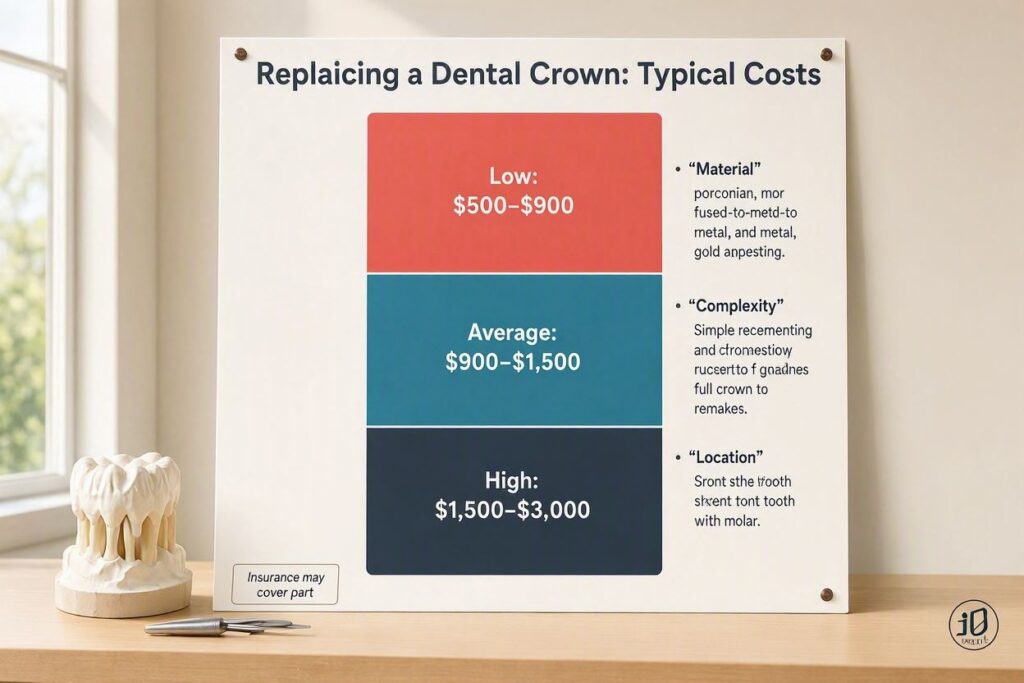
The answer is not a single number. It ranges from $500 to $3,000 per crown. The price depends on the material, the dentist, your location, and whether you need additional procedures like a new core build-up or gum treatment. It can feel overwhelming, especially if you have multiple crowns that need replacing.
This guide will break down everything you need to know. We will look at the different types of crowns and their costs. We will explain why replacement is sometimes necessary and what happens during the procedure. We will also cover insurance, payment plans, and practical tips to save money. By the end, you will have a clear picture of what to expect.
What Is A Dental Crown?
A dental crown is a custom-made cap that fits over your entire tooth. It is cemented into place and becomes the new outer surface of the tooth. Crowns are used for several reasons:
- To protect a weak tooth from breaking.
- To restore a broken or severely worn tooth.
- To cover a tooth after a root canal.
- To cover a dental implant.
- To improve the appearance of a discolored or misshapen tooth.
Crowns can be made from many materials, including porcelain, ceramic, zirconia, metal, and resin. Each material has different costs, benefits, and drawbacks.
Why Would You Need To Replace A Crown?
Crowns are durable, but they do not last forever. The average lifespan of a dental crown is 10 to 15 years. Some last longer, and some fail sooner. Here are the most common reasons for replacement:
1. Wear And Tear
Chewing, grinding, and clenching put stress on your crowns. Over time, the material can wear down, crack, or chip.
2. Decay Under The Crown
If bacteria get under the crown, a cavity can form on the tooth underneath. This can cause pain and infection. The crown must be removed to treat the decay, and a new crown is usually needed.
3. Loose Or Broken Crown
The cement that holds the crown in place can wash away or degrade. This makes the crown loose. If you swallow it or it breaks, you need a new one.
4. Gum Recession
If your gums recede, the edge of the crown may become exposed. This can look unsightly and lead to decay.
5. Cosmetic Reasons
You might want to replace an old metal crown with a more natural-looking porcelain or zirconia crown.
6. Allergic Reaction
Some people are allergic to the metals used in crowns. This can cause gum irritation and other symptoms. A replacement with a different material is needed.
The Average Cost Of Replacing A Dental Crown
Let’s get to the numbers. These are average costs in the United States. Prices in other countries vary.
| Type of Crown | Average Cost (USD) |
|---|---|
| Porcelain Fused to Metal | $800 – $1,500 |
| All-Porcelain (Ceramic) | $900 – $1,800 |
| Zirconia | $1,000 – $2,000 |
| Base Metal Alloy | $500 – $1,200 |
| Gold Alloy | $1,200 – $2,500 |
| Temporary Crown | $100 – $300 |
| Core Build-Up (if needed) | $200 – $500 |
| Post and Core (if needed) | $300 – $600 |
These prices are per crown. If you need multiple crowns replaced, the cost multiplies. Some dentists offer a discount for multiple crowns.
Factors That Affect The Cost Of Crown Replacement
Not all crown replacements cost the same. Here are the main factors.
1. The Material
This is the biggest factor. Metal crowns are cheaper because the materials are less expensive. Porcelain and zirconia crowns cost more because they are made in a lab using advanced techniques. Gold crowns are expensive because the material itself is valuable.
2. The Dentist’s Fees
A general dentist will charge less than a prosthodontist (a specialist in crowns and bridges). A dentist in a big city will charge more than one in a rural area.
3. Your Location
Prices vary by region. In New York or San Francisco, a crown can cost $2,000 or more. In a smaller town in the Midwest, it might cost $800.
4. Additional Procedures
If the tooth underneath the crown is damaged, you may need a core build-up or a post and core. This adds to the cost. If you need a root canal, that is another $700 to $1,500.
5. The Lab Used
Some dentists use high-end labs that produce beautiful, precise crowns. Others use cheaper labs. The lab fee affects the final price.
6. The Complexity Of The Case
If the crown is in a hard-to-reach area or if the tooth is severely damaged, the procedure may take longer and cost more.
Comparison Table: Crown Materials
| Material | Cost | Durability | Appearance | Best For |
|---|---|---|---|---|
| Porcelain Fused to Metal | $800 – $1,500 | 10-15 years | Good | Back teeth, bridges |
| All-Porcelain | $900 – $1,800 | 10-15 years | Excellent | Front teeth |
| Zirconia | $1,000 – $2,000 | 15+ years | Very Good | Back teeth, grinders |
| Base Metal | $500 – $1,200 | 10-15 years | Poor | Back teeth (hidden) |
| Gold | $1,200 – $2,500 | 20+ years | Noticeable | Back teeth |
Does Insurance Cover Crown Replacement?
Dental insurance often covers part of the cost of a crown. However, the rules are specific.
1. Replacement Time Limits
Most insurance plans will only pay for a replacement crown if the old crown is at least 5 to 7 years old. If you need a new crown sooner, you will pay out of pocket.
2. Coverage Percentage
Insurance typically covers 50% to 80% of the cost after you meet your deductible. The exact percentage depends on your plan.
3. Annual Maximum
Most plans have an annual maximum, usually $1,000 to $2,000. If you have already used your benefits for other treatments, you may have little left for a crown.
4. Medical Necessity
Insurance will only cover a crown if it is medically necessary. They will not pay for a crown purely for cosmetic reasons.
How To Check Your Coverage
Call your insurance company. Ask:
- Is my crown replacement covered?
- How old is my current crown? (They may need the date it was placed.)
- What percentage will you cover?
- Do I need a pre-authorization?
- What is my annual maximum?
What About Medical Insurance?
If the crown is needed because of an accident or a medical condition, your medical insurance might cover part of the cost. This is rare, but it happens.
The Procedure For Replacing A Crown
Replacing a crown is usually a two-visit process. Here is what happens.
Step 1: Examination And X-Rays
The dentist examines your mouth and takes X-rays. They check the tooth underneath the crown for decay or damage.
Step 2: Removing The Old Crown
The dentist uses a special tool to cut through the old crown and remove it. This is usually painless, but you may feel some pressure.
Step 3: Treating The Tooth
If there is decay, the dentist removes it. If the tooth is weak, they may perform a core build-up to strengthen it. If the tooth is severely damaged, a root canal may be needed.
Step 4: Impressions
The dentist takes an impression of your tooth and the surrounding teeth. This is sent to a dental lab. Some dentists use a digital scanner instead of goopy impressions.
Step 5: Temporary Crown
A temporary crown is placed to protect your tooth while the permanent crown is being made. This takes 1 to 2 weeks.
Step 6: Fitting The New Crown
When the permanent crown is ready, the dentist removes the temporary crown and fits the new one. They check the fit, color, and bite. Then they cement it into place.
How Long Does A Replacement Crown Last?
A replacement crown can last just as long as the original, if not longer. With good oral hygiene and regular dental visits, you can expect 10 to 15 years or more. Zirconia and gold crowns tend to last the longest.
How To Make Your Crown Last Longer
- Brush and floss daily. Pay special attention to the gum line around the crown.
- Avoid hard foods. Do not chew on ice, hard candy, or popcorn kernels.
- Wear a nightguard. If you grind your teeth, a nightguard will protect your crown.
- Get regular check-ups. Your dentist can spot problems early.
- Do not use your teeth as tools. Do not open packages or tear things with your teeth.
How To Save Money On Crown Replacement
You do not have to pay full price. Here are some tips.
1. Compare Prices
Call several dentists in your area. Ask for a written quote for a crown replacement. Prices vary widely.
2. Go To A Dental School
Dental schools offer crowns at a reduced cost. The work is done by supervised students. It takes longer, but it can save you 50% or more.
3. Consider Dental Tourism
Countries like Mexico, Thailand, and Hungary offer crowns at a fraction of US prices. A crown in Mexico might cost $300 to $600. Just do your research and choose a reputable clinic.
4. Use Your HSA Or FSA
If you have a Health Savings Account or Flexible Spending Account, you can use pre-tax dollars to pay for your crown. This saves you 20% to 30%.
5. Ask For A Discount
Some dentists offer discounts for cash payments or for seniors. It never hurts to ask.
6. Choose A Cheaper Material
If the crown is on a back tooth, you might not need a high-end porcelain crown. A base metal crown is cheaper and very durable.
7. Join A Dental Savings Plan
Dental savings plans (like Aetna Dental Access or Careington) offer discounted rates at participating dentists. You pay an annual fee and get 10% to 60% off treatments.
Quotes From People Who Replaced Crowns
“I had an old metal crown that was loose. My dentist charged $1,200 for a new porcelain crown. Insurance covered $600. I paid $600 out of pocket.” — Robert, Ohio
“I went to a dental school to replace two crowns. It cost $1,800 total. A private dentist quoted me $4,000. It took longer, but I saved a lot.” — Maria, Texas
“I got a zirconia crown in Mexico for $500. In the US, it would have been $1,800. The clinic was modern and clean. I am very happy.” — David, Arizona
Important Note For Readers
Prices for dental crowns change over time. The ranges in this article are estimates based on current market data. Always get a personalized quote from a licensed dentist. Do not rely solely on online information for your treatment decisions. Your specific needs may result in a different price.
Frequently Asked Questions (FAQ)
1. How much does it cost to replace a dental crown?
It costs between $500 and $3,000 per crown, depending on the material and your location. Porcelain and zirconia crowns are more expensive than metal crowns.
2. Does insurance cover replacing a crown?
Often, yes, but only if the crown is at least 5 to 7 years old. Insurance typically covers 50% to 80% of the cost.
3. Can I just replace the crown without seeing a dentist?
No. Replacing a crown requires a dentist to remove the old crown, check the tooth, and fit a new one. Do not try to do it yourself.
4. How long does it take to get a new crown?
It usually takes two visits over 1 to 2 weeks. Some dentists offer same-day crowns using CAD/CAM technology.
5. What is a same-day crown?
A same-day crown is made in the dentist’s office using a milling machine. You get the crown on the same day, with no temporary crown needed.
6. Is a zirconia crown better than porcelain?
Zirconia is stronger and more durable. Porcelain looks more natural. Zirconia is often used for back teeth, while porcelain is used for front teeth.
7. Can I eat normally with a temporary crown?
You should avoid sticky, hard, and chewy foods. Chew on the other side of your mouth. The temporary crown is not as strong as the permanent one.
8. What happens if I don’t replace a broken crown?
The tooth underneath is exposed. It can decay, break, or become infected. This can lead to a root canal or even tooth loss.
9. How can I prevent needing a crown replacement?
Practice good oral hygiene, avoid hard foods, wear a nightguard if you grind, and see your dentist regularly.
10. Are gold crowns worth the money?
Gold crowns are very durable and last a long time. They are expensive, but they are a good investment for back teeth.
Conclusion
The cost of replacing a dental crown ranges from $500 to $3,000, depending on the material and your dentist. Insurance can help, but many people pay out of pocket. The procedure is straightforward and usually takes two visits. By choosing the right material, comparing prices, and considering options like dental schools or dental tourism, you can save money without sacrificing quality. A new crown will restore your smile and protect your tooth for years to come.
Additional Resource:
For more information on dental crowns and oral health, visit the American Dental Association: