Best Toothpaste for Dental Implants
Toothpaste is a staple of oral hygiene, but not all toothpastes are suitable for dental implants. Some contain abrasive ingredients that can scratch implant surfaces, while others offer benefits like fluoride protection and gum soothing.
This article helps you choose the best toothpaste for your dental implants.
Why Toothpaste Choice Matters for Implants
The toothpaste you use affects:
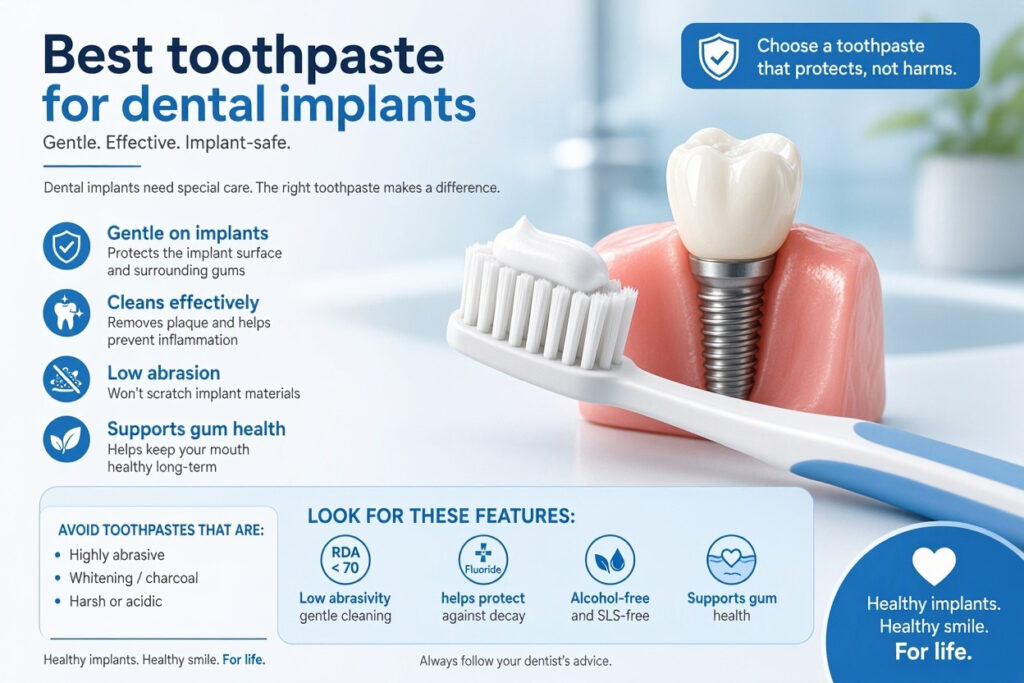
- Implant surface integrity: Abrasive particles can scratch titanium or ceramic surfaces, creating rough areas where bacteria thrive.
- Gum health: Some ingredients soothe gums; others irritate them.
- Natural tooth protection: Fluoride protects remaining natural teeth.
- Overall oral environment: Antibacterial ingredients help control bacteria.
Choosing the right toothpaste supports implant longevity and oral health.
Key Ingredients to Look For
Fluoride
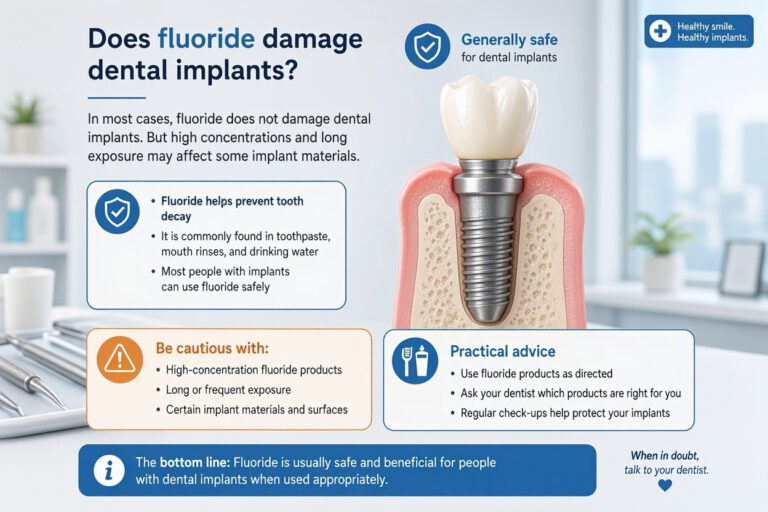
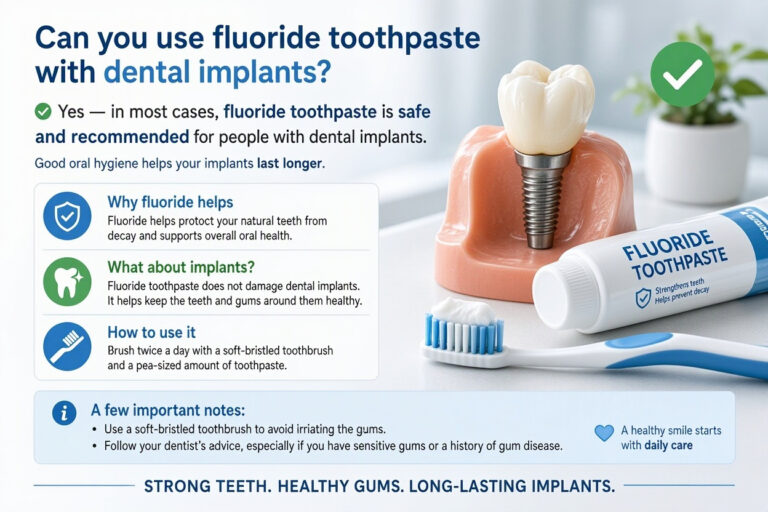
Fluoride strengthens natural tooth enamel and prevents decay. While fluoride does not affect implants directly, it protects the natural teeth around them. Most dentists recommend fluoride toothpaste for patients with a mix of natural teeth and implants.
Gentle Abrasives
Some abrasion is necessary to clean teeth, but it should be gentle. Look for toothpastes with low abrasivity (low RDA value). Avoid whitening toothpastes with harsh abrasives.
Antibacterial Agents
Ingredients like stannous fluoride or triclosan (though triclosan is less common now) help reduce bacteria. Some toothpastes include additional antibacterial compounds.
Desensitizing Agents
If you have sensitive teeth, toothpastes with potassium nitrate or stannous fluoride can help.
Gum-Soothing Ingredients
Some toothpastes contain aloe vera, chamomile, or other soothing ingredients. These can comfort irritated gums.
Ingredients to Avoid
Harsh Abrasives
Whitening toothpastes often contain abrasive particles like silica or calcium carbonate in high concentrations. These can scratch implant surfaces and wear away natural enamel. Choose gentle formulas.
Sodium Lauryl Sulfate (SLS)
SLS is a foaming agent found in many toothpastes. Some people find it irritating, especially those with sensitive gums or canker sores. Consider SLS-free toothpaste if you experience irritation.
Artificial Colors and Flavors
Some patients prefer natural toothpastes without artificial additives. While not harmful for most, these ingredients may cause sensitivity in some individuals.
High Fluoride Concentrations (Without Guidance)
Prescription-strength fluoride toothpastes are beneficial for some patients but should be used under dental supervision. Do not use high-fluoride products without professional guidance.
Comparison Table: Toothpaste Types for Implant Patients
| Type | Key Features | Best For | Considerations |
|---|---|---|---|
| Standard fluoride | Cavity protection | Most patients | Choose gentle formula |
| Sensitive teeth | Desensitizing agents | Patients with sensitivity | Effective for discomfort |
| Gum health | Antibacterial, soothing | Patients with gum concerns | Good for implant maintenance |
| Whitening | Abrasives, chemicals | Natural teeth whitening | Avoid harsh abrasives near implants |
| Natural/herbal | Plant-based ingredients | Patients preferring natural products | Verify fluoride content |
| Prescription high-fluoride | High fluoride concentration | High cavity risk | Use only as directed |
Recommended Toothpaste Features for Implant Patients
Based on dental guidelines, here is what to look for:
- Soft, gentle formula: Low abrasivity
- Fluoride content: For natural tooth protection (unless your dentist advises otherwise)
- SLS-free (optional): If you have sensitivity
- Gum-soothing ingredients: For comfort
- ADA Seal of Acceptance: Indicates safety and efficacy
How to Use Toothpaste Effectively
Amount
Use a pea-sized amount for adults. More is not better—it just creates more foam.
Brushing Technique
As covered in the toothbrush article, use gentle circular motions at a 45-degree angle. Let the toothpaste do its job without aggressive scrubbing.
Rinsing
Spit out excess toothpaste but avoid rinsing with large amounts of water immediately after brushing. This allows fluoride to remain on teeth longer.
Frequency
Brush twice daily with toothpaste. If you snack during the day, rinse with water or use a small amount of toothpaste on a brush for a quick clean.
Special Considerations
For Patients With Sensitive Gums
Choose toothpaste labeled for sensitive teeth or gum health. Avoid SLS if you experience irritation.
For Patients With Natural Teeth and Implants
Fluoride toothpaste protects natural teeth without harming implants. This is the best choice for most patients.
For Patients Who Want Whitening
Whitening toothpastes can be abrasive. If you want to whiten your teeth, talk to your dentist about safe options. Professional whitening is safer and more effective than abrasive toothpastes.
“I tell my implant patients to think of toothpaste like skincare—you want something gentle that cleans without stripping. Harsh abrasives are the enemy of long-term implant health.” — Dr. Amanda Foster, DDS
Conclusion
The best toothpaste for dental implants is a gentle, fluoride-containing formula with low abrasivity. Avoid harsh whitening toothpastes and ingredients that irritate your gums. Use a pea-sized amount, brush gently, and pair toothpaste with proper brushing and flossing for optimal implant care.
FAQ: Toothpaste for Dental Implants
Can I use whitening toothpaste with implants?
Whitening toothpastes can be abrasive and may scratch implant surfaces. Choose gentle formulas or consult your dentist about safe whitening options.
Is fluoride toothpaste safe for implants?
Yes. Fluoride does not harm implants and protects natural teeth. Most dentists recommend fluoride toothpaste for implant patients.
What if toothpaste irritates my gums?
Try SLS-free toothpaste or a formula designed for sensitive gums. If irritation persists, consult your dentist.
Can toothpaste whiten implant crowns?
No. Toothpaste cannot change the color of implant crowns. If you want to whiten your smile, discuss professional options with your dentist.
How much toothpaste should I use?
A pea-sized amount is sufficient for adults.
Additional Resource: For a list of ADA-accepted toothpastes, visit https://www.ada.org.