Does Fluoride Damage Dental Implants?
If you have dental implants, you may have heard conflicting information about fluoride. Some sources claim fluoride is safe and beneficial; others suggest it might harm implants.
This article examines the evidence and provides clear, honest answers.
The Short Answer
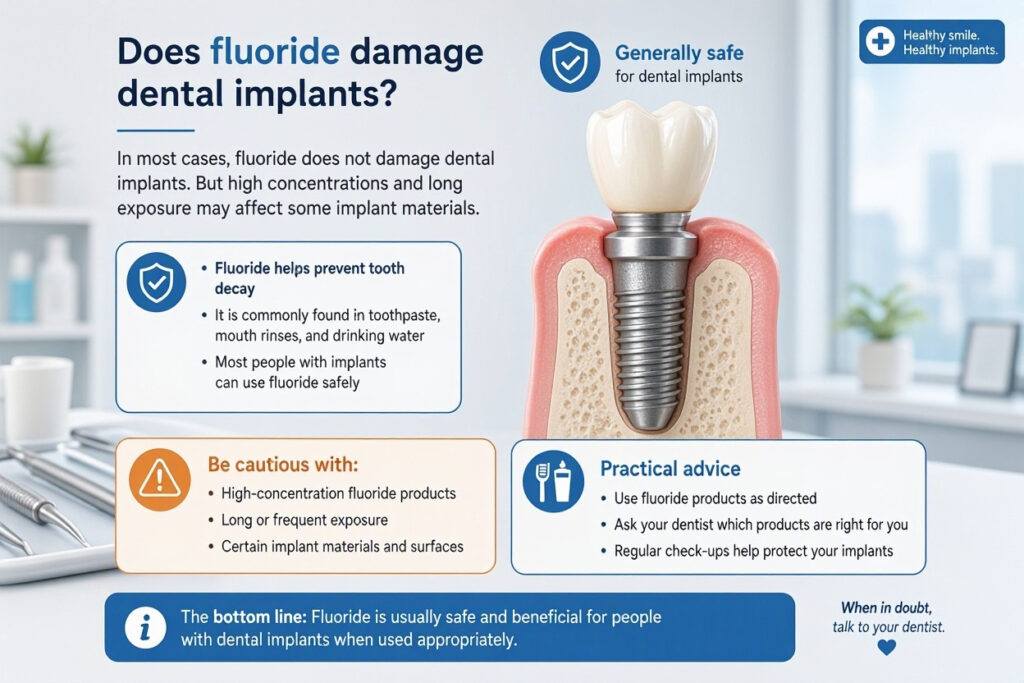
No, fluoride does not damage dental implants. At the concentrations found in toothpaste and drinking water, fluoride is safe for titanium and ceramic implant materials. Dentists routinely recommend fluoride toothpaste for implant patients.
Why the Confusion?
Concerns about fluoride and implants often stem from:
Misunderstanding of Material Science
Some people worry that fluoride, being a reactive element, might corrode metal implants. However, titanium—the most common implant material—is highly resistant to corrosion, including from fluoride.
Confusion With Natural Teeth
Fluoride affects natural tooth enamel. Some may incorrectly assume it also affects implant materials. It does not.
Rare Case Reports
Very rarely, high-concentration fluoride products (like professional fluoride treatments applied incorrectly) have been associated with surface changes on some dental materials. These cases involve extreme conditions not encountered in normal use.
Online Misinformation
The internet contains conflicting information about fluoride. Reliable sources, including dental professional organizations, affirm fluoride’s safety for implants.
What Research Shows
Scientific studies have examined fluoride’s effects on dental implants:
- Titanium corrosion studies: Research shows titanium is resistant to fluoride at concentrations found in toothpaste and water. Corrosion requires much higher concentrations and acidic conditions not present in normal oral care.
- Clinical studies: Long-term studies of implant patients using fluoride toothpaste show no increased risk of implant failure or complications.
- Dental guidelines: Major dental organizations recommend fluoride toothpaste for all patients, including those with implants.
How Fluoride Interacts With Implant Materials
Titanium
Titanium forms a stable oxide layer on its surface that protects against corrosion. This layer is resistant to fluoride at normal concentrations.
Ceramic (Zirconia)
Zirconia implants are also resistant to fluoride. The material is highly stable and does not react with fluoride in oral care products.
Porcelain Crowns
The ceramic crowns on implants are similarly resistant to fluoride.
When Fluoride Could Be a Concern
While fluoride is safe in normal use, consider these points:
High-Concentration Professional Products
Professional fluoride treatments (gels, varnishes) contain higher fluoride concentrations than toothpaste. These are applied by dental professionals and are safe when used correctly. Your dentist will take precautions to protect implant surfaces if needed.
Extreme Concentrations
Industrial or laboratory exposure to very high fluoride concentrations could potentially affect titanium. This is not relevant to oral care.
Individual Sensitivities
Some individuals may be sensitive to fluoride, experiencing irritation or other symptoms. This is a personal health issue, not an implant concern.
Fluoride vs. Abrasives: What Actually Harms Implants?
While fluoride is safe, some toothpaste ingredients can harm implants. The real concern is abrasives.
Abrasive Particles
Harsh abrasives in some toothpastes (especially whitening formulas) can scratch implant surfaces. Scratched surfaces create rough areas where bacteria accumulate, potentially leading to peri-implantitis.
Why This Matters
Scratches on implant crowns or exposed implant surfaces can:
- Harbor bacteria
- Make cleaning more difficult
- Compromise the aesthetic appearance of the restoration
Choosing Gentle Toothpaste
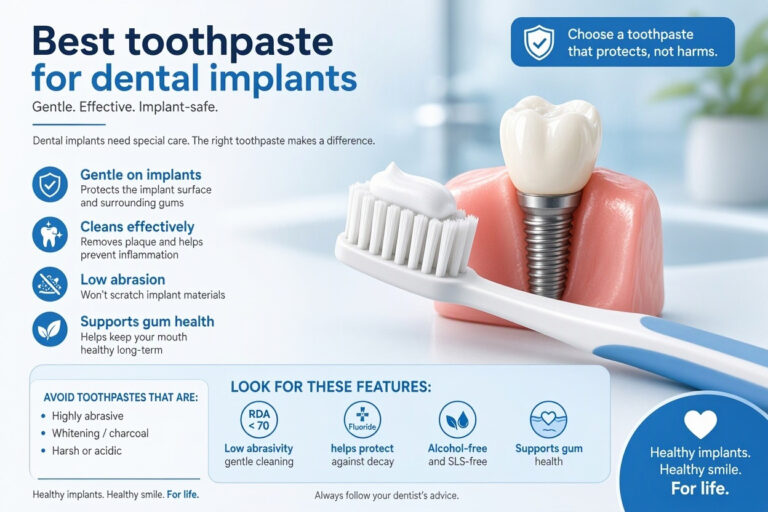
Look for toothpastes with low abrasivity. Avoid whitening toothpastes with harsh particles. Your dentist can recommend appropriate products.
Comparison Table: Fluoride vs. Abrasives and Implant Safety
| Ingredient/Feature | Effect on Implants | Safety |
|---|---|---|
| Fluoride (standard concentration) | No effect | Safe |
| Fluoride (professional high concentration) | No effect when used correctly | Safe with professional application |
| Harsh abrasives | Can scratch surfaces | Avoid |
| Gentle abrasives | Minimal effect | Safe |
| SLS (foaming agent) | May irritate gums | Optional to avoid |
| Whitening chemicals | Varies | Consult dentist |
What Dentists Recommend
“I tell my patients that fluoride is not the enemy—harsh abrasives are. Fluoride toothpaste protects natural teeth without harming implants. The key is choosing a gentle formula.” — Dr. James Wilson, DDS
“There is a lot of misinformation online about fluoride and implants. The science is clear: fluoride is safe. What patients should focus on is avoiding abrasive toothpastes that can scratch their implant crowns.” — Dr. Maria Santos, DMD
Conclusion
Fluoride does not damage dental implants. It is safe, effective, and recommended for implant patients to protect natural teeth. The real concern is abrasive toothpaste ingredients that can scratch implant surfaces. Choose a gentle, fluoride-containing toothpaste, and consult your dentist for personalized recommendations.
FAQ: Fluoride and Dental Implant Damage
Can fluoride cause implant failure?
No. There is no evidence that fluoride at normal concentrations causes implant failure.
Is fluoride-free toothpaste safer for implants?
Not necessarily. Fluoride-free toothpaste offers no advantage for implants and lacks fluoride’s benefits for natural teeth.
What about professional fluoride treatments?
Professional fluoride treatments are safe when applied by a dental professional. Your dentist will take appropriate precautions.
Can fluoride stain implant crowns?
No. Fluoride does not stain implants or crowns. Some toothpaste ingredients may cause staining of natural teeth, but this does not affect implants.
Should I worry about fluoride in drinking water?
No. Fluoride in drinking water is safe for implants and beneficial for natural teeth.
Additional Resource: For evidence-based information on fluoride, visit the American Dental Association: https://www.ada.org.