How Long Do Dental Implants Last?
The Question Everyone Asks
When considering dental implants, one question dominates conversations: “How long will they last?” It’s a fair question—implants represent a significant investment in time, money, and comfort. You deserve to know what to expect.
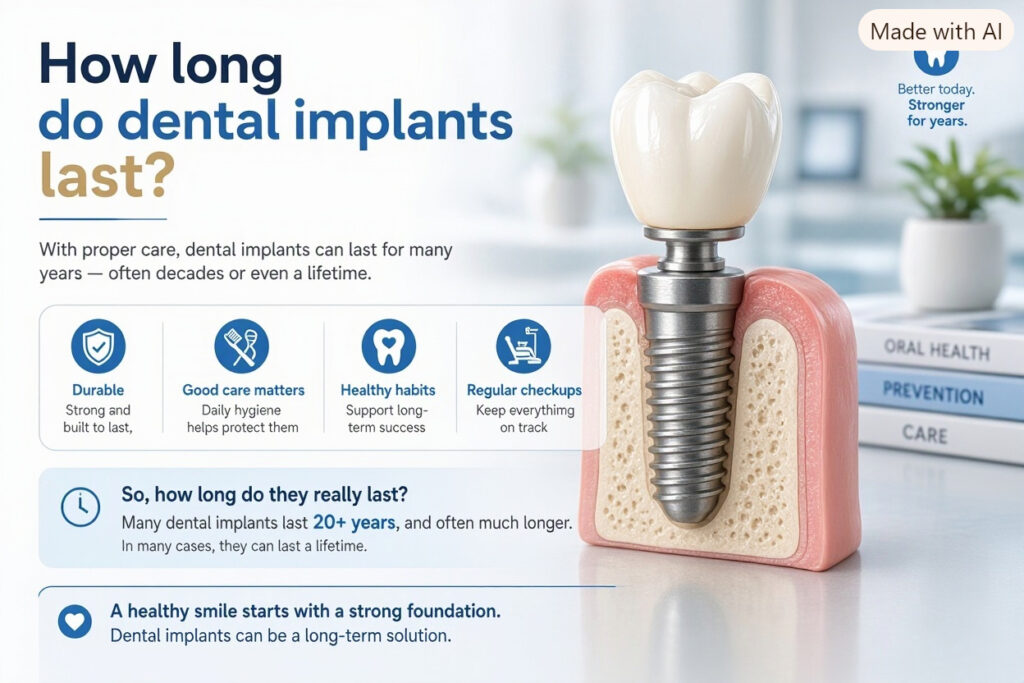
The short answer? Dental implants can last 25 years or longer, with many patients keeping theirs for life. The longer answer involves several factors that influence longevity, from your daily habits to your dentist’s skill. This article explores everything you need to know about implant lifespan, giving you a realistic picture of what to expect.
The Science Behind Implant Longevity
Why Implants Last So Long
Dental implants owe their durability to a remarkable biological process we introduced in our previous article: osseointegration. When titanium fuses with your jawbone, it creates a bond that’s stronger than any adhesive or mechanical connection could achieve.
This biological integration means your implant becomes part of your body, not just a foreign object sitting in your mouth. The bone grows around the titanium threads, locking the implant in place with incredible strength.
“Osseointegration is the foundation of implant longevity. Once this process completes successfully, the implant is essentially locked into your jawbone, creating a bond that can last decades.” — Dr. Michael Torres, Periodontist
Research and Statistics
Clinical studies paint an encouraging picture:
- 95-98% of implants survive 10 years
- 90-95% survive 20 years
- Many implants last 30+ years with proper care
These numbers represent averages. Some patients exceed these benchmarks easily, while others face challenges that shorten implant lifespan.
Table: Implant Survival Rates by Time Period
| Time Period | Success Rate | Notes |
|---|---|---|
| 5 years | 97-98% | Early failures usually occur here |
| 10 years | 95-97% | Most implants pass this milestone |
| 15 years | 92-95% | Continued stability expected |
| 20 years | 90-95% | Long-term studies show excellent results |
| 25+ years | 85-90% | Still impressive longevity |
Factors That Affect How Long Implants Last
Patient-Related Factors
Oral Hygiene Habits
Your daily brushing and flossing routine significantly impacts implant longevity. Implants don’t get cavities, but they can develop peri-implantitis—a gum disease equivalent that attacks the bone around implants. Consistent hygiene prevents this.
Smoking
Smoking is the single biggest threat to implant longevity. It restricts blood flow, impairs healing, and increases infection risk. Studies show smokers experience significantly higher implant failure rates than non-smokers.
Important Note: If you smoke and want implants, quitting before surgery dramatically improves your chances of long-term success. Even reducing smoking helps.
Bite Force and Habits
Grinding your teeth (bruxism) or clenching puts excessive stress on implants. Your dentist might recommend a night guard to protect your investment. Avoid using teeth as tools—opening packages with your mouth is asking for trouble.
Diet
A balanced diet supports healing and bone health. After healing, maintain good nutrition to keep your jawbone strong.
Overall Health
Conditions like uncontrolled diabetes, autoimmune diseases, and osteoporosis can affect implant longevity. Good management of these conditions improves outcomes.
Dentist-Related Factors
Surgical Skill
Implant placement requires precision. An experienced dentist positions the implant at the exact angle, depth, and location for optimal integration. Poor placement increases failure risk.
Treatment Planning
Proper diagnosis and planning matter. Your dentist should assess bone quality, gum health, and bite dynamics before surgery. Rushed planning leads to problems down the road.
Implant Quality
Not all implants are created equal. Premium implant systems have extensive research backing their reliability. Cheaper alternatives may fail sooner.
“Choosing an experienced implant dentist is one of the most important decisions you’ll make. Skill and planning create the foundation for decades of success.” — Dr. Emily Roberts, Implant Dentist
Common Reasons Implants Fail or Fail to Last
Early Failure (Within First Year)
Failed Osseointegration
Sometimes the bone doesn’t bond properly with the implant. This can happen due to poor bone quality, infection, or excessive stress during healing. Early detection allows for replacement before problems worsen.
Infection
Surgical site infections can derail healing. Following post-surgical instructions and taking prescribed antibiotics minimizes this risk.
Insufficient Bone
Inadequate bone density prevents secure integration. Bone grafting beforehand prevents this issue.
Late Failure (Years Later)
Peri-implantitis
This is the most common cause of late implant loss. It’s an infection of the tissue around implants, similar to periodontitis around natural teeth. Symptoms include swelling, bleeding, and bone loss around the implant. Good hygiene prevents this.
Bite Problems
Imbalances in your bite can stress implants over time. Regular dental visits catch these issues early.
Trauma
Accidents or injuries can damage implants. While rare, this does happen. Sports guards protect against trauma.
Systemic Health Changes
New health conditions or medications can affect implant stability. Keep your dentist informed about health changes.
Signs Your Implant Is Having Problems
Warning Signs to Watch For
- Swelling or redness around the implant
- Bleeding when brushing near the implant
- Pain or tenderness
- A loose-feeling implant
- Bad breath that doesn’t resolve
- Visible bone loss around the implant
- Changes in how your bite feels
What to Do
If you notice any of these signs, contact your dentist promptly. Early intervention saves implants. Don’t wait until severe damage occurs.
“Most implant problems are treatable when caught early. Ignoring warning signs allows small issues to become serious problems.” — Dr. Sarah Mitchell, Prosthodontist
Maximizing Your Implant’s Lifespan
Daily Care Tips
Brush Thoroughly
Use a soft-bristled brush twice daily. Pay special attention to the area where your implant meets your gum. This junction is where bacteria accumulate.
Floss Daily
Use implant-specific floss or interdental brushes. These reach areas around implant crowns that regular floss misses.
Use Antibacterial Rinse
An alcohol-free antibacterial mouthwash helps control bacteria. Your dentist may recommend a specific product.
Avoid Abrasive Products
Don’t use harsh toothpaste or metal instruments on implants. These can scratch the surface and create bacteria-harboring crevices.
Professional Care
Regular Checkups
Visit your dentist every six months. Professional cleanings remove plaque and tartar you can’t reach at home.
Ongoing Monitoring
Your dentist monitors your implants during checkups, watching for any changes. X-rays detect bone loss early.
Treat Problems Early
Any concern warrants a call to your dentist. Quick treatment prevents implant loss.
Lifestyle Adjustments
- Don’t smoke—or quit if you currently smoke
- Wear a night guard if you grind your teeth
- Avoid biting hard objects like ice or pens
- Maintain a healthy diet
- Control systemic health conditions
Table: Implant Care Checklist
| Care Activity | Frequency | Purpose |
|---|---|---|
| Brushing | Twice daily | Remove plaque |
| Flossing | Daily | Clean between teeth |
| Antibacterial rinse | Daily | Control bacteria |
| Professional cleaning | Every 6 months | Remove stubborn deposits |
| Dental exam | Every 6 months | Monitor health |
| X-rays | As recommended | Detect bone changes |
| Night guard use | Nightly (if grinding) | Protect implants |
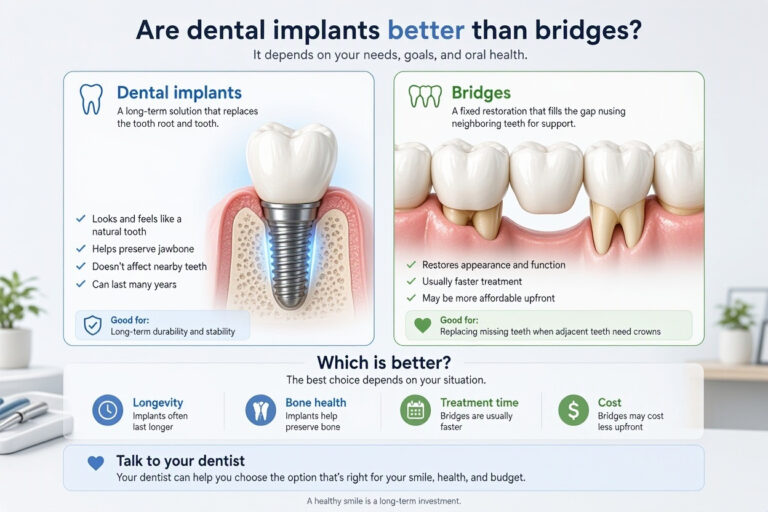
Comparing Implant Longevity to Other Options
How Implants Stack Up
| Option | Typical Lifespan | Replacement Needed |
|---|---|---|
| Dental Implants | 25+ years to lifetime | Rarely |
| Fixed Bridge | 10-15 years | Usually |
| Partial Dentures | 5-10 years | Yes |
| Full Dentures | 5-10 years | Yes |
Cost Per Year of Service
When you calculate cost per year of service, implants often prove most economical:
- Implant: $4,000 / 25 years = $160 per year
- Bridge: $3,000 / 12 years = $250 per year
- Denture: $1,500 / 7 years = $214 per year
Implants require a higher initial investment but deliver superior long-term value.
When Implants Need Replacement
Is Replacement Common?
While many implants last a lifetime, some need replacement. Reasons include:
- Fractured implant (rare)
- Severe peri-implantitis with bone loss
- Traumatic injury
- Failed osseointegration from the start
- Changes in medical status
The Replacement Process
If an implant fails, your dentist removes it and allows healing. Afterward, a new implant can typically be placed. This process may include bone grafting if bone loss occurred.
Preserving the Crown
Often, only the crown needs replacement, not the implant itself. Crowns experience normal wear and may develop chips or fractures after 10-15 years of use.
The Role of Age and Health
Young Patients
Younger patients who receive implants often have decades of use ahead. Their strong healing ability supports good outcomes. However, they face a lifetime of wear and must be diligent about maintenance.
Older Patients
Age doesn’t preclude implants. Many patients in their 70s and 80s receive implants successfully. Healing may take slightly longer, but outcomes remain excellent.
Health Changes Over Time
New health conditions may affect implants. Regular dental visits help monitor for changes. Keep your dental team informed about new medications or diagnoses.
Frequently Asked Questions
Do implants last longer than natural teeth?
Sometimes, yes. Natural teeth can be lost to decay, gum disease, or trauma. Implants don’t decay, but they require healthy gums and bone. With ideal care, implants may outlast natural teeth.
Can I do anything to make my implant last longer?
Absolutely. Excellent hygiene, regular dental visits, avoiding smoking, and protecting your implant from trauma all extend lifespan.
How do I know if my implant is failing?
Signs include pain, swelling, bleeding, or loosening. Regular checkups catch problems before you notice symptoms.
Do implant crowns need replacement?
Yes, crowns experience wear. Most crowns last 10-15 years before requiring replacement. The implant itself usually remains.
What’s the most common cause of implant failure?
Peri-implantitis (gum infection around implants) and failed osseointegration are the leading causes. Both are largely preventable with proper care.
Can I get a second implant if one fails?
Yes, in most cases. Your dentist evaluates bone quality and healing before placing a new implant.
Do children and teenagers get implants?
Implants are typically placed after jaw growth completes, usually in the late teens or early twenties.
Conclusion
Dental implants offer outstanding longevity, often lasting decades with proper care. Success depends on multiple factors—your hygiene habits, health status, lifestyle choices, and the skill of your dental team.
In summary: Dental implants typically last 25 years or longer, with many patients keeping them for life thanks to their integration with the jawbone through osseointegration. Factors like smoking, poor oral hygiene, and certain health conditions can shorten lifespan, but excellent daily care and regular dental visits dramatically improve long-term success. While implants require investment and attention, their durability makes them one of the most reliable dental solutions available.
Additional Resource
Learn more about implant maintenance from the American Academy of Periodontology at www.perio.org.